
Faster Membership
The rest of this one is for members.
This article, both twelve-week training plans, and the full library of protocols and calculators are part of Faster Membership. CHF 129 for the year.

Faster Membership
The rest of this one is for members.
This article, both twelve-week training plans, and the full library of protocols and calculators are part of Faster Membership. CHF 129 for the year.
Faster Membership
The rest of this one is for members.
This article, both twelve-week training plans, and the full library of protocols and calculators are part of Faster Membership. CHF 129 for the year.

In this episode I cover the metrics that I track during a rowing season, to monitor and manage. This episode ought to be useful for anyone seeking to understand what training metrics and devices are best to improve their performance in rowing.

Faster Membership
The rest of this one is for members.
This article, both twelve-week training plans, and the full library of protocols and calculators are part of Faster Membership. CHF 129 for the year.

Faster Membership
The rest of this one is for members.
This article, both twelve-week training plans, and the full library of protocols and calculators are part of Faster Membership. CHF 129 for the year.

Faster Membership
The rest of this one is for members.
This article, both twelve-week training plans, and the full library of protocols and calculators are part of Faster Membership. CHF 129 for the year.

Success loves preparation, and it’s not uncommon to see athletes heading into the last months of the year, without a clear goal for the next year, and an understanding of what they need to do to achieve their goals. With the off season in Europe and America and with at least 6-months to racing in most of the world, we have an opportunity, to reflect on results from 2022, what went well and what can be improved for next year. Question is, will you take time to reflect and plan?
I thought I’d share the approach I use, along with the approaches from super successful masters athletes and coaches, with the intention of inspiring and even challenging you, in your approach to setting up, and preparing for the year ahead.
Many rowers feel that they shouldn’t take a break at the end of the season. I like to take at least 3-weeks off, and sometimes 4-weeks. Rest the body and mind. Build up an appetite to get back in the boat, gym and ergo, to train through the off season. I use this time to build up my reserves, and to reflect what I need to do to go faster next year.
Take some time to reflect on the year to date. What did you do this year, and how has it worked out?
Now that you have the what identified, i.e. data points from the season, a good question to consider is, so what? With good data from the year, you can start making informed decisions, on where to focus in the year ahead.
In my interview with multiple HOCR winner, Greg Benning, this is what he had to say about planning the year.
Goal #1: Do it better every year
Accretive: Start with prior year, try new stuff, keep best ideas
Incremental Gains: Keeping a list of strengths, weaknesses, measuring
Faster podcast interview with Greg Benning (2020)
I use the time now to plan forward for next year, with a strong focus on what I need to do in the off season, to be ready for the base training in 4-months time.
Review and Plan are key aspects of success in life, business and sport. I hope that some of the points I have raised, challenge and inspire you, to review what you have done, and identify areas that will help you to go faster.

Every year I take a look at a few things to experiment with. All with the aim of improving my personal performance. In this post I’m sharing what I’m experimenting with for rowing, across different aspects, and over the coming months, I will share updates in my newsletter.
I’ll be testing the new ‘Carbon Pack’ from Filippi Boats with the Filippi F22 single scull. I first learnt about these developments in late 2020, when I spent some time with David Filippi at the Italian Championships. I’m curious to see Filippi’s new developments in carbon fibre footplate, seat deck interface, rigger and gate technology. More information will be revealed as I share the process of the new boat build and interview David Filippi on the Faster podcast about the new technology.


Testing 776BC rowing clothes for comfort, durability and how their ‘Motion Technology’ works. The 776BC Motion System highlights key biometric markers and lines on the body. The aim is to show how you’re moving whilst rowing on the ergo or in the boat. To achieve this, 776BC developed a motion sensor app, that you can use to film the session, and observe how the biometric markers line up vs the desired technique.
I have order some 776BC customised kit for a few willing masters and juniors to try at my club. Will update how the kit looks, feels and how it is to work with the Motion App for filming and providing feedback.


I’ve been paying more attention to how much and what I’m drinking during training, especially with the increase in time on the ergo, and this year I will be experimenting with how my performance is influenced by how hydrated I am when I start exercising.
Precision Hydration have a protocol they call, ‘preloading‘ and the practice has been widely studied in the last 20 years. There’s strong evidence that taking in additional sodium with fluids before you start sweating is effective in promoting increased acute fluid retention and in improving endurance performance, especially in the heat.
I will be working with the team at Precision Hydration, to dial this in over the coming months and I’ll share updates along the way.

On the advice of masters champion, Greg Benning, I will be monitoring my Heart Rate Variability (HRV), and using this metric to measure my response to, and readiness for training. I’ll be using and comparing the Oura Ring and Elite HRV app & heart rate belt.


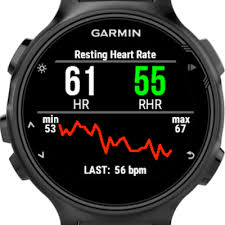
Wow. What a big week,following a big week of both volume and the introduction of more high intensity. It’s always a fine balance of when to introduce high intensity, and how to introduce the intensity. I have found that I respond best to a 4-week block, two to three session a week is enough, and just enough that I feel that I have done a big effort, yet not so much, that I’m in a deep hole after the session. It’s a fine balance, and another reason why ‘cookie cutter’ programs from magazines and books, can negatively impact your season, unless they are treated as a guide. A tip is to observe your morning resting heart rate (MRHR). I will post a short article on my approach to this simple protocol that can really help you to understand your fatigue and readiness in less that 30-seconds.
So this week, I spent considerable time on the bike, on the ergo and fortunately also on the water. Two high intensity sessions this week. 4 x 8-minutes @92% peak HR, with 4-minutes rest, and then on Sunday morning, 5 x 1-minute on 1-minute off. This last one is a great speed work out, and although the heart rate may not respond so fast within the minute, the power and intensity is there, and the cumulative effect over time builds up.


Over the weekend, we spent time on a smaller lake near the Swiss French/German speaking border, working on technique, technique, technique. I am always impressed what our coach, Urs Graf, can find for us to improve. It’s a continuous learning mindset and approach. Fitted this all in around Zoom calls with Mick Miller on High Performance Mindset (check the other post) and calls with athletes around the world.
So to summarise the week in numbers:
This week is a recovery week. Treat your recovery as seriously as your training. Time for the body to assimilate the training stress and adapt. Maintaining the intensity this week, and the following week will be super-compensation.
Have a great week!

Hi there,
Thanks for all the great questions and feedback from my recent post on how always training in the middle can be costly. I have summarised most of the questions and feedback below.
Thanks to all that have enrolled and completed the course on ‘how to create your heart rate zones for rowing.’ Please forward the course link to a friend. Course Link
In the coming days I’ll be sending out information on my new course, ‘How to create your training plan’. I will be launching this in late May and welcome suggestions on topics you’d like to see covered.
Q Do I count the sessions of the time spent in low vs. high intensity?
A I count the number of sessions training in low intensity vs. high intensity. For example, I train 5-days a week, I spend 4 days training at low intensity and one day where I focus on training at high intensity. When my squad do say 7 sessions a week, they will do two high intensity sessions that week.
Q How long is the time required to fully reset aerobic base? During the reset period, should I be aiming for an 80:20 ratio (80% zone 2: 20% zone 4/5) or some other ratio?
A Between 8-12 weeks depending on the individual. My annual plan is very similar to a classical periodized plan in that I prescribe at least 8-weeks of aerobic foundation at the start of the season. During the ‘re-set’ I focus my clients on 100% zone 2 (<75% heart rate peak) until I start to see some improvement in their aerobic condition, i.e. improvement in pace or power for the same effort. After I start to see some improvement I may include one high intensity session a week.
Q I used to train for bike racing and used my HR zones almost exclusively so as to focus on effort and not hills or wind that affects speed. I would like to start doing that with rowing, but need to re-establish my HR zones as I haven’t done that in 10 years – on the bike. My questions are 1) what is the best way to do that for rowing 2) I want to train by HR for on the water rowing as well as erg – I’m on the water more than erg anyway.
A First establish your heart rate peak on the ergo for 2k, or on the water with a 6-minute Vo2max test. From there you can set your heart rate zones from this peak and use this as a guide to your training intensity on the water, ergo or bike.
Q If ratio is 80:20, does it matter if I mix in some zone 4/5 with zone 2 workouts, or should they be done on separate days? Thanks
A They should be done exclusively on separate days.
Q I feel my 2k erg pace (which also needs to be redone) is not a good marker as I’m likely not working hard enough in that test. Thoughts?
A The 2k test should be your maximal effort. To really get motivated and to push an all out effort, re-do the test with some friends cheering you on.
Q Is there guidance around about HR geared workouts as opposed to pace? Almost everything I see is based upon your “2k erg pace”.
A The 2k test is there to establish your heart rate peak. Once you have your heart rate peak, you can set up your training zones and train accordingly.
Q Hi Bill, I am a follower of polarization training for over 4 years. I am happy with the long 18k-26k around 75% HR sculling/erging. What I am struggling about is the 10-15% red zone training. I cannot manage it without greater percent of yellow zone. What type of intervals do you use to achieve the preferable percentage? Many thanks for your help.
A So what we do (masters squad) and what I do is as follows: look at the intensity of the session first of all and count these as either low or high intensity. For the high intensity I aim to accumulate between 30 – 45 minutes in zone 4 through different interval variations. My objective is to get into zone 4 as fast as possible and therefore only transition through zone 3. ntervals are a variation of 2:1 work to rest ratio. I let the squad pick and mix to keep the varsity yet a favourite is 5 x 8 minutes with 4 minutes rest between intervals. This is comfortably hard.
Hi Bill. Just read your post on base training. I’ve just completed a solid 4 week blockof it. Two comparative workouts 4 weeks apart. 2nd one at same wattage but HR 20 beats lower. (Craig)
Great case study Bill Chambers. Have you, or are you considering submitting this formally? There’s a real dearth of rowing specific research out there relative to other sports.
Thanks this is a very good post, and spooky as well – we were just talking about this as a team. I can attest that the single biggest improvement in my 2k time was doing the long, boring sessions at 65-75% HR. Audible helps!
Thanks for this. Improvements in aerobic capacity, not limiting carbs, is what leads to efficiency in burning fat for fuel.
I’ve been training mainly in the middle for the last 4 seasons and last year I started feeling my shape was going under. No recover between sessions, more fatigue more pain in the body. When I started rowing at home in March I saw a video from a British rower claiming the benefits of training below AT2. After that, my club coach shared with me your Course about adjusting the training zones. Since then I’m focusing on working below AT2 as a base training.
With no pressure from regattas to train for sprints, I’m catching up on a couple of lost autumns’ UT2 endurance work. At 71, I’m sticking to 120bpm @ 18spm – for 10k up to HM. 200k out of 260k (75%+) so far in April. Need to do another couple of months of this!! Money in the bank!! 👍