For most of my adult life, I regarded illness as something that happened to other people.
This was not a scientific position. It was simply the inevitable consequence of spending forty years exercising.
Spend enough time around masters rowers and you start to notice a peculiar trait. We don’t think we’re immortal. That would be absurd.
Instead, we convince ourselves we’ve negotiated a special arrangement with biology. We behave like men who have mistaken a collection of race medals, a Garmin watch and a resting heart rate in the low forties for a legally binding contract with nature.
The rest of the population gets older. We train.
The rest of the population develops health problems. We compare resting heart rates.
The rest of the population spends Sunday mornings reading newspapers. We spend them rowing through freezing rain before sunrise and then spend the rest of the day talking about it as though we’d crossed the Atlantic.
I was no different.
I trained ten to twelve hours a week. I raced. I won often enough to convince myself there was a direct relationship between effort and outcomes.
This turns out to be precisely the sort of thing people believe shortly before life has a quiet word.
Like many rowers, I measured everything.
Distance. Training load. Heart rate. Power.
I was the sort of person who believed that given enough data, enough discipline, enough science and enough training, almost any problem could be solved.
A faster 1 or 2k seemed a reasonable solution to most things.
Leaking roof?
Train harder.
Career problem?
Train harder.
Global instability?
A couple of long threshold sessions should sort that out.
I’d spent years collecting evidence that I was indestructible. Unfortunately, most of that evidence had been gathered by me. It’s a philosophy that works remarkably well.
Until it doesn’t.
The First Lesson
The first episode of atrial fibrillation arrived in 2021.
My experience skipped straight past inconvenience and ended in surgery.
Which was unfortunate. And unexpected.
I’d spent decades doing all the things we’re told are supposed to prevent this sort of thing. I wasn’t overweight. I exercised. I looked after myself.
My heart reviewed the evidence and carried on regardless.
The surgery worked.
Nine months later I was training and racing again. Which I naturally interpreted as evidence of my resilience. Looking back, it may simply have been evidence that I hadn’t learned anything.
I treated the whole experience as a temporary disruption. A mechanical issue. Replace the part. Service complete. Carry on.
The possibility that the rules had changed never really occurred to me.
I preferred my version of events.
The surgery worked. Modern medicine, I concluded, was astonishing, and I was probably invincible.
Looking back, I may have misunderstood at least one of those things.
The Last 250 Metres
The second episode arrived at the Swiss Rowing Championships in 2025.
Not in a hospital. Not during a medical examination. During a race. Specifically, the last 250 metres of a semi-final.
This is normally the point where rowing becomes wonderfully simple. The pain has already arrived. Your lungs are on fire. Your legs have started negotiating with lactate. Your life choices are under formal review.
All that’s left is one question.
Can you find another gear?
Usually, I could. This time I couldn’t.
The power simply disappeared.
No drama. No warning. No flashing lights. Just nothing.
As though somebody had quietly removed half the engine and neglected to mention it.
Something felt wrong and I backed off. In a race! Which is roughly equivalent to a Labrador losing interest in a tennis ball.
I crossed the line confused rather than worried.
The final was worse.
Athletes I’d beaten the previous week started moving away from me. Not because they’d suddenly become faster. They were exactly the same athletes they’d been seven days earlier. The difference was me.
This was deeply unsettling because I’d already spent a week explaining to anyone who would listen why they weren’t actually as good as I was. It turns out the body occasionally has opinions on these matters.
I kept waiting for the response. The lift. The surge. The familiar gear that had always been there before. Nothing arrived.
Then came the double scull final.
Five hundred metres into the race I stopped racing altogether and started paddling lightly. I remember looking at the water and thinking a thought that had never entered my head before.
Something is seriously wrong.
My heart felt constrained. Suppressed. As though it wanted to respond but couldn’t. For the first time in my sporting life, I genuinely wondered whether it was about to explode. I got off the water feeling flat. Lacklustre. Confused. And withdrew from the remaining races.
And then it happened. Again. The AFib returned.
There are moments in life when your internal monologue becomes remarkably sophisticated. This wasn’t one of them.
The entire thought process could be summarised in a single word.
Bugger.
That was my nightmare. Because the first time you convince yourself it’s bad luck. The second time you start wondering whether this is now the new normal. Whether you’ve entered a completely different chapter. And whether your body forgot to send you the memo.
The Most Uncomfortable Statistic I’ve Ever Read
Afterwards I started reading.
I expected reassurance. What I got was something considerably more annoying.
A recent study of former elite rowers found that around one in five had atrial fibrillation. One in five! I’ve sat through enough rowing club dinners to know exactly what one in five looks like.
The same study found rates were substantially higher than in comparable non-athletes.
Which feels deeply unfair.
You spend years freezing on lakes, destroying ergometers, missing family breakfasts and voluntarily entering head races that feel like being slowly strangled by your own lungs.
And your reward is discovering there may be consequences.
There is increasing evidence that while moderate exercise is enormously beneficial, decades of high-volume endurance and threshold training may increase AFib risk.
Exercise is good.
Lots of exercise is very good.
A lifetime of obsession?
Apparently that’s where the conversation becomes more complicated.
Recovery Is Its Own Sport
The second surgery worked. The medication worked. And then began the part nobody talks about.
Recovery.
I’d assumed recovery would behave like training. Follow the programme. Trust the process. Improvement follows.
Simple.
Instead it behaved more like assembling flat-pack furniture after three glasses of wine. Nothing happened in the correct order and there always seemed to be parts missing.
The first surprise was discovering that AFib doesn’t politely confine itself to races. It follows you home.
For years I’d been very pleased with my resting heart rate. Like many endurance athletes, I’d quietly viewed it as evidence not merely of fitness but of superior character.
Then I found myself lying awake at two in the morning watching my pulse sit somewhere between 90 and 100 beats per minute. While supposedly asleep.
It’s difficult to relax under those circumstances. Especially when your heart appears to be recreating a run up a set of stairs. Which was disappointing because after decades of training I’d expected my heart to spend retirement behaving like a reliable village postmaster.
Instead it had become the drummer in a heavy metal band fuelled by a double vodka Red Bull and several regrettable life choices.
Then there were the surges.
I’d be sitting quietly reading, answering emails or performing some equally unathletic activity and suddenly my heart would decide this was the ideal moment to rehearse for a sprint finish.
Not because I was exercising.
Not because I was under attack.
Simply because chaos had entered the chat.
The experience wasn’t painful. It was unsettling.
For forty years I’d trusted my body completely. Now I was watching it the way you’d watch a washing machine making unfamiliar noises.
Not panicking. Just standing nearby wondering whether this was about to become expensive.
The medication helped. Of course it did. That’s why they prescribe it.
But nobody tells you that some of these drugs don’t leave the building the moment you stop taking them. You imagine they’ll depart politely like unwanted relatives after Christmas.
They don’t.
They linger.
The anti-coagulants reduce stroke risk.
The heart-rate regulators stop your pulse behaving like an escaped Labrador.
But if you’ve spent forty years measuring progress in watts, split times and race results, they can also leave you feeling as though somebody has removed the V8 from your sports car and replaced it with a lawnmower engine.
Everything still works. Just not with any enthusiasm.
My power disappeared. My heart rate sat wherever it pleased.
I became breathless doing things that previously qualified as warming up.
I put on weight. Not huge amounts. But enough for every photograph to appear to have been taken by a photographer who actively disliked me.
Training fell from ten or twelve hours a week to three or four hours of cardio and a couple of strength sessions. And I discovered something rowers hate.
Recovery doesn’t care how badly you want it.
The Long View
The hardest adjustment hasn’t been physical. It’s been psychological.
For years I measured success in speed, rankings and medals. Suddenly I found myself considering a possibility that would once have sounded ridiculous.
Maybe success isn’t winning.
Maybe success is remaining healthy enough to keep turning up.
A few years ago I’d have dismissed that as the sort of thing people say when they stop winning. Now I’m not so sure. Will I race again?
I hope so.
Perhaps next year I’ll do sprint races.
The irony would be magnificent. Spend a lifetime training endurance only to discover that shorter, less sensible races might be the future.
For decades I believed every problem could be solved with more training.
More volume. More work. More effort. More science.
It turns out that after forty years of trying to become bulletproof, I’d merely become a very fit man sitting in a cardiologist’s waiting room wondering why nobody had mentioned that biology eventually reads the small print.
That philosophy gave me friendships, experiences and a few medals I remain embarrassingly proud of. It also left me standing on a Swiss regatta course at the age of 55 wondering why my body had suddenly stopped following instructions.
What I do know is that after a lifetime of treating my body like a dependable employee who could always be persuaded to work overtime, it has finally arrived carrying a letter from Human Resources, a representative from the union and a list of demands longer than a Henley regatta programme.
And, rather annoyingly, it appears to have a very strong case.
Enjoyed this article?
If you’re looking for a structured, evidence-based approach to your training, our rowing plans have helped athletes prepare for sprint racing, head races, and personal best performances while balancing training with everyday life.
Each plan includes detailed weekly sessions, strength training guidance, pacing recommendations, and flexibility to fit your available training time.
Join me as I speak exclusively with Vincent Galliard, Executive Director of World Rowing about the future direction of Rowing. In this episode, Vincent shares World Rowing’s 15 year plan to transform the reach, the image and revenues of the sport. We discuss the expansion into coastal rowing, indoor rowing, plans to drive awareness and boost audience engagement. Vincent also talks about what we can expect after the 1,500m racing format at the LA Games. World Rowing’s new partnership with Concept2 and the future of rowing in e-sports Games.
Many of us will be doing a lot of training on the rowing machine in these coming weeks, and it’s important to understand the impact of sweat and proper hydration. This article by Andy Blow, provides good insights and tips for all of us using the Concept2 to train indoors.
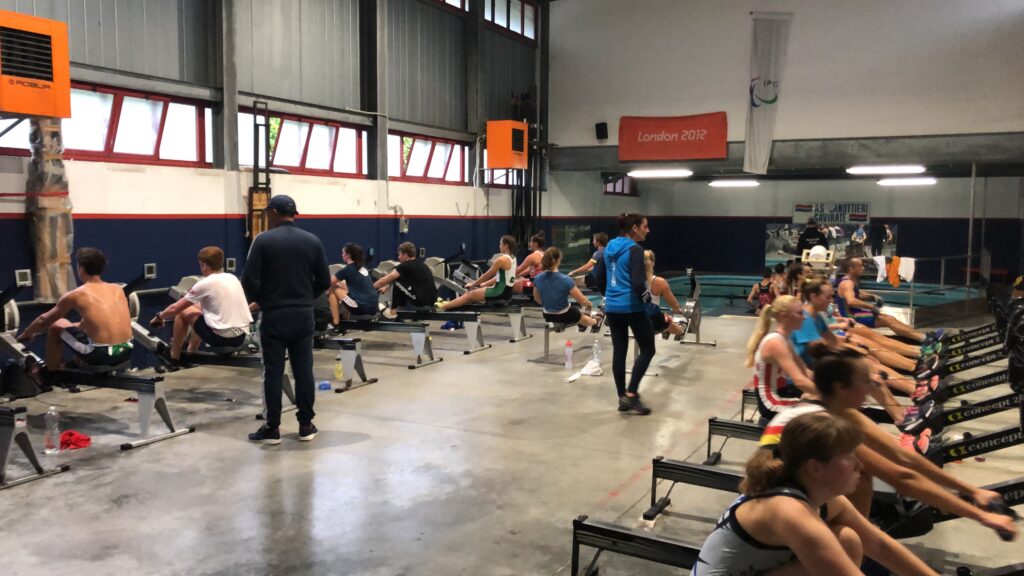
Gavirate Rowing Club 2020. Photo WH Chambers.
Original article by Andy Blow, BSc Honours degree in Sports and Exercise Science from the University of Bath, Precision Hydration (2020). Precision Hydration support our newsletter subscribers with 10% off all purchases, when you use the discount code; Faster10 at checkout. www.precisionhydration.com
Indoor training can be viewed as an unfortunate but necessary evil by some athletes, while others relish the opportunity to get in the ‘Pain Cave’ and log those hours on the turbo trainer or treadmill.
There’s often an impressive (and slightly dangerous) pool of sweat on the floor whenever I’ve finished an indoor training session. So, does that puddle mean I sweat more when training indoors than outdoors? Let’s find out…
The effects of heat on sweat rate
The body controls core body temperature (CBT) to keep us alive and functioning, and we sweat when our CBT rises above a certain point.
The heat given off by working muscles has the greatest influence on CBT when exercising, so how hard you’re working has a massive impact on your sweat rate and more so than body fat, weight and overall size. This was emphasised by the findings of a recent study.
So, the average indoor workout is probably more intense than an outdoor session because we generally go for ‘quality’ over ‘quantity’ (unless you really enjoy being in your ‘pain cave’ for hours and hours on end). Therefore, this results in a higher sweat loss per unit of time.
Air Flow and Temperature
Two other important factors which will impact on how sweaty you get when training indoors are Air Flow and Temperature:
Air Flow
When outdoors, you’re moving through air so you get some airflow past the skin. Air movement causes heat to be drawn away from the body’s surface more effectively (via convection and sweat evaporation) and this cools you.
On a static bike or treadmill, you lose this airflow and the sweat tends to drip off you, making you more aware of it. And as there’s no natural cooling effect, you probably actually do sweat a little more to compensate too (unless you attempt to mitigate the lack of air flow by adding a fan to your indoor ‘Pain Cave’…).
Temperature
Your body tries to offload heat to the environment when you’re training. The bigger the gradient between the air temperature, and the lower the humidity, the easier it is for heat to be evaporated away. As many places we train indoors are already quite warm and humid, the gradients for heat loss and evaporation are less pronounced than outside, and this further hinders thermoregulation and drives sweat rate up.
So, whilst you don’t necessarily sweat significantly more indoors than outdoors, there are reasons why total sweat loss might be higher some of the time.
Tips for staying hydrated during indoor training
There are five simple steps you can take to ensure that you are well hydrated for your daily indoor training session…
Before: Arrive well hydrated
As we mentioned earlier, most people’s indoor training sessions are short and intense as we go for the old ‘quality over quantity’ approach. So, it’s important to make sure you start hydrated by doing some form of preload as this will maximise your ability to thermoregulate by sweating.
Aim to drink around 500-750ml (16-25oz) of plain water mixed with a strong electrolyte drink (we recommend PH 1500) a few hours before you start your session. Use a bit of trial and error over the course of a few sessions to refine this approach.
Before: Don’t overdo your fluid intake
Having said that, there’s no need to go overboard on fluid intake in the immediate build-up to your session. Just try to stick to good hydration practices on a day-to-day basis.
Before: Add sodium
If you do find yourself low on fluid leading up to a session, it’s a good idea to add additional sodium to your drinks in the preceding hours as this maximises absorption of the fluids you do consume.
During: Drink to thirst during the session
This comes back to the ‘don’t overdo it’ point. Ultimately, don’t interfere with what you’re actually there to do (i.e. get sweaty on the turbo or treadmill) by trying to taking on unnecessary amounts of fluid.
Don’t forget to stay on top of your hydration when training indoors and following these simple steps will help keep you hydrated correctly and able to perform at your best.
Interview with James Goodwin, Head of physical performance and science for the Swiss Rowing Federation. James is responsible for ensuring the Swiss Team are strong and fit, to train and race. In this episode, James shares his expertise towards Masters Rowing. James and I discuss strength and condition strategies for Masters, and answer questions from the Masters Rowing Facebook Group.
James holds a Bachelor of Science (BSc) in Sports and Exercise Science, from Sheffield Hallam University and worked as the Strength and Conditioning Coach (GB Rowing) through the Rio Olympic cycle.
This episode is supported by Precision Hydration. You can take Precision Hydration’s free online sweat test at www.precisionhydration.com and save 10% on purchases when you use the code FASTER10 at check-out.
To listen to the podcast, click on the link to the Faster Podcast below or find the Faster Podcast in your favourite podcast player.
I have in the past experimented with monitoring HRV to understand both how I’m responding to training (stress) and recovery (rest) to optimise my training response and avoid overtraining. So far, I’m still learning and building up a baseline. I’m researching different sources of information and will share these with you.
Sharing original article found at the Oura website. Author: Oura Team February 12, 2020
Stress vs. Rest
When stressful thoughts consume your day, it can feel as though stress is strictly a mental problem. The reality is that stress materializes as both emotional and physiological symptoms—your brain and body are inseparable.
Whether you are running from a lion or preparing for a presentation at work, your brain and body share a single response system for all stressors—the autonomic nervous system (ANS).
Knowing how your body uses the ANS to react to different situations can help you build awareness and identify practices that transform your stress reaction into a reasoned response.
The ANS functions like a tug-of-war game between two subsystems: your activation (sympathetic nervous) system and your rest (parasympathetic nervous) system. Both regulate essential body functions like heart rate, respiratory rate, and digestion.
Your sympathetic nervous system is well known as the driver of your activating, fight-or-flight response, while the parasympathetic nervous system kicks in during calmer moments as your rest-and-digest network.
Both systems dial their activity up or down based on messages from your brain and spinal cord. These systems can be active at the same time, or one can take over and dominate the other.
When activated, they trigger a cascade of changes in your body:
If your fight-or-flight system starts to dominate, there are some rest-and-digest functions that stop altogether, while others simply scale back.
Your rest-and-digest system has multiple players (e.g., your heart, lungs, liver). If your fight-or-flight system dominates, some parasympathetic players quit (e.g., digestion pauses while you’re running). Others may use a different tactic; for example, as you warm up for a jog, your body will shift its temperature-regulating strategy and reroute blood from your internal organs to your skin in an effort to shed heat.
Finding Balance
Life’s stress levels naturally fluctuate. When your body remains in a stressed-out, fight-or-flight mode, it can take a serious toll on your health by slowing your recovery time, weakening your immune system, and impacting your mental state.
Our ANS was designed to help us deal with brief episodes of high-intensity stress (e.g., running from a predator), but our modern lifestyle contains multiple chronic stressors that rarely shut off (e.g., job pressure, balancing childcare and work, sleep deprivation, and constant device stimulation).
It’s all about balance. You don’t want your fight-or-flight system to be in a constant state of activation, but you also don’t want it to remain inactive—it is essential for your survival ability to respond to stress as well as maintain your body’s equilibrium.
Managing Your Stress
We are often unaware of the tug-of-war inside our ANS because it functions involuntarily and reflexively. Becoming more in tune with the physiological effects of stress can help you regulate your response or deploy strategies to bring you back into balance.
Check out these tips to identify and reverse imbalances sooner:
Become more self-aware: Techniques like meditation can help you become more in touch with how activated or relaxed your body is. Taking a moment during the day also offers an opportunity to reset imbalances when you sense them and may even improve your sleep.
Sense imbalances sooner: Consider how wearables, like Oura, can give you the opportunity to follow patterns of stress within your body and measure their impact more objectively. You can even see your body’s ANS balance and reduce stress by monitoring your heart rate variability.
Improve your resilience: Increasing your fitness level and improving your sleep both boost your body’s ability to bounce back from stressful periods. If you’re looking for ways to rest and restore, consider these ideas.
References
Stults-Kolehmainen, Matthew A., and John B. Bartholomew. “Psychological stress impairs short-term muscular recovery from resistance exercise.” Medicine and science in sports and exercise 44, no. 11 (2012): 2220-2227. (link)
Morey, Jennifer N., Ian A. Boggero, April B. Scott, and Suzanne C. Segerstrom. “Current directions in stress and human immune function.” Current opinion in psychology 5 (2015): 13-17. (link)
Slavich, George M. “Life stress and health: A review of conceptual issues and recent findings.” Teaching of Psychology 43, no. 4 (2016): 346-355. (link)
This is a repost of an interesting article on why athletes suffer from cramp, by Andy Blow. Medically reviewed by Dr Tamara Hew-Butler. Original article can be found at precision hydration.com
The causes of muscle cramp in athletes remain a contentious issue in the scientific world. We’ve taken a look at the competing theories of cramp, the major studies and detailed the methods that can help alleviate the symptoms of cramp…
Definition of muscle cramp
I have a strong personal interest in the subject of Exercise Associated Muscle Cramps (EAMC) because I used to be a chronic sufferer back when I was competing.
For as long as I can remember I seem to have been especially susceptible to ‘sudden, involuntary, spasmodic contractions’ of selected my muscles – to borrow a phrase from the dictionary definition – to the point where cramps ruined numerous important races for me.
I’ve also been plagued with horrible contractions in my legs that have woken me up during the night after hard training sessions, and on one memorable occasion cramp even cost me a Chicken Tikka Masala when an extremely violent hamstring spasm made me kick over my table during a quiet meal after a race.
Despite the fact that muscle cramps are a very common phenomenon and that they have been widely studied, no-one really knows the full story about cramp yet.
In spite of this, over the last ten years or so I seem to have largely got on top of my issues with cramp. This has come through modifying my behaviour, diet and expectations of my body based on what I’ve learned through a combination of reading and personal experimentation.
So, if you’re a fellow cramper, there may be hope. Here are some of the things I’ve picked up along the way in case they help you win your own war on cramp. If you want to skip past the science to the potential solutions, just click here (I won’t hold it against you).
What causes exercise associated cramps?
In the research world there are essentially two competing theories of what causes Exercise Associated Muscle Cramp…
This theory is probably the oldest. It speculates that a significant disturbance in fluid or electrolyte balance, usually due to a reduction in total body exchangeable sodium stores, causes a contraction of the interstitial fluid compartment around muscles and a misfiring of nerve impulses, leading to cramp.
In simpler terms, if you lose a lot of sodium and don’t replace it (as is common when you sweat a lot) it can cause fluid shifts in the body that in turn causes cramps.
This theory is predominantly based on plenty of case studies, observational data, anecdote and expert opinion (what scientists call ‘level 4 and 5 evidence’). So, although there’s a decent amount of circumstantial weight behind it, it lacks the more “concrete proof” of data from large scale randomised controlled trials (RCTs) which is rightly considered necessary by proponents of evidence-based practice for it to be widely accepted as anything approaching ‘fact’.
The ‘Neuromuscular Theory’
This theory is more recent and proposes that muscle overload and neuromuscular fatigue are the root causes of Exercise Associated Muscle Cramp. The hypothesis is that fatigue contributes to an imbalance between excitatory impulses from muscle spindles and inhibitory impulses from Golgi tendon organs, and that this results in a localised muscle cramp.
In other words, muscles tend to cramp specifically when they are overworked and fatigued due to electrical misfiring.
This theory is much better suited to being tested in a lab (where researchers can ‘excite’ muscles with electrical stimuli and provoke muscle cramps to measure what is happening at an electrical level) and so there’s arguably more robust data to support it than is the case for the Dehydration/Electrolyte depletion model (although a recent lab-based study has looked at the effects of electrolyte intake on cramping threshold). It’s probably also fair to say that, in certain circles at least, this theory is gaining widespread popularity at the moment.
One big factor that does appear to support the neuromuscular theory is that stopping and stretching affected muscles is a pretty universally effective method to fix a cramp when it is actually happening. What stretching does is put the muscle under tension invoking afferent activity from the Golgi Tendon Organs (part of the muscle responsible for telling it to relax) and causing the cramp to dissipate.
Scientific studies of cramp
Studies in this area that looked at the general electrical activity of muscles (EMG) have also shown increased baseline levels of excitatory activity in fatigued muscles right between bouts of cramping – as if the muscles are firing away more excitedly than they should and ‘close’ to cramping even when they are not. Again this tends to support the conclusion that fatigue is somehow causing problems for the muscle to relax so are often cited to back up this theory.
Field studies that have failed to find major differences in the blood electrolyte profiles of athletes getting cramps during events like triathlons and marathons are often cited to dismiss the dehydration/electrolyte theory. This is essentially saying that if there’s no difference in blood electrolyte levels between crampers and non-crampers then it cannot be an influencing factor.
Unfortunately what these studies tend to overlook is the fact that blood electrolyte levels can be quite stable in athletes in the face of vastly different levels of total sweat and sodium loss.
This is because the body tends to protect sodium concentration in the blood at the expense of blood volume when sweat losses are high, so seeing similar blood sodium concentrations in crampers and non-crampers is not necessarily indicative of anything and could even be a bit misleading in the context of the bigger picture.
In fact in one of the major studies often cited in this area researchers did find that crampers ended an ultra marathon race with statistically lower serum sodium values than non-crampers, but they deemed the difference ‘not clinically significant’ even if it was statistically different…and I think that this evidence can be viewed in different ways, depending on your predisposition!
At this point it’s important to steer your thinking away from this being a binary – ‘one or the other’ – argument between two competing ideas, even though this is how the topic of cramping is commonly presented in both the scientific and mass media.
As no-one definitively knows what’s going on with muscle cramps yet, focusing on a polarised argument between two incomplete theories is a lot less productive than looking at the bigger picture and considering the merits of both theories and the actionable advice they have to offer.
Back in the early 1900s cramp was more commonly viewed as a productivity issue for manual labourers doing hard physical work in hot environments, rather than not as an inconvenience to athletes.
Different groups of doctors and researchers took notes on numerous case studies around this time and some conducted rudimentary field tests. Whilst it’s fair to say that the research efforts were not anywhere near as rigorously structured as modern clinical trials, they did elicit a pretty universal consensus. That was that providing workers with adequate sodium chloride (salt) along with drinking water to help them replace what was being sweated out was quite effective in treating or preventing many cases of cramps.
“Excessive sweat is accompanied by abnormal loss of sodium chloride through the skin. Fluid replacement is necessary and should include sufficient sodium chloride, otherwise the individual will suffer from fatigue, cramp, or collapse…A suitable preparation of sodium chloride in tablet form is described…After extensive trial this has proved satisfactory in the prevention of fatigue and other symptoms due to excessive heat.”
It was this kind of work that inevitably shaped our early understanding of EAMC in relation to athletes.
These days it’s become quite fashionable for commentators seeking to ‘disprove’ the Dehydration/Electrolyte theory of EAMC to play down this early work in industrial medicine around salt and cramping as dated, flimsy and insignificant. This is especially true for staunch supporters of the neuromuscular theory. However, having read (and re-read) most of the work available from the era, I’m far from convinced that it deserves to be so easily dismissed.
I actually feel that playing it down as ‘old hat’ is perhaps just a convenient (or even slightly lazy) way of dealing with evidence that is otherwise incongruent with a more contemporary – but not necessarily more correct – way of thinking.
In addition to the early work on industrial workers, there are a few other perspectives on electrolyte balance and cramping that are worth highlighting here too. These, in their own way, add some credence to the idea that it’s still relevant…
The Salt Deprivation Study
The first is a classic study on salt depletion that was carried out by a pioneering doctor – R.A McCance – in the 1930s. McCance was a hands on type of researcher and was intrigued by the question of what would happen to the human body if it was depleted of salt but not fluid (numerous studies into dehydration had already been undertaken by then). He organised a study using himself and a couple of colleagues as test subjects.
Essentially what McCance and his co-workers did was subject themselves to an incredibly low salt diet. Along with their salt-free food, the subjects drank plenty of water and took hot baths to increase sweat output and accelerate salt loss. They found that when salt depletion started to kick in it quickly led to…
“…aberrations of flavour, cramps, weakness, lassitude, and severe cardio-respiratory distress on exertion.”
Interestingly, as soon as the test subjects reintroduced salt into their systems (eating bacon and drinking the fat from the pan I might add) their recovery from symptoms – including the absence of further cramping – was ‘dramatic’ with effects being felt within 15 minutes of ingestion of the salty meal.
This experience in particular – cramps disappearing soon after salt ingestion – is completely consistent with my own experiences in very long and hot triathlons when I had become salt depleted due to heavy sweating, so it definitely struck a chord with me when I first read it.
It’s also congruent with lots of other anecdotal evidence coming from athletes who train or compete in similar conditions of heavy sweat loss, but more on that later.
Image credit: Quang Nguyen Ven via Pexels (copyright free).
Hyponatremia and cramp
Another notable example of electrolyte disturbance associated with cramping can be found in case reports of people suffering with hyponatremia, especially when this occurs around exercise.
Hyponatremia is a condition where blood sodium levels fall lower than they should be due to dilution by over-consumption of water, excessive loss of sodium from the body, or both together as is common amongst athletes.
Cramping is often listed as a general symptom of hyponatremia in medical texts and there are case study reports in the literature such as one involving a UK serviceman who suffered cramps and collapsed whilst running in the heat in Saudi Arabia in 1991. He was successfully treated with intravenous saline (salt) solution and made a full recovery in the short term, but was later found out to have undiagnosed Cystic Fibrosis (CF) – a condition in which sufferers lose very large amounts of salt in their sweat.
It seems likely that this high rate of salt loss could have pre-disposed him to losing more salt than others doing the same exercise (who did not cramp and collapse) and contributed to him suffered the cramps and fatigue on more than one occasion when exercising in hot conditions.
Aside from this individual case it’s well known that CF sufferers can struggle with exercise in the heat, at least in part due to their elevated levels of salt and fluid loss through very salty sweating.
Athletic case studies and cramp anecdotes from the real world
There are a large number of case studies, observations and anecdotal reports from athletes whose cramping problems seem to be directly related to times when fluid and sodium balance are significantly disrupted due to heavy sweating.
For example, in 1996 Dr Michael Bergeron documented a case study (in the International Journal of Sport Nutrition and Exercise Metabolism) of a tennis player who often suffered with cramps during tournaments. Having ascertained that this player had a high sweat rate and was calculated to be unlikely to be replacing his sodium losses via his normal diet, he was prescribed an increased salt intake. The conclusion of the study was that…
“[The Player] was ultimately able to eliminate heat cramps during competition and training by increasing his daily dietary intake of sodium.”
In 2020, a study of a 17-year-old American Football player with a history of Cystic Fibrosis and hyponatremic seizure emphasised the importance of planning nutrition and hydration. The player had previously struggled with severe muscle cramping issues during his previous two seasons, but he got through an entire season with minimal cramp symptoms after establishing an appropriate electrolyte replacement and hydration plan.
At Precision Hydration we carry out an Annual Cramp Survey survey of athletes who had reported that they had suffered with muscle cramps at one time or another. Of the survey respondents many said that they had found that supplementing with sodium or salt during exercise had helped them manage or eliminate EAMCs.
As alluded to earlier, I also personally suffered through many long and hot triathlon races with debilitating cramps slowing me down during the run leg, or kicking in post race.
Through simple trial and error I gradually learned to consume plenty of sodium before the race and during the bike section (usually in the form of salt capsules) and found this to be extremely effective at not only reducing my cramping symptoms dramatically, but also helping overall performance in the latter stages of events.
Subsequently I also learned that I lose very large amounts of sodium in my sweat (approaching the levels that some Cystic Fibrosis sufferers lose) and that this is likely to have contributed to my issues.
Whilst I could go on with more of these kind of examples from different sports and athletes it’s probably better to stop at this point and move on at the risk of getting repetitive. The bottom line is that there are a lot of examples out in the real world of people losing a lot of salt (often via sweating) and suffering cramps as a result and that, very often, increasing their intake of salt (or sodium in other forms) seems to provide relief, or even prevents cramps from happening in the first place.
Of course, the big problem with case studies, observations and anecdote is that they can fail to paint a truly complete picture of what is really going on, because they can be influenced by bias, lack control groups and can fail to account for the placebo effect.
It has also been pointed out that not all cramps can be traced back to sodium loss (think about cramps that occur in cool conditions or at times when sweat losses are not significant) and that not all cramps respond to increased sodium intake. This is one big reason that the Neuromuscular Theory has been developed to try to fill in the gaps where sodium loss does not provide an adequate explanation for what is likely to be going on.
How to alleviate the symptoms of cramp
One thing that makes cramping so difficult to understand is that it remains a stubbornly fickle and unpredictable phenomenon to pin down and study properly. This is one reason why evidence for both the Dehydration/Electrolyte theory and the Neuromuscular theory is often not as robust as it could be.
Although I tended to cramp a lot when I was competing, especially in longer and hotter races, it didn’t happen every single race and it was relatively rare that it would occur in training. And this is the case for a lot of other athletes; cramps happen from time to time, but not all the time – so zeroing in on causative factors and cures can be tricky.
The bottom line appears to be that muscle cramps are likely to have multiple causes including, but not limited to, electrolyte imbalances and neuromuscular fatigue and that, as a result, it’s likely that multiple interventions are likely to be needed to try to eliminate these ‘different flavours’ of cramp. At Precision Hydration we surveyed hundreds of athletes who reported suffering from cramp and more than 85%of them had tried more than one method in an attempt to alleviate the issue.
Does pickle juice fix cramp?
In the last five years or so (and somewhat connected with the rise of the neuromuscular theory) there has been a lot of interest in the use of compounds that can stimulate something in the mouth called ‘transient receptor potential (TRP) channels’ and the possible effects these might have on cramping muscles.
TRP channels connect the mouth into the central nervous system and the hypothesis is that stimulating these receptors somehow causes a ‘jolt’ reaction down the nerves that disrupts the signals that are causing a cramp.
Substances that stimulate TRP channels are things like wasabi, mustard oil and other pungent spices and it’s thought that this is where the idea of using pickle juice to cure muscle cramps (a common practice in the USA in particular) comes from. Pickle juice contains acetic acid and it’s believed to be this (rather than the high levels of sodium in it) that stimulate the TRP receptors and help relieve cramps.
This would explain why cramps have sometimes been shown to be relieved almost instantly when pickle juice is ingested (the nerve stimulation happens almost instantly, whereas the sodium in it takes several minutes to travel to the gut and to be absorbed into the blood). It’s also consistent with the the general idea that the root cause of some cramp is found in the nervous system rather than solely an electrolyte imbalance.
There is no ‘magic bullet’ available to kill off muscle cramping at the moment and it doesn’t look like there will be one coming anytime soon.
However, if you’re not inclined to sit around twiddling your thumbs waiting for science to deliver in it’s own sweet time, there are a few things you might want to try if you are a cramper and want to try to get on top of the issue…
Increase your sodium intake
Based on my own experiences and the historical evidence I absolutely think it’s worth looking at your sodium intake in relation to your sweat output. It’s a cheap and simple exercise and has little downside to it. It’s certainly a good idea if your cramps tend to occur during or after periods of heavy sweating, in hot weather, late on during longer activities or if you generally eat a low sodium (or low carb) diet.
One note of caution however; if you do take on additional sodium, especially in the form of electrolyte drinks, make sure they are strong enough to make a real difference. Most sports drinks are extremely light on electrolytes (despite the claims they make on their labels), containing only about 300-500mg sodium per litre (32oz).
Human sweat, on average, comes in at over 900mg of sodium per litre (32oz), and at Precision Hydration we often measure athletes losing over 1500mg per litre (including myself) through our Advanced Sweat Test. It’s therefore a good idea to look for upwards of 1000mg sodium per litre in a drink and over 1500mg per litre if you suspect you are a particularly ‘salty sweater’. A good way to see where this should fit in to the rest of your hydration strategy is by taking this free online Sweat Test.
If you’re consuming salt or sodium separate to your fluids, in foods or capsule form, aim for a similar ratio (i.e. 1000-1500mg sodium along with each litre of water you drink) and remember that table salt (NaCl) is only 39% sodium (the other 61% is chloride), so you need ~3g of salt to give you ~1170mg of sodium.
Take the extra sodium in the hours immediately before and during activities that normally result in cramping and see how you get on (there’s a specific protocol laid out in this blog I wrote about how to start hydrated). You’ll know pretty quickly if this is effective or not, and can fine tune your dosage to balance cramp prevention with keeping your stomach happy over time (really excessive salt or sodium intake can cause nausea).
When I first started taking in additional sodium before and during long, hot triathlon races the effect was immediate and dramatic. I went from cramping up almost every time, to almost never having problems again. I ended up settling on a regime of consuming around 1000-1500mg of sodium per hour during long races (I lose a lot of salt in my sweat, 1,842mg/l in fact) and also found that taking this amount eliminated post-race cramping almost entirely as well.
Reduce fatigue
Because it seems highly likely that fatigue is also implicated in cramping, finding ways to minimise this is also logical. As obvious as many of them may sound try to make sure you tick all of the following boxes to ensure you’re not overloading your body excessively…
Train specifically for the event(s) that tend to induce cramps – i.e. with the right mix of volume and intensity to prepare your muscles for what is going to be asked of them.
Pace yourself appropriately based on fitness levels and environmental conditions to avoid overloading muscles prematurely.
Taper into events so that you are fresh and well rested when you start.
Make sure you’re adequately fuelled with plenty of carbohydrates on board before you start events and that you fuel adequately to avoid becoming glycogen depleted which can contribute to premature fatigue.
Other strategies
Other strategies that are far from proven, but that either make intuitive sense or have been used by athletes in the war on cramp include…
Sports massage and stretching of the affected muscles.
Acupuncture.
Thorough warm ups prior to cramp inducing activities.
Mental relaxation techniques.
Although none of these are likely to offer a complete solution they are generally accessible, inexpensive and may even benefit performance in other ways, so there would seem to be little downside to giving them a try.
Hopefully this overview of the major theories on what causes Exercise Associated Muscle Cramp have left you feeling better equipped to fight your own war on cramp.
Andy Blow is a Sports Scientist with a BSc Honours degree in Sports and Exercise Science from the University of Bath. An expert in hydration, he has co-authored a number of scientific studies and books.
He was once the Team Sports Scientist for the Benetton and Renault Formula 1 teams and remains an adviser to the Porsche Human Performance Centre at Silverstone.
Andy has finished in the top 10 of IRONMAN and IRONMAN 70.3 races, as well as winning an XTERRA Age Group World title. It was his own struggles with cramp that led to him specialising in hydration and founding Precision Hydration.
Whether you’re a seasoned rower or new to the sport, it’s essential to prioritize hydration and sun protection to ensure your safety, well-being, and optimal performance.
As rowers continue to row in the heat of the summer, it’s crucial to acknowledge the extreme heat conditions currently sweeping across Europe. The summer months have brought scorching temperatures, creating challenges for athletes training outdoors.
As we age, our bodies become more susceptible to the effects of extreme heat. Masters may face additional challenges in regulating their body temperature, making hydration and sun protection even more critical during summer workouts. With the right knowledge and preparation, rowers can continue to enjoy their sport safely and make the most of their training sessions despite the hot weather.
In this newsletter, we will explore:
The importance of proper hydration for rowers and its impact on performance in hot conditions.
The effects of aging on fluid balance and how masters rowers can tailor their hydration strategies.
Hydration and sun protection strategies to optimize performance and safeguard against heat-related risks.
By understanding the unique challenges posed by the current extreme heat conditions in Europe, rowers can equip themselves with valuable information and actionable tips to train safely and effectively. Let’s delve into the world of hydration, sun protection, and training strategies that will help you navigate this summer’s sweltering temperatures and excel in your rowing pursuits.
Understanding the Importance of Hydration:
Hydration is vital for all athletes, as water is involved in various physiological processes, including temperature regulation, nutrient transport, and waste elimination. For rowers, who perform in both endurance and strength-demanding activities, proper hydration is even more crucial to prevent dehydration, which can impair performance and increase the risk of heat-related illnesses.
Hydration and Aging:
As we age, our body’s ability to regulate fluid balance changes, making proper hydration even more critical for masters rowers. Sometimes, aging is associated with a decreased thirst response, reduced total body water content, and alterations in kidney function. These age-related changes can hinder the body’s ability to maintain optimal hydration levels, especially during intense exercise in hot weather.
Hydration Strategies for Rowers:
Pre-Hydration: Begin hydrating well before the training session starts. I like to drink at least 500 ml of water 2 hours before exercise and an additional 250 ml 15-30 minutes before training. Pre-hydration helps offset any initial fluid deficits and sets a foundation for better performance.
Monitor Urine Colour: Elite Rowing teams monitor the colour of their athlete’s urine as a simple indicator of hydration status. Pale yellow urine indicates proper hydration, while dark-coloured urine signals possible dehydration. Aim for a light-yellow colour, especially during training in hot weather.
Hydrate During Exercise: For training sessions lasting longer than an hour, I like to consume fluids during the workout. Aim for 150-250 ml of water every 15-20 minutes. A sports drink with carbohydrates and electrolytes may be beneficial for sessions exceeding 90 minutes. I love the Filippi water bottle solution. Easy way to safely secure your water bottle in the boat.
Individualized Hydration: Every athlete’s hydration needs are unique, and factors like sweat rate, body composition, and training intensity play a role. On hot days like we currently have in Europe now, you may want to consider weighing yourself before and after training to estimate fluid losses and tailor your hydration plan accordingly.
Replace Lost Fluids After Training: Recovery is just as crucial as pre-hydration. After training, aim to drink 150% of the fluid lost during exercise to fully replenish lost fluids. Combine water intake with sodium-rich foods or sports drinks to restore electrolyte balance. I have been playing with the hydration tracking app in Garmin. It looks interesting.
Sun Protection Strategies:
Use Sunscreen: Apply a broad-spectrum sunscreen with an SPF of 30 or higher at least 30 minutes before heading out for training. Reapply every two hours or more frequently if sweating heavily. Pay attention to commonly overlooked areas like the back of your neck, ears, and wash your hands well so they don’t slip on the oar handle or scull grips.
Protective Clothing: Wear lightweight, long-sleeved shirts to shield your skin from direct sunlight. Look for clothing with UPF (Ultraviolet Protection Factor) labels to ensure optimal sun protection. Wide-brimmed hats can also help protect your face, neck, and ears.
Wear a Hat: Invest in a wide-brimmed hat made of breathable fabric that provides shade for your face, neck, and ears. Hats with a UPF rating offer additional protection from harmful UV rays, reducing the risk of sunburn and heat-related skin damage.
Avoid the Sun: When possible, train during the cooler parts of the day, such as early morning or early evening. Avoid training between 10 a.m. and 4 p.m., when the sun’s rays are the strongest.
Wear Sunglasses: Choose sunglasses with UV protection to shield your eyes from harmful rays. This will not only protect your eyes but also reduce the risk of eye strain and discomfort during training.
Conclusion:
Hydration and sun protection are key factors in the performance, safety, and well-being when training in hot summer weather. For Masters athletes, age-related changes in fluid balance highlight the importance of adopting tailored hydration strategies to optimize performance and minimize the risk of dehydration. By following evidence-based guidelines for hydration and sun protection, rowers can enhance their training experience and achieve their best results on the water.
Remember to listen to your body, adjust intensity as needed, and ensure proper rest and nutrition for optimal performance. With a well-balanced hydration and sun protection strategy, rowers can stay focused, perform at their peak, and safely navigate through the challenges of hot summer training sessions.
Excited to share this episode of the Faster Podcast, this time with Dr Charlie Simpson.
Charlie is a Senior Lecturer in Sport and Exercise Science at Oxford Brookes University and well known for his publications. The Complete Guide to Indoor Rowing and Advanced Rowing.
In this episode, Charlie and I cover the following topics and a lot more…
Defining training intensity
The holy trinity in training intensity; heart rate, RPE and power
Key training zones to pay attention to
Lactate testing
How to set up your season and week for training
Nutrition and hydration strategies
The Big 5 supplements that can make a real impact on performance
It’s a long episode (99-mins) and perfect for a long indoor endurance session.
The Complete Guide to Indoor Rowing, is the first comprehensive book to focus on this unique form of strength-endurance training. It is aimed at serious athletes, outdoor rowers and normal gym users.
Advanced Rowing , brings together a selection of leading experts in the sport of rowing, including international head coaches from New Zealand, Norway, Switzerland, and Denmark, who have all coached crews to World and Olympic medals. Distinguished club and university coaches contribute from across the United States, Great Britain, and Australia. Between them, these coaches work with the top national level athletes in their countries and specialize in preparing them to an international competitive standard.
Books recommended by Charlie
Wanted rowing coach by Brad Lewis
Assault on Lake Casitas by Brad Lewis
Thinking Fast and Slow by Daniel Kahneman
The God Delusion by Richard Dawkins
Guns, Germs and Steel by Jared Diamond
Thank you to our Faster podcast supporters: Precision Hydration, Bont Rowing, Filippi Boats and Citius Remex seat pads. These companies want to support Masters Rowers to go Faster and offer exclusive benefits to my newsletter subscribers. To gain access to exclusive bonus offers, ensure you subscribe to my newsletter.
Prof Tim Noakes, is well known in the world of sports science and considered an expert in this subject. Originally born in Harare, Zimbabwe, he grew up in South Africa, studying Medicine and Exercise Science.
He is the author of several books on exercise and nutrition, including the Lore of Running and Challenging Beliefs and has over 750 scientific articles, being cited over 19,000 times.
In 2008, he was elected an Honorary Fellow of the Faculty of Sports and Exercise Medicine (UK), and in 2015, he was made an Honorary Fellow of the Faculty of Sports and Exercise Medicine, Royal College of Physicians of Ireland in recognition of his involvement in the field of Sports and Exercise Medicine.
His book, Lore of Running, is considered the “bible of the sport”. Among his other published works are: Rugby without Risk; Bob Woolmer’s Art and Science of Cricket co-written with the late Bob Woolmer; his scientific autobiography, Challenging Beliefs; Waterlogged: The Serious Problem of Overhydration in Endurance Sports; Real Meal Revolution; Raising Superheroes; The Banting Pocket Guide and Lore of Nutrition.
In this episode, Prof Noakes explains his Central Governor theory. How the brain regulates performance, as well as strategies the world’s best use, to tap into their pure potential.
Sharing an article I came across whilst researching approaches to recovery. Original article on Training Peaks and by Simon Wegerif, 2020
Simon Wegerif explains how proper sleep habits affects training and recovery, and how to make the most of your sleep.
Sleep is one of the main mechanism by which the body repairs itself and recovers. While perfect sleep is quite easy to imagine (and desire!), it’s not that easy to achieve.
What are the problems with the less-than-perfect sleep that almost all of us encounter, either on a temporary or ongoing basis, and how do these affect total training load?
Perfect sleep
Perfect sleep is not defined as a certain number of hours each night, but rather it:
Has 90-minute cycles comprising periods of light sleep, deep sleep, and REM sleep, with more deep sleep at the start of the night, and less later on.
Has a number of 90-minute cycles per night, usually five for most people when averaged across the week.
Fits in with your personal body clock or circadian rhythm, which is reset by the daily light/dark cycle (i.e. when your body naturally wants to be asleep).
Satisfies our sleep pressure. This is our need to sleep which has built up during the day, and which carries over from nights of insufficient sleep.
Has good sleep hygiene (i.e. cool, dark, quiet, comfortable).
Includes 20- to 30-minute naps in the early or late afternoon, especially if training or competing later in the day, or if night-time sleep quantity or quality has been reduced.
Why do we need good sleep?
There are plenty of articles out there with advice on how to prepare for effective sleep, but why do we need good sleep? In general, sleep facilitates recovery from damage accumulated during the previous period of wakefulness, and is especially important for athletes.
Good sleep is needed to maintain the performance of thinking and problem solving, carbohydrate metabolism and the appetite associated with particular blood sugar levels, and the performance of the immune system in identifying and neutralizing invading pathogens. The first four hours of sleep are especially critical, as this period has the largest amount of deep sleep when human growth hormone (HGH) and testosterone are produced. These are the hormones responsible for the compensation response to exercise when our muscles and metabolism become stronger and more powerful.
Good sleep resets the calibration of our internal perceived exertion (RPE) scale, and maintains good sensations of fatigue and mood. Workouts (especially high-intensity ones) feel easier when we have slept well, so are more likely to be completed as prescribed. Extended endurance workouts are more satisfying and our pacing strategy is also better when we have slept well too.
With such clear benefits, you would expect that athletes take sleep as seriously as training, but according to surveys performed by Dr. Shona Halson at the Australian Institute of Sport, this is seldom the case, even amongst elite athletes.
As the chart below shows, sleep efficiency (the proportion of time spent asleep whilst in bed, often used as a rough measure of sleep quality) and wake-up time are related, with swimmers and triathletes having the earliest rise times, coupled with the poorest sleep efficiency:
Dr. Shona Halson, Australian Institute of Sport (AIS)
So, although athletes need more sleep than their less-active peers, they often get less, resulting in daytime sleepiness as well as reduced performance.
Less-than-perfect sleep
So, what typically prevents athletes from getting good sleep?
Sleep hygiene: Poor bedtime routine, use of phones and TV in bed, bedding and room temperature mismatched.
Body sensations: Fatigue, injury, muscle soreness, nervous system activity—especially from using caffeine or training late in the day.
Travel: Jet lag, shared hotel rooms, shifts in time zone, training/competition times.
Overall, a lack of awareness of the importance of good sleep is what prevents athletes from paying sufficient attention to the factors they can control.
(Alcohol may aid with sleep onset due to its sedative properties, allowing you to fall asleep more quickly. However, people who drink before bed may experience disruptions later in their sleep cycle as liver enzymes metabolize alcohol.) Source, Sleep Foundation 2020.
How does sleep interact with other total training load components?
NUTRITION
A chronic lack of sufficient sleep has significant effects on the regulation of blood sugar levels, increasing appetite for sweet sugary foods and the likelihood of contracting type 2 diabetes. On the other hand, an evening meal that includes high GI carbohydrates more than one hour before bedtime has been shown to increase the amount of REM sleep and reduce the time required to fall asleep.
Diets high in protein may improve sleep quality slightly, but high-fat diets may negatively influence total sleep time. Foods naturally high in amino acid tryptophan, such as turkey and pumpkin seeds, may improve both sleep latency and quality.
MENTAL STRESS
high levels of perceived stress can reduce endurance athletes’ maximum power output. A study by Canadian researchers used Heart Rate Variability (a sensitive marker of stress) to evaluate the susceptibility of a group of students to stress in the form of a demanding task. They found that the amount of reduction in HRV during a standard stress test predicted the degree of sleep disturbance the students experienced during the build-up to important exams.
Other researchers found that a higher daytime HRV predicted a shorter time to fall asleep and less arousals during the night, as well as a better sleep questionnaire score.
This makes stress management and stress reduction techniques such as mindfulness, meditation, and deep breathing especially valuable at bedtime. It’s also said that a little love at bedtime doesn’t do sleep quality any harm, even the night before competition!
CONCLUSION
Sleep deprivation has significant effects on athletic performance, especially longer endurance sessions and high-intensity intervals. Most athletes don’t get enough sleep, and both napping and deliberately extending sleep on some days to get in the missing 90-minute cycles are very likely to have positive effects on performance, total load, and overall life satisfaction.
Want to have a chat with me about your goals? Let’s connect on WhatsApp.