Tag: faster with bill chambers

  • The Man We Called Crispy Bacon

    Faster Newsletter · Free

    In which a man who grew up in the sun capital of the world moves to Switzerland and forgets everything he was taught.


    In Switzerland you are not allowed to mow your lawn on a Sunday. You may not wash your car either. In parts of the country you are discouraged from putting glass in the recycling before nine, on the grounds that the clinking disturbs the national calm.

    After twenty years here I find all of this entirely reasonable, which tells you what two decades in the Alps does to a man. This is a country built by people who read the instructions. There is a form for the form.

    So I had always assumed we were careful people.

    Then my girlfriend said something over dinner I have been trying to un-hear ever since. She is a plastic surgeon, and much of her week is spent cutting skin cancers off people — faces mostly, plus ears, noses and the triangle at the back of the neck. She has a line she delivers with the patience of someone who has said it four hundred times: the best anti-wrinkle treatment ever invented is a hat.

    Free advice, from a woman who could charge for it. And obviously aimed at me.


    Which is worse than it sounds, because I did not grow up here. I grew up in Manly, on the northern beaches of Sydney, in the exact years Australia was inventing the modern concept of not dying of the sun.

    And we had a local exhibit. Nobody remembers his real name. He was on the beach every day of the summer, flat on a towel, turning over every twenty minutes like a chicken, glossy with what was almost certainly coconut oil. By February his shoulders had a texture. We called him Crispy Bacon. It was not affectionate, and it was not inaccurate.

    He was the cautionary tale of my childhood. Slip, Slop, Slap was on the television. I knew all of it before I could drive. Then I moved to Switzerland and filed the subject under Australian Problems, along with funnel-webs and the cricket.


    Here is the thing about Switzerland. The most inspected country on earth has one of the worst skin cancer records in Europe: around 22 new melanoma cases per 100,000 people a year, a higher rate than forty other European countries, and the figure has doubled in twenty years. UV intensity also rises 10 to 12 per cent per thousand metres of altitude.

    We legislate about lawnmowers. We do not legislate about faces.

    None of which applied to me, obviously, because I am not a sunbather. I am an athlete. I go out at six in the morning and do work. Entirely different activity. Practically medicinal.

    I also had the water excuse, which every rower has heard and nobody has checked: the water doubles your dose, bounces it all back at you, nothing to be done. Open water reflects less than 10 per cent of the ultraviolet that hits it. About the same as grass. The mirror I had blamed for three decades was never there, which leaves the arithmetic: four hours is four hours, and there is no shade in a single.


    Then it got worse, because the epidemiology does not say what I expected. Melanoma, the one that kills people, barely tracks steady day-after-day exposure. What drives it is intermittent, intense exposure — holidays, water sports, sunny weeks taken by pale people — a pattern carrying around a 60 per cent elevated risk.

    Read that again with a regatta in mind.

    The dangerous part of my rowing life was never the dawn outing in April. It was eight hours in a folding chair at a course with no trees. It was the camp in Seville, racing at midday the colour of a boiled potato. And it was the photographs of me sculling on an Italian lake, no shirt, in a sun visor.

    A visor. I would like to enter into evidence that I chose that item deliberately, in a shop, with money, believing it to be the serious option — unencumbered by the frivolous top part of a hat. What it does is protect a strip of forehead and abandon everything else. Caps are barely better: scalp, forehead and nose, almost nothing to the ears or the back of the neck. Which is a surface aimed at the sky, catch to finish, for every stroke you have ever taken.


    Which brings me to the rower’s tan. A cyclist finishes the summer in white gloves and white socks, which is ridiculous, but it is a specialist’s ridiculous. The rower’s tan is a singlet. It is the tan of a man who has spent forty years laying paving slabs: brown arms, brown neck, a brown V at the throat, a torso the colour of an office.

    Crispy Bacon spent his summers turning himself into a warning. I have spent mine doing the same thing at six in the morning, in technical fabric, and calling it a training block.


    The good news is that this is one of the few corners of sports science with a proper randomised trial in it. In Nambour, Queensland, 1,621 adults were assigned either to daily sunscreen or to using it when they felt like it. Ten years on: 11 melanomas in the daily group against 22 in the other. For invasive melanoma, 3 against 11.

    The catch is that nobody uses enough. SPF is measured at 2 milligrams per square centimetre of skin; in real life people apply a fifth to a half of that. The rule is seven teaspoons for a whole body.

    Seven teaspoons. I have been using roughly one, in the car park, with the engine running.


    So I have made my peace with the hat. There is an Australian at every regatta wearing the one with the curtain down the back — cap at the front, flap over the neck and ears, the general impression of a man delivering post across the Simpson Desert. I spent twenty years thinking he looked absurd, which is remarkable given that when I was twelve, half of Manly dressed exactly like that. He was not the eccentric. He was the control group.

    Every Australian reading this has been thinking the same thing for eight hundred words. Yes. It is obvious. It was obvious in 1981. I know, because I was there.


    The hat arrived on Tuesday. So did a long-sleeved UPF top, which I had resisted on grounds of heat until I found out a cotton T-shirt has an ultraviolet protection factor of about 5, and that wet, stretched fabric protects far less than dry, loose fabric — which describes the soaked technical top I wore all summer and called clothing.

    I have not solved the sunscreen problem. It still runs into my eyes on the third kilometre and still makes the handle feel buttered.

    What I have accepted is smaller and more annoying than a lesson. I live in a country that will fine me for washing my car on a Sunday and let me sit unprotected on a lake for eight hours in July. All that regulation, and nobody was ever going to inspect my face.

    Crispy Bacon, as far as I know, is still out there. He had exactly one advantage over me. He never pretended he was doing something else.

    The actual protocol

    The actual protocol — quantities, what to put on before you touch the handle so it does not end up in your eyes, reapplication timing for a regatta day, and kit that covers you without cooking you — is a one-page sheet in the Faster Membership library, next to the supplements and lactate protocols. Membership is CHF 129 for the year. A single training plan on its own is CHF 79, which should tell you how the arithmetic works. Most of you intend to be racing in twenty years, and I would rather you did it with a face.

    Faster with Bill · whchambers.com

  • The Great Watts Lie

    The Great Watts Lie

    There is a specific type of man in every rowing club car park, and you will recognise him instantly. He has just done a café ride on the bike instead of the erg, he owns at least one item of clothing with the word “aero” printed on it, and he has started saying “watts” the way other men say “reps.” I know this man well. For about three weeks a year, I become him.

    This year those three weeks coincided with the Tour de France, and my club’s WhatsApp group did what it always does when the Tour is on: it turned into a shrine to Tadej Pogačar and a small crime scene for rowing’s reputation.

    The provocation was a number. On stage 19, up Alpe d’Huez, Pogačar held roughly 440 watts for thirty-five minutes and change, on his way to a fifth Tour title that puts him level with Merckx, Hinault, Anquetil and Indurain — a club so exclusive it makes the Leander members’ bar look like a Wetherspoons. Tibbett posted the number to the group with the caption “and rowers think 2k is hard.” Tibbett is fifty-four, has been threatening to do a proper winter of erging since roughly 2019, and owns more cycling kit than any man who has never raced a bicycle should.

    I did what any self-respecting oarsman does when his tribe is insulted. I got defensive, then I got the calculator out. Our sport’s crown jewel — the 2000m erg world record — currently sits at 5:33.4, set by Simon van Dorp back in March, edging out Oliver Zeidler’s mark from just weeks earlier. That works out to around 600 watts. Six hundred! I sent it into the group with the smugness of a man who has just won an argument he doesn’t fully understand.

    Which, as it turned out, I hadn’t.

    Because somebody — there is always somebody — pointed out that comparing a 35-minute effort to a five-and-a-half-minute one is not a comparison. It’s asking why Usain Bolt can’t hold his 100m pace for a marathon. Every engine produces less power the longer you ask it to run. Big number, short time. Smaller number, long time. This is the entire point of a power-duration curve, and it is taught to teenagers. I have been rowing for twenty years and had apparently decided it didn’t apply to me.

    That stung rather more than losing the WhatsApp argument.

    So I went looking for a fairer fight, and found one in Filippo Ganna, an Italian shaped like a filing cabinet who holds cycling’s Hour Record: 56.792 kilometres in sixty minutes, at an estimated 440 to 460 watts. Now put an oarsman next to him. Eric Murray, two Olympic golds and no discernible pain receptors, once sat on an erg and rowed for a full hour: 18,728 metres, about 394 watts, with his heart rate above 190 for fifty of those sixty minutes. Same duration. Same clock. No gravity for one to blame, no drag for the other to hide behind. And the cyclist still wins. I had gone looking for the comparison that would vindicate us, found the only clean one available, and lost that too.

    The difference isn’t toughness. It’s what each sport is fighting. Cycling up a mountain is a war against your own bodyweight, which is why the best climbers look like they’ve been assembled from spare tent poles. Rowing barely punishes mass at all, which is why the best rowers look like they were grown deliberately. Pogačar is 63 kilograms. Van Dorp is closer to 95. Both numbers are correct. Neither proves the other man is soft.

    Which brings me back to Tibbett. Because while I was busy being wrong about watts, he was busy being wrong about something more expensive. He has bought a Colnago Y1Rs — the one Colnago’s own white paper says needs 20 fewer watts than its predecessor to hold 50kph — and rides it almost exclusively on a Sunday café loop at a heart rate that wouldn’t trouble a nap, a good twenty kilometres an hour short of anywhere that aero saving does anything at all. He also has, by his own cheerful admission, around nine kilograms he could lose before his next birthday, and a standing talent for discovering that the erg session doesn’t quite fit this week whenever the weather is nice enough for the bike. He bought the machinery of a Grand Tour winner and declined the two things that are actually free: the training and the weight. Pogačar didn’t get to 6.99 watts per kilo by owning the right frame. He got there by doing the unglamorous sessions and weighing 63 kilograms. The Y1Rs is the paint job. The missed erg piece is the whole number.

    There is one place where the cyclists genuinely have us beaten, and I’ll concede it before somebody makes me. The Tour ran 21 stages and about 3,300 kilometres in three weeks, several days over 180km, back to back, uphill, surrounded by 180 nervous men who occasionally fall off. A regatta asks for two races in a day and then lets you go and lie down. Being good on day nineteen is a different sport to being good once.

    I’m not thrilled about any of this, if I’m honest. I much preferred believing that rowers were simply the hardest people in endurance sport and cyclists were gifted amateurs with better tans and worse haircuts. What I’ve actually learned is that I spent a fortnight sneering at a man for buying performance instead of doing the work, while I was doing precisely the same thing with numbers — grabbing the one figure that flattered me and waving it about instead of reading the thing properly.

    Faster Membership

    The training plans are the version of this where I stopped collecting numbers and started doing the work: sessions that earn their place, in an order that makes sense, with watts used as a measurement rather than a personality. They come with Faster Membership, CHF 129 for the year, along with the lactate and supplement protocols. Tibbett’s frameset cost considerably more and did not come with a plan.

  • Exclusive interview with Vincent Galliard, Executive Director World Rowing

    Exclusive interview with Vincent Galliard, Executive Director World Rowing

    Join me as I speak exclusively with Vincent Galliard, Executive Director of World Rowing about the future direction of Rowing. In this episode, Vincent shares World Rowing’s 15 year plan to transform the reach, the image and revenues of the sport. We discuss the expansion into coastal rowing, indoor rowing, plans to drive awareness and boost audience engagement. Vincent also talks about what we can expect after the 1,500m racing format at the LA Games. World Rowing’s new partnership with Concept2 and the future of rowing in e-sports Games.

  • I’m trying to lose weight and eat healthily. Why do I feel so hungry all the time? What can I do about it?

    I’m trying to lose weight and eat healthily. Why do I feel so hungry all the time? What can I do about it?

    Several hormones play an essential role in regulating our feelings of hunger and fullness.

    Sharing original article posted by Nick Fuller, Sat 16 Dec 2023 Australian Broadcasting Corporation

    Benjamin Franklin, one of the founding fathers of the United States, famously said nothing is certain except death and taxes. But I think we can include “you’ll feel hungry when you’re trying to lose weight” as another certainty.

    The reason is basic biology. So how does this work — and what can you do about it?

    Hormones control our feelings of hunger

    Several hormones play an essential role in regulating our feelings of hunger and fullness. The most important are ghrelin — often called the hunger hormone — and leptin.

    When we’re hungry, ghrelin is released by our stomach, lighting up a part of our brain called the hypothalamus to tell us to eat.

    When it’s time to stop eating, hormones, including leptin, are released from different organs, such as our gut and fat tissue, to signal to the brain that we’re full.

    Dieting disrupts the process

    But when we change our diet and start losing weight, we disrupt how these appetite hormones function. This triggers a process that stems from our hunter-gatherer ancestors. Their bodies developed this mechanism as a survival response to adapt to periods of deprivation and protect against starvation.

    The levels of hormones managing our hunger increase, making us feel hungrier to tell us to eat more, while the ones responsible for signalling we’re full decrease their levels, intensifying our feelings of hunger.

    We end up increasing our calorie consumption so we eat more to regain the weight we lost. But worse, even after the kilos creep back on, our appetite hormones don’t restore to their normal levels — they keep telling us to eat more so we put on a little extra fat. This is our body’s way of preparing for the next bout of starvation we will impose through dieting.

    Fortunately, there are things we can do to manage our appetite, including:

    1. Eating a large, healthy breakfast every day

    One of the easiest ways to manage our feelings of hunger throughout the day is to eat most of our food earlier in the day and taper our meal sizes so dinner is the smallest meal.

    Research shows a low-calorie or small breakfast leads to increased feelings of hunger, specifically appetite for sweets, across the course of the day.

    Another study found the same effect. Participants went on a calorie-controlled diet for two months, where they ate 45 per cent of their calories for breakfast, 35 per cent at lunch and 20 per cent at dinner for the first month, before switching to eat their largest meal in the evening and their smallest in the morning. Eating the largest meal at breakfast resulted in decreased hunger throughout the day.

    Research also shows we burn the calories from a meal 2.5-times more efficiently in the morning than the evening. So emphasising breakfast over dinner is good not just for hunger control, but also weight management.

    boiled egg and toast
    Protein-rich foods, such as eggs, leave us feeling fuller for longer.(ABC Rural: Meg Powell)

    2. Prioritising protein

    Protein helps contain feelings of hunger. This is because protein-rich foods such as lean meats, tofu and beans suppress the appetite-stimulating ghrelin and stimulate another hormone called peptide YY that makes you feel full.

    And just as eating a breakfast is vital to managing our hunger, what we eat is important too, with research confirming a breakfast containing protein-rich foods, such as eggs, will leave us feeling fuller for longer.

    But this doesn’t mean just eating foods with protein. Meals need to be balanced and include a source of protein, wholegrain carb and healthy fat to meet our dietary needs. For example, eggs on wholegrain toast with avocado.

    3. Filling up with nuts and foods high in good fats and fibre

    Nuts often get a bad rap — thanks to the misconception they cause weight gain — but nuts can help us manage our hunger and weight. The filling fibre and good fats found in nuts take longer to digest, meaning our hunger is satisfied for longer.

    Studies suggest you can include up to 68 grams per day of nuts without affecting your weight.

    Avocados are also high in fibre and heart-healthy monounsaturated fats, making them another excellent food for managing feelings of fullness. This is backed by a study confirming participants who ate a breakfast incorporating avocado felt more satisfied and less hungry than participants who ate a meal containing the same calories but with lower fat and fibre content.

    Similarly, eating foods that are high in soluble fibre — such as beans and vegetables — make us feel fuller. This type of fibre attracts water from our gut, forming a gel that slows digestion.

    A bowl filled with brightly coloured salad vegetables and a metal fork

    4. Eating mindfully

    When we take time to really be aware of and enjoy the food we’re eating, we slow down and eat far less. A review of 68 studies found eating mindfully helps us better recognise feelings of fullness. Mindful eating provides our brain enough time to recognise and adapt to the signals from our stomach telling us we’re full.

    Slow down your food consumption by sitting at the dinner table and use smaller utensils to reduce the volume of food you eat with each mouthful.

    5. Getting enough sleep

    Sleep deprivation disturbs our appetite hormones, increasing our feelings of hunger and triggering cravings. So aim to get at least seven hours of uninterrupted sleep a night.

    Try switching off your devices two hours before bed to boost your body’s secretion of sleep-inducing hormones like melatonin.

    6. Managing stress

    Stress increases our body’s production of cortisol and triggers food cravings.

    So take time out when you need it and set aside time for stress-relieving activities. This can be as simple as getting outdoors. A 2019 study found sitting or walking outdoors at least three times a week could reduce cortisol levels by 21 per cent.

    7. Avoiding depriving ourselves

    When we change our diet to lose weight or eat healthier, we typically restrict certain foods or food groups. However, this heightens activity in our mesocorticolimbic circuit — the reward system part of the brain — often resulting in us craving the foods we’re trying to avoid. Foods that give us pleasure release feel-good chemicals called endorphins and learning chemicals called dopamine, which enable us to remember — and give in to — that feel-good response.

    When we change our diet, activity in our hypothalamus — the clever part of the brain that regulates emotions and food intake — also reduces, decreasing our control and judgement. It often triggers a psychological response dubbed the “what-the-hell effect”, when we indulge in something we think we shouldn’t feel guilty about and then go back for even more.

    Don’t completely cut out your favourite foods when you go on a diet or deprive yourself if you’re hungry. It will take the pleasure out of eating and eventually you’ll give into your cravings.

    Nick Fuller is the Charles Perkins Centre Research Program Leader at University of Sydney. 

  • How to stay hydrated during ergo training

    How to stay hydrated during ergo training

    Many of us will be doing a lot of training on the rowing machine in these coming weeks, and it’s important to understand the impact of sweat and proper hydration. This article by Andy Blow, provides good insights and tips for all of us using the Concept2 to train indoors.

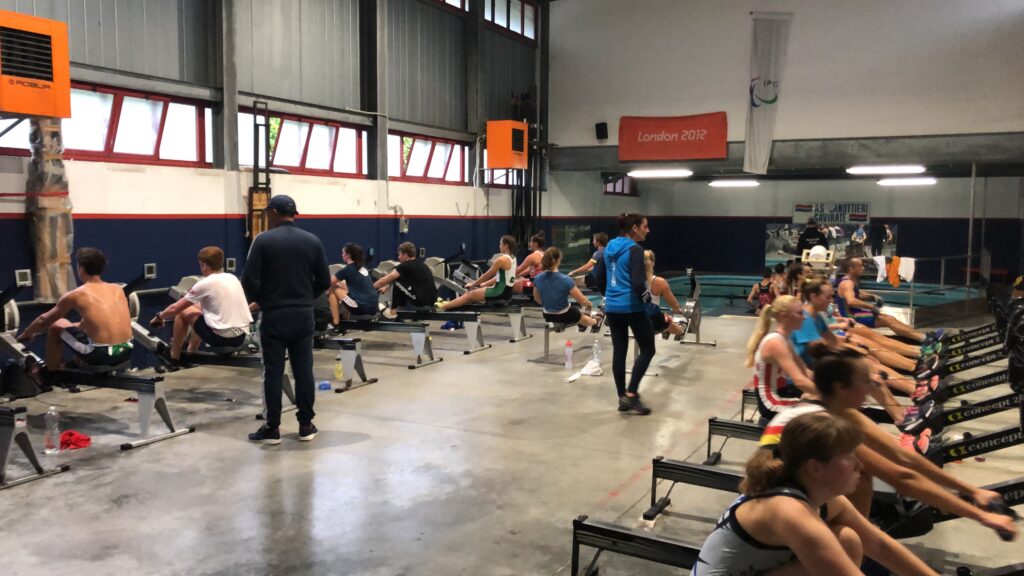
    Gavirate Rowing Club 2020. Photo WH Chambers.

    Original article by Andy Blow, BSc Honours degree in Sports and Exercise Science from the University of Bath, Precision Hydration (2020). Precision Hydration support our newsletter subscribers with 10% off all purchases, when you use the discount code; Faster10 at checkout. www.precisionhydration.com

    Indoor training can be viewed as an unfortunate but necessary evil by some athletes, while others relish the opportunity to get in the ‘Pain Cave’ and log those hours on the turbo trainer or treadmill.

    There’s often an impressive (and slightly dangerous) pool of sweat on the floor whenever I’ve finished an indoor training session. So, does that puddle mean I sweat more when training indoors than outdoors? Let’s find out…

    The effects of heat on sweat rate 

    The body controls core body temperature (CBT) to keep us alive and functioning, and we sweat when our CBT rises above a certain point.

    The heat given off by working muscles has the greatest influence on CBT when exercising, so how hard you’re working has a massive impact on your sweat rate and more so than body fat, weight and overall size. This was emphasised by the findings of a recent study.

    So, the average indoor workout is probably more intense than an outdoor session because we generally go for ‘quality’ over ‘quantity’ (unless you really enjoy being in your ‘pain cave’ for hours and hours on end). Therefore, this results in a higher sweat loss per unit of time.

    Air Flow and Temperature

    Two other important factors which will impact on how sweaty you get when training indoors are Air Flow and Temperature:

    Air Flow

    When outdoors, you’re moving through air so you get some airflow past the skin. Air movement causes heat to be drawn away from the body’s surface more effectively (via convection and sweat evaporation) and this cools you.

    On a static bike or treadmill, you lose this airflow and the sweat tends to drip off you, making you more aware of it. And as there’s no natural cooling effect, you probably actually do sweat a little more to compensate too (unless you attempt to mitigate the lack of air flow by adding a fan to your indoor ‘Pain Cave’…).

    Temperature

    Your body tries to offload heat to the environment when you’re training. The bigger the gradient between the air temperature, and the lower the humidity, the easier it is for heat to be evaporated away. As many places we train indoors are already quite warm and humid, the gradients for heat loss and evaporation are less pronounced than outside, and this further hinders thermoregulation and drives sweat rate up.

    So, whilst you don’t necessarily sweat significantly more indoors than outdoors, there are reasons why total sweat loss might be higher some of the time.

    Tips for staying hydrated during indoor training

    There are five simple steps you can take to ensure that you are well hydrated for your daily indoor training session…

    Before: Arrive well hydrated

    As we mentioned earlier, most people’s indoor training sessions are short and intense as we go for the old ‘quality over quantity’ approach. So, it’s important to make sure you start hydrated by doing some form of preload as this will maximise your ability to thermoregulate by sweating.

    Aim to drink around 500-750ml (16-25oz) of plain water mixed with a strong electrolyte drink (we recommend PH 1500) a few hours before you start your session. Use a bit of trial and error over the course of a few sessions to refine this approach.

    Before: Don’t overdo your fluid intake

    Having said that, there’s no need to go overboard on fluid intake in the immediate build-up to your session. Just try to stick to good hydration practices on a day-to-day basis.

    Before: Add sodium

    If you do find yourself low on fluid leading up to a session, it’s a good idea to add additional sodium to your drinks in the preceding hours as this maximises absorption of the fluids you do consume.

    During: Drink to thirst during the session

    This comes back to the ‘don’t overdo it’ point. Ultimately, don’t interfere with what you’re actually there to do (i.e. get sweaty on the turbo or treadmill) by trying to taking on unnecessary amounts of fluid.

    Don’t forget to stay on top of your hydration when training indoors and following these simple steps will help keep you hydrated correctly and able to perform at your best.

  • Monitoring HRV to understand how you are responding to stress.

    Monitoring HRV to understand how you are responding to stress.

    I have in the past experimented with monitoring HRV to understand both how I’m responding to training (stress) and recovery (rest) to optimise my training response and avoid overtraining. So far, I’m still learning and building up a baseline. I’m researching different sources of information and will share these with you.

    Sharing original article found at the Oura website. Author: Oura Team  February 12, 2020

    Stress vs. Rest

    When stressful thoughts consume your day, it can feel as though stress is strictly a mental problem. The reality is that stress materializes as both emotional and physiological symptoms—your brain and body are inseparable.

    Whether you are running from a lion or preparing for a presentation at work, your brain and body share a single response system for all stressors—the autonomic nervous system (ANS).

    Knowing how your body uses the ANS to react to different situations can help you build awareness and identify practices that transform your stress reaction into a reasoned response.

    The ANS functions like a tug-of-war game between two subsystems: your activation (sympathetic nervous) system and your rest (parasympathetic nervous) system. Both regulate essential body functions like heart rate, respiratory rate, and digestion.

    Your sympathetic nervous system is well known as the driver of your activating, fight-or-flight response, while the parasympathetic nervous system kicks in during calmer moments as your rest-and-digest network.

    Both systems dial their activity up or down based on messages from your brain and spinal cord. These systems can be active at the same time, or one can take over and dominate the other.

    When activated, they trigger a cascade of changes in your body:

    If your fight-or-flight system starts to dominate, there are some rest-and-digest functions that stop altogether, while others simply scale back.

    Your rest-and-digest system has multiple players (e.g., your heart, lungs, liver). If your fight-or-flight system dominates, some parasympathetic players quit (e.g., digestion pauses while you’re running). Others may use a different tactic; for example, as you warm up for a jog, your body will shift its temperature-regulating strategy and reroute blood from your internal organs to your skin in an effort to shed heat.

    Finding Balance

    Life’s stress levels naturally fluctuate. When your body remains in a stressed-out, fight-or-flight mode, it can take a serious toll on your health by slowing your recovery time, weakening your immune system, and impacting your mental state.

    Our ANS was designed to help us deal with brief episodes of high-intensity stress (e.g., running from a predator), but our modern lifestyle contains multiple chronic stressors that rarely shut off (e.g., job pressure, balancing childcare and work, sleep deprivation, and constant device stimulation).

    It’s all about balance. You don’t want your fight-or-flight system to be in a constant state of activation, but you also don’t want it to remain inactive—it is essential for your survival ability to respond to stress as well as maintain your body’s equilibrium.

    Managing Your Stress

    We are often unaware of the tug-of-war inside our ANS because it functions involuntarily and reflexively. Becoming more in tune with the physiological effects of stress can help you regulate your response or deploy strategies to bring you back into balance.

    Check out these tips to identify and reverse imbalances sooner:

    • Become more self-aware: Techniques like meditation can help you become more in touch with how activated or relaxed your body is. Taking a moment during the day also offers an opportunity to reset imbalances when you sense them and may even improve your sleep.
    • Sense imbalances sooner: Consider how wearables, like Oura, can give you the opportunity to follow patterns of stress within your body and measure their impact more objectively. You can even see your body’s ANS balance and reduce stress by monitoring your heart rate variability.
    • Improve your resilience: Increasing your fitness level and improving your sleep both boost your body’s ability to bounce back from stressful periods. If you’re looking for ways to rest and restore, consider these ideas.

    References

    • Stults-Kolehmainen, Matthew A., and John B. Bartholomew. “Psychological stress impairs short-term muscular recovery from resistance exercise.” Medicine and science in sports and exercise 44, no. 11 (2012): 2220-2227. (link)
    • Morey, Jennifer N., Ian A. Boggero, April B. Scott, and Suzanne C. Segerstrom. “Current directions in stress and human immune function.” Current opinion in psychology 5 (2015): 13-17. (link)
    • Slavich, George M. “Life stress and health: A review of conceptual issues and recent findings.” Teaching of Psychology 43, no. 4 (2016): 346-355. (link)
  • Cracking the Athlete’s Brain

    Cracking the Athlete’s Brain

    Researchers are showing everyday athletes how to train their brains to perform like the pros


    Original article by Alex Hutchison, Outside magazine, Dec 30, 2013

    It goes without saying that Olympic athletes need to be strong, fit, and tough. But none of that matters if they aren’t capable of adapting quickly to unexpected circum-stances. Take former Slovenian swimmer Sara Isakovic. During the 2008 Beijing Olympics, with one length remaining in the 200-meter freestyle final, disaster struck. Isakovic misjudged her final flip turn, and as she uncoiled her legs to explode off the wall, she could feel her toes just barely graze it.

    “I remember thinking, This is not happening! Why now?” Isakovic, 25, recalls. “Then, in a split second, I was able to refocus.” Riding on a surge of adrenaline, she tore down the last length to nab a silver medal, breaking the previous world record and missing gold by just 0.15 seconds.

    Isakovic is now a research assistant in psychiatry at the University of California at San Diego, where she works with Martin Paulus, a leading player in the search for brain–training techniques that will enable the rest of us to develop elite-level mental agility. Says Isakovic, “What we’re interested in is how you build resilience, how you train your brain to be as tough as your body.”

    For the past five years, Paulus and his team have employed advanced imaging tools to understand the difference between normal and ultra-resilient brains. They’ve discovered that the distinction often resides in the interplay between two areas: the insular cortex and the medial prefrontal cortex, or MPC. The insular cortex monitors data from the outside world and from within the body—muscle tension, glucose levels, blood pressure, blood-oxygen levels. The MPC, meanwhile, decides how strongly to respond to those signals.

    The goal, then, is to train your brain to anticipate, and not overreact, to unexpected stress. For a whitewater kayaker, that means staying calm and making the right strokes after getting caught in a hole; for a runner, it means pushing through the pain to stay on pace late in a race.

    In a series of studies starting in 2009, Paulus and his colleagues put hardened Marines, elite adventure racers, and regular Joes through various cognitive tasks while monitoring their brain activity in real time with an fMRI scanner. To provide an “aversive stimulus”—a scaled-down version of the stress they’d experience when coming under enemy fire or taking a wrong turn during a multi-day race—the researchers occasionally interfered with subjects’ breathing, restricting airflow to masks they were wearing.

    The subjects knew the sensation was coming but not always when. Some members of the control group panicked and had to be removed from the scanner, but the Marines and the adventure racers handled the scenario with ease. In the fMRI scanner, they showed higher activation in the insular cortex immediately before the restricted breathing started. They had, essentially, prepared themselves for the unpleasant sensation. Then, while it was happening, the same region of the brain showed lower activ-ity and carried on with business as usual. “That kind of anticipation and preparation is critical,” Paulus says.

    The goal, then, is to train your brain to anticipate, and not overreact, to unexpected stress. For a whitewater kayaker, that means staying calm and making the right strokes after getting caught in a hole; for a runner, it means pushing through the pain to stay on pace late in a race. Paulus believes that neurofeedback training, in which subjects try to alter their resiliency-related brain patterns based on real-time data from an fMRI scanner, is not far off.

    For now, the most promising technique is one that’s already familiar to many professional athletes: meditation. Paulus’s latest study put 30 Marine recruits through a program in mindfulness, an approach to self-awareness with roots in Buddhist teachings. “You learn to monitor how your body actually feels while suspending judgment about it,” Paulus explains.

    In the study, subjects followed an eight-week course that taught simple breathing exercises, sitting and walking meditation, yoga, and techniques like “body scans,” in which they focused awareness on each part of their bodies, progressing from head to toe.

    Brain scans before and after revealed that the trainees acquired some of the same brain patterns that the Marines and adventure racers had shown in the earlier experiments. More surprising, the changes persisted a year later. The biggest effects were in the MPC, which moderates knee-jerk responses to external stimuli.

    Of course, there are many routes to the same goal. “There are similarities between mindfulness and the state of focus that athletes achieve through long hours of repetitive training,” says Christopher Bergland, a triple-Ironman champion who covered 153.8 miles to set a 24-hour treadmill world record in 2004. That state of mindfulness helped him push his endurance to new levels, he says.

    Isakovic, too, certainly honed her ability to listen closely and dispassionately to her body’s feedback during the many years and countless hours spent staring at the bottom of a practice pool. But with the tools of neuro-science, the process can be made more efficient and accessible, Paulus believes. “We can’t all be Olympic athletes, that’s clear,” he acknowledges. “But if our brains are trained properly, we can do amazing things beyond what most people imagine.”

    You may want to try out the Head Space or Calm apps to get an easy introduction to meditation.

    https://www.calm.com

    https://www.headspace.com

  • The Physiology of the Finishing Kick

    The Physiology of the Finishing Kick

    What can we learn from the studies done on other sports like running, and how does this potentially apply to rowing? We see crews that bolt out of the start and hold a fast pace all the way (Aussie Men’s 4-) and the Kiwi Pair that settle into a relentless pace and simply grind through the field. And there are the famously fast finishes from Olaf Tufte in 2008, and Damian Martin at the Rio Olympics. Which approach is the most successful? Alex Hutchinson provides a nice perspective and review of the emerging literature over the last years. I hope you enjoy the read.


    Original article written by Alex Hutchinson, Jan 26, 2021.

    If even pacing is so great, why do the best runners in the world always seem to have another gear at the end?

    I used to see my finishing kick as a sign of toughness. Nobody passed me in the closing stages of a race, I’d tell myself, because nobody wanted it more than me.null

    But as time went on, I began to see it from a different perspective. No matter how a race played out, whether it was fast or slow and whether I was way ahead or way behind, I would always manage to sprint the last quarter-mile or so. Why did I always have energy left for a sprint, even if I’d been dropped by the leaders? Shouldn’t I have used that energy to avoid being dropped in the first place? Eventually, my kick became a source of frustration. I tried to race hard enough that I’d have nothing left for a kick, but I almost never managed it.

    As a result, I’ve always been fascinated by attempts to unravel the physiology and psychology of the finishing kick. The most recent addition: a study in Medicine & Science in Sports & Exercise, led by graduate student Rafael Azevedo at the University of Calgary under the direction of Juan Murias and Guillaume Millet, using an interesting new methodology to tease out levels of fatigue in the brain and body before and after the finishing kick.

    Some important background: I always come back to a 2006 study by University Cape Town researchers Ross Tucker, Michael Lambert, and Tim Noakes that analyzed pacing patterns in a century’s worth of men’s world record performances over distances between 800 and 10,000 meters. As I discussed in more detail here, they observed a remarkably consistent U-shaped pacing template for races longer than 800 meters, featuring a fast start, even-paced middle, and fast finish, as shown in this graph:

    finishing-kick-chart-1.jpg
    (Illustration: International Journal of Sports Physiology and Performance)

    The presence of a finishing kick even in elite athletes running at world-record pace, they argued, reflected a hardwired tendency to maintain a physiological reserve during intense exercise. In other words, it was evolution rather than cowardice that made me hold back energy for a sprint.

    This big-picture explanation makes intuitive sense, but actually unraveling what’s going in your body at different stages in a race has turned out to be more complicated than expected. To that end, Azevedo’s new study involved 12 male volunteers performing a series of 4K cycling time trials. The trials lasted a little over six minutes on average, and as expected they followed a U-shaped pacing profile with a fast start, even-paced middle, and finishing sprint. On average, according to a mathematical analysis, the fast start lasted 827 meters, and the finishing kick started with 410 meters left.

    After a couple of familiarization trials, the subjects completed three experimental trials in randomized order: one in which they were stopped after the fast start, a second in which they were stopped after the even-paced section, and a third in which they continued to the finish. As soon as they stopped, they underwent a battery of tests to assess fatigue in various ways. The measurements used force sensors mounted in the pedals of the bike—a crucial detail, since fatigue starts dissipating within a few seconds. Previous experiments have involved getting subjects off the bike and then strapping them into a separate apparatus to measure fatigue, so this is a key technical innovation.

    The simplest way of measuring muscle fatigue is with a maximal voluntary contraction: you ask the subject to contract the relevant muscle (in this case the quads) as hard as possible. Using more sophisticated techniques, you can also break it down into two subcomponents. “Central fatigue” is how much the signal from the brain to the muscles has decreased; “peripheral fatigue” is how much weaker the muscle fibers themselves are when you stimulate them with electricity. The researchers performed all three of these measurements.

    The results showed a rapid increase in fatigue during the initial fast start: the max voluntary contraction dropped by 23 percent, central fatigue was 8 percent, and peripheral fatigue was 40 percent. Then things stabilized: by the end of the even-paced phase, which accounts for about 70 percent of the overall race, all three of the fatigue markers were essentially unchanged compared to just after the fast start. But after the finishing sprint, fatigue ramped up again, for example to 34 percent for max voluntary contraction.

    In other words, muscle fatigue doesn’t accumulate in a nice straight line. After the initial excitement of the start, we settle into a sustainable pace that seems to have very little impact on muscle function. The sensation that your jellied legs couldn’t take another step after a race is produced almost entirely by the finishing sprint, not by the miles that preceded it. One way to understand this is in terms of critical speed (or, equivalently, critical power), a concept I’ve written about in detail a few times recently. Your critical speed is essentially the threshold of what’s metabolically sustainable. You can run above critical speed for a while, but you’re using up your finite reserves of anaerobic capacity—and once they’re done, you’re cooked.

    If you were to run a race at a perfectly even pace, you’d use up your anaerobic capacity gradually, hitting zero as you cross the finish line if you judge it right. In contrast, what most of us tend to do is use up a chunk of anaerobic capacity at the start. (There may be good physiological reasonsfor that, since a fast start ramps up your oxygen-processing capacities more quickly.) Then we settle into a pace relatively close to critical power, where we’re only nibbling away very slowly at anaerobic capacity. Then, as we approach the finish, we use it all up with a glorious sprint.

    Sure enough, in Azevedo’s data, the cyclists settled into a pace barely above critical power for the middle portion of the race, meaning that they used most of their anaerobic capacity at the beginning and end. The big question is whether this approach is suboptimal. That’s certainly my intuition. When Joshua Cheptegei broke the 5,000-meter world record last summer, I arguedthat the Wavelight pacing lights flashing around the perimeter of the track at a perfectly even pace helped Cheptegei by enabling him to run the most evenly paced world record ever. It must be more efficient, right?

    But it’s perhaps not as obvious as I thought. Back in 2013, a study from Andy Jones’s lab at the University of Exeter compared different pacing strategies in three-minute cycling trials: the typical self-paced U-shape, an all-out-from-the-start effort, and an even-paced trial. Here’s what those pacing patterns looked like, with the amount of work done above critical power (i.e. the anaerobic capacity) shaded in grey. Panel A is an incremental test to exhaustion, B is all-out from the start, C is even pacing, and D is self-paced.

    finishing-kick-chart-2.jpg
    (Illustration: Medicine & Science in Sports & Exercise)

    The numbers indicate the total anaerobic capacity shown by the shaded areas, and there are no significant differences between them. Even pacing produced an anaerobic capacity of 12.9 kJ; self-pacing with a finishing kick produced 12.8 kJ. There’s a big difference in how these different strategies feel, though. The closer you are to emptying your anaerobic capacity, the worse you feel. “My interpretation/hunch,” Jones told me by email, “is that athletes have learnt, or know intuitively, that a pacing strategy involving an end spurt results in the same performance outcome as other strategies, BUT that this same performance can be achieved with less pain for most of the race! The athletes will be just as knackered at the end but that middle section won’t be quite so excruciatingly intolerable if they implement an end spurt strategy.”

    It’s an interesting idea. And it would explain why U-shaped pacing patterns are so ubiquitous even among the greatest runners in the world. It has always puzzled me that a seemingly suboptimal pacing strategy could produce so many world records. Even if we’re wired to pace ourselves cautiously, you’d still expect that world records would happen when athletes accidentally started too fast if having a finishing kick was really so bad for performance.

    On the other hand, as Ross Tucker has noted, the pacing in world records does seem to be getting more and more even. The gains from smoothing out your pacing may be marginal, but at that level you have to look for every possible edge. Personally, though, I find Andy Jones’s argument very tempting—because if U-shaped pacing doesn’t cost you anything, then I can start thinking of my finishing kick as a badge of pride again, rather than a mark of shame.

    Original article written by Alex Hutchinson, Jan 26, 2021

  • Training intensity for Masters Rowing with Dr Charlie Simpson

    Training intensity for Masters Rowing with Dr Charlie Simpson

    Excited to share this episode of the Faster Podcast, this time with Dr Charlie Simpson.

    Charlie is a Senior Lecturer in Sport and Exercise Science at Oxford Brookes University and well known for his publications. The Complete Guide to Indoor Rowing and Advanced Rowing.

    In this episode, Charlie and I cover the following topics and a lot more…

    • Defining training intensity
    • The holy trinity in training intensity; heart rate, RPE and power
    • Key training zones to pay attention to
    • Lactate testing
    • How to set up your season and week for training
    • Nutrition and hydration strategies
    • The Big 5 supplements that can make a real impact on performance

    It’s a long episode (99-mins) and perfect for a long indoor endurance session.

    The Complete Guide to Indoor Rowing, is the first comprehensive book to focus on this unique form of strength-endurance training. It is aimed at serious athletes, outdoor rowers and normal gym users.

    Advanced Rowing , brings together a selection of leading experts in the sport of rowing, including international head coaches from New Zealand, Norway, Switzerland, and Denmark, who have all coached crews to World and Olympic medals. Distinguished club and university coaches contribute from across the United States, Great Britain, and Australia. Between them, these coaches work with the top national level athletes in their countries and specialize in preparing them to an international competitive standard.

    Books recommended by Charlie

    • Wanted rowing coach by Brad Lewis
    • Assault on Lake Casitas by Brad Lewis
    • Thinking Fast and Slow by Daniel Kahneman
    • The God Delusion by Richard Dawkins
    • Guns, Germs and Steel by Jared Diamond

    Thank you to our Faster podcast supporters: Precision Hydration, Bont Rowing, Filippi Boats and Citius Remex seat pads. These companies want to support Masters Rowers to go Faster and offer exclusive benefits to my newsletter subscribers. To gain access to exclusive bonus offers, ensure you subscribe to my newsletter.

    https://anchor.fm/s/1f7219c8/podcast/rss

    If you’d like to connect with Charlie, you can email him at: charlessimpson@brookes.ac.uk

  • How the brain regulates performance – Faster Podcast

    How the brain regulates performance – Faster Podcast

    Conversation with Prof Tim Noakes MD

    Prof Tim Noakes, is well known in the world of sports science and considered an expert in this subject. Originally born in Harare, Zimbabwe, he grew up in South Africa, studying Medicine and Exercise Science. 

    He is the author of several books on exercise and nutrition, including the Lore of Running and Challenging Beliefs and has over 750 scientific articles, being cited over 19,000 times. 

    In 2008, he was elected an Honorary Fellow of the Faculty of Sports and Exercise Medicine (UK), and in 2015, he was made an Honorary Fellow of the Faculty of Sports and Exercise Medicine, Royal College of Physicians of Ireland in recognition of his involvement in the field of Sports and Exercise Medicine. 

    His book, Lore of Running, is considered the “bible of the sport”. Among his other published works are: Rugby without Risk; Bob Woolmer’s Art and Science of Cricket co-written with the late Bob Woolmer; his scientific autobiography, Challenging Beliefs; Waterlogged: The Serious Problem of Overhydration in Endurance Sports; Real Meal Revolution; Raising
    Superheroes; The Banting Pocket Guide and Lore of Nutrition.

    In this episode, Prof Noakes explains his Central Governor theory. How the brain regulates performance, as well as strategies the world’s best use, to tap into their pure potential.

    Books recommended by Prof Noakes

    • The Big Fat Surprise, by Nina Teicholz
    • Boat race: The Oxford revival, by Daniel Topolski 
    • The White Spider, written by Heinrich Harrer

    YouTube Links

    The Noakes Foundation

    Link to website

    https://anchor.fm/s/1f7219c8/podcast/rss