
Faster Membership
The rest of this one is for members.
This article, both twelve-week training plans, and the full library of protocols and calculators are part of Faster Membership. CHF 129 for the year.

Faster Membership
The rest of this one is for members.
This article, both twelve-week training plans, and the full library of protocols and calculators are part of Faster Membership. CHF 129 for the year.

Original article By Alex Hutchinson, New Yorker Magazine, December 12, 2014. Includes links to Podcast interviews.
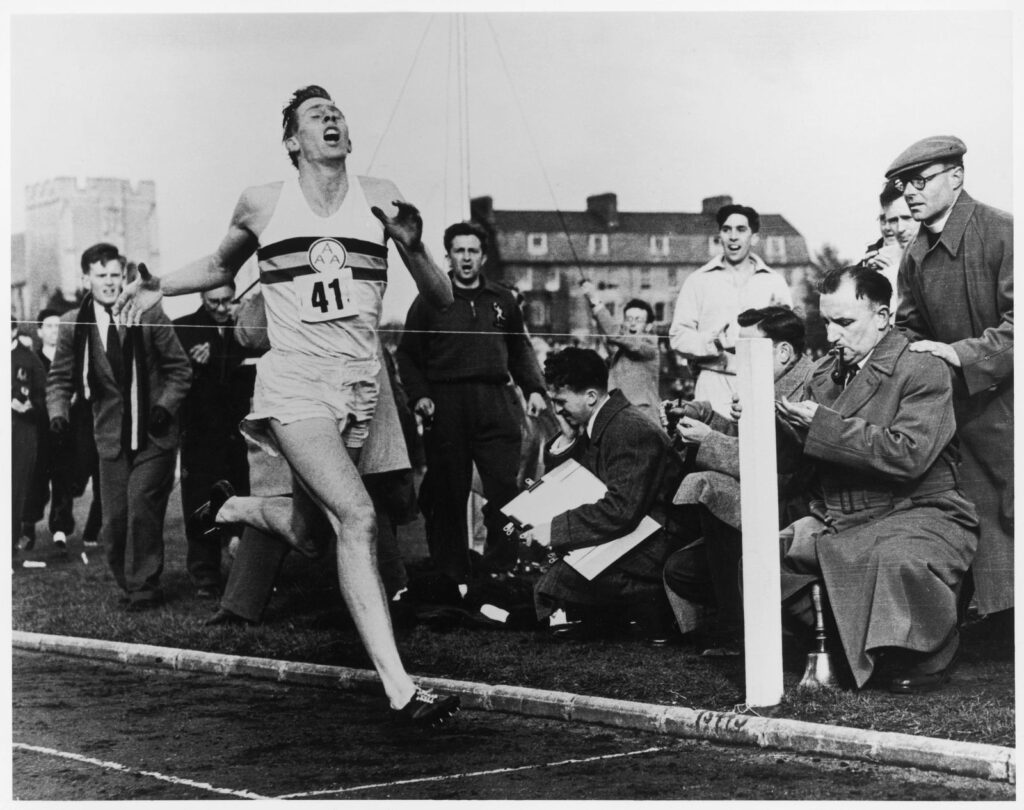
When, on a blustery day in Oxford in 1954, Roger Bannister ran the first sub-four-minute mile, measuring out the full capacity of his lungs and legs and collapsing across the finish line, he felt, as he later wrote, “like an exploded flashlight.” That was the feeling researchers were trying to evoke, recently, when they paid thirteen volunteers at Bangor University, in Wales, to pedal a stationary bike at a predetermined pace for as long as they could. Such “time to exhaustion” trials are a well-established method of measuring the limits of physical endurance, but in this case the experiment also had a hidden psychological component. As the cyclists pedalled, a screen in front of them periodically flashed images of happy or sad faces in imperceptible sixteen-millisecond bursts, ten to twenty times shorter than a typical blink. The cyclists who were shown sad faces rode, on average, twenty-two minutes and twenty-two seconds. Those who were shown happy faces rode for three minutes longer and reported less of a sense of exertion. In a second experiment, the researchers demonstrated that subliminal action words (go, lively) could boost a subject’s cycling performance by seventeen per cent over inaction words (toil, sleep).
The study, which was published last month (2013) in the journal Frontiers in Human Neuroscience, by Samuele Marcora, who heads the University of Kent’s Endurance Research Group, and two of his colleagues at Bangor, Anthony Blanchfield and James Hardy, is the latest salvo in an ongoing debate about the very nature of fatigue. According to one study, fatigue is “the inability of the contracting muscles to maintain the desired force.” But what causes it? Physiologists in the early twentieth century studied exhaustion by cutting off the hind legs of frogs and electrically stimulating the muscles over and over until they couldn’t contract anymore. In 1907, the Nobel Laureate Frederick Hopkins and one of his colleagues showed that the depleted frog muscles were bathed in lactic acid. Their experiment gave rise to an enduring-and incorrect-explanation for muscle failure; scientists now know that lactate, the form in which lactic acid occurs in the body, actually fuels muscular contraction rather than inhibiting it. Nevertheless, the view of fatigue as a mechanical breakdown has persisted. You max out your ability to pump oxygen, the acidity of your blood creeps up, and the neuromuscular signalling between your brain and your muscles gets weaker: one way or another, you hit a limit.
Marcora believes that this limit is probably never truly reached-that fatigue is simply a balance between effort and motivation, and that the decision to stop is a conscious choice rather than a mechanical failure. This, he says, is why factors that alter a person’s perception or motivation (monetary rewards, for example) can affect performance, even without any change in muscle capacity. In the subliminal experiments, the cyclists’ heart rates and lactate levels rose at the same rate no matter which faces they saw, indicating that nothing had changed from the neck down. Considerations like heat, hydration, and muscle conditioning, Marcora says, “are not unreal things, but their effect is mediated by perception of effort.” In other words, they don’t force you to slow down, as happens with the failing frog muscles in the petri dish; they cause you to want to slow down-a semantic difference, perhaps, but a significant one when it comes to testing the outer margins of human capability.
Marcora calls his theory the “psychobiological model.” It’s one of several attempts, in the past decade, to incorporate the brain into the understanding of endurance. This isn’t to say that previous generations of scientists discounted the mind’s influence on physical performance; as Michael Joyner, a physiologist at the Mayo Clinic, in Minnesota, told me, “There were people talking about this stuff in the eighteen-eighties, and coming up with very good thought experiments.” The Italian scientist Angelo Mosso, for instance, showed that the muscular endurance of two of his fellow physiology professors was diminished after they had given a series of lectures and oral exams to students. In the more than a century since, researchers have tried everything from hypnosis to curare toxin to alter the correspondence between mental effort and muscular output. But only recently have brain-imaging tools such as functional magnetic resonance imaging and electroencephalography become advanced enough to allow observation of the brain during intense exercise.
Consider, for example, the sub-two-hour marathon, which is starting to look like the contemporary equivalent of the four-minute mile. Back in 1991, Joyner published an influential paper in which he combined the upper observed limits of several aspects of running performance into a calculation of the fastest possible marathon time. He settled on 1:57:58, almost nine minutes faster than the world record at the time; a discrepancy that suggested, Joyner wrote, that “our level of knowledge about the determinants of human performance is inadequate.” At the Berlin Marathon, this September, a thirty-year-old Kenyan man named Dennis Kimetto, a former subsistence farmer who started competing internationally just three years ago, set a new world record, completing the race in a time of 2:02:57-still almost five minutes short of Joyner’s prediction.
Why does fatigue prevent athletic wonders like Kimetto from closing the five-minute gap? One possibility, proposed by Tim Noakes, a professor at the University of Cape Town, is that the brain has a subconscious safety mechanism that kicks in to prevent the body from getting too close to dangerous limits. Noakes calls this mechanism the “central governor.” In his view, fatigue is a protective emotion rather than a reflection of the body’s physiological state; its action is preëmptive and involuntary. That’s why, if you go for a run on a hot day, your pace is slower right from the start-not because you’re already overheating but because you might do so later. It’s possible, Noakes might argue, that what holds Kimetto back from a 1:57:48 marathon is hardwired self-preservation.
Some clues about how this protective circuitry may work are beginning to emerge. A study published in November by researchers at the University of Utah showed that leg exercise makes the arms tired, a brain-mediated phenomenon known as nonlocal fatigue-unless you inject the painkiller fentanyl into the spine to block nerve signals travelling upward from the legs, in which case the arms are unaffected. Other studies have shown that acetaminophen, the pain inhibitor that is used in Tylenol, can boost cycling performance by some two per cent. Last year, a group of Brazilian and international scientists used a weak electric current, directed at a region of their subjects’ brains that monitors effort and pain, to produce an improvement of around four per cent in cycling endurance. In each case, altering the brain’s ability to monitor distress signals from the body seemed to increase the level of fatigue that the central governor was willing to tolerate.
Marcora views the idea of a subconscious governor as unnecessarily complicated. He cites his subliminal-messaging study as a counterargument. Seeing a smiling face for a fraction of a second doesn’t change the fact that your pulse is, say, a hundred and eighty beats per minute and your blood-lactate concentration is seven millimoles per litre. It simply alters your conscious perception of those physiological extremes. In previous studies, Marcora has used caffeine gum, motivational self-talk, and what he calls “brain endurance training”-daily doses of cognitively challenging computer tasks-to tinker similarly with the feeling of exertion. (His initial interest in fatigue research was sparked by his mother’s struggles with unexplained fatigue after a kidney transplant, a common clinical occurrence in which perception is out of synch with physiology.)
As laboratory demonstrations of the brain’s role in endurance have accumulated, the sports world has begun its own experiments. In May, Red Bull brought four élite cyclists and triathletes and two dozen researchers, led by a team of neuroscientists from Weill Cornell Medical College and Burke Medical Research Institute, in New York, to its Santa Monica headquarters. There they explored the endurance-boosting potential of transcranial direct-current stimulation, the technique used in the Brazilian study. Members of the U.S. national BMX team are testing a program that was developed by neuroscientists at the University of California, San Diego, to encourage mindfulness. Marcora, meanwhile, is in discussion with Recon Instruments, which bills its Recon Jet as “the first heads-up display for sports”-a Google Glass-like contraption that is ideal for flashing subliminal encouragement.
Of course, coaches and athletes have long known to focus their efforts on the brain. I contacted Steve Magness, a cross-country coach at the University of Houston and the author of “The Science of Running: How to Find Your Limit and Train to Maximize Your Performance,” to ask him about Marcora’s study. It was the eve of the N.C.A.A. championships, and he was at a hotel in Indiana. “It’s intriguing that a seemingly subliminal cue could impact performance,” he told me in an e-mail. But he wasn’t surprised. “That’s what coaching is all about.” For months, Magness had been preparing his runners for the critical point in a race, the moment at which fatigue threatens to eclipse motivation. He planned to look his star runner in the eye the next morning and tell him that he was ready for the challenge. “That reinforcement from a coach, if it is genuine, I’m sure has a bigger psychological effect both consciously and subconsciously than presenting smiley faces,” he said.

Interview with James Goodwin, Head of physical performance and science for the Swiss Rowing Federation. James is responsible for ensuring the Swiss Team are strong and fit, to train and race. In this episode, James shares his expertise towards Masters Rowing. James and I discuss strength and condition strategies for Masters, and answer questions from the Masters Rowing Facebook Group.


James holds a Bachelor of Science (BSc) in Sports and Exercise Science, from Sheffield Hallam University and worked as the Strength and Conditioning Coach (GB Rowing) through the Rio Olympic cycle.
This episode is supported by Precision Hydration. You can take Precision Hydration’s free online sweat test at www.precisionhydration.com and save 10% on purchases when you use the code FASTER10 at check-out.
To listen to the podcast, click on the link to the Faster Podcast below or find the Faster Podcast in your favourite podcast player.

I have in the past experimented with monitoring HRV to understand both how I’m responding to training (stress) and recovery (rest) to optimise my training response and avoid overtraining. So far, I’m still learning and building up a baseline. I’m researching different sources of information and will share these with you.
Sharing original article found at the Oura website. Author: Oura Team February 12, 2020
When stressful thoughts consume your day, it can feel as though stress is strictly a mental problem. The reality is that stress materializes as both emotional and physiological symptoms—your brain and body are inseparable.
Whether you are running from a lion or preparing for a presentation at work, your brain and body share a single response system for all stressors—the autonomic nervous system (ANS).
Knowing how your body uses the ANS to react to different situations can help you build awareness and identify practices that transform your stress reaction into a reasoned response.
The ANS functions like a tug-of-war game between two subsystems: your activation (sympathetic nervous) system and your rest (parasympathetic nervous) system. Both regulate essential body functions like heart rate, respiratory rate, and digestion.
Your sympathetic nervous system is well known as the driver of your activating, fight-or-flight response, while the parasympathetic nervous system kicks in during calmer moments as your rest-and-digest network.
Both systems dial their activity up or down based on messages from your brain and spinal cord. These systems can be active at the same time, or one can take over and dominate the other.

When activated, they trigger a cascade of changes in your body:
If your fight-or-flight system starts to dominate, there are some rest-and-digest functions that stop altogether, while others simply scale back.
Your rest-and-digest system has multiple players (e.g., your heart, lungs, liver). If your fight-or-flight system dominates, some parasympathetic players quit (e.g., digestion pauses while you’re running). Others may use a different tactic; for example, as you warm up for a jog, your body will shift its temperature-regulating strategy and reroute blood from your internal organs to your skin in an effort to shed heat.

Life’s stress levels naturally fluctuate. When your body remains in a stressed-out, fight-or-flight mode, it can take a serious toll on your health by slowing your recovery time, weakening your immune system, and impacting your mental state.
Our ANS was designed to help us deal with brief episodes of high-intensity stress (e.g., running from a predator), but our modern lifestyle contains multiple chronic stressors that rarely shut off (e.g., job pressure, balancing childcare and work, sleep deprivation, and constant device stimulation).
It’s all about balance. You don’t want your fight-or-flight system to be in a constant state of activation, but you also don’t want it to remain inactive—it is essential for your survival ability to respond to stress as well as maintain your body’s equilibrium.
We are often unaware of the tug-of-war inside our ANS because it functions involuntarily and reflexively. Becoming more in tune with the physiological effects of stress can help you regulate your response or deploy strategies to bring you back into balance.
Check out these tips to identify and reverse imbalances sooner:
References

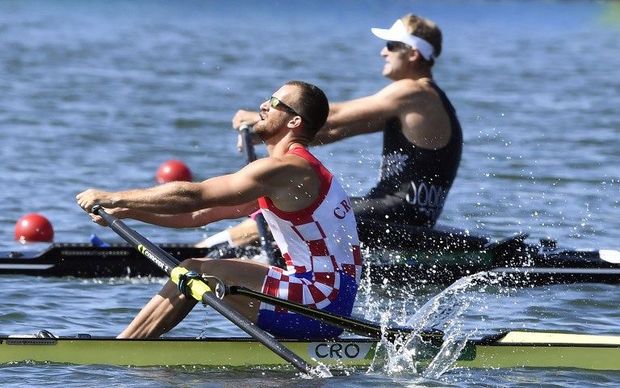
What can we learn from the studies done on other sports like running, and how does this potentially apply to rowing? We see crews that bolt out of the start and hold a fast pace all the way (Aussie Men’s 4-) and the Kiwi Pair that settle into a relentless pace and simply grind through the field. And there are the famously fast finishes from Olaf Tufte in 2008, and Damian Martin at the Rio Olympics. Which approach is the most successful? Alex Hutchinson provides a nice perspective and review of the emerging literature over the last years. I hope you enjoy the read.

Original article written by Alex Hutchinson, Jan 26, 2021.
If even pacing is so great, why do the best runners in the world always seem to have another gear at the end?
I used to see my finishing kick as a sign of toughness. Nobody passed me in the closing stages of a race, I’d tell myself, because nobody wanted it more than me.null
But as time went on, I began to see it from a different perspective. No matter how a race played out, whether it was fast or slow and whether I was way ahead or way behind, I would always manage to sprint the last quarter-mile or so. Why did I always have energy left for a sprint, even if I’d been dropped by the leaders? Shouldn’t I have used that energy to avoid being dropped in the first place? Eventually, my kick became a source of frustration. I tried to race hard enough that I’d have nothing left for a kick, but I almost never managed it.
As a result, I’ve always been fascinated by attempts to unravel the physiology and psychology of the finishing kick. The most recent addition: a study in Medicine & Science in Sports & Exercise, led by graduate student Rafael Azevedo at the University of Calgary under the direction of Juan Murias and Guillaume Millet, using an interesting new methodology to tease out levels of fatigue in the brain and body before and after the finishing kick.
Some important background: I always come back to a 2006 study by University Cape Town researchers Ross Tucker, Michael Lambert, and Tim Noakes that analyzed pacing patterns in a century’s worth of men’s world record performances over distances between 800 and 10,000 meters. As I discussed in more detail here, they observed a remarkably consistent U-shaped pacing template for races longer than 800 meters, featuring a fast start, even-paced middle, and fast finish, as shown in this graph:

The presence of a finishing kick even in elite athletes running at world-record pace, they argued, reflected a hardwired tendency to maintain a physiological reserve during intense exercise. In other words, it was evolution rather than cowardice that made me hold back energy for a sprint.
This big-picture explanation makes intuitive sense, but actually unraveling what’s going in your body at different stages in a race has turned out to be more complicated than expected. To that end, Azevedo’s new study involved 12 male volunteers performing a series of 4K cycling time trials. The trials lasted a little over six minutes on average, and as expected they followed a U-shaped pacing profile with a fast start, even-paced middle, and finishing sprint. On average, according to a mathematical analysis, the fast start lasted 827 meters, and the finishing kick started with 410 meters left.
After a couple of familiarization trials, the subjects completed three experimental trials in randomized order: one in which they were stopped after the fast start, a second in which they were stopped after the even-paced section, and a third in which they continued to the finish. As soon as they stopped, they underwent a battery of tests to assess fatigue in various ways. The measurements used force sensors mounted in the pedals of the bike—a crucial detail, since fatigue starts dissipating within a few seconds. Previous experiments have involved getting subjects off the bike and then strapping them into a separate apparatus to measure fatigue, so this is a key technical innovation.
The simplest way of measuring muscle fatigue is with a maximal voluntary contraction: you ask the subject to contract the relevant muscle (in this case the quads) as hard as possible. Using more sophisticated techniques, you can also break it down into two subcomponents. “Central fatigue” is how much the signal from the brain to the muscles has decreased; “peripheral fatigue” is how much weaker the muscle fibers themselves are when you stimulate them with electricity. The researchers performed all three of these measurements.
The results showed a rapid increase in fatigue during the initial fast start: the max voluntary contraction dropped by 23 percent, central fatigue was 8 percent, and peripheral fatigue was 40 percent. Then things stabilized: by the end of the even-paced phase, which accounts for about 70 percent of the overall race, all three of the fatigue markers were essentially unchanged compared to just after the fast start. But after the finishing sprint, fatigue ramped up again, for example to 34 percent for max voluntary contraction.
In other words, muscle fatigue doesn’t accumulate in a nice straight line. After the initial excitement of the start, we settle into a sustainable pace that seems to have very little impact on muscle function. The sensation that your jellied legs couldn’t take another step after a race is produced almost entirely by the finishing sprint, not by the miles that preceded it. One way to understand this is in terms of critical speed (or, equivalently, critical power), a concept I’ve written about in detail a few times recently. Your critical speed is essentially the threshold of what’s metabolically sustainable. You can run above critical speed for a while, but you’re using up your finite reserves of anaerobic capacity—and once they’re done, you’re cooked.
If you were to run a race at a perfectly even pace, you’d use up your anaerobic capacity gradually, hitting zero as you cross the finish line if you judge it right. In contrast, what most of us tend to do is use up a chunk of anaerobic capacity at the start. (There may be good physiological reasonsfor that, since a fast start ramps up your oxygen-processing capacities more quickly.) Then we settle into a pace relatively close to critical power, where we’re only nibbling away very slowly at anaerobic capacity. Then, as we approach the finish, we use it all up with a glorious sprint.
Sure enough, in Azevedo’s data, the cyclists settled into a pace barely above critical power for the middle portion of the race, meaning that they used most of their anaerobic capacity at the beginning and end. The big question is whether this approach is suboptimal. That’s certainly my intuition. When Joshua Cheptegei broke the 5,000-meter world record last summer, I arguedthat the Wavelight pacing lights flashing around the perimeter of the track at a perfectly even pace helped Cheptegei by enabling him to run the most evenly paced world record ever. It must be more efficient, right?
But it’s perhaps not as obvious as I thought. Back in 2013, a study from Andy Jones’s lab at the University of Exeter compared different pacing strategies in three-minute cycling trials: the typical self-paced U-shape, an all-out-from-the-start effort, and an even-paced trial. Here’s what those pacing patterns looked like, with the amount of work done above critical power (i.e. the anaerobic capacity) shaded in grey. Panel A is an incremental test to exhaustion, B is all-out from the start, C is even pacing, and D is self-paced.

The numbers indicate the total anaerobic capacity shown by the shaded areas, and there are no significant differences between them. Even pacing produced an anaerobic capacity of 12.9 kJ; self-pacing with a finishing kick produced 12.8 kJ. There’s a big difference in how these different strategies feel, though. The closer you are to emptying your anaerobic capacity, the worse you feel. “My interpretation/hunch,” Jones told me by email, “is that athletes have learnt, or know intuitively, that a pacing strategy involving an end spurt results in the same performance outcome as other strategies, BUT that this same performance can be achieved with less pain for most of the race! The athletes will be just as knackered at the end but that middle section won’t be quite so excruciatingly intolerable if they implement an end spurt strategy.”
It’s an interesting idea. And it would explain why U-shaped pacing patterns are so ubiquitous even among the greatest runners in the world. It has always puzzled me that a seemingly suboptimal pacing strategy could produce so many world records. Even if we’re wired to pace ourselves cautiously, you’d still expect that world records would happen when athletes accidentally started too fast if having a finishing kick was really so bad for performance.
On the other hand, as Ross Tucker has noted, the pacing in world records does seem to be getting more and more even. The gains from smoothing out your pacing may be marginal, but at that level you have to look for every possible edge. Personally, though, I find Andy Jones’s argument very tempting—because if U-shaped pacing doesn’t cost you anything, then I can start thinking of my finishing kick as a badge of pride again, rather than a mark of shame.
Original article written by Alex Hutchinson, Jan 26, 2021

Excited to share this episode of the Faster Podcast, this time with Dr Charlie Simpson.
Charlie is a Senior Lecturer in Sport and Exercise Science at Oxford Brookes University and well known for his publications. The Complete Guide to Indoor Rowing and Advanced Rowing.
In this episode, Charlie and I cover the following topics and a lot more…
It’s a long episode (99-mins) and perfect for a long indoor endurance session.


The Complete Guide to Indoor Rowing, is the first comprehensive book to focus on this unique form of strength-endurance training. It is aimed at serious athletes, outdoor rowers and normal gym users.
Advanced Rowing , brings together a selection of leading experts in the sport of rowing, including international head coaches from New Zealand, Norway, Switzerland, and Denmark, who have all coached crews to World and Olympic medals. Distinguished club and university coaches contribute from across the United States, Great Britain, and Australia. Between them, these coaches work with the top national level athletes in their countries and specialize in preparing them to an international competitive standard.
Books recommended by Charlie
Thank you to our Faster podcast supporters: Precision Hydration, Bont Rowing, Filippi Boats and Citius Remex seat pads. These companies want to support Masters Rowers to go Faster and offer exclusive benefits to my newsletter subscribers. To gain access to exclusive bonus offers, ensure you subscribe to my newsletter.
https://anchor.fm/s/1f7219c8/podcast/rssIf you’d like to connect with Charlie, you can email him at: charlessimpson@brookes.ac.uk


Prof Tim Noakes, is well known in the world of sports science and considered an expert in this subject. Originally born in Harare, Zimbabwe, he grew up in South Africa, studying Medicine and Exercise Science.
He is the author of several books on exercise and nutrition, including the Lore of Running and Challenging Beliefs and has over 750 scientific articles, being cited over 19,000 times.
In 2008, he was elected an Honorary Fellow of the Faculty of Sports and Exercise Medicine (UK), and in 2015, he was made an Honorary Fellow of the Faculty of Sports and Exercise Medicine, Royal College of Physicians of Ireland in recognition of his involvement in the field of Sports and Exercise Medicine.
His book, Lore of Running, is considered the “bible of the sport”. Among his other published works are: Rugby without Risk; Bob Woolmer’s Art and Science of Cricket co-written with the late Bob Woolmer; his scientific autobiography, Challenging Beliefs; Waterlogged: The Serious Problem of Overhydration in Endurance Sports; Real Meal Revolution; Raising
Superheroes; The Banting Pocket Guide and Lore of Nutrition.


In this episode, Prof Noakes explains his Central Governor theory. How the brain regulates performance, as well as strategies the world’s best use, to tap into their pure potential.
Books recommended by Prof Noakes
YouTube Links
The Noakes Foundation
https://anchor.fm/s/1f7219c8/podcast/rss

In this episode I cover the metrics that I track during a rowing season, to monitor and manage. This episode ought to be useful for anyone seeking to understand what training metrics and devices are best to improve their performance in rowing.

Faster Membership
The rest of this one is for members.
This article, both twelve-week training plans, and the full library of protocols and calculators are part of Faster Membership. CHF 129 for the year.
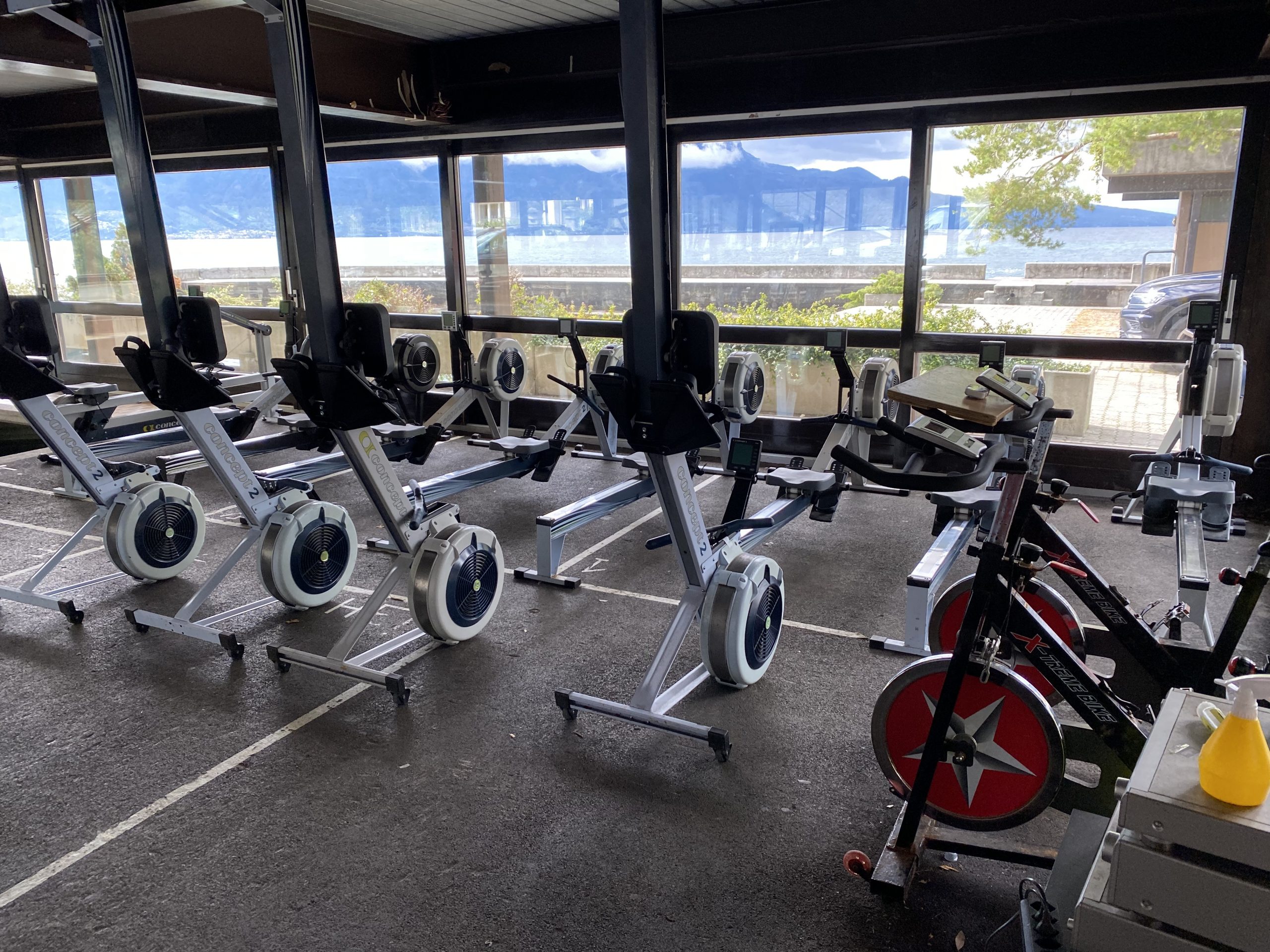
Sharing with you some of my Go To Ergo sessions from the last 6-months. Each of these sessions can be done done on the Concept2 Dynamic, Model D static or RP3 machine. I use a polarised 5 zone heart rate model to guide training intensity. More information of how to train with heart rate can be found on my online courses page, and include easy to use heart rate zone calculator tools. I like to use the Citius Remex seat pad and recommend it for those that don’t want a pain in the backside and legs after long sessions. Citius Remex offer our readers 10% discount at checkout with the code: NoAssPain2020
This is a good work out to stimulate your zone 3 and zone 4 heart rate zones. I like to do this work out in spring time, to prepare for the harder, longer zone 4 intervals.
Build up your capacity to collecting 30+ minutes in heart rate zone 4. It is not unusual to take 1-2 minutes in each interval for your heart rate to adjust and move into zone 4. I generally aim to maintain a maximum pace that I can sustain for 8 minutes, yet manage the intensity not to go into zone 5.
This is a longer and harder workout, and designed to develop your anaerobic capacity.
Great workout to get used to race pace. I like to incorporate the start sequence and transition into race pace. I also like to start at race pace and accelerate into the finish burst.