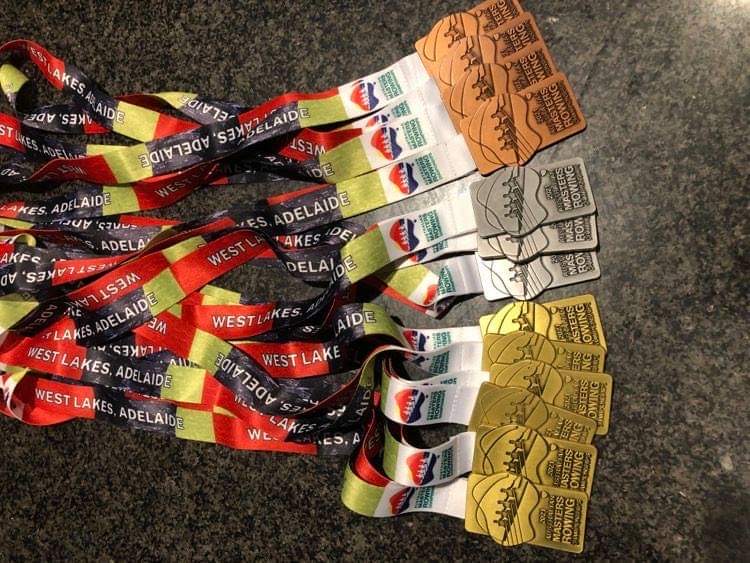
Craig is the head of rowing at Caulfield Grammar School, Victoria, Australia, and the holder of the impressive haul of Masters medals from this years Australian Masters Championships.
On the Erg. Aerobic intervals. Sets of 500m on 1 min off at T2. Rate 27-29. Do them in sets of 10 and accumulate 12-15km worth of 500s. I challenge the masters to do 1 for every year of age.
Strength & Conditioning with James Goodwin
James is the head of sports performance for the Swiss Rowing Federation. In this short video, James demonstrates a real favourite of mine, the bent over row.
What an amazing Olympic Games and an amazing Olympic Rowing Regatta for Australia. The most successful Olympic Games for Australia in quite a while. With 17 Gold medals, (2 Gold and 2 Bronze in rowing) and 46 medals in total, Australia finished 6th on the Olympic medals table.
How is it that a country with 26 million people achieved such success?
There are some lessons to be learnt in how high performing teams, prepare for success. I found this article over the weekend. Thought that you would appreciate insights into how Australian Rowing Team prepares for success.
Original article; Behind High Performance Teams, Australian Olympic Committee, by Catriona Dixon, published on 13 August 2021.
Australian Womens 4- 2020 Olympic Champions
Beyond the emotional victories and heart-warming medal ceremonies we’ve witnessed at the Tokyo Olympics, there are lessons to be learned from the way our elite teams prepare for sustainable success.
In a three-part series, we talk to some of our most successful coaches to gain an insight into the secrets behind high-performing teams. Today we spotlight Rowing Australia.
When Bernard Savage made a phone call to Rowing Australia Women’s Head coach John Keogh right after the NSW Premier held her daily Covid-19 press conference, he didn’t mince his words: “I think we might need to get the girls out today.”
With Sydney at the early stages of a Covid outbreak, the Performance Director for Rowing Australia knew he would need to act quickly to avoid disruption to the final weeks of the national team’s Olympic preparation.
Within hours, the rowing shells were on trailers heading from Penrith to their final training base at Rockhampton, (1,500 km north of Penrith) athletes were packed for their seven-week trip and on the road to Canberra. Later that night they would fly to Rockhampton – all four days earlier than expected.
“This doesn’t happen without trust,” Savage said of the feat which would have left even the world’s leaders in logistics in awe.
“Our athletes trusted we were doing the best thing for them to get them to the Games. It was a reflection on the work we’d done to ensure they had complete trust in the leadership and operational management of our program.”
ADELAIDE, AUSTRALIA – JUNE 13: Athletes pose for a photo during the Australian Rowing Tokyo Olympic Games Team Announcement at the Adelaide Oval on June 13, 2021 in Adelaide, Australia. (Photo by James Elsby/Getty Images for the Australian Olympic Committee)
Trust, that is the secret to a high-performing team, according to Savage who helped Rowing Australia to two gold and two bronze medals at the Games, and it’s something he believes needs to be at the heart of all teams, in sport or in business.
The data speaks for itself. From a team of 38 athletes and nine qualified boats, they won four medals, made six A finals and three B finals.
“Trust is the foundation for how our teams perform well,” he said.
“The things people talk about often like communication flow off a strong foundation of trust. It takes time to develop and to sustain, a level of trust; the ability to have open and honest conversations, to have conflict, and conflict isn’t always a negative thing.”
So how do you develop trust, considering the diversity of workplaces, the disconnection of teams with many people working from home, the challenge and fatigue from the Covid-19 pandemic?
“It’s about making sure you have open and transparent discussion about how to be better,” he says.
“If you have trust people bring their very best to the table and feel confident and comfortable that they’re able to be their true self and put their views forward.”
“Any team that’s going to function well and be successful, has to have that strong foundation of trust. If you don’t have that people aren’t going to commit themselves fully to the process and that’s obviously got a huge impact in the outcome.”
TOKYO, JAPAN – JULY 28: Alexander Purnell, Jack Hargreaves, Alexander Hill and Spencer Turrin of Team Australia celebrate winning the gold medal during the medal ceremony for the Men’s Four Final A on day five of the Tokyo 2020 Olympic Games at Sea Forest Waterway on July 28, 2021 in Tokyo, Japan. (Photo by Naomi Baker/Getty Images)
To develop a culture of trust, Rowing Australia relies on constant communication, reviews, feedback, and small group consultations within individual teams, to provide a safe place for individuals to thrive as part of a bigger team.
This is normally done in crew groups, with coaches and athletes alike, playing a key role in promoting open communication in an authentic and positive environment.
To facilitate this, and as part of their strategy to become the number one rowing nation globally, Rowing Australia set up two national training centres at the end of 2017 with the men based in Canberra and the women in Penrith.
The training centres aim to provide more stability for athletes to enable them to plan their education and employment, access to world-class coaching and facilities and a competitive daily training environment.
They are also seen as integral to building a culture of unity and collaboration within the sport.
Savage believes the days of “I say, you do” are long gone when it comes to sustainable high-performance.
“You need to be genuine in the way you conduct yourself and you need to understand and be respectful of the diversity you have within your group,” he says.
“This comes from understanding that everyone’s going to bring something to the table. If you want people to commit themselves to a process, striving towards an outcome, they need to feel like they’re being accepted for what they bring.”
“Communication is core: the fact I can accept who you are and what you’re bringing to our team. It’s about being authentic. It’s about constantly talking, constantly reviewing.”
“It’s having people understand and feel comfortable that they’re able to engage and not be afraid to challenge the status quo or put forward an idea or to ask a question about why we’re doing something.”
As the rowing team basks on its success in Tokyo, the entire Australian Rowing network, including staff, athletes, families, sponsors and stakeholders, can look back with exhausted pride at what was a tumultuous Olympic preparation.
Over a period of 18 months, they were forced to relocate their national team to Tasmania due to bushfires, find innovative race practice alternatives due to no international travel and deal with constant uncertainty and disruption of the pandemic.
“Our results are testimony to the strength of the program we developed over five years,” Savage said.
“In a crisis or under pressure, you need to remain calm and clear-headed because you need to make the right decision.”
“Those decisions can only be based on the information you have at the time; 20-20 hindsight is a wonderful thing, but you just have to make the best decision you can make at the time with all the information you have.”
“Then you need to execute that decision, follow through and know you have got the entire team’s trust to do the best thing you can for them.”
The secret to a high-performing team according to Rowing Australia? Quite simply: Trust.
“Time Contracter” is 60 mins with 6 mins easy pace (e.g. UT2 and 4 mins moderate effort (UT1/AT) until the clock hits zero (so six intervals of 4 mins by the end)….If doing on the erg, during the final 2 mins of both the 6min easy and 4 mins moderate…..flick the monitor to watts and aim to keep a high stroke to stroke consistency such that every stroke is +/- 3 watts of the target value for the section….For example, if the target UT2 pace is 200 watts….then every stroke in the final 2 mins of the 6 min section should be between 197 and 203……It’s easy enough to count the number of missed target strokes …..a goal is to keep this to no more than 3 missed strokes per minute…
Charlie is the Senior Lecturer in Sport and Exercise Science and Global Partnership Lead for Faculty of Health and Life Sciences at Oxford Brooks University, and the co-author of Advanced Rowing and Indoor Rowing.
Strength & Conditioning with James Goodwin
James is the head of sports performance for the Swiss Rowing Federation. In this short video, James demonstrates the goblet squat.
In this podcast episode, I chat with the amazing masters crew that set the masters record at the Head of The Charles Regatta (HOCR). The Wallingford crew of Mike Edge, Pete King, Steve Pearson and stroke, Richard Smith – coxed by Sara Ball, won the 2016 regatta by 30-seconds, with a new course record of 17mins 5 secs.
From right to left; Mike Edge, Pete King, Steve Pearson and stroke, Richard Smith – cox Sara Ball
The crew share how they trained and prepared for the race. Everything from engaging a new coach, and partnering with an amazingly talented cox. How they used YouTube to get used to the bends and bridges, to mapping the race distance and course on their local stretch of water in Wallingford, Oxford.
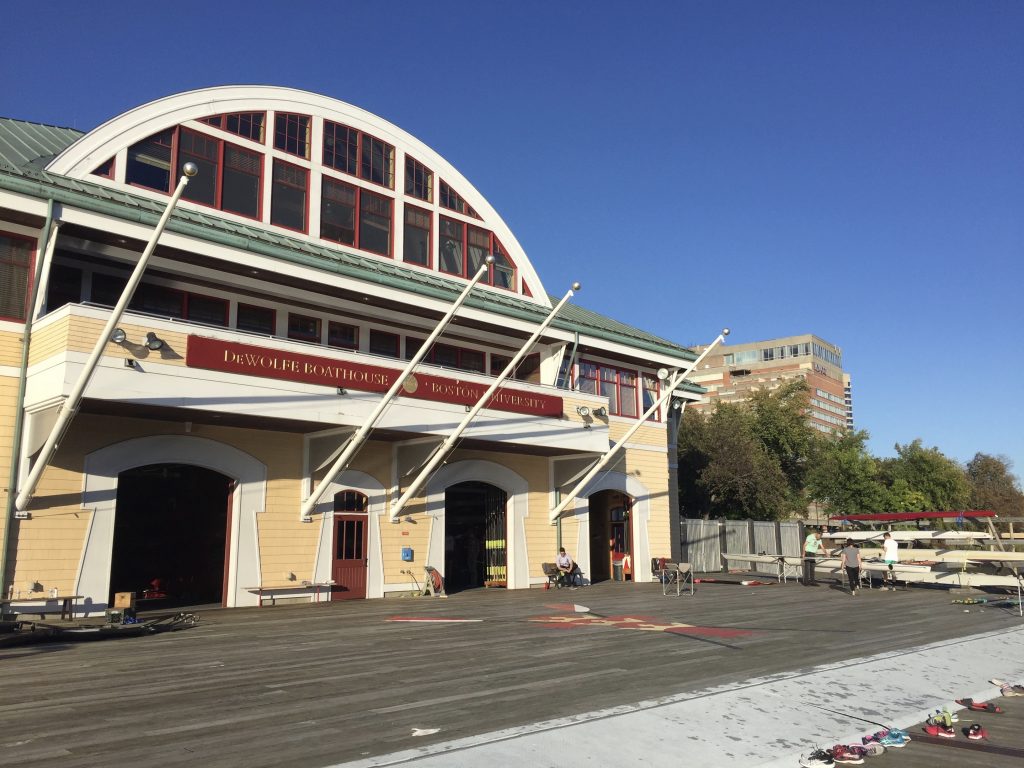
Boat used was a Filippi coxed four out of Boston University.
If you are a Masters Rowers, and interested in training for the Head of The Charles Regatta, I have prepared training plans especially for you. Whether you are planning to race in Boston, or compete virtually, these plans will help you to be at your best. The plans are designed by the most successful Masters Rowers, specifically for the Head of The Charles, and for Masters with 6 hours a week all the way to 12 hours of training a week. Click on the link to check out the programs. HOCR Training Plan
Personal favourite of mine. I call this le canibale session, because you feel like you are on the attack! This is designed for developing anaerobic capacity.
Strength & Conditioning with James Goodwin
James is the head of sports performance for the Swiss Rowing Federation. In this short video, James demonstrates the single arm row, with both feet on the ground.
James Goodwin, is the Head of physical performance and science for the Swiss Rowing Federation. James is responsible for ensuring the Swiss Team are strong and fit, to train and race.
This episode is an extract from the Live Strength & Conditioning Masterclass held earlier this year (2021), where James is presenting strategies and approaches to strength training for Masters Rowers.
Subscribe to the Faster newsletter, to get free access to the weekly workout from James, and much more.
Analysis provided by expert guest contributor, Dr Valery Kleshnev, Biorow.
Radical changes were observed in the race strategy, which is now much more even. The winners were among the slowest at the first 100-150m after start, but significantly faster than their competitors during the middle of the race.
A strong cross-tail wind allowed for quick times on Tokyo’s Sea Forest Waterway, despite fairly rough water. Six World best times were set (W8+ ROU, W2- NZL, LW2x ITA, LM2x IRL, W4x CHN in FA, M4x NED in FA), all on Wednesday 28th July. This made it the second fastest World regatta since 1993, only 0.3% slower than Worlds- 2014 (Amsterdam).
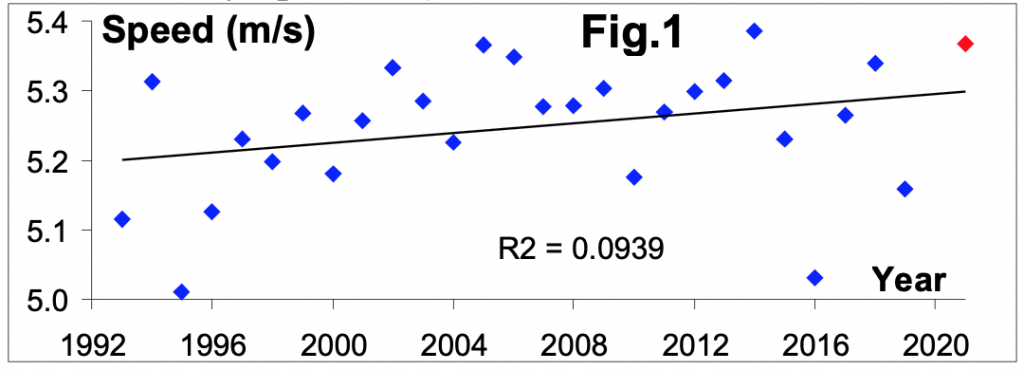
Fig.1, the average speed in 13 consistent Olympic boats. (Kleshnev 2021)
The linear trend during 1993-2021 grows by 0.065 %/year (0.0035 ms-1/y). W8+ continues to show the highest speed increase (0.18%/y), significantly higher than in the next M8+ (0.13%/y) and LW2x (0.10%/y). The lowest trend (Table 1) was found in women sculling boats (0.03%/y).
Table 1. Growth of winners’ speed during 1993-2021 (Kleshnev 2021)
More detailed analysis in scrolling decades (RBN 2020/08) also shows continuous growth during the last two decades (Fig.2) with the latest value +0.045 %/y.
Speed Growth (%/year) (Kleshnev 2021)
The average stroke rate in the 12 Olympic boat types (Table 2) was 39.0spm, which is 0.6spm higher than in the previous Worlds-2019 in Linz and similar to Worlds-2018 in Plovdiv. This is possibly weather-related: faster speed allows for a higher stroke rate.
Table 2. Average stroke rate in finals A in 12 Olympic events in Tokyo-2021 (missing data for M2x and M4-)
The differences in the rate between finalists were insignificant: only ±0.2spm within the first four place- takers, though 8 out of 12 winners showed lower average stroke rate than their silver competitors.
(Kleshnev 2021)
Radical changes were observed in the race strategy, which is now much more even. Two years ago in Linz the average variation of 500m splits in A finals was 2.56% (+3.5%, -1.6%, -2.1%, +0.3%), but now (Tab.3) it is more than two times lower 1.14% (+0.8%,-1.2%,- 0.7%,+1.2%). The first 500m split was the fastest in all previous regattas, but now the last section is the fastest. As before, the winners had the most even distribution of efforts during the race (Tab.3), except the 6th place-takers.
Table 3. Speed at each 500m as % difference to the average over 2000m in finals A in 14 Olympic events. (Kleshnev 2021)
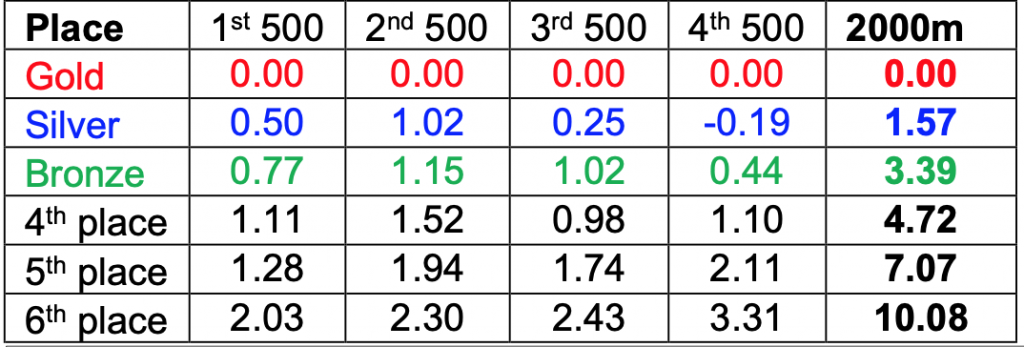
Analysing the absolute splits (Tab.4), the winners were faster than other finalists at each section, except the last 500m, where silver medallists were 0.19s faster. As before, the main advantage was taken by the winners at the second 500m, where they were about 1.0s faster than their closest competitors.
Average margins (s) from the winners in 14 finals A in Tokyo-2021. (Kleshnev 2021)
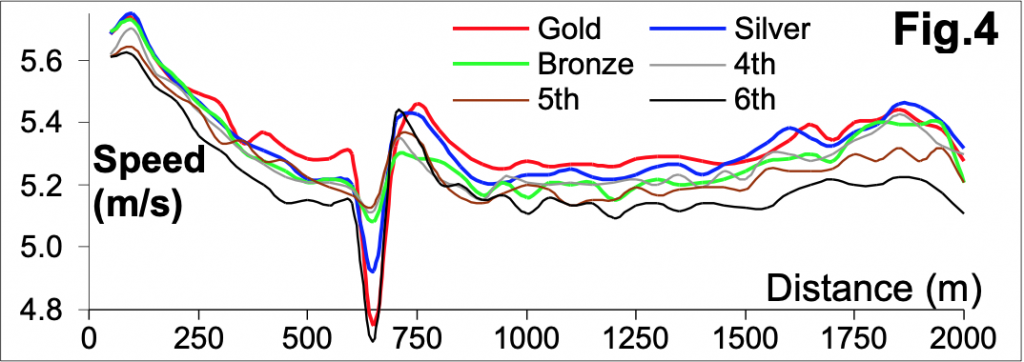
Fig.4 confirms the above conclusion with average data (12 boats) at each 50m section taken from GPS (the glitch at 650m appears to be the shielding of the GPS signal by the bridge). The winners were among the slowest at the first 100-150m after start, but significantly faster than their competitors during the middle of the race.
Dr Dan was the head physiologist at New Zealand Rowing, and responsible for designing the training sessions for the likes of the Kiwi Pair.
8 x 4 min at 103% to 105% of your Critical Power or in Zone 4 (93-95% of max heart rate) with 2 min recovery between intervals. You want to achieve at least 30 min of work in Zone 4.
Strength & Conditioning with James Goodwin
James is the head of sports performance for the Swiss Rowing Federation. In this short video, James demonstrates the Bulgarian split squat.
Bulgarian split squat, demonstrated by James Goodwin
Over head squats with a bucket of water in each hand. Fill the buckets with water, and do 4 x (8-10) squats without getting wet. Anne-Marie Boule, Swiss Rowing Federation Coach. Check out more from Anne-Marie in our podcast episode together by clicking here.
On the water or ergo
Strength endurance session. Total duration 90-minutes in zone 2 (LT1) with 30-minutes rowing/sculling with a bungee cord for resistance. For this on the ergo, substitute the bungee with fan setting 10.
My guest today, is Wendy Miller, from Mosman Rowing Club in Sydney Australia. Wendy competed in the 2019 Head of The Charles regatta, and gained 3rd place in her first attempt in the single sculls event.
I first met Wendy in 2019, as she was travelling through Europe on holidays on her way to Boston. She gave me a call to ask if she could drop by Switzerland, (as you do:-) to do a spot of training with me, before heading over to race in the US. Wendy has a great story to share, with her journey through Europe, training on a yacht whilst sailing down the Italian coast, her ingenuity to source boats, blades and boathouses to use, staying with wonderful hosts in different cities, and finding races to sharpen up before the big event. Nothing stopped Wendy on her way to racing in the 2019 Head of The Charles regatta and having a great adventure along the way. I hope you enjoy listening to her journey as much as I did.
Head of The Charles Training Plans
If you are a Masters Rowers, and interested in training for the Head of The Charles Regatta, I have prepared training plans especially for Masters Rowers. Whether you are planning to race in Boston, or compete virtually, these plans will help you to be at your best. The plans are designed by the most successful Masters Rowers, specifically for the Head of The Charles, and for Masters with 6 hours a week all the way to 12 hours of training a week. Click on the link to check out the programs. HOCR Training Plan