Tag: Rowing

  • My comeback from a catastrophic accident

    My comeback from a catastrophic accident

    Catastrophic; causing sudden and very great harm or destruction. (Cambridge dictionary 2020)

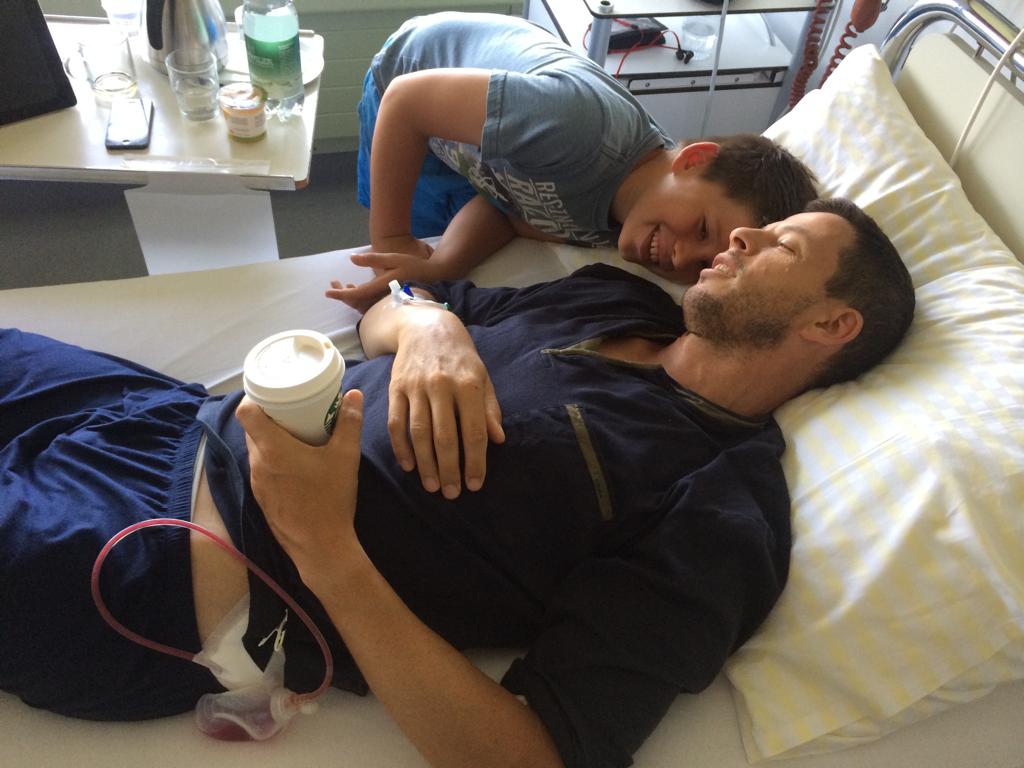
    In June 2013, I was paddling lightly to cool down, after racing the single scull (1x) in a Swiss regatta, when a men’s coxless four (4-) doing racing starts, collided head on into my back at full speed. The boat went through my back, broke two of my vertebrae, and a piece of the bow, was lodged precariously close to my spinal cord. I was catapulted into the water, and nearly drowned.

    Rushed to the hospital for emergency surgery. The doctors feared I would be paralysed, and certainly didn’t think that I would being rowing ever again.

    Over the next two years I developed an approach and later codified a system and process to get back on my feet, back in the boat, and winning again.

    I don’t mention what happened, yet my friend Emmanuel thought it was important to capture my story and share my approach to coming back stronger. Perhaps my approach can help others. Below is a link to the video. Please share with your friends and connect with me to find out more about transformational change.

  • FAQ’s & feedback from my recent post

    FAQ’s & feedback from my recent post

    Hi there,

    Thanks for all the great questions and feedback from my recent post on how always training in the middle can be costly. I have summarised most of the questions and feedback below.

    Thanks to all that have enrolled and completed the course on ‘how to create your heart rate zones for rowing.’ Please forward the course link to a friend. Course Link

    In the coming days I’ll be sending out information on my new course, ‘How to create your training plan’. I will be launching this in late May and welcome suggestions on topics you’d like to see covered.

    FAQ

    Q         Do I count the sessions of the time spent in low vs. high intensity?

    A         I count the number of sessions training in low intensity vs. high intensity. For example, I train 5-days a week, I spend 4 days training at low intensity and one day where I focus on training at high intensity. When my squad do say 7 sessions a week, they will do two high intensity sessions that week.

    Q         How long is the time required to fully reset aerobic base? During the reset period, should I be aiming for an 80:20 ratio (80% zone 2: 20% zone 4/5) or some other ratio?

    A         Between 8-12 weeks depending on the individual. My annual plan is very similar to a classical periodized plan in that I prescribe at least 8-weeks of aerobic foundation at the start of the season. During the ‘re-set’ I focus my clients on 100% zone 2 (<75% heart rate peak) until I start to see some improvement in their aerobic condition, i.e. improvement in pace or power for the same effort. After I start to see some improvement I may include one high intensity session a week.

    Q         I used to train for bike racing and used my HR zones almost exclusively so as to focus on effort and not hills or wind that affects speed. I would like to start doing that with rowing, but need to re-establish my HR zones as I haven’t done that in 10 years – on the bike. My questions are 1) what is the best way to do that for rowing 2) I want to train by HR for on the water rowing as well as erg – I’m on the water more than erg anyway. 

    A         First establish your heart rate peak on the ergo for 2k, or on the water with a 6-minute Vo2max test. From there you can set your heart rate zones from this peak and use this as a guide to your training intensity on the water, ergo or bike.

    Q         If ratio is 80:20, does it matter if I mix in some zone 4/5 with zone 2 workouts, or should they be done on separate days? Thanks

    A         They should be done exclusively on separate days.

    Q         I feel my 2k erg pace (which also needs to be redone) is not a good marker as I’m likely not working hard enough in that test. Thoughts?

    A         The 2k test should be your maximal effort. To really get motivated and to push an all out effort, re-do the test with some friends cheering you on. 

    Q         Is there guidance around about HR geared workouts as opposed to pace? Almost everything I see is based upon your “2k erg pace”. 

    A         The 2k test is there to establish your heart rate peak. Once you have your heart rate peak, you can set up your training zones and train accordingly.

    Q         Hi Bill, I am a follower of polarization training for over 4 years. I am happy with the long 18k-26k around 75% HR sculling/erging. What I am struggling about is the 10-15% red zone training. I cannot manage it without greater percent of yellow zone. What type of intervals do you use to achieve the preferable percentage? Many thanks for your help. 

    A         So what we do (masters squad) and what I do is as follows: look at the intensity of the session first of all and count these as either low or high intensity. For the high intensity I aim to accumulate between 30 – 45 minutes in zone 4 through different interval variations. My objective is to get into zone 4 as fast as possible and therefore only transition through zone 3. ntervals are a variation of 2:1 work to rest ratio. I let the squad pick and mix to keep the varsity yet a favourite is 5 x 8 minutes with 4 minutes rest between intervals. This is comfortably hard.

    Feedback on the approach

    Hi Bill. Just read your post on base training. I’ve just completed a solid 4 week blockof it. Two comparative workouts 4 weeks apart. 2nd one at same wattage but HR 20 beats lower. (Craig)

    Great case study Bill Chambers. Have you, or are you considering submitting this formally? There’s a real dearth of rowing specific research out there relative to other sports.

    Thanks this is a very good post, and spooky as well – we were just talking about this as a team. I can attest that the single biggest improvement in my 2k time was doing the long, boring sessions at 65-75% HR. Audible helps!

    Thanks for this. Improvements in aerobic capacity, not limiting carbs, is what leads to efficiency in burning fat for fuel.

    I’ve been training mainly in the middle for the last 4 seasons and last year I started feeling my shape was going under. No recover between sessions, more fatigue more pain in the body. When I started rowing at home in March I saw a video from a British rower claiming the benefits of training below AT2. After that, my club coach shared with me your Course about adjusting the training zones. Since then I’m focusing on working below AT2 as a base training.

    With no pressure from regattas to train for sprints, I’m catching up on a couple of lost autumns’ UT2 endurance work. At 71, I’m sticking to 120bpm @ 18spm – for 10k up to HM. 200k out of 260k (75%+) so far in April. Need to do another couple of months of this!! Money in the bank!! 👍

  • Train smart & stay healthy

    Masters – Keep building the base with low stress training.

    It’s so important to stay below the stress radar when everyone around is not feeling well and you are training. Train smart and accumulate enough time in zone 2 to continue to build the aerobic base yet not create too much stress signalling. Keep your immune system strong and use this time to invest in building your foundation for the delayed regatta season.

  • THE DAY BEFORE RACE DAY

    THE DAY BEFORE RACE DAY

    Being fresh with good form before a race is important – you need to get your mind and body primed and ready to race.

    The primary goal in the final day before a race is to prime the body to perform at its peak level. Making sure all the body’s interconnected systems are functioning as efficiently and effectively as possible. The neuromuscular system is sending signals back and forth quickly between the muscles and the brain. The muscles are full of glycogen and able to activate the maximum percentage of their fibres and fire them forcefully, and your heart is ready to pump oxygen-rich blood where it’s needed.

    In the days before a race, the gains you’ve made from training will stick around for some time, where in contrast, the neuromuscular system (the communication system between your brain and your muscles) requires constant stimulation because the growth and recovery cycle of the neuromuscular system is very short. The best way to optimise rowing specific neuromuscular communication, is to do a short row/erg, the day before your race with some short bursts at or near race pace. 

    What to do

    The final day before the race, row/ergo for 30-45 minutes. When you have warmed up, include two to three 10-15 stroke bursts at race pace to facilitate optimal neuromuscular coordination on race day. Allow for a 5-minute easy paddle between bursts.

    Avoid spending any unnecessary time on your feet today and get a good night’s sleep.

    Eating

    Eat a well-balanced and natural carbohydrate based meal for lunch and dinner the day before race day to maximise  muscle glycogen stores. The best time to start replenishing glycogen stores is right after your short, fast workout, when your muscles are most receptive to glucose. Keep well hydrated and sip water as desired.

    For the pre-race meal, check out my Race Day Breakfast here.

    Image from World Championship 2019, © Detlev Seyb/MyRowingPhoto.com

  • Finding the edge

    Finding the edge

    In the pursuit of excellence whether in business, sport or my personal life, I like to continuously challenge where my real or perceived limits are. I often find that when I explore a limit, I find an edge. This edge is where I start to explore, understand and challenge the belief that is defining the ‘limit’.

    Exploring where the edge can be uncomfortable. It generally challenges an existing belief, yet my desire to improve, my pursuit of excellence, drives me forward to find, explore and push this limit. I won’t find the limit unless I push the limit, push to find the edge, move with it, learn from it and find a way through it.

    An example is in preparation for the 2019 rowing season, I have challenged the Masters Rowing Squad to train differently to how they have in the past. Together we challenged the belief in the “no pain no gain”  approach to athletic improvement. (Side note; see Seiler’s Hierarchy of Endurance Training Needs 2016) On exploring what the best in the world do to go fast. we identified the key themes that define success and the supporting tactics. Some of these themes challenged general beliefs and concepts, yet instead of going with what everyone else is doing or the dogma of failed strategies, we are focusing on building up the season in a healthy, intelligent and personalised way that has proven to be successful.

    Although the squad knows the approach works, it challenges their beliefs. Together, we need to be consciously aware of what we are doing and why we are doing what we are doing. We need to be aware that our approach is challenging our belief systems and the beliefs of others around us. We need to pay attention to our thoughts and fortitude to stay the course. Simple questions like; “whats the purpose of this session”? help to bring the awareness to what we are doing and why.

    Another example may be when challenging an organisation in transformation to examine existing organisational beliefs. The old quote of ‘this is how we do things around here’ or in excusing leadership beliefs and or behaviour that are not working as ‘The Organisation’s DNA‘ need to be consciously put on the table for discussion.

    Leaders need to explore and understand how successful teams have navigated through change. The default norm of ‘telling’ people what to do and being directive simply is not as successful or effective as empowering teams with clear direction, with trust in the organisation to work it out. This may challenge existing beliefs on what it meant to be a leader and may place leaders at the edge of their beliefs and along with the ambiguity, doubt.

    “We cannot solve our problems with the same thinking we used when we created them.”

    Albert Einstein

    Like the rowing squad, leaders that acknowledge they need to work differently and consciously pay attention to their behaviour generally do. It feels different, yet when supported, leaders can gain strength in exploring the edge through cooperating and collaborating together.

    So what you say? Well in the pursuit of excellence I’m constantly looking for the edge, understanding what I need to do differently or optimising the ‘same‘ to achieve my personal and professional goals. I’m paying attention to what is making me uncomfortable and why. I’m getting feedback from close counsel on what I may need to do differently or pay attention to. I’m challenging my beliefs. I’m finding the edge…


    Excellence. The quality of being outstanding or extremely good.

    Oxford dictionary, 2019
  • Reading and listening this week

    Reading and listening this week

    Books I’m reading

    Appreciative inquiry for change management; Sarah Lewis, Jonathan Passmore & Stefan Cantore

    Long Lift; Vyacheslav Ivanov

    Swiss democracy in a nutshell

    Podcasts I’m listening to

    This is Akimbo; Seth Godin

    The Cycling Podcast

  • Nearly died this morning – no joke

    Nearly died this morning – no joke

    Its mid-January and on Lac Leman in Switzerland it’s a clear sunny morning and +1.5°. A great morning for a row with my mate Craig. Forty-five minutes later I find myself upside down in 5°water, my feet trapped in my form fitting rowing shoes, and the first thing that pops into my head is the sensation of being back at Bilgola beach and staying under a series of large waves and having to hold my breath. Stay calm and think about what you need to do next.

    Under water I eventually get my feet out and come up for air. Then take a breath and asses what just happened. I can see Craig close by looking to see if I am okay. “I’m okay mate”. I know that I need to get back in the boat and get to shore and get dry and warm fast. Craig and I figure I’ve got about 15 minutes max before I’m in danger of my body shutting down due to the cold.

    Heaving myself up onto the hull of the overturned skiff, it becomes clear what happened. The freezing temperatures had affected the locking mechanism on the gate that holds the oar securely in place. At the catch, the bow (left) oar simply popped out and I instantly had nothing in my hand and over I went.

    Paddling the boat back to shore like a large Malibu surf board, it took about 8 minutes to get to a place where I could turn the boat over, empty out the water, secure the oar in place, get in and row to the nearest harbour. Easier said than done as my feet and hands were beginning to seize up. The cold was seeping in and taking hold. Craig was clear and kept talking to me, he also was alert to where to go. We eventually got to shore, 15-minutes had passed by the time Craig heaved me out of the boat and searched for somewhere to get dry. A member of the local sailing club was alerted. Craig got me under a hot shower and called in Jeroen, another member of the crew to bring down some dry clothes. Although I was clearly showing signs of hypothermia, exhausting the hot water supply extinguished the cold and steadied the shivering.

    Today I was reminded again of how the “being” of a great team is so important. Both Craig and Jeroen went into action so fast and with clear intent, they no doubt saved me from going deeper into a dangerous hypothermic state. They stayed calm and just did what the knew had to be done.

    A little while after all of this, we are all sitting down eating breakfast and drinking coffee, laughing, debriefing the situation and learning from what happened. There was a collective consciousness between us. Its simply amazing what can be done when you have the right crew and an abundance of trust.