Tag: world rowing

  • How to keep rowing relevant. Example of how the Boat Race Organisation is adapting and leading our sport.

    How to keep rowing relevant. Example of how the Boat Race Organisation is adapting and leading our sport.

    Most will now be aware, that the 2021 Boat Races, will take place on the River Cam in Ely. After a combination of factors, including the COVID pandemic, and the closure of Hammersmith Bridge at the halfway mark of the 6,800m course, forced the organisers to take radical action. The change in venue marks a return to Ely for the first time since a series of unofficial races took place there during the Second World War. Source; Robert Treharne Jones (Dec 2020)

    Although the scale of the Boat Race event, could seem small in comparison to other major sporting events held in London, the Boat Race has an important attractor effect on people through physical visitors and also through television and digital platforms. I feel we can all learn a lot from what the Boat Race Organisation, and others like Henley Royal Regatta, The Head of The Charles, and Silver Skiff regatta, are are doing to attract and inspire people to rowing. How the organisers are understanding and translating the economic benefit of regatta, as well as learning how to televise, engage and extend the reach of the event beyond Race Day itself.

    The facts and figures used in this article have been gathered from multiple sources, including a detailed report titled; The Boat Race, Impact of a Single Day Major Event on a City, Arup & The Boat Race Company (October 2017). Link to the original report can be found at the bottom of this post.

    The Boat Race Today

    There are 250,000+ visitors each year to the river banks on Race Day, and some 7 million people watching on national television, representing 3,400 visitors and 100,000 viewers per athlete.

    In comparison the London 2012 Olympic Games had 10,568 athletes, 52 million individual viewers in the UK and 2 million visitors to London for the Games – or each athlete “attracting” 190 visitors and 4,900 viewers.

    As such, each rower at the Boat Race, “attracts” 20 times more visitors than Olympic athletes.

    The Boat Race generates 40 percent more spend per athlete than the London Olympics.

    In the spirit of sport competition, The Boat Race has always been inclusive to all visitors, with no ticketing costs to the visitor. Yet the total spend from visitors is estimated between £7 million and £8.5 million, averaging £30 per person or £100,000 per athlete.

    The visitor spend generated by the London 2012 Olympic Games was about £760 million (in the UK), averaging £1,290 per person, or £72,000 per athlete. Again, the Races have a yield per rower (based on visitor spend) 40 percent higher than the London 2012 Olympic Games.

    The Boat Race attracts 50,000 additional day-visitors to London.

    The Race attracts 200,000 visitors living in London who would not be considered additional visitors to the local area as the vast majority of them come from one of the four adjoining boroughs along the route.

    Yet it attracts over 50,000 people from outside London each year to west London.

    The direct net economic impact on the local economy is estimated between £2.1 and £2.9 million.

    The 50,000 day-visitors spend £1.4 to £1.7 million in the local economy. Whilst London-based visitors are not additional as such to London or the local area, they will likely be spending more than on their average Saturday day-out, due to the event and celebratory atmosphere.

    The direct economic impact of The Boat Race in the local economy is estimated between £2.1 and £2.9 million, with indirect contribution reaching £2.8 to £3.7 million each year.

    Multiplier Effect

    The additional spend in local businesses has an indirect impact on the wider supply chain, called the ‘multiplier effect’. In this case for every £1 spent directly, it will generate £0.30 in the supply chain.

    It is estimated that the total net economic benefit to the local area from The Boat Race to be between £2.8 and £3.7 million each year.

    Digital Spectators

    Global sport is in the process of undergoing a dramatic change in how it is presented, followed and consumed by the public. As the demographics of sport spectators moves towards people who have grown up in the digital age the appetite for ‘sport as entertainment’ and data integration have become the focus of events organisers to capture the attention of the digital consumer. In a recent report out by Deloitte, it is estimated that 85% of the workforce in 2025 will be of the ‘Millennial Generation’, a generation that is defined by their use of digital in daily life.

    Integration of technology and data into the broadcast material has enabled The Boat Race to reach out to, and maintain the interest of, a new generation of spectators. The results of online consumption are on the increase. For a small sport, at time of writing this post, the Boat Race has more than 1 Million views on You Tube, and Henley Royal Regatta nearly 10 Million views, and World Rowing 5.8 million views. Source, YouTube 2020.

    Another ‘niche’ spectator sport, the America’s Cup, has transformed itself, from an event that attracted attention within the sport – but little public interest – to an event that has a huge online following (165,000 subscribers to their YouTube channel, with over 35m views in 2017) and is broadcast live through an in-house app and subscription TV channels worldwide.

    Final Thoughts

    The Boat Race has a much larger and wider impact on the London economy, beyond the event. The Boat Race and Henley Royal Regatta, have already, and continue to transform the way they present rowing in the digital age. Both have looked to how other sports, like the America’s Cup, T20 Cricket, Golf and Formula E motor sport, have achieved success, and figured out how the success of attracting and keeping new audiences, can translate and be relevant to rowing.

    As the younger generations become the predominant spectator demographic for sporting events, integrating data analysis and real time graphic updates into the streaming and broadcast feeds will ensure that the rowing can move into the digital age. As former FISA secretary general and Henley Steward John Boultbee said, “Most people watch the World Championships and Olympic Regatta, do so via television. We need to make it more appealing for these audience to stay relevant.” You can listen to the episode with John, by clicking on the link to the Faster podcast below.

    I invite you to consider how you and I, can directly influence rowing events, to challenge and inspire regatta organisers, to explore, to test and develop ways of presenting our sport to current and future generations.

    You can access the report that I have sampled by visiting the following link on the Boatrace.org website. https://www.theboatrace.org/wp-content/uploads/Arup-Report-The-Boat-Race.pdf

    https://anchor.fm/s/1f7219c8/podcast/rss
  • Anne-Marie Howald – Swiss Rowing Team Coach

    Anne-Marie Howald – Swiss Rowing Team Coach

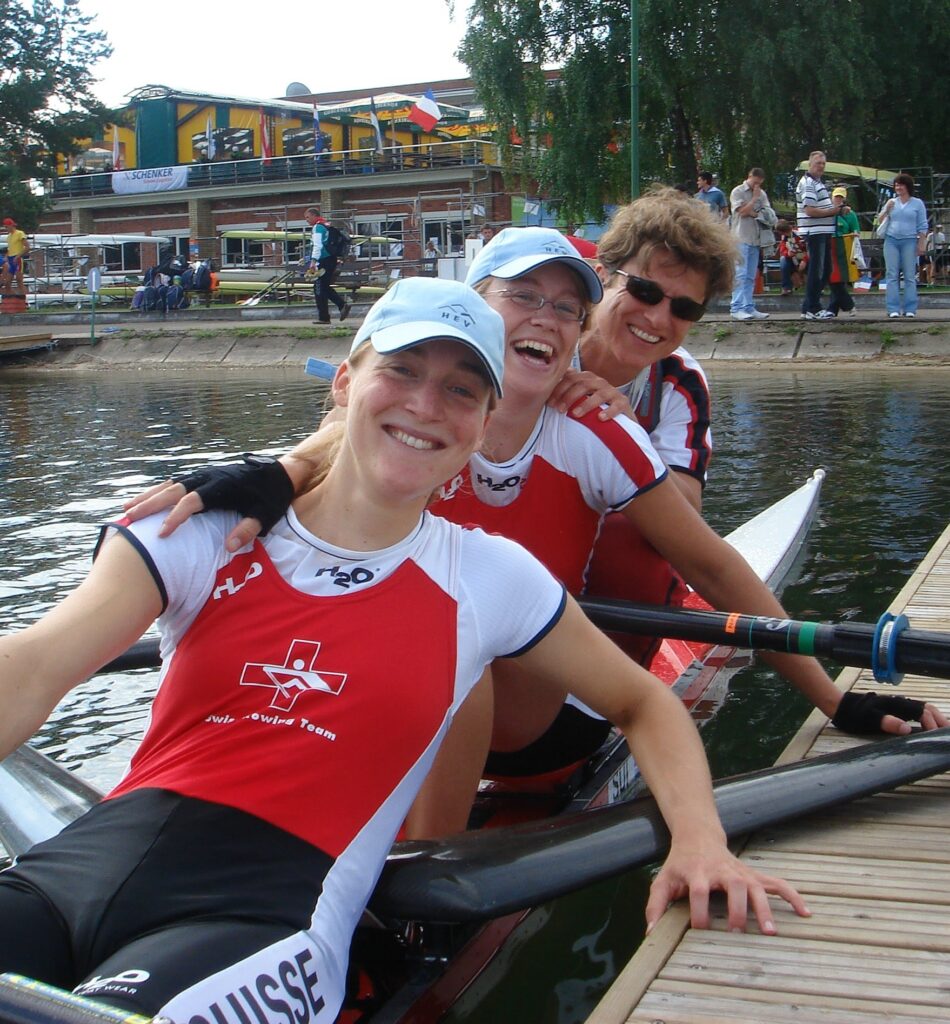
    Anne-Marie Howald is well know in the rowing world, having represented Switzerland at the 1987 & 88 World Championships as a lightweight, and now as the Head Coach of the U23 and Junior Squad.

    In 2018, Anne-Marie was awarded the “Swiss Olympic Coach Award” for the impressive achievements of the junior national team at the European Championships in Krefeld and the World Championships in Trakai.

    Anne-Marie leads the talent identification of young rowers in Switzerland, with the ‘Future Rowers’ programme that takes promising young athletes through to the Elite level. In this episode, Anne-Marie covered how she first started in rowing and how that love for rowing, and high performance, has taken her on her own journey to coaching and inspiring others. Plenty of inspiration for the listener, some ideas and tips on how to move the boat faster, along with some nice insights into her time training with the legendary coach, Harry Mahon.

    You can connect with Anne-Marie via email: annemarie.howald@swissrowing.ch

    This podcast is supported by, Precision Hydration, Bont Rowing, Filippi Boats and Citius Remex seat pads. For more information about our supporters, please ensure you subscribe to my newsletter to gain access to exclusive bonus offers.

    https://anchor.fm/s/1f7219c8/podcast/rss
  • Winter Training – Next 3-Months Training? What’s Your Plan?

    Winter Training – Next 3-Months Training? What’s Your Plan?

    Faster Membership

    The rest of this one is for members.

    This article, both twelve-week training plans, and the full library of protocols and calculators are part of Faster Membership. CHF 129 for the year.

    See what’s inside Members log in

  • Why sodium is crucial to athletes performing at their best

    Sharing an interesting article on why sodium is important for Masters Rowers to perform at our best. Original article by Andy Blow and medically reviewed by Dr Tamara Hew-Butler.

    Disclosure: Precision Hydration support subscribers to the Faster newsletter with 10% off all purchases.

    Why sodium is important

    Sodium plays a key role in how your body functions as it helps maintain fluid balance and cognitive function, so it’s important to replace the sodium you lose to some extent when your sweat losses really begin to mount up.

    2015 study found that athletes who adequately replaced the sodium lost in their sweat finished a middle distance triathlon an average of 26 minutes faster than those who didn’t.

    Whilst that sort of performance gain isn’t going to be possible for everyone, it does highlight the potential impact of getting your hydration strategy right.

    Your body contains lots of water – 50-70% of it is made up of the stuff in fact, depending on the amount of muscle and fat that you have. Around a third of that water exists outside your cells, in extracellular fluids like your blood.

    What does sodium do?

    The main electrolyte in this extracellular fluid is sodium and much of your body’s total sodium reserves are found here. This makes it rather ‘salty’ and the total volume of extracellular fluid in your body is directly related to the amount of sodium you have on board at a given time. So, more sodium equals more fluid; less sodium means less fluid.

    As well as maintaining fluid balance, sodium plays an important role in the absorption of nutrients in the gut, maintaining cognitive function, nerve impulse transmission and in muscle contraction. Basically, it’s pretty darn important.

    Most of the sodium we consume is in the form of sodium chloride, or the common table salt found in food and drinks.

    We take salt for granted these days as we’ve developed ways to make it widely available. But in the past wars were fought over access to and the control of salt, which gives you a pretty big clue as to its importance to life!

    Because your body can’t produce or store it beyond a certain point, you need to consume sodium every day to keep your levels topped up.

    Individual differences in sweat sodium losses

    Sweating is the main way athletes lose sodium and fluids during exercise. That’s basically why those of us who train regularly have different needs when it comes to replacing sodium than those who don’t.

    Everyone loses a different amount of sodium in their sweat. At Precision Hydration, we see athletes who lose from as little as 200mg of sodium per litre of sweat to as much as 2,000mg/l. I personally lose ~1,800 mg/l and I often suffered from hydration issues in hot climates as a result. It was my personal search for a solution that led to me founding the company.

    Sweat rates also vary from person to person of course; and from situation to situation for any given person (from almost nothing in cooler conditions and at low intensities, to several litres per hour during intense exercise in the heat).

    When you combine differences in sodium concentration with those in sweat rates, the potential variance in the total net sodium losses experienced from one athlete to another can be really significant, especially over a middle or long distance triathlon.

    And, in a lot of cases, those losses are many times higher than someone who’s not sweating on a regular basis. This is why the standard government guidelines for sodium consumption should be viewed cautiously by athletes. It’s more than possible to lose the daily 2,300mg of sodium recommended by the existing government guidelines in just 1 hour of exercise, if you’re sweating heavily and you’re sweating out lots of sodium. Your loses during a longer period of exercise really can be massive.  

    What happens when sodium losses mount up?

    It’s impossible to nail down the exact point at which sodium (and fluid) loss through sweating becomes a problem for an athlete. But, it’s clear that when losses reach a certain point, the effects can be detrimental to your performance.

    Your blood volume is gradually reduced as your sweat losses increase. That’s because sweat is drawn from your blood plasma. This increases the strain on your cardiovascular system, making it harder to pump blood to your skin to cool you down and to your working muscles.

    Other issues such as a general feeling of fatigue and muscle cramps can also be experienced if losses are allowed to go uncorrected for long enough, or if significant imbalances between fluid and sodium are allowed to occur. 

    Up to a certain point, taking in plain water is enough to mitigate sweat losses. But, as those losses start to mount up, you need to replace sodium too in order to avoid your blood becoming diluted.

    This is a potentially disastrous condition called hyponatremia, which can certainly ruin your race and, tragically, has even been fatal on occasion.

    How much sodium should you replace when sweating? 

    Because sweat/sodium losses are so individual, any generic guidelines on the replacement of sodium and fluid should always viewed with suspicion.

    Having said that, figuring out whether your net losses are likely to be low, moderate, or high can be a great starting point for honing in on the level of sodium and fluid replacement that’ll work best for you in different circumstances.

    The two main inputs that drive your personal net sodium losses are…

    1. The total amount you sweat. This is a factor of your sweat rate and the number of hours you spend sweating during a given timeframe.
    2. Your sweat sodium concentration. i.e. how much salt you lose in your sweat.

    Figuring out approximately what these are is a sensible place to start.

    Calculating your sweat rate can be a bit awkward, but here’s a guide to help you get you to a reasonable estimate of how much you’re sweating per hour.

    Your sweat sodium concentration is largely genetically determined and doesn’t vary much at all which means that, whilst you can only find it out by getting your sweat tested, you only really need to get tested once in most cases.

    Precision Hydration offer a free online Sweat Test that’ll help you get started with understanding your losses and refining your hydration plan through some good old fashioned trial and error in training.

    Precision Hydration supports subscribers of the newsletter, with 10% off all purchases when you enter the code below at checkout.

    Enter code: FASTER10 at check out www.precisionhydration.com

    Check out the podcast interview with Andy Blow on Faster

    https://anchor.fm/s/1f7219c8/podcast/rss
  • How to ensure rowing remains relevant with John Boultbee AM – Faster Podcast

    In my first conversation with John, he left us on a ‘cliffhanger’ with what rowing needs to do to stay relevant. In this follow up conversation, John shares his thoughts on what rowing needs to do to stay relevant and thrive, vs. survive.

    John Boultbee AM, is well known in Australian as a lawyer and leading Australian sport administrator, particularly in relation to rowing and football. In 1990, he was appointed a Member of the Order of Australia for services to rowing as an administrator. Between 1989 and 1995, John was Secretary General of the International Rowing Federation (FISA). John was a board member of the International Rowing Federation, Rowing Australia and Steward of the Henley Royal Regatta.

    • What John would do now to ensure rowing stays relevant
    • How the exclusion of lightweight rowing is hurting the sport
    • Why changing the format is not the answer to attract more people to rowing 
    • What rowing can learn from other sports
    • What led to the Australian Olympic team’s success in 2000
    • Vision of the National Sports Tribunal
    https://anchor.fm/s/1f7219c8/podcast/rss

  • Signups for How To Create Your Annual Training Plan starts today.

    Signups for How To Create Your Annual Training Plan starts today.

    We’d like to suggest you consider the How To Create Your Annual Training Plan online course. It’s a proven, effective way to level up and prepare for the next season in your rowing calendar. This is a proven, effective and powerful way for you to plan out your training, understand where you are now, and start doing the work you were meant to do.

    Signups for our new intake of the How To Create Your Annual Training Plan starts today. If you’re ready to start doing the work of transforming your rowing training, this window of time might be an opportunity. Masters rowing is hard work, and the best way to go faster, is to train smarter. You don’t go faster by training more hours. You can’t always train more hours. You do better by finding a better way to prepare and train.

    If you’d like to join the others, as they learn and connect together, today is the best day to join. It’s our last session for 2020.

    How to Create Your Annual Training Plan, is an online interactive course that will enable you to;
    • Set up your training plan in under an hour to maximise your power and speed for 1,000m and head races.
    • Set up your personalised training zones in less than 30-minutes.
    • Understand how to be +14% more powerful at race pace and +11% more aerobically efficient in 12-weeks.
    • Access to the key workouts from Champion Masters athletes.
    • Understand how to train with fewer hard sessions to maximise your training and go faster than ever before.
    • Know how to burn fat for fuel through increased activation of the Aerobic system. 
    • Access to downloadable tools and frameworks to help you assess your fitness to improve Aerobic efficiency, increase Anaerobic threshold and increase power at VO2max.
    • Get an advantage on the competition with knowledge and cutting-edge insights into training methods from the world’s best coaches, sports scientists and fastest Masters crews.

    Click here to purchase the course

    Here’s what one student shared about his experience in the course: 

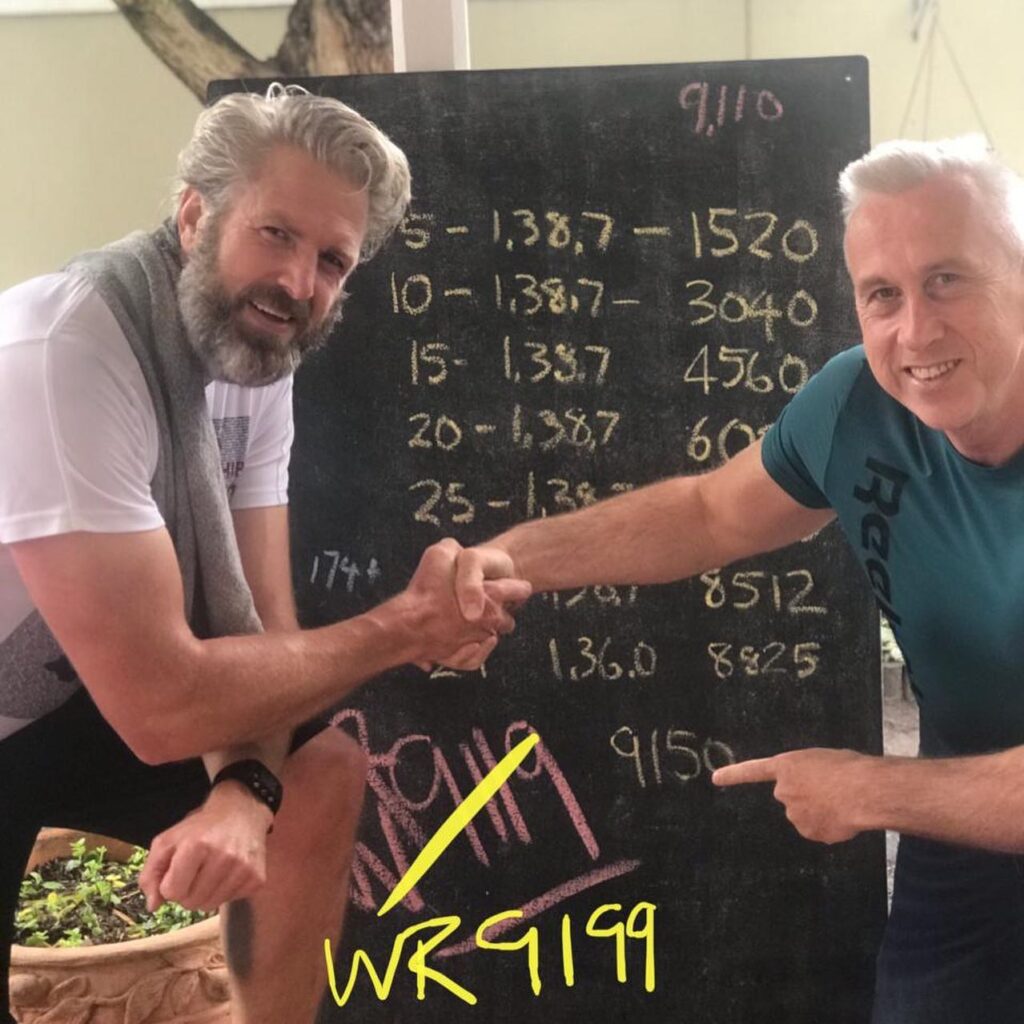
    After 10 weeks of Bill Chambers Faster training program, I set out to break @grahambenton record of 9110m. This was my second attempt after hitting the wall the first time at 7min to go. Bill Chambers program was very well laid out and all I had to do was get on with it.

    Luke Wollenschlaeger , 5 Times age group world ergo record holder

    Click here to purchase the course $287.00

    Contact me directly for the subscribers discount code.

    Here’s what’s included in the course

    • Exclusive access to the Faster Alumni Group on Facebook, to share ideas and cover questions with past students. This group is only open to Faster Alumni.
    • Three Live Zoom Classes to review the course together with the course community. Classes will be streamed Live to the Faster Alumni Group
    • Access to all the online learning modules via the Teachable platform
    • Downloadable tools and templates
    • Protocols on how to test your performance
    • Access to Tips & Tricks – Ideas & Inspiration from our advisory panel of experts
    • PDF downloads of studies on the best approaches to train
    • Guidance on how to train from the world’s best coaches, scientists and athletes – period!
    Here’s what another student shared about his experience in the course: 

    “I completed the course earlier this year, and what I learnt has opened my eyes to what I was truly capable of, and transformed the way I train and prepare. I used to always train hard, yet never knew if I was really training the right way. Since I have done the course, I now KNOW what I need to do to reach my potential. I don’t train any more than I used to, yet I am going faster on the ergo and on the water. I can better plan my training to achieve balance with my family and the business that I own and operate.

    I highly recommend this course to anyone that wants to train smart vs. just training harder all the time.”

    J Van Vulpen, The Netherlands

    Click here to purchase the course $287.00


    Join hundreds of other Masters Rowers who are changing the way they prepare and train.

    Contact me directly for the subscribers discount code.

    Hope to see you inside,

    Bill and the FASTER Team

  • You’re getting priority!

    You’re getting priority!

    My next course is about to open for enrolment.

    I’m really excited to let you know, my flagship course, How to Create Your Annual Training Plan, is ready to go live! I have opened the course exclusively to you, before it opens to the public on Friday, 6th of November. The course will be open for a limited time, and for a limited number of people, so get your spot before the course officially opens. 
    Click here to purchase the course. Special coupon code EARLYBIRD30

    In addition to the course materials and downloadable tools, there will be three Live Zoom classes with Bill and former students from the Faster Alumni, exclusively for course delegates.

    Here’s what’s included in the course;

    • Exclusive access to the Faster Alumni Group on Facebook, to share ideas and cover questions with past students. This group is only open to Faster students
    • Three Live Zoom Classes to review the course together with the course community. Classes will be recorded for playback
    • Access to all the online learning modules via the Teachable platform
    • Downloadable tools and protocols on how to test your performance
    • Dynamic and Maximum strength plans
    • Access to Tips & Tricks – Ideas & Inspiration from our advisory panel of experts
    • PDF downloads of studies on the best approaches to training 
    • Guidance on how to train from the world’s best coaches, scientists and masters athletes – period!

    Access to the entire course and all the online learning modules is $287, but I’m giving you 30% off when you enrol before the course opens on November 6th. Just use one of the limited the coupon codes EARLYBIRD30 at the checkout, and you’ll receive your discount.

    Click here to purchase the course. Special coupon code EARLYBIRD30

    Here’s what one student shared about his experience in the course.

    “What I learnt from this course opened my eyes to what I was truly capable of and transformed the way I now train and prepare. I used to go fast, yet never knew if I was really training the right way. Since I have done the course, I now KNOW what I need to do to reach my potential. I don’t train any more than I used to, yet I am going faster on the ergo and on the water. I can better plan my training to achieve balance with my family and the business that I own and operate. I highly recommend this course to anyone that wants to train smart vs. just training harder all the time.” 

    J Van Vulpen, The Netherlands

    Click here to purchase the course. Special coupon code EARLYBIRD30

    If you’ve been waiting to see what you’re capable of, today’s a great day to begin. Hope to see you inside,

    Bill and the FASTER Team

  • What business leaders can learn from one of the world’s most successful rowing coaches.

    What business leaders can learn from one of the world’s most successful rowing coaches.

    Building high performance teams with Noel Donaldson, former Head Coach and High Performance Director of Australian Rowing and New Zealand Rowing.

    The last time Noel and I spoke on the Podcast, we talked about the evolution of rowing across the last 30-years and the success habits and behaviours of winning crews do. With Noel’s success in building winning teams, I thought it would be nice to have a conversation with Noel, to understand his approach to building world champion teams and what business leaders can learn from this approach.

    Want to have a chat with me about transforming your business or high performance coaching? Let’s connect on WhatsApp.

    https://anchor.fm/s/1f7219c8/podcast/rss

    Want to have a chat with me about transforming your business or high performance coaching? Let’s connect on WhatsApp.

  • Conversation with Noel Donaldson – Faster Podcast

    Conversation with Noel Donaldson – Faster Podcast

    Insights into how rowing has evolved over the decades

    Really excited to share with you, my conversation with Noel Donaldson. Noel is widely recognised, as one of the world’s most successful rowing coaches. He has held posts as the head coach at the Victorian Institute of sport winning countless King’s Cup races, Elite Development, Head Coach and high-performance director at Rowing Australia, as well as the head coach for Australia and then New Zealand Rowing.

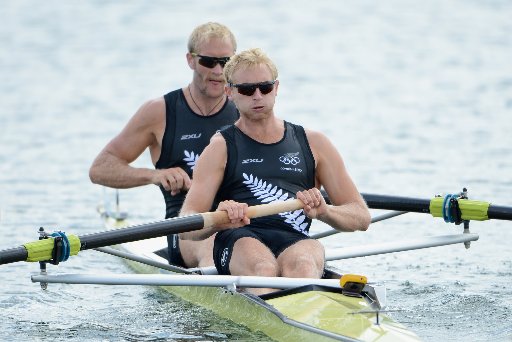
    Perhaps best known as the coach of the “Oarsome Foursome” from Australia winning gold medals at both the 1992 and 1996 Olympics and coach of the outstanding ‘Kiwi Pair’ to three consecutive Gold medals, including a double gold in 2014 in the M2- and M2+.

    With so much experience and building winning teams, and crews over the years, I thought it would be nice to have a conversation with Noel and get his insights into how rowing has evolved over the years, across some different themes.

    1. Technique
    2. Approach to training and preparation
    3. Equipment

    Join Noel and I, as we talk about how rowing has evolved over the decades. Click on the button to go to the Faster podcast. Like and subscribe, so you never miss an episode.