
Faster Membership
The rest of this one is for members.
This article, both twelve-week training plans, and the full library of protocols and calculators are part of Faster Membership. CHF 129 for the year.

Faster Membership
The rest of this one is for members.
This article, both twelve-week training plans, and the full library of protocols and calculators are part of Faster Membership. CHF 129 for the year.

Faster Membership
The rest of this one is for members.
This article, both twelve-week training plans, and the full library of protocols and calculators are part of Faster Membership. CHF 129 for the year.
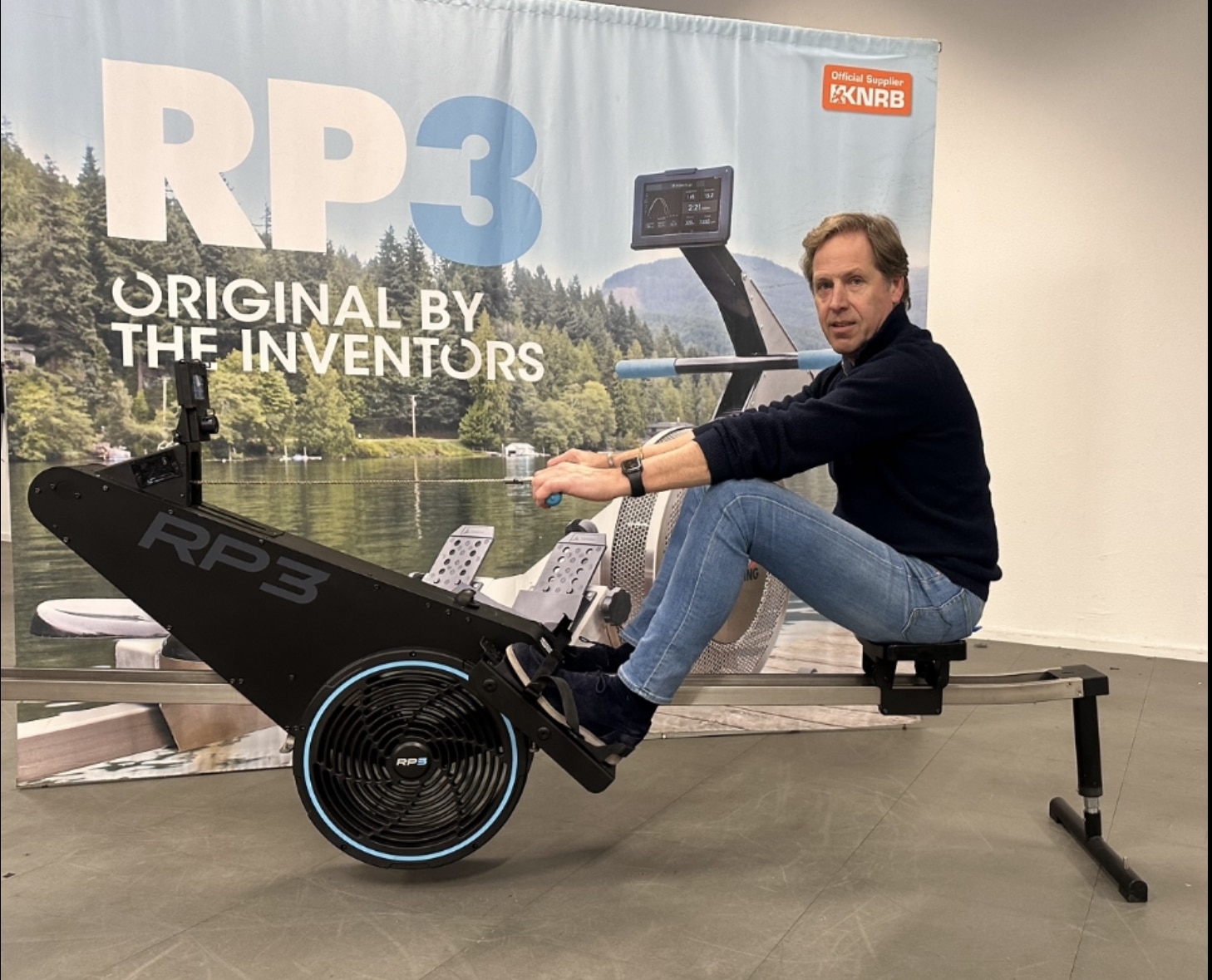
In this episode of the Faster Podcast, I speak with Jan Lammers, CEO of RP3 dynamic rowing machines.
Podcast highlights
Link to the discussion paper by Ivan Hooper 15/09/2006 Rowing Australia SSSM Coordinator. Click Here.

Latest insights from observational data from Supersapiens users on the best time to eat before your workout so you get the most metabolic efficiency and glucose availability.
Source, Supersapiens Blog (10 March 2023) References included at the end.
Still second guessing what the best time to fuel up before your workout is? There’s been decades of debate. And there’s still a lot of differing opinions out there. But they’re just that: opinions. Let’s settle this debate with the data.
Most athletes agree that loading up with carbs is key during the pre-exercise window. But when and how much are sources of contention.
There is support for eating low-GI foods in the 30 minutes prior to exercise. But others advocate for higher doses of carbohydrate 3-4 hours prior to exercise.
Some still believe that glycogen stores are full after 24 hours of intake at a rate of 10g of carbohydrate/kg of body weight, suggesting that a longer time frame for loading up is more important.
But here’s the latest insight from observational data from our Supersapiens users:
It turns out that the best time to eat before your workout is either within 20 minutes of the start or 4 hours before the start.
What that means for you: don’t eat between 20 minutes and 4 hours from the start of your workout.
One of our team members just set a new marathon personal best using this strategy.
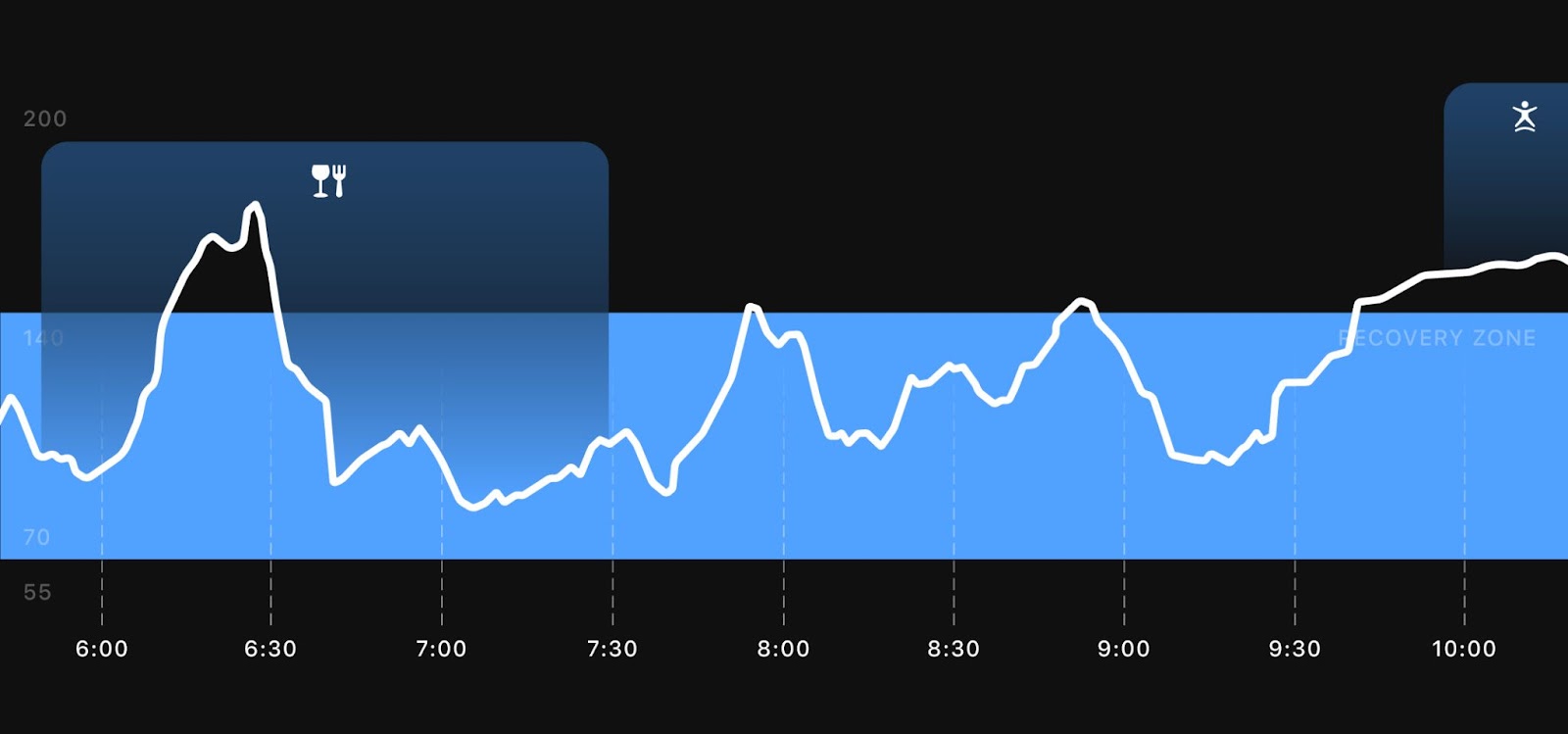
You can see the glucose rush induced by his high carbohydrate breakfast, which was just about 4 hours prior to the start of the race. From there you can see some small rushes as a result of some stress/excitement and some potential metabolic perturbations from that high carb meal.
The main reason why you should avoid fueling during that 20 minute to 4 hour window prior to the start is because of the hormonal and metabolic imbalance triggered by the high carb glucose rush. Those imbalances can impact your feel, energy, and performance during the race!
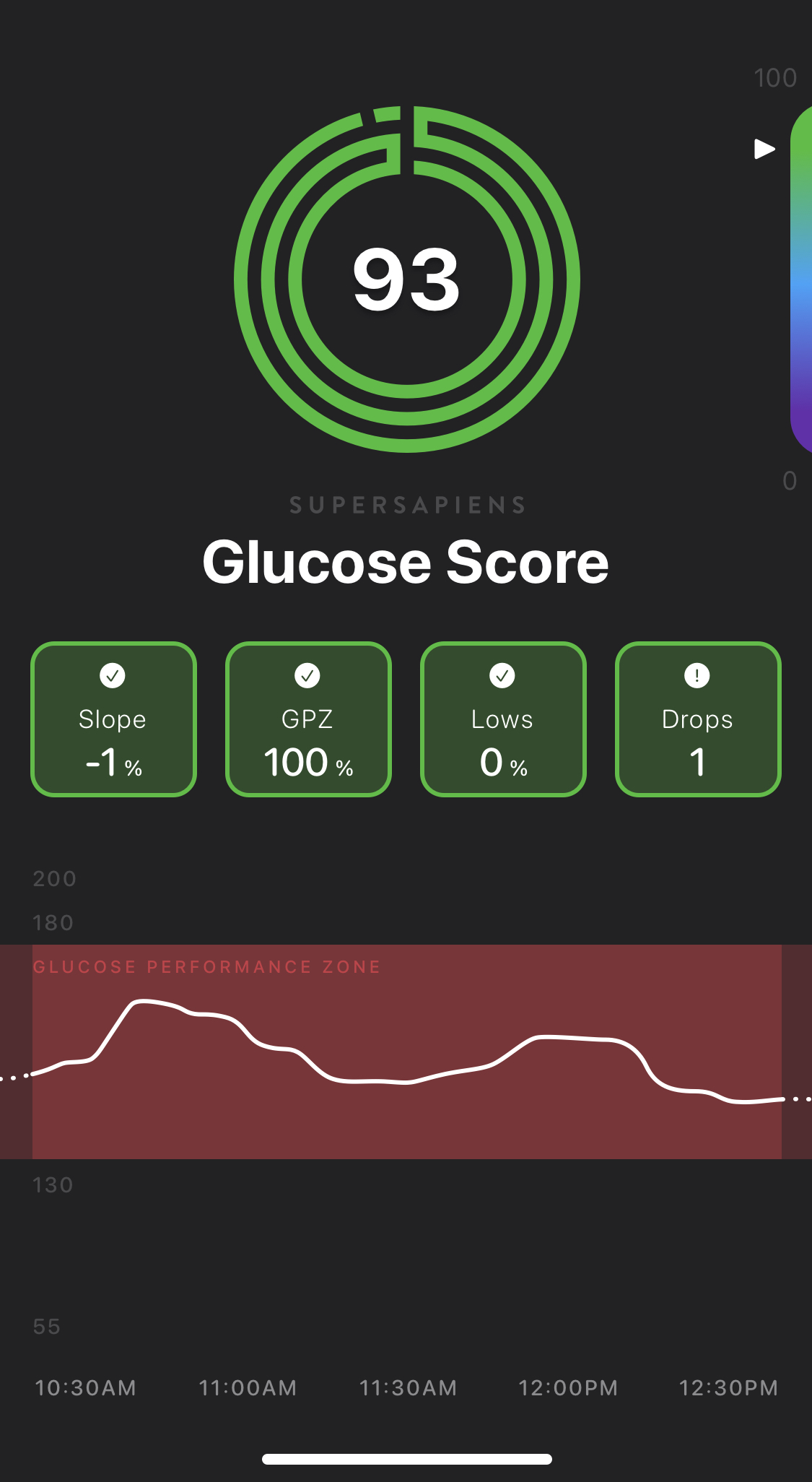
You will see a rise in glucose at start line arrival (9:30am) which leads into the race start.
You can see here that he managed to keep his glucose up and stable for the duration of his marathon. Likewise, he has great glucose stability. Both of these factors contributed to his high Glucose Score and amazing performance.
For the record, his nutrition strategy was dialed in during the months prior to the race, where he found that 75g/hr of carbohydrates, starting from 10 minutes into the race, was optimal for his glucose stability.
For him, loading up 4 hours before the start is key number one. Key number two was not eating and triggering internal imbalances for the next few hours before the race started.
Let’s dive into the ‘why’ and also explore what your options are if you can’t fuel up 4 hours before a workout (maybe because you run at 6am!)
There are a few reasons for eating this far in advance of your workout. And they’re the same reasons to avoid fueling during the 4 hour window before your workout.
One of these is gastrointestinal comfort. If you eat too close to exercise, especially if you eat a lot of food, you may experience gastrointestinal problems. This may be worsened by things that slow gastrointestinal emptying, including fiber, fats, and protein.
But the most significant reason to avoid eating too close to exercise is ‘Rebound Hypoglycemia’ also known as ‘Reactive Hypoglycemia.’ Simply put, a steep rush in glucose triggers a big insulin release, which can overcorrect things in your system, and the result is a steep drop in glucose levels and low glucose for a period of time. This can be exacerbated by commencing exercise close to your meal. If you eat during your warmup for example, you may not get the insulin release from ingesting carbs because exercise-induced muscle uptake of glucose does not require insulin – in a rested state, your muscle uptake of glucose does require insulin.
Bottom line: too much glucose (without exercise) can result in too much insulin, which can drive metabolic instability and unwanted low glucose levels before and at the start of your workout! During that time of instability, you’ll probably have energy swings, feel lethargic, and, given such effects, you might end up wasting carbohydrates or causing GI stress by overcompensating for how poorly you feel through over-fueling in the early stages of your workout.
The main reasons that we think that rebound hypoglycemic (sometimes referred to as “reactive hypoglycemia”) events are bad is due to metabolic perturbations and the potential perception/feeling of the athlete. Anyone who has had one of these will attest to the fact that it is quite unpleasant and feels like you cannot perform well. That said, unfortunately all literature currently suggests that there is no performance detriment to rebound hypoglycemia.
Interestingly, the chance to develop symptoms from a reactive episode is somewhat subjective. Research suggests that around 30-to-40% of athletes develop symptoms of reactive hypoglycemia and if you are prone to it, you are also more sensitive to it.
Data from our database do support such evidence as displayed in the figure below.
As you can see, there is a portion of athletes (on the far right) that never develop rebound hypoglycemic events. On the other hand (the far left) the same users tend to develop rebound hypoglycemic events of different severity (described by the depth and the duration of episodes).
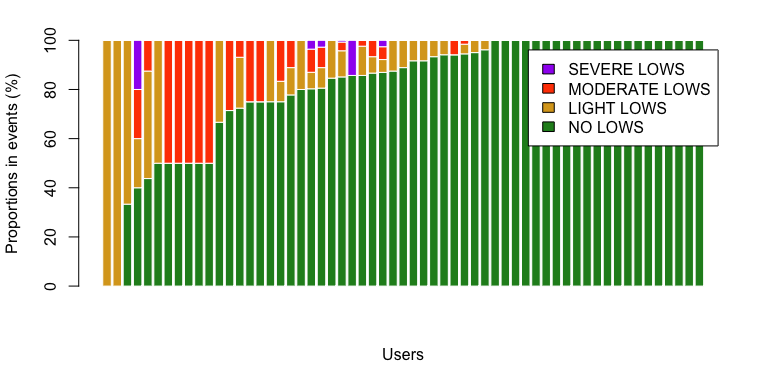
Maybe you have a morning workout and don’t want to get up in the middle of your sleep? Some people will be able to get away with eating at any time without consequence. Likewise, the other side of this coin is that there seems to be a subset of people who are very susceptible to rebound hypoglycemic events and these folks find any food within four or so hours of exercise is an issue.
It is a good time to remind readers that your pre-workout meal is mostly about topping up glycogen stores and so carbohydrates are the main focus. The amount, type (liquid, gels, solids etc) and their glycemic index (GI) are all relevant variables to manipulate when planning this meal and its timing.
Research suggests that the closer to your workout, the lower the amount of carbohydrates should be included. Likewise, the type is relevant mostly for comfort and convenience. The GI is heavily timing dependent and has the potential to either exacerbate or somewhat limit rebound hypoglycemic events. Generally, advice is that within 30mins of a workout you should be eating a higher GI whereas between this time and 4 hours, it probably serves users best to use low GI sources of carbohydrate.
The below data is from fellow Supersapiens and sheds light on whether or not to eat if you’re not able to eat four hours prior to a workout. It is a graphical representation of the average glucose response to meals eaten at different times prior to exercise. In brief, the graph focuses on the average CGM profile of a representative sample of users (~6000 Supersapiens). Variability has been removed for clarity.
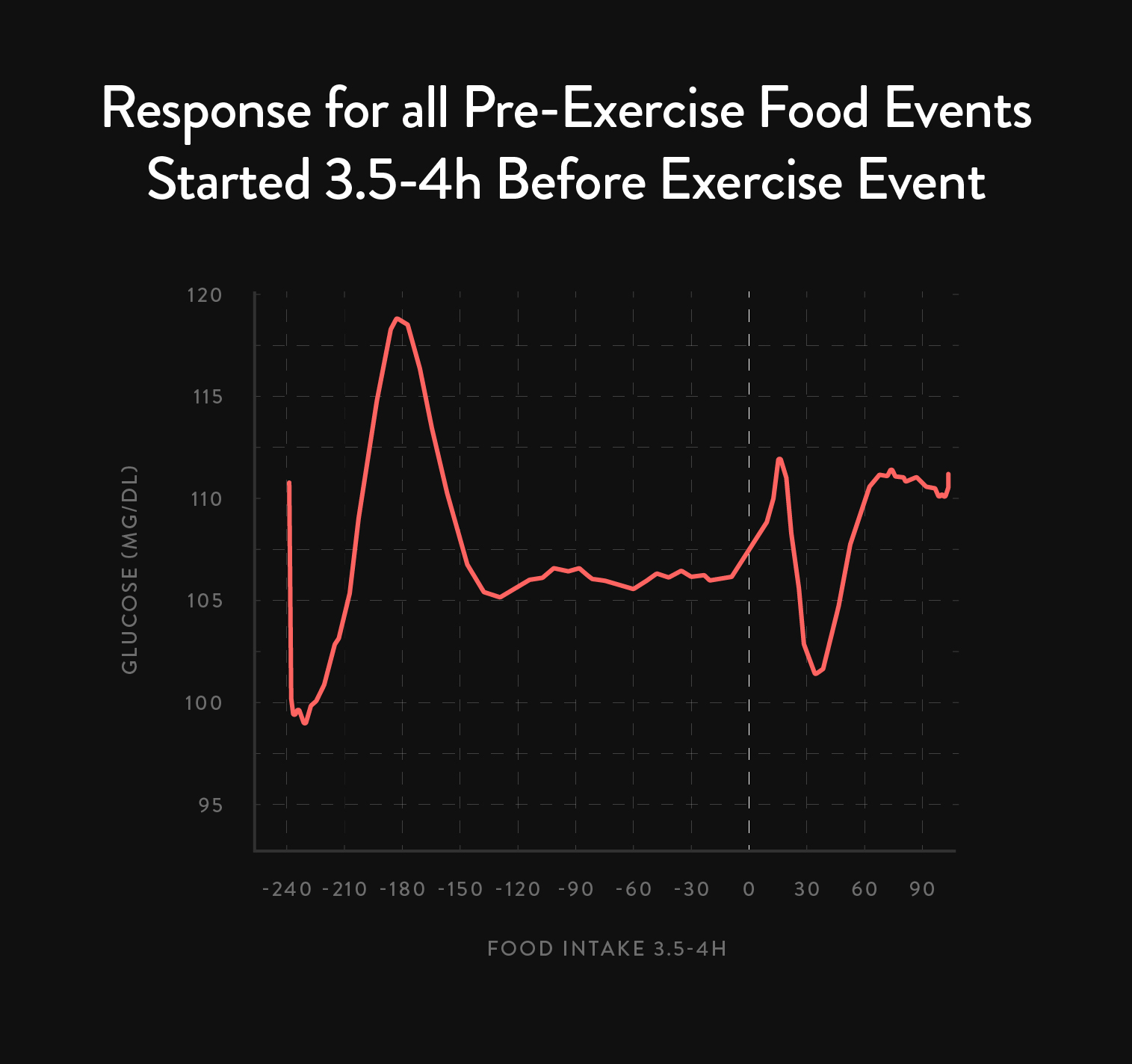
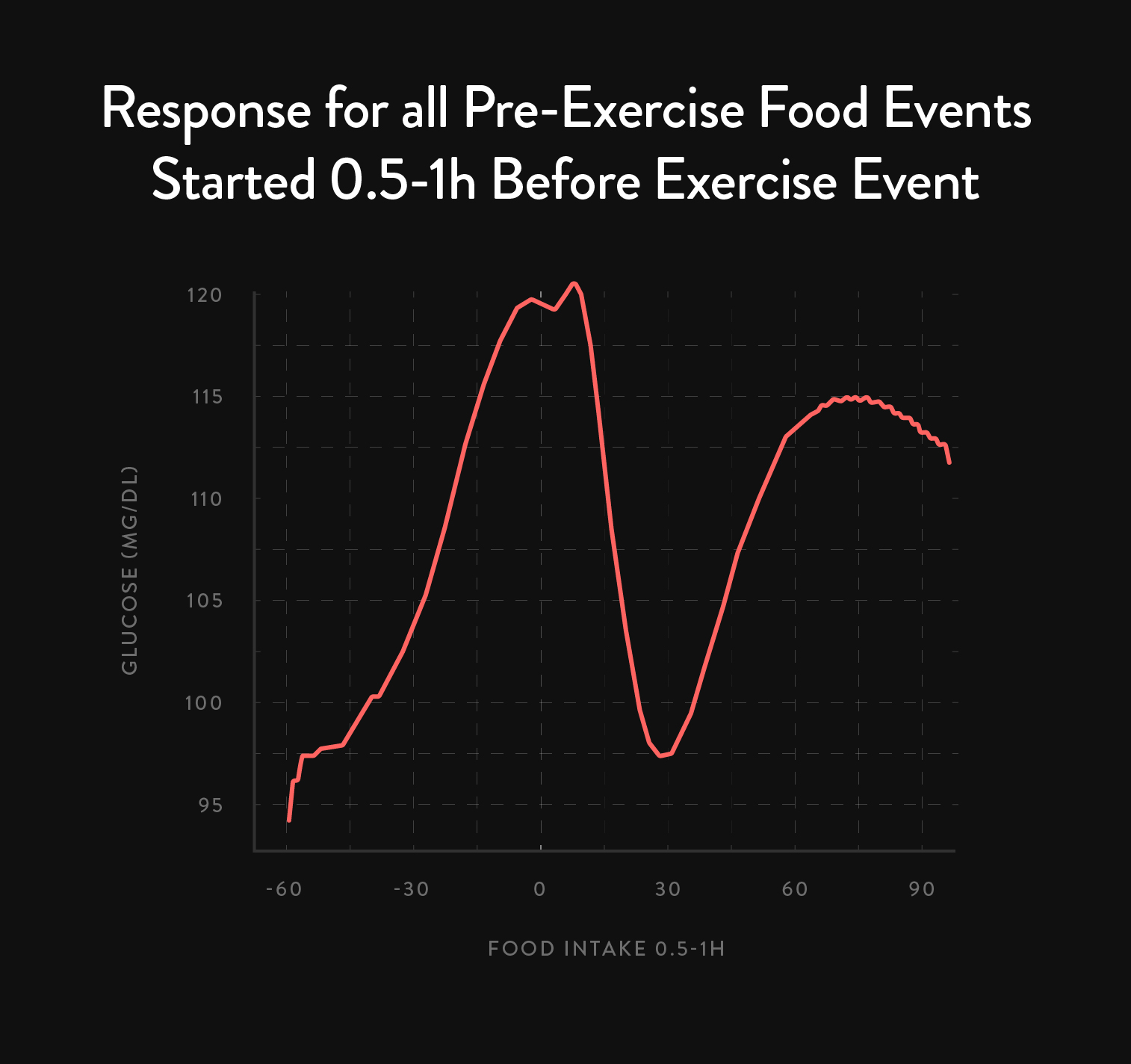

Notice the significant rebound hypoglycemia in the 60 minutes prior to exercise graph. This doesn’t happen when the meal is 3.5 hours or more prior to the exercise event.
The last graph (of the 30 minutes prior to exercise) is a key one. This may be the answer to “What if you can’t eat four hours before a workout?”
This data currently includes all food events from the last 30 minutes prior to exercise. This means events from 1 minute prior are grouped with those 30 minutes prior to exercise.
Metabolism is more of a continuum (or dimmer switch) than an all or nothing phenomenon (or light switch), and so it is fair to assume that there is a continuum that exists between 1 minute and 60 minutes prior to exercise. There is a significant portion of the 0-30 minutes group that is more like the 30-60 minutes group. Thus eating just before the start of exercise is probably the safest strategy here. Allowing minimal insulin release and any rise in glucose being mitigated by muscle contraction related glucose absorption rather than insulin. Basically, eat during your warmup or after the start of your workout.
This data is further supported by the below figure relating to the number of lows during exercise with respect to the meal timing preceding it in Supersapiens users. This too is split up into 30min blocks of timing.
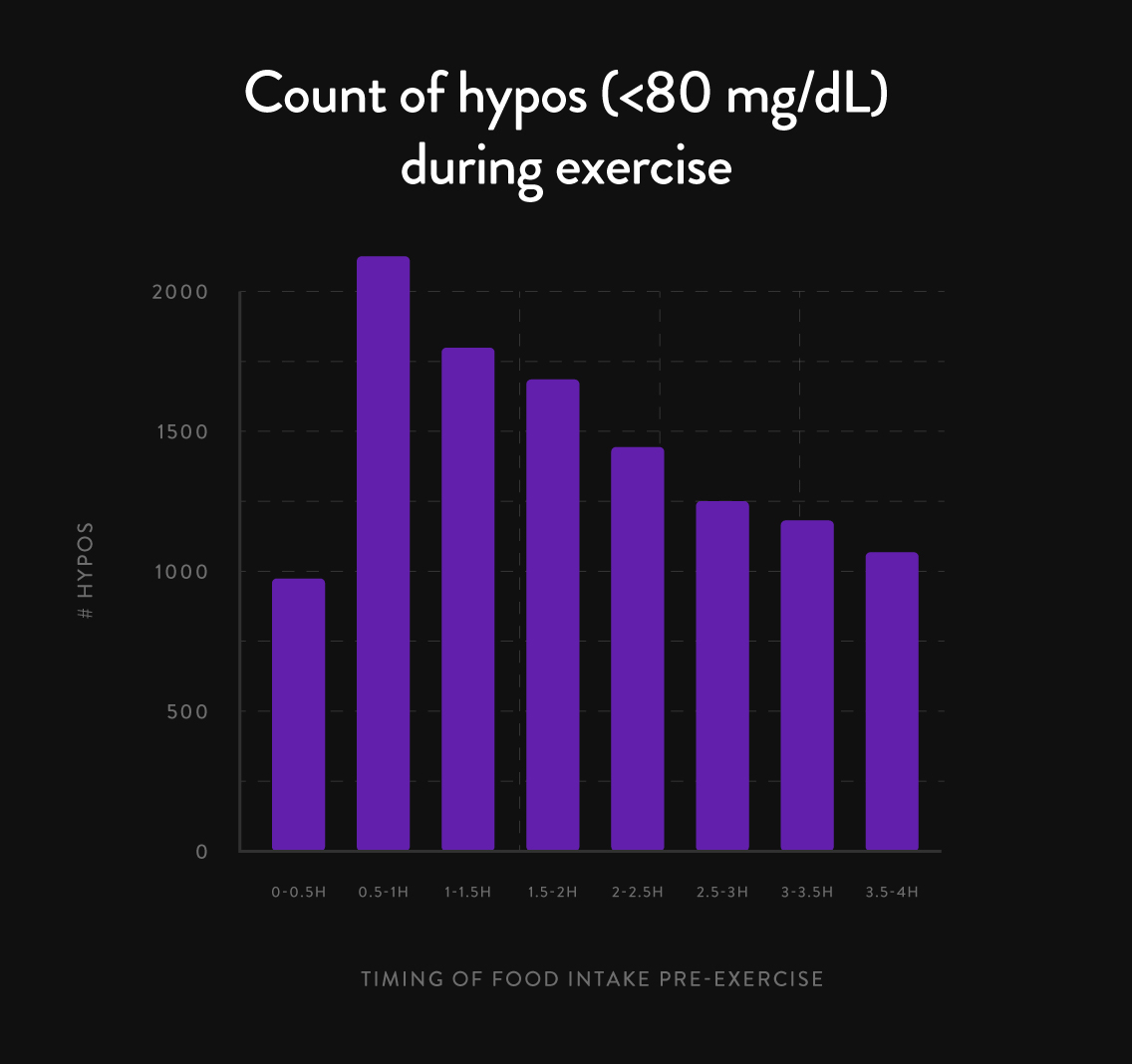
Again, considering the way metabolism works (more of a continuum than all or nothing), this is likely a reflection of very few episodes of low glucose in the last 10 to 15 minutes before exercise starts. Thus lowering the number of lows in the 0-30min time block. Similarly, this is as high as it is, likely in large part due to the effects of lows events when eating 15-30 minutes prior to exercise.
Further clarity and resolution is provided by the below, final figure. This figure shows the normalized probability of experiencing a lows, with respect to time of the last meal. Of note and perhaps most importantly, your risk is never 0. This is because not all lows are food induced. Some may be due to the warm-up phase, as one example.
The risk of low glucose events, as displayed in this figure, is highest when eating 50-60 minutes before exercise, where it is double the baseline risk and there is a hint that it is a little lower when eating less than 15 minutes before exercise starts.
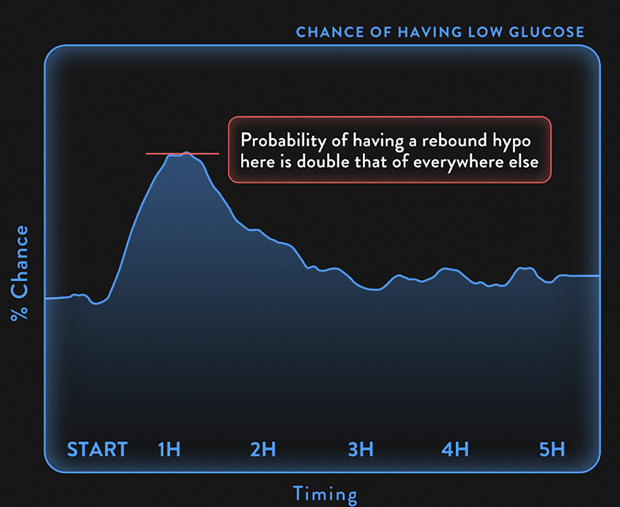
It should be considered that these probabilities are for when an athlete eats (not when they do not, though eating 4 hours prior is fairly likely a good indication of baseline physiology) and are population level data rather than specific to an individual. This is all to say that our data gives a great starting point but the athletes need to find a best practice for themselves.
Thankfully, Supersapiens gives you the visibility to do so.
*A caveat with this data is that it is only for exercise events made in the app with a concomitant prior food event made too. We have no insight into what users ate in these food events. Similarly we have no context for what the exercise event entailed.
Don’t hesitate and write off another poor training session as a result of fatigue when it is because of your glucose. And definitely don’t waste another race on a mistimed pre-race meal.
Get Supersapiens today and get back to the lab to dial your nutrition in!

Faster Membership
The rest of this one is for members.
This article, both twelve-week training plans, and the full library of protocols and calculators are part of Faster Membership. CHF 129 for the year.

Faster Membership
The rest of this one is for members.
This article, both twelve-week training plans, and the full library of protocols and calculators are part of Faster Membership. CHF 129 for the year.

This episode of the Faster Podcast, will help you to better understand the Oar range from Concept2.
Meredith and Kevin explain all there is to know about the different blades, oar shaft and grips from Concept2. We discuss how Concept2 started to where they are today. Key differences between the different blade shapes and oar shaft. How to set up the boat with different oars. How to care and maintain the equipment. To ideas and best practice on how to test which set of oars/scull are the best for you.
Meredith started rowing in high school. She quickly fell in love with early morning practices, erg tests, blisters, and track bite. She continued her rowing career at Cornell University. After graduation, she switched her focus to running and triathlon.
At Concept2, Meredith is a member of the marketing team. Her passion is working to diversity the sport through social justice initiatives. She currently rows with Green Mountain Rowing, a sculling club founded by her husband. They stay active with rowing, running, skiing and chasing after their two daughters.
Kevin is a mechanical engineer at Concept2, having worked on rowing oar and ergometer development for 13 years. A collegiate rower and graduate of Hobart College, Dartmouth College, and the University of Vermont, he’s a Vermont native, and work at Concept2 allows him to combine his love for product development and rowing while taking advantage of all the area has to offer. When not rowing he can be found with his wife and three kids skiing, biking, tinkering, or maple sugaring in the spring.
Peter and Dick use the following procedure when conducting speed testing:
Peter and Dick use the following principles to evaluate results:

Faster Membership
The rest of this one is for members.
This article, both twelve-week training plans, and the full library of protocols and calculators are part of Faster Membership. CHF 129 for the year.

Faster Membership
The rest of this one is for members.
This article, both twelve-week training plans, and the full library of protocols and calculators are part of Faster Membership. CHF 129 for the year.

Success loves preparation, and it’s not uncommon to see athletes heading into the last months of the year, without a clear goal for the next year, and an understanding of what they need to do to achieve their goals. With the off season in Europe and America and with at least 6-months to racing in most of the world, we have an opportunity, to reflect on results from 2022, what went well and what can be improved for next year. Question is, will you take time to reflect and plan?
I thought I’d share the approach I use, along with the approaches from super successful masters athletes and coaches, with the intention of inspiring and even challenging you, in your approach to setting up, and preparing for the year ahead.
Many rowers feel that they shouldn’t take a break at the end of the season. I like to take at least 3-weeks off, and sometimes 4-weeks. Rest the body and mind. Build up an appetite to get back in the boat, gym and ergo, to train through the off season. I use this time to build up my reserves, and to reflect what I need to do to go faster next year.
Take some time to reflect on the year to date. What did you do this year, and how has it worked out?
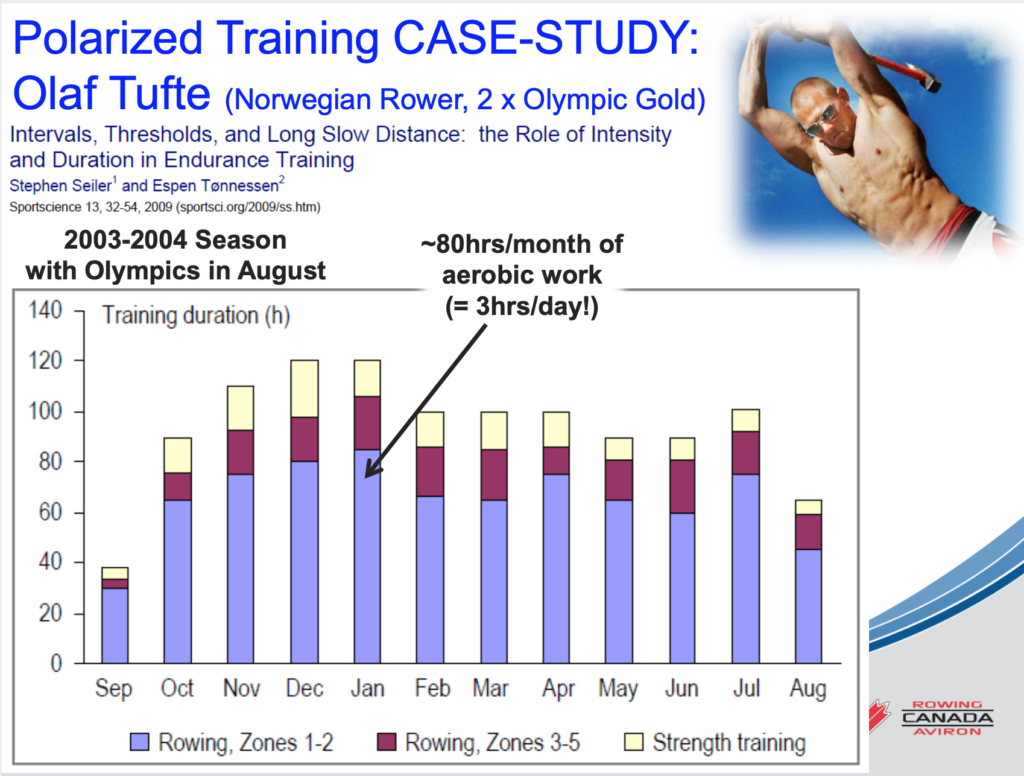
Now that you have the what identified, i.e. data points from the season, a good question to consider is, so what? With good data from the year, you can start making informed decisions, on where to focus in the year ahead.
In my interview with multiple HOCR winner, Greg Benning, this is what he had to say about planning the year.
Goal #1: Do it better every year
Accretive: Start with prior year, try new stuff, keep best ideas
Incremental Gains: Keeping a list of strengths, weaknesses, measuring
Faster podcast interview with Greg Benning (2020)
I use the time now to plan forward for next year, with a strong focus on what I need to do in the off season, to be ready for the base training in 4-months time.
Review and Plan are key aspects of success in life, business and sport. I hope that some of the points I have raised, challenge and inspire you, to review what you have done, and identify areas that will help you to go faster.