
Faster Membership
The rest of this one is for members.
This article, both twelve-week training plans, and the full library of protocols and calculators are part of Faster Membership. CHF 129 for the year.

Faster Membership
The rest of this one is for members.
This article, both twelve-week training plans, and the full library of protocols and calculators are part of Faster Membership. CHF 129 for the year.

This week was a hard one. The second build week averaging 12+ hours per week along with everything else that is going on. Ended up spending most of the time on the bike and ergo, as the lake was too rough and windy. More time on the bike, and that was great. Plenty of climbing with the average ride covering 2,000m in elevation.
Last week of the Strength endurance block. Next week we will kick of the start of a 4-week block of higher intensity Anaerobic work. Big picture, 10-12 high intensity sessions. Mindset is on quality outings. Quality of execution of each piece. Presence in the connection with the water and application of power. Focus on the glide and uninterrupted flow/speed of the total system.
Next week will be fun. Off to the Rotsee in Luzern for a ‘mini-camp’ over 3-days with my coach. Looking forward to the insights, conversations and learning from a partner that’s so invested in my improvement.
So week 31. Total hours 13.5 – TSS 995 – kms 490

Faster Membership
The rest of this one is for members.
This article, both twelve-week training plans, and the full library of protocols and calculators are part of Faster Membership. CHF 129 for the year.

Original article found at Outside Online, 22 June 2018 by Sarah Angle
Finding fresh, healthy food that gives you energy to tackle your workouts is never easier than in summer, given the wealth of straight-from-the-farm produce. These nutrient-dense foods will help you optimise performance and recovery all summer long.
Beets are high in nitrates, which our bodies use to make nitric oxide, which in turn signals blood vessels to relax, helping widen the arteries and increase circulation, bringing more oxygen to hardworking muscles. The elevated rate of oxygen delivery to working is a natural performance enhancer. In a study at the University of St. Louis, researchers had 11 participants eat about 1.3 cups of beets (200 grams) 75 minutes before a timed 5K. Participants improved their speed by 3 percent compared to a later timed trial in which the runners consumed a placebo. To make the most of the summer beet stock, Breanne Nalder, a sports nutritionist and member of the DNA Pro Cycling team, recommends roasting them by wrapping each beet in foil, placing them in a glass baking dish, and cooking at 400 degrees for 40 to 60 minutes. You can enjoy beets cold in salads or as an added boost in a smoothie.
Early summer is prime time for cherries, which have a short season. The antioxidant and anti-inflammatory effects of cherries protect against muscle damage and accelerate recovery, Nalder says. Most of the cherries you’ll find at the grocery store or farmer’s market are the sweet kind, which still have anti-inflammatory effects, but the biggest performance benefits come from tart cherries, which can be a bit harder to come by. A 2010 study conducted at Oregon Health Sciences University found that tart cherry juice can reduce post-run muscle pain, while a 2009 study published in the Scandinavian Journal of Medicine and Science in Sports found it can aid recovery after running a marathon. Grab fresh cherries while you can, and opt for unsweetened tart cherry juice when they’re out of season.
These sweet, crisp melons have a reputation for being high in sugar, but their potential upsides outweigh the extra carbs. “Eating watermelon or drinking watermelon juice may have several health benefits, including lower blood pressure, improved insulin sensitivity, and reduced muscle soreness,” Nalder says. Watermelon’s high water content—around 91 percent—is hydrating, and it’s a good dietary source of the antioxidants citrulline and lycopene. A study published in the Journal of Agricultural and Food Chemistry in 2013 found that citrulline helped improve post-exercise muscle soreness when participants consumed watermelon juice an hour before a workout. It’s also an excellent mid-workout snack, with a good ratio of water to quick-burning carbs.
Peppers of all kinds are abundant in summer, and each have their own benefits. Spicier peppers like habañero and jalapeño contain capsaicin, which helps metabolize fat needed for fuel in endurance exercise and boosts blood circulation, Nalder says. Spicy food also enhances release of the feel-good hormone serotonin, helping you manage stress. If spice isn’t your thing, mild red bell peppers are packed with vitamin C, which is crucial for tissue growth and repair. A medium pepper contains about 250 percent of the daily recommended value. Nalder recommends making red bell pepper candy: Slice two peppers and drizzle with one tablespoon of pure maple syrup. Place peppers on a parchment-covered wire rack on top of a baking sheet, and bake at 150 degrees for eight to ten hours with the oven door ajar about four inches.
Greens like spinach, collard greens, and kale are packed with calcium, and you can—and should—enjoy them year-round. But summer offers a bounty of versatile, market-fresh options. “All athletes should make sure they get 1,200 to 1,500 milligrams of calcium a day,” Nalder says. A cup of cooked collard greens, for instance, has more than 250 milligrams of calcium. “Excessive training may cause hormonal declines that can compromise bone formation, possibly leading to premature, irreversible osteoporosis,” she explains. Calcium from whole foods is absorbed and metabolized slower than from supplements, allowing our bodies to utilize the mineral as an electrolyte and improve bone mineral density. Like red beets, leafy greens are also high in nitrates.

Excited to release the second part of my interview with Aram Lemmerer! In this episode, Aram shares with us everything you need to know about the Biorower, along with some interesting insights into how they came up with the concept, and what question, the Biorower team were looking to answer.
Click on the following link to listen to the podcast. Faster with Bill Chambers

As the training volume increases, I’m experimenting with a ways to enhance my recovery. I’m increasing my daily sleep by getting to bed 15-minutes earlier, not using my iPhone an hour before shut eye, and leaving my iPhone in the home office rather than beside the bed. I was using the phone as an alarm, and now use the alarm on my Garmin watch, which is very effective. 15-minutes each night, isn’t much more, yet it all adds up over the week with an extra 1’45” over the week.
I will be using the following performance metrics to track sleep over the next weeks;
From time to time I have some residual pain from strength training or the garden;-) I have been using Deep Blue Polyphenol Complex from doTERRA. I can say that Deep Blue has a profound pain relief for me. More so than over the counter pain killers from the pharmacy.
I buy it via a network to get a 25% discount. I DON’T sell doTERRA, I just use it, get the discount.

You can purchase doTERRA products at wholesale pricing (25% discount) via the following link: https://www.mydoterra.com/Application/index.cfm?&Country=EO&EnrollerID=3378159&lng=en_uk
I first tried the Nelo in Gavirate at the beginning of this year. I was impressed with the stability, the speed and the little extras like the inverted seat rails and the water bottle holder. I am curious to understand the benefits of the inverted bow and stern, the flat bottom and square gunnels.


I have purchased an R75 to test this season. I will be using the following performance metrics over the next weeks, to compare the Filippi F22 vs the Nelo R75.
I will use the boats over the coming weeks and run the same test over many weeks. Decision will be based on repeatability of performance.

Hi there,
Really excited that the Swiss Rowing Championships will now be held on 18, 19 & 20 September 2020. This gives me 11-weeks until my first race of the year.
I will capture and share with you, my plan, my approach, my training and the experiences along the way.
Let me know if there is anything in particular you’d like me to share.
Why am I doing this? My why, my purpose, is to challenge and inspire my self and others to evolve and to reach my/their fullest potential. Sharing this with everyone, certainly challenges me. I’m sure I will feel venerable from time to time, be challenged by others too. And that’s a good thing.
Bill
Catastrophic; causing sudden and very great harm or destruction. (Cambridge dictionary 2020)
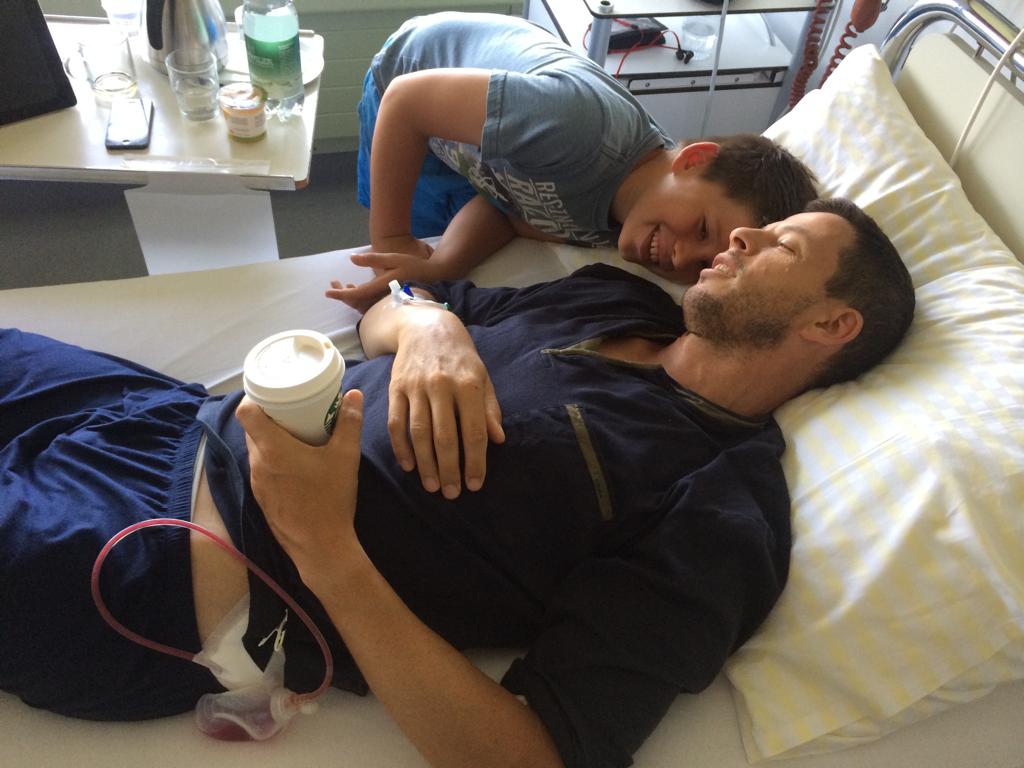
In June 2013, I was paddling lightly to cool down, after racing the single scull (1x) in a Swiss regatta, when a men’s coxless four (4-) doing racing starts, collided head on into my back at full speed. The boat went through my back, broke two of my vertebrae, and a piece of the bow, was lodged precariously close to my spinal cord. I was catapulted into the water, and nearly drowned.
Rushed to the hospital for emergency surgery. The doctors feared I would be paralysed, and certainly didn’t think that I would being rowing ever again.
Over the next two years I developed an approach and later codified a system and process to get back on my feet, back in the boat, and winning again.
I don’t mention what happened, yet my friend Emmanuel thought it was important to capture my story and share my approach to coming back stronger. Perhaps my approach can help others. Below is a link to the video. Please share with your friends and connect with me to find out more about transformational change.

Hi there,
Thanks for all the great questions and feedback from my recent post on how always training in the middle can be costly. I have summarised most of the questions and feedback below.
Thanks to all that have enrolled and completed the course on ‘how to create your heart rate zones for rowing.’ Please forward the course link to a friend. Course Link
In the coming days I’ll be sending out information on my new course, ‘How to create your training plan’. I will be launching this in late May and welcome suggestions on topics you’d like to see covered.
Q Do I count the sessions of the time spent in low vs. high intensity?
A I count the number of sessions training in low intensity vs. high intensity. For example, I train 5-days a week, I spend 4 days training at low intensity and one day where I focus on training at high intensity. When my squad do say 7 sessions a week, they will do two high intensity sessions that week.
Q How long is the time required to fully reset aerobic base? During the reset period, should I be aiming for an 80:20 ratio (80% zone 2: 20% zone 4/5) or some other ratio?
A Between 8-12 weeks depending on the individual. My annual plan is very similar to a classical periodized plan in that I prescribe at least 8-weeks of aerobic foundation at the start of the season. During the ‘re-set’ I focus my clients on 100% zone 2 (<75% heart rate peak) until I start to see some improvement in their aerobic condition, i.e. improvement in pace or power for the same effort. After I start to see some improvement I may include one high intensity session a week.
Q I used to train for bike racing and used my HR zones almost exclusively so as to focus on effort and not hills or wind that affects speed. I would like to start doing that with rowing, but need to re-establish my HR zones as I haven’t done that in 10 years – on the bike. My questions are 1) what is the best way to do that for rowing 2) I want to train by HR for on the water rowing as well as erg – I’m on the water more than erg anyway.
A First establish your heart rate peak on the ergo for 2k, or on the water with a 6-minute Vo2max test. From there you can set your heart rate zones from this peak and use this as a guide to your training intensity on the water, ergo or bike.
Q If ratio is 80:20, does it matter if I mix in some zone 4/5 with zone 2 workouts, or should they be done on separate days? Thanks
A They should be done exclusively on separate days.
Q I feel my 2k erg pace (which also needs to be redone) is not a good marker as I’m likely not working hard enough in that test. Thoughts?
A The 2k test should be your maximal effort. To really get motivated and to push an all out effort, re-do the test with some friends cheering you on.
Q Is there guidance around about HR geared workouts as opposed to pace? Almost everything I see is based upon your “2k erg pace”.
A The 2k test is there to establish your heart rate peak. Once you have your heart rate peak, you can set up your training zones and train accordingly.
Q Hi Bill, I am a follower of polarization training for over 4 years. I am happy with the long 18k-26k around 75% HR sculling/erging. What I am struggling about is the 10-15% red zone training. I cannot manage it without greater percent of yellow zone. What type of intervals do you use to achieve the preferable percentage? Many thanks for your help.
A So what we do (masters squad) and what I do is as follows: look at the intensity of the session first of all and count these as either low or high intensity. For the high intensity I aim to accumulate between 30 – 45 minutes in zone 4 through different interval variations. My objective is to get into zone 4 as fast as possible and therefore only transition through zone 3. ntervals are a variation of 2:1 work to rest ratio. I let the squad pick and mix to keep the varsity yet a favourite is 5 x 8 minutes with 4 minutes rest between intervals. This is comfortably hard.
Hi Bill. Just read your post on base training. I’ve just completed a solid 4 week blockof it. Two comparative workouts 4 weeks apart. 2nd one at same wattage but HR 20 beats lower. (Craig)
Great case study Bill Chambers. Have you, or are you considering submitting this formally? There’s a real dearth of rowing specific research out there relative to other sports.
Thanks this is a very good post, and spooky as well – we were just talking about this as a team. I can attest that the single biggest improvement in my 2k time was doing the long, boring sessions at 65-75% HR. Audible helps!
Thanks for this. Improvements in aerobic capacity, not limiting carbs, is what leads to efficiency in burning fat for fuel.
I’ve been training mainly in the middle for the last 4 seasons and last year I started feeling my shape was going under. No recover between sessions, more fatigue more pain in the body. When I started rowing at home in March I saw a video from a British rower claiming the benefits of training below AT2. After that, my club coach shared with me your Course about adjusting the training zones. Since then I’m focusing on working below AT2 as a base training.
With no pressure from regattas to train for sprints, I’m catching up on a couple of lost autumns’ UT2 endurance work. At 71, I’m sticking to 120bpm @ 18spm – for 10k up to HM. 200k out of 260k (75%+) so far in April. Need to do another couple of months of this!! Money in the bank!! 👍

It’s so important to stay below the stress radar when everyone around is not feeling well and you are training. Train smart and accumulate enough time in zone 2 to continue to build the aerobic base yet not create too much stress signalling. Keep your immune system strong and use this time to invest in building your foundation for the delayed regatta season.