Tag: Bill Chambers

  • Swiss Rowing Championships championnats suisses d’aviron 2020

    Swiss Rowing Championships championnats suisses d’aviron 2020

    So the racing season is over. One race done, and all done for the year. Very grateful, that with everything going on around the world, and in Switzerland, we were able to come together to race together. Great organisation skills from the Swiss Rowing Federation, the organising committee of Luzern, and discipline from all the clubs, to enable a safe regatta.

    In the last week, the entire training squad from Vevey, has been tapering down, and getting ready for the first and only major race of the year. The Swiss Rowing Championships, held as always, at the Rotsee Lake, Luzern, Switzerland. The central point of rowing for Switzerland, and some may say, the best natural rowing venue in the world.

    In the last week, the masters squad travelled to a small lake north of Vevey, to sharpen up for the coming ‘all or nothing’ regatta at the end of the week. We completed around 4-hours of training, about 60% less than a normal week’s training volume, and each session included high intensity. As a result, we all felt fresh, and sharpened up the coordination required for the 1,000m blast.

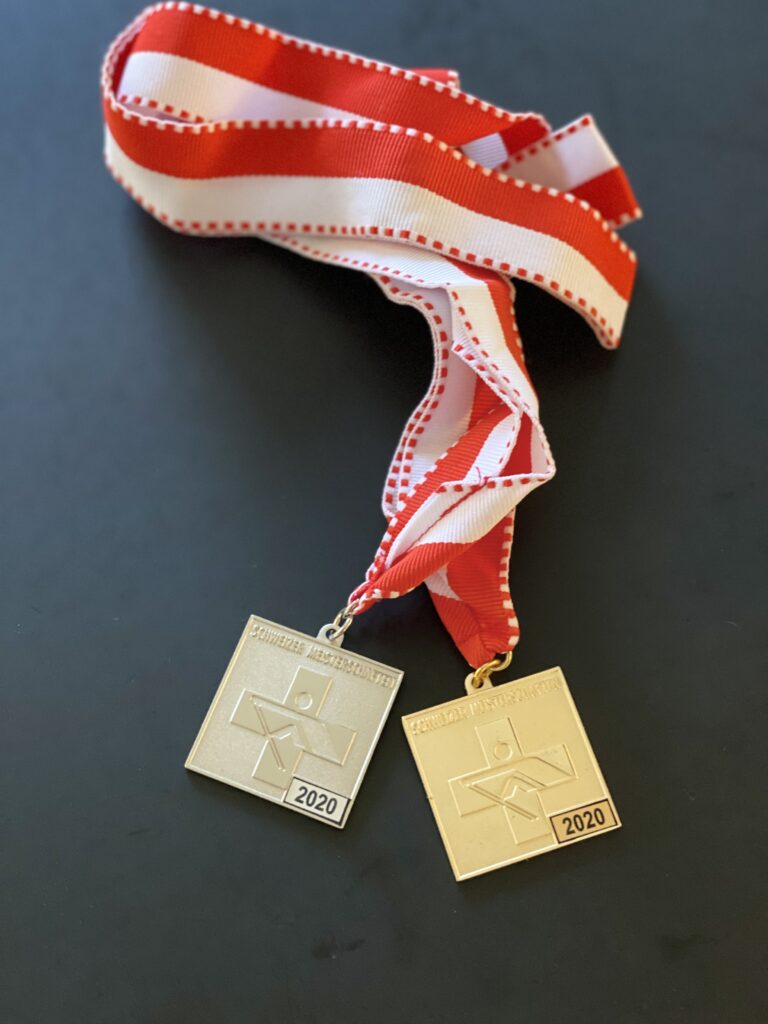
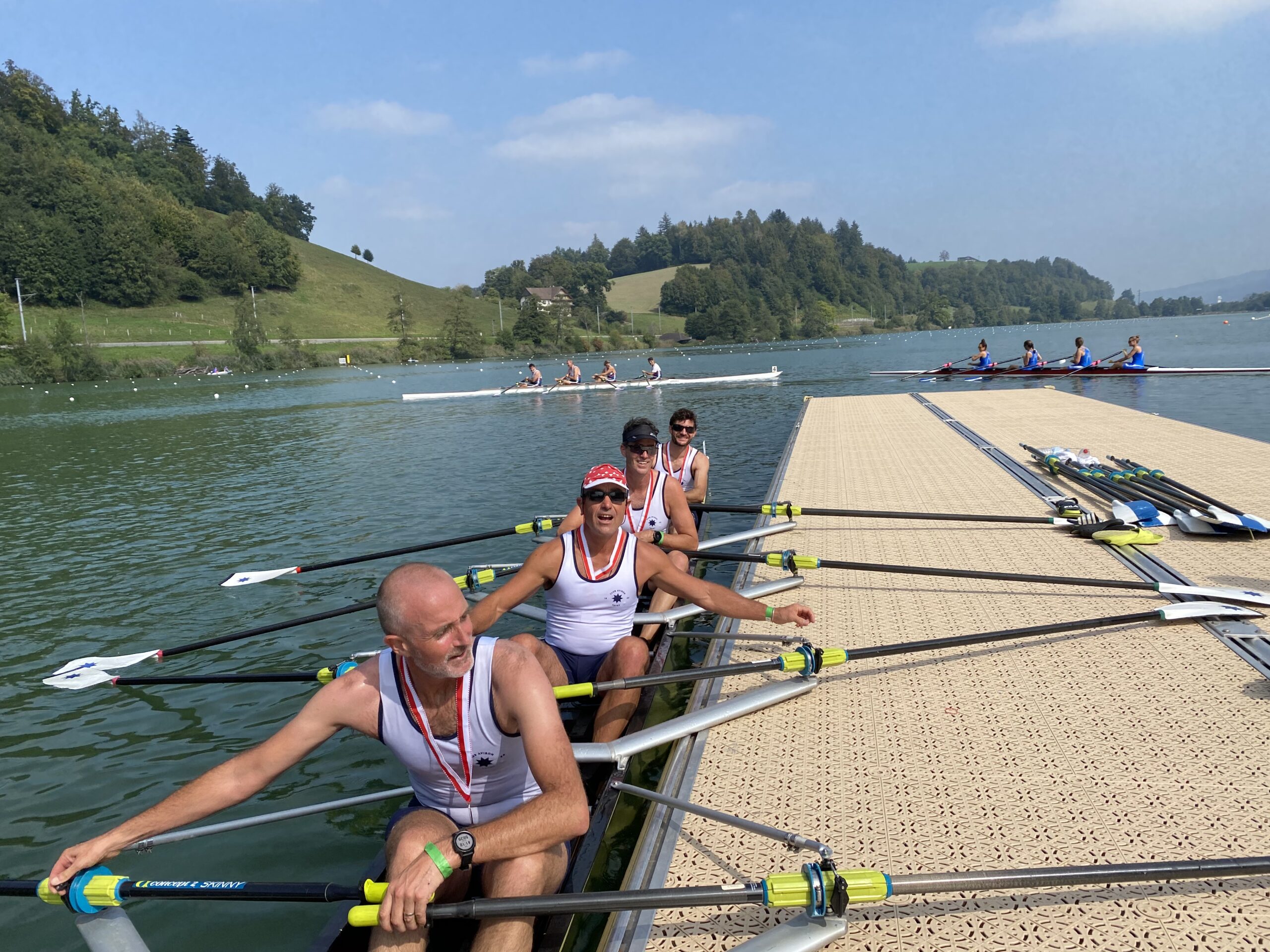
    The races were all stacked together on the Friday, meaning that most of the squad were racing 3 times. We fielded a crew in the men’s quad, 2 doubles and four singles. Took home silver in the quad, silver in the double and a gold in the single scull.

    Training volumes for the 8.5-months were 5% higher than last year. 84% of training volume (time) was spent <75% heart rate peak, and 5% of training volume (time) was spent >90% heart rate peak. Average training volume c.a. 10.5 hours a week.

    The race in the single scull was always going to be a fast one. No one knew the others form, leading into the race, so I made some assumptions on what would be required to win it. I figured 3:35 or there about would be the winning time, and confirmed this on seeing the still conditions at the Rotsee. My opposition always start fast, and I started well. By the 200m mark, I settled into race pace with about half a lengths lead. My opposition cranked it up, and started to creep ahead, yet I was comfortable with the planned race pace of 1:45, and knew that at this pace, I could stay aerobic and leave something for the last 350m. Eventually, that is what happened. With 350m I was able to increase the pace and go through to win.

    Racing Equipment

    • Filippi F22 single scull with Aliante carbon wing rigger
    • Concept2 Skinny plain edge smoothies
    • Bont BOA rowing shoes
    • Citius Remex seat pad
    • DiBi racing suit
    • Oakley Sutro glasses
    • Garmin 945 Forerunner
    • Precision Hydration electrolytes

    Big Thanks

    Lot’s of people are always involved in successful campaigns, yet it simply wouldn’t have been possible without the support of my wife Angela. Angela not only supported my journey this year, she kept me healthy and incredibly strong with her knowledge of integrated nutrition and medicine. Thanks also to Giovanni Calabrese, and the team at Gavirate Rowing Club for being so welcoming all the time. To Luca and the team at the Australian Institute of Sport, that helped take our training and preparation to the next level. And finally, thanks to Urs Graf, for spotting all the areas for improvement. Urs helped us to understand what a fast moving boat feels like, and how to look after that speed.

    Now the road to the Silver Skiff starts in a week….

  • Conversation with Noel Donaldson – Faster Podcast

    Conversation with Noel Donaldson – Faster Podcast

    Insights into how rowing has evolved over the decades

    Really excited to share with you, my conversation with Noel Donaldson. Noel is widely recognised, as one of the world’s most successful rowing coaches. He has held posts as the head coach at the Victorian Institute of sport winning countless King’s Cup races, Elite Development, Head Coach and high-performance director at Rowing Australia, as well as the head coach for Australia and then New Zealand Rowing.

    Perhaps best known as the coach of the “Oarsome Foursome” from Australia winning gold medals at both the 1992 and 1996 Olympics and coach of the outstanding ‘Kiwi Pair’ to three consecutive Gold medals, including a double gold in 2014 in the M2- and M2+.

    With so much experience and building winning teams, and crews over the years, I thought it would be nice to have a conversation with Noel and get his insights into how rowing has evolved over the years, across some different themes.

    1. Technique
    2. Approach to training and preparation
    3. Equipment

    Join Noel and I, as we talk about how rowing has evolved over the decades. Click on the button to go to the Faster podcast. Like and subscribe, so you never miss an episode.

  • Training Update Week 38 Final Week Of Preparation

    Training Update Week 38 Final Week Of Preparation

    Last week, was the start of my taper for the Swiss Champs. Good solid week of volume and intensity. The club moved to a small lake, for the final preparation days. We are so lucky to have this lake so close by. It’s sheltered and ideal for race training.

    Introducing more and more race like intensity, and the volume is dropping. Lots of race simulations with other crews and scullers. Fine tuning the start and first 250m. Sessions included 750m, 500m and 250m intervals at or above race pace.

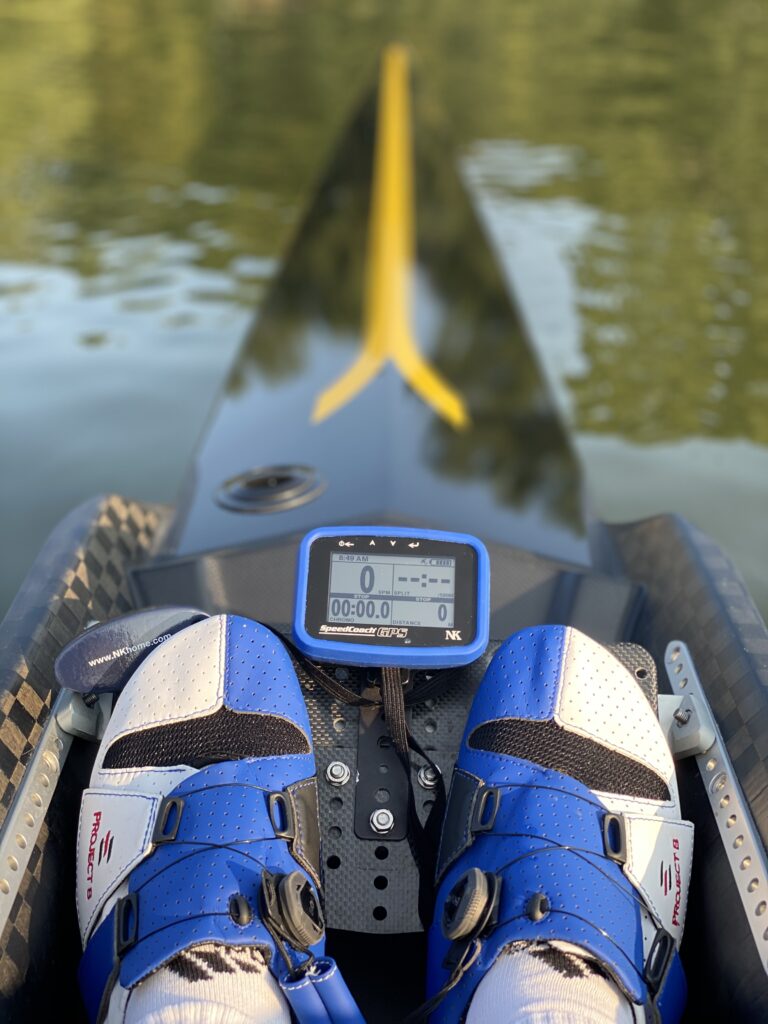
    Testing of Bont’s new rowing shoes with the BOA dial went well. I really like the fit, and subjectively, feel more ‘planted’ and connected to the foot stretcher. I like the wrap around feeling, the BOA system provides. I also made some adjustments to my seat pad. Fixing it to the boat seat with some double sided velcro. This saves time faffing around with the positioning, and avoids any chance of the seat moving. You can join my Facebook page to watch the overview.

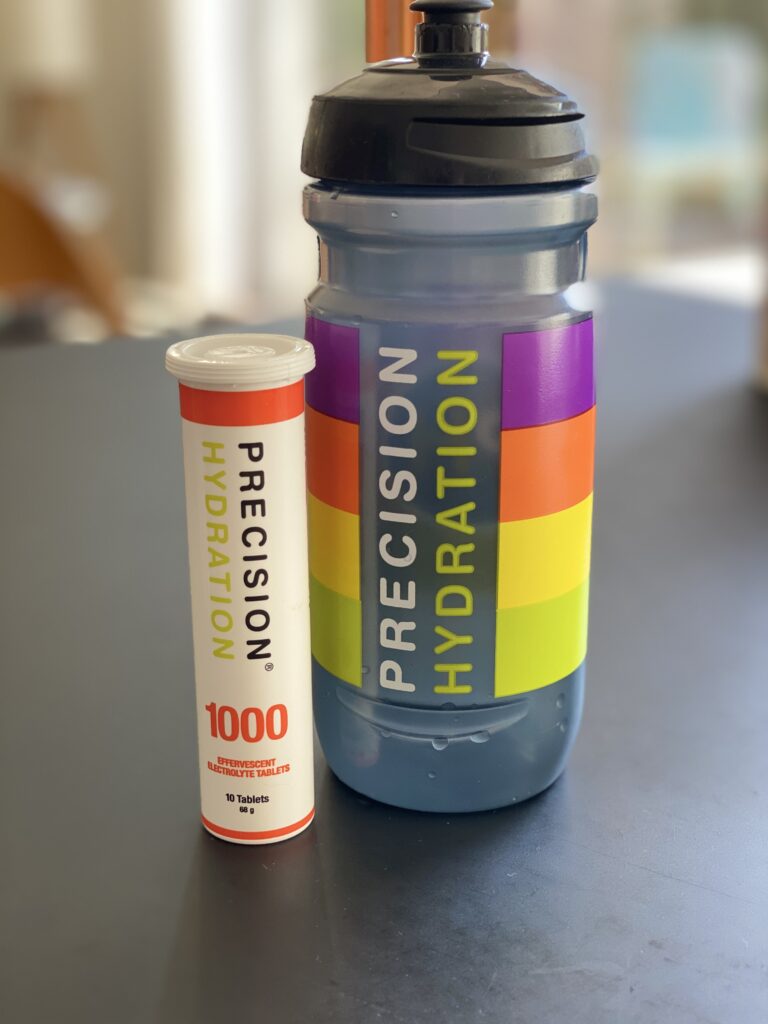
    Precision Hydration sent me some of their hydration solutions to test in training. I did the online sweat test, and then a few days later received a pretty cool package in the mail. So far so good. I don’t think I’ll change my routine in the last days, yet I certainly will test their electrolyte solutions, leading up to the Silver Skiff in November.

    To summarise, the volume is down and intensity is the same. The final days leadings into the Swiss Championships on Friday, will see less and less volume yet maintaining the intensity. If you’d like to know my what I do to taper down and be ready on race day, you can purchase my ‘Ultimate Race Week Plan’, an online course that will teach you everything I do to prepare myself and my athletes to go Fast on race day.

    Race day is the opportunity for you to bring all of your training and hard work over the weeks and months to perform at your best. The Ultimate Race Week Plan, will help you to avoid common mistakes, that can end up destroying your race day performance. Simple mistakes, like training too hard or not enough, or not knowing how to warm-up correctly that can be avoided when you know what to do. When you don’t, they can be incredibly frustrating.

    You will learn tried, tested and proven processes, from the world’s best sports scientists and trainers, on what needs to be done in the week leading up to race day for Ultimate Performance on the day.

    • Understand why the taper is so important, what to do, when and how.
    • Learn how to plan your workouts day by day, leading up to race day.
    • Know what to do the day before, so that you are fresh and ready to race.
    • How to warm up and prime your energy systems.
    • How and when to fuel for your best performance.
    • Know what you need to do after the race to recover, and be ready race again.

    This course can be completed in an hour. Is full of videos and easy to follow guides. It is suitable for anyone that will be racing on the ergo or at a regatta and wants to know what they need to do to be prepared.

    I personally use the Ultimate Race Week Plan for all of my major races, and with my athletes, with great success. I look forward to you enjoying the same level of knowledge and awareness, to take your racing to the next level.

  • Planning for the Head of The Charles Regatta with Greg Benning

    Planning for the Head of The Charles Regatta with Greg Benning

    Really excited to release my follow up interview with Greg Benning. With 19 wins at HOCR, 4 course records, and  7 wins at SilverSkiff, I just had to get him back on the podcast, to share with us his approach to training and preparing for an event.

    Anyone that wants to get insights and inspiration, into how a multiple champion athlete, prepares and trains to win, you will not want to miss this episode.

    Some of the key points covered;

    • How Greg plan’s his season to key races
    • How Greg measures and manages his training volume, intensity and recovery
    • Technology Greg uses in training and racing
    • Rigging, catch angles and how to approach power application
    • Key workouts and strength program
    • What Greg has learnt from other sports and how these insights can be applied to rowing
    • Coffee or tea? Coffee
    • Racing or training? Training
    • Crew or Single? Crew
    • Favourite race? Head of the Charles Regatta, Silver Skiff & Heineken Roeivierkamp

    Links to Greg’s mentions

    To make sure you get all the latest information, ideas and inspiration, subscribe to my newsletter and join our community on Facebook.

    This podcast is brought to you by High Performance Coaching in business and sport with Bill Chambers. To have a chat about your goals and high performance coaching, connect with me on WhatsApp.

    https://anchor.fm/s/1f7219c8/podcast/rss
  • My top tips for recovery after training or racing

    My top tips for recovery after training or racing

    Faster Membership

    The rest of this one is for members.

    This article, both twelve-week training plans, and the full library of protocols and calculators are part of Faster Membership. CHF 129 for the year.

    See what’s inside Members log in

  • Nutrient-dense foods to help you optimise performance and recovery

    Nutrient-dense foods to help you optimise performance and recovery

    Original article found at Outside Online, 22 June 2018 by Sarah Angle

    Finding fresh, healthy food that gives you energy to tackle your workouts is never easier than in summer, given the wealth of straight-from-the-farm produce. These nutrient-dense foods will help you optimise performance and recovery all summer long.

    Red Beets

    Beets are high in nitrates, which our bodies use to make nitric oxide, which in turn signals blood vessels to relax, helping widen the arteries and increase circulation, bringing more oxygen to hardworking muscles. The elevated rate of oxygen delivery to working is a natural performance enhancer. In a study at the University of St. Louis, researchers had 11 participants eat about 1.3 cups of beets (200 grams) 75 minutes before a timed 5K. Participants improved their speed by 3 percent compared to a later timed trial in which the runners consumed a placebo. To make the most of the summer beet stock, Breanne Nalder, a sports nutritionist and member of the DNA Pro Cycling team, recommends roasting them by wrapping each beet in foil, placing them in a glass baking dish, and cooking at 400 degrees for 40 to 60 minutes. You can enjoy beets cold in salads or as an added boost in a smoothie.

    Cherries

    Early summer is prime time for cherries, which have a short season. The antioxidant and anti-inflammatory effects of cherries protect against muscle damage and accelerate recovery, Nalder says. Most of the cherries you’ll find at the grocery store or farmer’s market are the sweet kind, which still have anti-inflammatory effects, but the biggest performance benefits come from tart cherries, which can be a bit harder to come by. A 2010 study conducted at Oregon Health Sciences University found that tart cherry juice can reduce post-run muscle pain, while a 2009 study published in the Scandinavian Journal of Medicine and Science in Sports found it can aid recovery after running a marathon. Grab fresh cherries while you can, and opt for unsweetened tart cherry juice when they’re out of season.

    Watermelon

    These sweet, crisp melons have a reputation for being high in sugar, but their potential upsides outweigh the extra carbs. “Eating watermelon or drinking watermelon juice may have several health benefits, including lower blood pressure, improved insulin sensitivity, and reduced muscle soreness,” Nalder says. Watermelon’s high water content—around 91 percent—is hydrating, and it’s a good dietary source of the antioxidants citrulline and lycopene. A study published in the Journal of Agricultural and Food Chemistry in 2013 found that citrulline helped improve post-exercise muscle soreness when participants consumed watermelon juice an hour before a workout. It’s also an excellent mid-workout snack, with a good ratio of water to quick-burning carbs.

    Peppers

    Peppers of all kinds are abundant in summer, and each have their own benefits. Spicier peppers like habañero and jalapeño contain capsaicin, which helps metabolize fat needed for fuel in endurance exercise and boosts blood circulation, Nalder says. Spicy food also enhances release of the feel-good hormone serotonin, helping you manage stress. If spice isn’t your thing, mild red bell peppers are packed with vitamin C, which is crucial for tissue growth and repair. A medium pepper contains about 250 percent of the daily recommended value. Nalder recommends making red bell pepper candy: Slice two peppers and drizzle with one tablespoon of pure maple syrup. Place peppers on a parchment-covered wire rack on top of a baking sheet, and bake at 150 degrees for eight to ten hours with the oven door ajar about four inches.

    Dark Leafy Greens

    Greens like spinach, collard greens, and kale are packed with calcium, and you can—and should—enjoy them year-round. But summer offers a bounty of versatile, market-fresh options. “All athletes should make sure they get 1,200 to 1,500 milligrams of calcium a day,” Nalder says. A cup of cooked collard greens, for instance, has more than 250 milligrams of calcium. “Excessive training may cause hormonal declines that can compromise bone formation, possibly leading to premature, irreversible osteoporosis,” she explains. Calcium from whole foods is absorbed and metabolized slower than from supplements, allowing our bodies to utilize the mineral as an electrolyte and improve bone mineral density. Like red beets, leafy greens are also high in nitrates.

  • What I’m experimenting with this week

    What I’m experimenting with this week

    • Extra sleep
    • Natural anti inflammatories
    • Nelo R75 single scull

    Extra Sleep

    As the training volume increases, I’m experimenting with a ways to enhance my recovery. I’m increasing my daily sleep by getting to bed 15-minutes earlier, not using my iPhone an hour before shut eye, and leaving my iPhone in the home office rather than beside the bed. I was using the phone as an alarm, and now use the alarm on my Garmin watch, which is very effective. 15-minutes each night, isn’t much more, yet it all adds up over the week with an extra 1’45” over the week.

    I will be using the following performance metrics to track sleep over the next weeks;

    • Total sleep time via Garmin watch
    • Morning resting heart rate

    Natural anti-inflammatories

    From time to time I have some residual pain from strength training or the garden;-) I have been using Deep Blue Polyphenol Complex from doTERRA. I can say that Deep Blue has a profound pain relief for me. More so than over the counter pain killers from the pharmacy.

    I buy it via a network to get a 25% discount. I DON’T sell doTERRA, I just use it, get the discount.

    You can purchase doTERRA products at wholesale pricing (25% discount) via the following link: https://www.mydoterra.com/Application/index.cfm?&Country=EO&EnrollerID=3378159&lng=en_uk

    Nelo R75 Single Scull

    I first tried the Nelo in Gavirate at the beginning of this year. I was impressed with the stability, the speed and the little extras like the inverted seat rails and the water bottle holder. I am curious to understand the benefits of the inverted bow and stern, the flat bottom and square gunnels.

    I have purchased an R75 to test this season. I will be using the following performance metrics over the next weeks, to compare the Filippi F22 vs the Nelo R75.

    • Speed over 500m
    • Speed over 5,000m

    I will use the boats over the coming weeks and run the same test over many weeks. Decision will be based on repeatability of performance.

  • Four truths about people & change

    Four truths about people & change

    In briefing some new leaders involved in transformational change, we entered a great discussion around people and change. It’s sometimes nice to reconnect with some truths. Change can be complex and often engaging and creating space for cooperation can cut through complexity.

    1. People will support what they help to create. (Weisbord, 1987)
    2. People do not resist change; people resist being changed. (Richard Beckhard)
    3. Activating the self-energizing commitment and energy of people around changes they deeply care about has been the key to the many successes that have been achieved. (Senge 1999)
    4. It’s easier to act your way in to a new way of thinking, than to think your way into a new way of acting. (Lisa Kimball)
  • Finding your natural fit in order to do what you love to do everyday.

    Finding your natural fit in order to do what you love to do everyday.

    Listening to Jim Collins on the Tim Ferris podcast last week, I was reminded of the elegant simplicity in which Colin’s frames complex subjects. In this case, the Hedgehog Concept.

    The concept of the three circles, or the Hedgehog Concept posited by Jim Collins, is a powerful framework for individuals looking to determine what they should be focusing on in work.

    Collins invites you to imagine you were able to get or construct work for yourself that meets three tests:

    1. you’re passionate about it and you love to do it;
    2. you’re genetically encoded for it, so that when you do it you just feel like you were born to do it;
    3. and finally, you’re able to make the economics in your life work—you get well paid for it or perhaps there’s some other way of funding it with an economic engine.

    It’s a nice framework to guide and remind you to focus on what you naturally do well, enjoy and can make work for your own situation.

    Below is an expert from Jim Collins’s website;

    Now, people often struggle with the question, how do I find my own Hedgehog Concept? How do I find the intersection of my three circles? Let me suggest a specific piece of homework that everybody can do. That specific piece of homework is to take three totally separate sheets of paper.

    Sheet #1 On the first sheet of paper, do an analysis of yourself along the lines of, what am I truly passionate about? What do I love to do? What are the things that, even if there’s drudgery in them, I really have passion for doing them, and I have passion for the work?

    Sheet #2 covers the question, what am I genetically encoded for? What are those things that, when I do them, I feel as if I was made to do this? This just fits the way I’m constructed. It fits my psychology. It fits my capabilities. It fits what maybe I was even put here on this earth to do.

    Sheet #3 Finally, with the third sheet of paper, note all the various things you can think of that would allow you to have an economic engine. What are the things you could do in which you could make a living, if you need to do that? Or maybe the answer to that question is, “I don’t really need a traditional economic engine,” but what does your economic-engine sheet have as all the possibilities on it?

    Don’t worry about how those three circles or those three sheets of paper intersect with each other while you’re doing each one. Do them independently. Then give copies of those three sheets to your personal board of directors, or to other people whom you admire and whom you feel can provide perspective to you, and ask them for their thoughts regarding where they see the intersections. What do they think is the right direction for you? Have fun with it.

    Adapted from Jim Collins source; www.jimcollins.com 2019

  • Finding the edge

    Finding the edge

    In the pursuit of excellence whether in business, sport or my personal life, I like to continuously challenge where my real or perceived limits are. I often find that when I explore a limit, I find an edge. This edge is where I start to explore, understand and challenge the belief that is defining the ‘limit’.

    Exploring where the edge can be uncomfortable. It generally challenges an existing belief, yet my desire to improve, my pursuit of excellence, drives me forward to find, explore and push this limit. I won’t find the limit unless I push the limit, push to find the edge, move with it, learn from it and find a way through it.

    An example is in preparation for the 2019 rowing season, I have challenged the Masters Rowing Squad to train differently to how they have in the past. Together we challenged the belief in the “no pain no gain”  approach to athletic improvement. (Side note; see Seiler’s Hierarchy of Endurance Training Needs 2016) On exploring what the best in the world do to go fast. we identified the key themes that define success and the supporting tactics. Some of these themes challenged general beliefs and concepts, yet instead of going with what everyone else is doing or the dogma of failed strategies, we are focusing on building up the season in a healthy, intelligent and personalised way that has proven to be successful.

    Although the squad knows the approach works, it challenges their beliefs. Together, we need to be consciously aware of what we are doing and why we are doing what we are doing. We need to be aware that our approach is challenging our belief systems and the beliefs of others around us. We need to pay attention to our thoughts and fortitude to stay the course. Simple questions like; “whats the purpose of this session”? help to bring the awareness to what we are doing and why.

    Another example may be when challenging an organisation in transformation to examine existing organisational beliefs. The old quote of ‘this is how we do things around here’ or in excusing leadership beliefs and or behaviour that are not working as ‘The Organisation’s DNA‘ need to be consciously put on the table for discussion.

    Leaders need to explore and understand how successful teams have navigated through change. The default norm of ‘telling’ people what to do and being directive simply is not as successful or effective as empowering teams with clear direction, with trust in the organisation to work it out. This may challenge existing beliefs on what it meant to be a leader and may place leaders at the edge of their beliefs and along with the ambiguity, doubt.

    “We cannot solve our problems with the same thinking we used when we created them.”

    Albert Einstein

    Like the rowing squad, leaders that acknowledge they need to work differently and consciously pay attention to their behaviour generally do. It feels different, yet when supported, leaders can gain strength in exploring the edge through cooperating and collaborating together.

    So what you say? Well in the pursuit of excellence I’m constantly looking for the edge, understanding what I need to do differently or optimising the ‘same‘ to achieve my personal and professional goals. I’m paying attention to what is making me uncomfortable and why. I’m getting feedback from close counsel on what I may need to do differently or pay attention to. I’m challenging my beliefs. I’m finding the edge…


    Excellence. The quality of being outstanding or extremely good.

    Oxford dictionary, 2019