Tag: Train smart

  • How to stay hydrated during ergo training

    How to stay hydrated during ergo training

    Many of us will be doing a lot of training on the rowing machine in these coming weeks, and it’s important to understand the impact of sweat and proper hydration. This article by Andy Blow, provides good insights and tips for all of us using the Concept2 to train indoors.
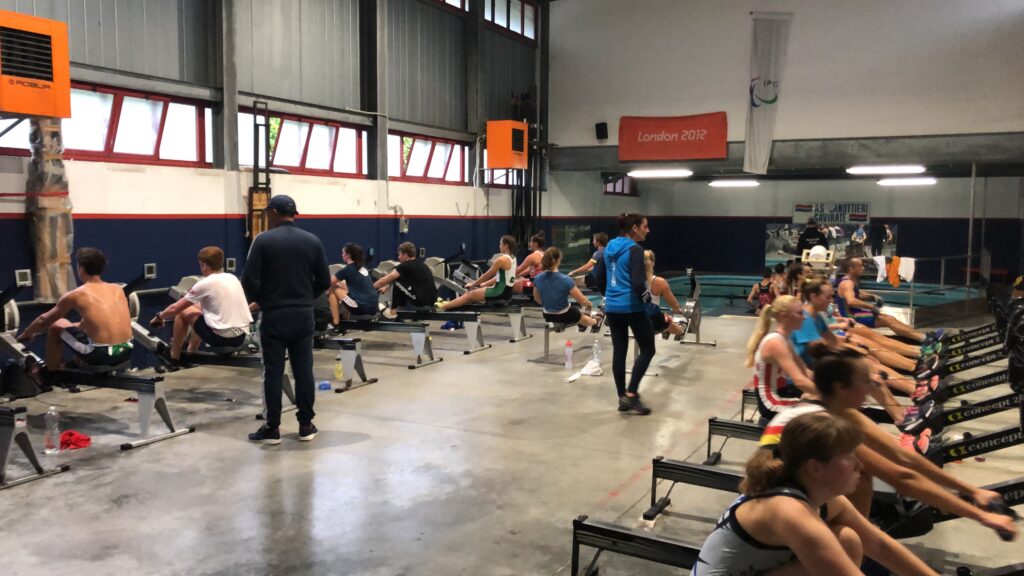
    Gavirate Rowing Club 2020. Photo WH Chambers.

    Original article by Andy Blow, BSc Honours degree in Sports and Exercise Science from the University of Bath, Precision Hydration (2020). Precision Hydration support our newsletter subscribers with 10% off all purchases, when you use the discount code; Faster10 at checkout. www.precisionhydration.com

    Indoor training can be viewed as an unfortunate but necessary evil by some athletes, while others relish the opportunity to get in the ‘Pain Cave’ and log those hours on the turbo trainer or treadmill.

    There’s often an impressive (and slightly dangerous) pool of sweat on the floor whenever I’ve finished an indoor training session. So, does that puddle mean I sweat more when training indoors than outdoors? Let’s find out…

    The effects of heat on sweat rate 

    The body controls core body temperature (CBT) to keep us alive and functioning, and we sweat when our CBT rises above a certain point.

    The heat given off by working muscles has the greatest influence on CBT when exercising, so how hard you’re working has a massive impact on your sweat rate and more so than body fat, weight and overall size. This was emphasised by the findings of a recent study.

    So, the average indoor workout is probably more intense than an outdoor session because we generally go for ‘quality’ over ‘quantity’ (unless you really enjoy being in your ‘pain cave’ for hours and hours on end). Therefore, this results in a higher sweat loss per unit of time.

    Air Flow and Temperature

    Two other important factors which will impact on how sweaty you get when training indoors are Air Flow and Temperature:

    Air Flow

    When outdoors, you’re moving through air so you get some airflow past the skin. Air movement causes heat to be drawn away from the body’s surface more effectively (via convection and sweat evaporation) and this cools you.

    On a static bike or treadmill, you lose this airflow and the sweat tends to drip off you, making you more aware of it. And as there’s no natural cooling effect, you probably actually do sweat a little more to compensate too (unless you attempt to mitigate the lack of air flow by adding a fan to your indoor ‘Pain Cave’…).

    Temperature

    Your body tries to offload heat to the environment when you’re training. The bigger the gradient between the air temperature, and the lower the humidity, the easier it is for heat to be evaporated away. As many places we train indoors are already quite warm and humid, the gradients for heat loss and evaporation are less pronounced than outside, and this further hinders thermoregulation and drives sweat rate up.

    So, whilst you don’t necessarily sweat significantly more indoors than outdoors, there are reasons why total sweat loss might be higher some of the time.

    Tips for staying hydrated during indoor training

    There are five simple steps you can take to ensure that you are well hydrated for your daily indoor training session…

    Before: Arrive well hydrated

    As we mentioned earlier, most people’s indoor training sessions are short and intense as we go for the old ‘quality over quantity’ approach. So, it’s important to make sure you start hydrated by doing some form of preload as this will maximise your ability to thermoregulate by sweating.

    Aim to drink around 500-750ml (16-25oz) of plain water mixed with a strong electrolyte drink (we recommend PH 1500) a few hours before you start your session. Use a bit of trial and error over the course of a few sessions to refine this approach.

    Before: Don’t overdo your fluid intake

    Having said that, there’s no need to go overboard on fluid intake in the immediate build-up to your session. Just try to stick to good hydration practices on a day-to-day basis.

    Before: Add sodium

    If you do find yourself low on fluid leading up to a session, it’s a good idea to add additional sodium to your drinks in the preceding hours as this maximises absorption of the fluids you do consume.

    During: Drink to thirst during the session

    This comes back to the ‘don’t overdo it’ point. Ultimately, don’t interfere with what you’re actually there to do (i.e. get sweaty on the turbo or treadmill) by trying to taking on unnecessary amounts of fluid.

    Don’t forget to stay on top of your hydration when training indoors and following these simple steps will help keep you hydrated correctly and able to perform at your best.

  • Are you getting enough?

    Are you getting enough?

    Recovery Through Sleep

    Sharing an article I came across whilst researching approaches to recovery. Original article on Training Peaks and by Simon Wegerif, 2020

    Simon Wegerif explains how proper sleep habits affects training and recovery, and how to make the most of your sleep.

    Sleep is one of the main mechanism by which the body repairs itself and recovers. While perfect sleep is quite easy to imagine (and desire!), it’s not that easy to achieve.

    What are the problems with the less-than-perfect sleep that almost all of us encounter, either on a temporary or ongoing basis, and how do these affect total training load?

    Perfect sleep

    Perfect sleep is not defined as a certain number of hours each night, but rather it:

    • Has 90-minute cycles comprising periods of light sleep, deep sleep, and REM sleep, with more deep sleep at the start of the night, and less later on.
    • Has a number of 90-minute cycles per night, usually five for most people when averaged across the week.
    • Fits in with your personal body clock or circadian rhythm, which is reset by the daily light/dark cycle (i.e. when your body naturally wants to be asleep).
    • Satisfies our sleep pressure. This is our need to sleep which has built up during the day, and which carries over from nights of insufficient sleep.
    • Has good sleep hygiene (i.e. cool, dark, quiet, comfortable).
    • Includes 20- to 30-minute naps in the early or late afternoon, especially if training or competing later in the day, or if night-time sleep quantity or quality has been reduced.


    Why do we need good sleep?

    There are plenty of articles out there with advice on how to prepare for effective sleep, but why do we need good sleep? In general, sleep facilitates recovery from damage accumulated during the previous period of wakefulness, and is especially important for athletes.

    Good sleep is needed to maintain the performance of thinking and problem solving, carbohydrate metabolism and the appetite associated with particular blood sugar levels, and the performance of the immune system in identifying and neutralizing invading pathogens. The first four hours of sleep are especially critical, as this period has the largest amount of deep sleep when human growth hormone (HGH) and testosterone are produced. These are the hormones responsible for the compensation response to exercise when our muscles and metabolism become stronger and more powerful.

    Good sleep resets the calibration of our internal perceived exertion (RPE) scale, and maintains good sensations of fatigue and mood. Workouts (especially high-intensity ones) feel easier when we have slept well, so are more likely to be completed as prescribed. Extended endurance workouts are more satisfying and our pacing strategy is also better when we have slept well too.

    With such clear benefits, you would expect that athletes take sleep as seriously as training, but according to surveys performed by Dr. Shona Halson at the Australian Institute of Sport, this is seldom the case, even amongst elite athletes.

    As the chart below shows, sleep efficiency (the proportion of time spent asleep whilst in bed, often used as a rough measure of sleep quality) and wake-up time are related, with swimmers and triathletes having the earliest rise times, coupled with the poorest sleep efficiency:

    Dr. Shona Halson, Australian Institute of Sport (AIS)

    So, although athletes need more sleep than their less-active peers, they often get less, resulting in daytime sleepiness as well as reduced performance.

    Less-than-perfect sleep

    So, what typically prevents athletes from getting good sleep?

    • Sleep hygiene: Poor bedtime routine, use of phones and TV in bed, bedding and room temperature mismatched.
    • Body sensations: Fatigue, injury, muscle soreness, nervous system activity—especially from using caffeine or training late in the day.
    • Travel: Jet lag, shared hotel rooms, shifts in time zone, training/competition times.
    • Overall, a lack of awareness of the importance of good sleep is what prevents athletes from paying sufficient attention to the factors they can control.
    • (Alcohol may aid with sleep onset due to its sedative properties, allowing you to fall asleep more quickly. However, people who drink before bed may experience disruptions later in their sleep cycle as liver enzymes metabolize alcohol.) Source, Sleep Foundation 2020.

    How does sleep interact with other total training load components?

    NUTRITION

    A chronic lack of sufficient sleep has significant effects on the regulation of blood sugar levels, increasing appetite for sweet sugary foods and the likelihood of contracting type 2 diabetes. On the other hand, an evening meal that includes high GI carbohydrates more than one hour before bedtime has been shown to increase the amount of REM sleep and reduce the time required to fall asleep.

    Diets high in protein may improve sleep quality slightly, but high-fat diets may negatively influence total sleep time. Foods naturally high in amino acid tryptophan, such as turkey and pumpkin seeds, may improve both sleep latency and quality.

    MENTAL STRESS

    high levels of perceived stress can reduce endurance athletes’ maximum power output. A study by Canadian researchers used Heart Rate Variability (a sensitive marker of stress) to evaluate the susceptibility of a group of students to stress in the form of a demanding task. They found that the amount of reduction in HRV during a standard stress test predicted the degree of sleep disturbance the students experienced during the build-up to important exams.

    Other researchers found that a higher daytime HRV predicted a shorter time to fall asleep and less arousals during the night, as well as a better sleep questionnaire score.

    This makes stress management and stress reduction techniques such as mindfulness, meditation, and deep breathing especially valuable at bedtime. It’s also said that a little love at bedtime doesn’t do sleep quality any harm, even the night before competition!

    CONCLUSION

    Sleep deprivation has significant effects on athletic performance, especially longer endurance sessions and high-intensity intervals. Most athletes don’t get enough sleep, and both napping and deliberately extending sleep on some days to get in the missing 90-minute cycles are very likely to have positive effects on performance, total load, and overall life satisfaction.

    Want to have a chat with me about your goals? Let’s connect on WhatsApp.

    This article is from Training Peaks, and shared to help inform you on the latest information circulating in high performance circles.

  • What is Heart Rate Variability (HRV)?

    What is Heart Rate Variability (HRV)?

    Faster Membership

    The rest of this one is for members.

    This article, both twelve-week training plans, and the full library of protocols and calculators are part of Faster Membership. CHF 129 for the year.

    See what’s inside Members log in

  • The Power and Importance of Mitochondria in Rowing

    The Power and Importance of Mitochondria in Rowing

    Faster Membership

    The rest of this one is for members.

    This article, both twelve-week training plans, and the full library of protocols and calculators are part of Faster Membership. CHF 129 for the year.

    See what’s inside Members log in

  • 5-Reasons Masters Rowers need to do strength training. (Premium access)

    5-Reasons Masters Rowers need to do strength training. (Premium access)

    Faster Membership

    The rest of this one is for members.

    This article, both twelve-week training plans, and the full library of protocols and calculators are part of Faster Membership. CHF 129 for the year.

    See what’s inside Members log in

  • This will help you set up your heart rate training zones. (Premium access)

    This will help you set up your heart rate training zones. (Premium access)

    Faster Membership

    The rest of this one is for members.

    This article, both twelve-week training plans, and the full library of protocols and calculators are part of Faster Membership. CHF 129 for the year.

    See what’s inside Members log in

  • In Pursuit of Excellence – Insights from the America’s Cup challenger series

    In Pursuit of Excellence – Insights from the America’s Cup challenger series

    After demolishing Team INEOS, 7-1 in the Prada Cup Challenger series, Luna Rossa’s James Spithill wasn’t gloating in the victory, he came across humble and focussed.

    “No doubt going through real racing, I think we’ve taken a good step forward. But it’s not enough…”

    Sharing this short article I came across, to inspire and challenge you with insights from the world’s very best competitors.

    Original article published in the New Zealand Herald, 22 February 2021.

    America’s Cup 2021: Luna Rossa co-helmsman Jimmy Spithill’s surprising claim ahead of Team New Zealand showdown.

    Jimmy Spithill admits Luna Rossa have a lot of work to do before being able to compete with Team New Zealand in the America’s Cup match – a daunting task he equates to facing the All Blacks in a Rugby World Cup final.

    The Luna Rossa co-helmsman was relatively understated in his celebrations following the Italian syndicate’s 7-1 demolition of Ineos Team UK last Sunday, perhaps looking ahead to his toughest challenge of his America’s Cup campaign in the shape of the defenders Team NZ.

    Spithill was pleased with the progress made by his team – from middling challengers early in the Prada Cup round robins to a near sweep in the final – but says they’re still behind the defenders.

    “No doubt going through real racing, I think we’ve taken a good step forward. But it’s not enough,” Spithill told NZME. “We’ve really got to utilise this time now between the match to try and bridge that gap. Because those guys (Team NZ), in my mind, are ahead at the moment.

    “I think the whole package is very, very good. I think we’ve got a great package at the bottom end for the wind conditions, but we need to improve in the middle and upper end of the ranges.”

    To do that, Spithill says he will be enlisting all the help he can get from his friends among the fallen challengers.

    “We spoke to the American guys after racing them in the semifinals. I’ll definitely be touching base with Ben [Ainslie] and Giles [Scott]. We’ve got a lot of friends in Ineos Team UK; a lot of guys who worked with Oracle in the last couple of campaigns. We’ll be looking for knowledge and ways to grow stronger from here from amongst all the challengers.”

    When asked how he’s going to wind up New Zealanders – like he did when Oracle came from behind to beat Team NZ in 2013 – Spithill laughed it off and simply spoke about the “privilege” of being able to challenge the Kiwis on home soil.

    “I think they seem to do a really good job of that themselves,” he said in jest. “I’m just really honoured to get a shot at the best team in the world. To be able to race Team New Zealand on home waters, it’s a lot like a rugby player getting to go on the rugby field against the All Blacks at Eden Park at a Rugby World Cup final. What an incredible privilege that is.”

    Spithill also made sure to pay tribute to his co-helmsman and partner in crime Francesco Bruni, who unlike the Australian, showed significantly more emotion after clinching the Prada Cup.

    “I’m so proud of ‘Ceco’. What an incredible journey he’s had. I know that Sicilian blood, that energy has just been bubbling there waiting. Man he’s just done an amazing job. An incredible series he’s raced. I was really pumped that we could get it done.”

    The two-time America’s Cup winner also praised the unique culture of the team, something he hopes will help them shock the world against the Kiwis next month.

    “The Italian culture is really amazing. It’s a really big family type of culture: very passionate, very emotional, a lot of energy and very hard workers.

    “One thing we’ve really worked on a lot is composure – just trying to sort of regulate, whether it’s been a good day or a bad day, we’re just trying to learn as much as we can.

    “I’ve been so impressed with the team from where we’ve come from. We’ve developed a fantastic culture in the team. It’s something now we’ve got to put in to play over this next week or two.”

  • Signups for How To Create Your Annual Training Plan starts today.

    Signups for How To Create Your Annual Training Plan starts today.

    We’d like to suggest you consider the How To Create Your Annual Training Plan online course. It’s a proven, effective way to level up and prepare for the next season in your rowing calendar. This is a proven, effective and powerful way for you to plan out your training, understand where you are now, and start doing the work you were meant to do.

    Signups for our new intake of the How To Create Your Annual Training Plan starts today. If you’re ready to start doing the work of transforming your rowing training, this window of time might be an opportunity. Masters rowing is hard work, and the best way to go faster, is to train smarter. You don’t go faster by training more hours. You can’t always train more hours. You do better by finding a better way to prepare and train.

    If you’d like to join the others, as they learn and connect together, today is the best day to join. It’s our last session for 2020.

    How to Create Your Annual Training Plan, is an online interactive course that will enable you to;
    • Set up your training plan in under an hour to maximise your power and speed for 1,000m and head races.
    • Set up your personalised training zones in less than 30-minutes.
    • Understand how to be +14% more powerful at race pace and +11% more aerobically efficient in 12-weeks.
    • Access to the key workouts from Champion Masters athletes.
    • Understand how to train with fewer hard sessions to maximise your training and go faster than ever before.
    • Know how to burn fat for fuel through increased activation of the Aerobic system. 
    • Access to downloadable tools and frameworks to help you assess your fitness to improve Aerobic efficiency, increase Anaerobic threshold and increase power at VO2max.
    • Get an advantage on the competition with knowledge and cutting-edge insights into training methods from the world’s best coaches, sports scientists and fastest Masters crews.

    Click here to purchase the course

    Here’s what one student shared about his experience in the course: 

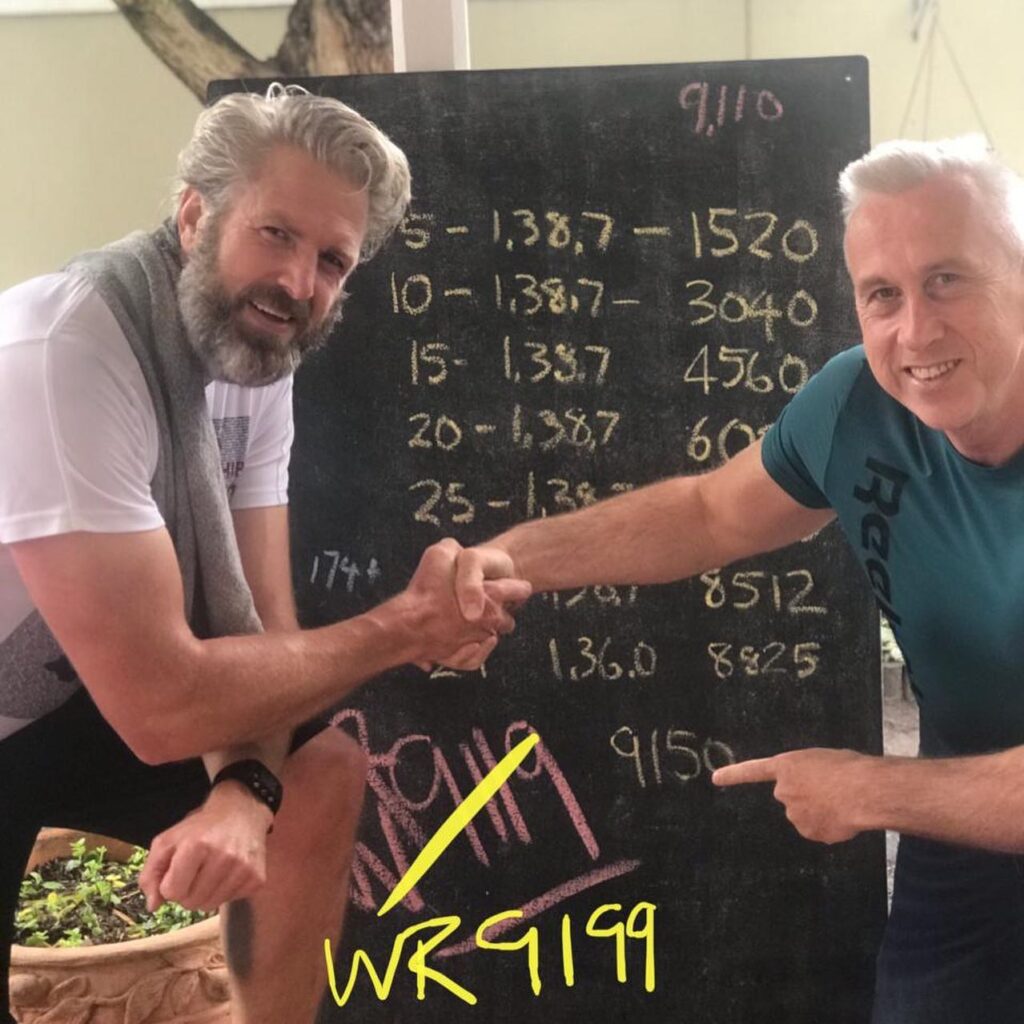
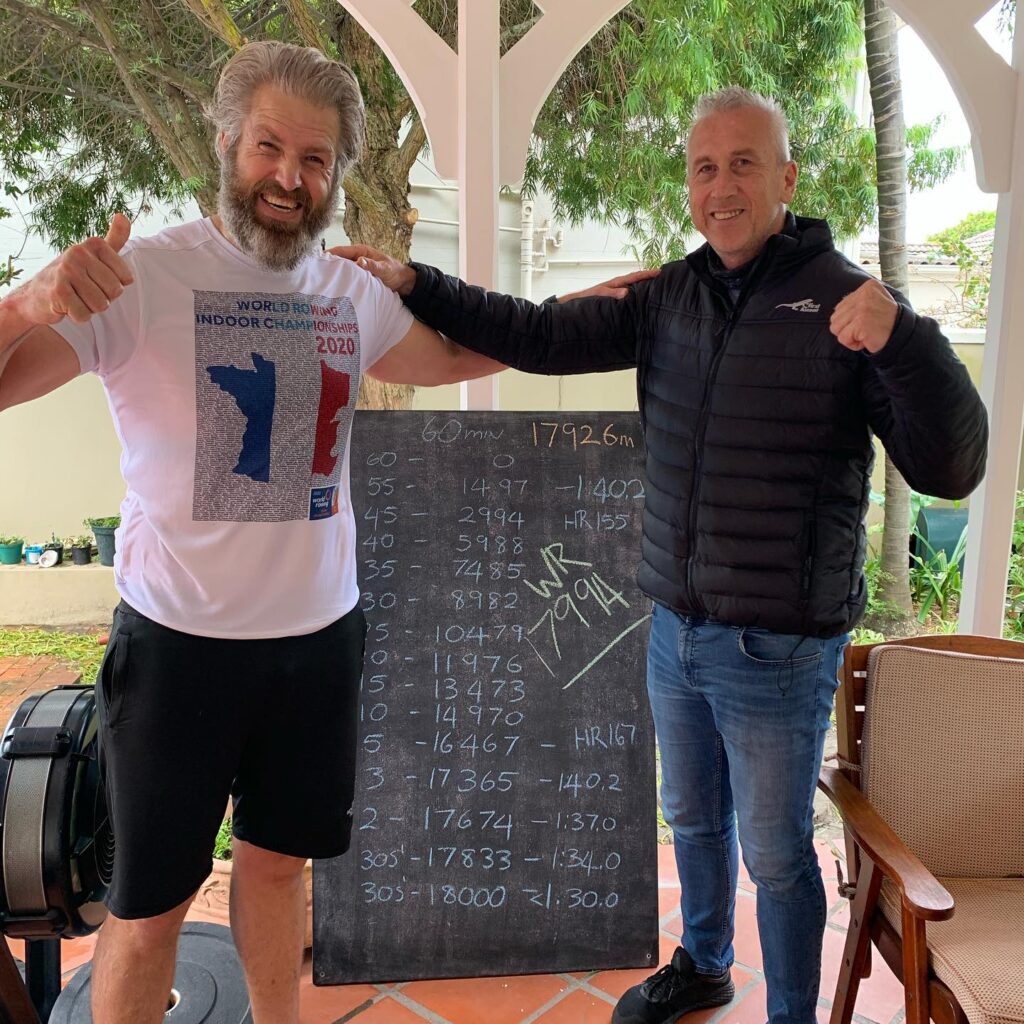
    After 10 weeks of Bill Chambers Faster training program, I set out to break @grahambenton record of 9110m. This was my second attempt after hitting the wall the first time at 7min to go. Bill Chambers program was very well laid out and all I had to do was get on with it.

    Luke Wollenschlaeger , 5 Times age group world ergo record holder

    Click here to purchase the course $287.00

    Contact me directly for the subscribers discount code.

    Here’s what’s included in the course

    • Exclusive access to the Faster Alumni Group on Facebook, to share ideas and cover questions with past students. This group is only open to Faster Alumni.
    • Three Live Zoom Classes to review the course together with the course community. Classes will be streamed Live to the Faster Alumni Group
    • Access to all the online learning modules via the Teachable platform
    • Downloadable tools and templates
    • Protocols on how to test your performance
    • Access to Tips & Tricks – Ideas & Inspiration from our advisory panel of experts
    • PDF downloads of studies on the best approaches to train
    • Guidance on how to train from the world’s best coaches, scientists and athletes – period!
    Here’s what another student shared about his experience in the course: 

    “I completed the course earlier this year, and what I learnt has opened my eyes to what I was truly capable of, and transformed the way I train and prepare. I used to always train hard, yet never knew if I was really training the right way. Since I have done the course, I now KNOW what I need to do to reach my potential. I don’t train any more than I used to, yet I am going faster on the ergo and on the water. I can better plan my training to achieve balance with my family and the business that I own and operate.

    I highly recommend this course to anyone that wants to train smart vs. just training harder all the time.”

    J Van Vulpen, The Netherlands

    Click here to purchase the course $287.00


    Join hundreds of other Masters Rowers who are changing the way they prepare and train.

    Contact me directly for the subscribers discount code.

    Hope to see you inside,

    Bill and the FASTER Team

  • You’re getting priority!

    You’re getting priority!

    My next course is about to open for enrolment.

    I’m really excited to let you know, my flagship course, How to Create Your Annual Training Plan, is ready to go live! I have opened the course exclusively to you, before it opens to the public on Friday, 6th of November. The course will be open for a limited time, and for a limited number of people, so get your spot before the course officially opens. 
    Click here to purchase the course. Special coupon code EARLYBIRD30

    In addition to the course materials and downloadable tools, there will be three Live Zoom classes with Bill and former students from the Faster Alumni, exclusively for course delegates.

    Here’s what’s included in the course;

    • Exclusive access to the Faster Alumni Group on Facebook, to share ideas and cover questions with past students. This group is only open to Faster students
    • Three Live Zoom Classes to review the course together with the course community. Classes will be recorded for playback
    • Access to all the online learning modules via the Teachable platform
    • Downloadable tools and protocols on how to test your performance
    • Dynamic and Maximum strength plans
    • Access to Tips & Tricks – Ideas & Inspiration from our advisory panel of experts
    • PDF downloads of studies on the best approaches to training 
    • Guidance on how to train from the world’s best coaches, scientists and masters athletes – period!

    Access to the entire course and all the online learning modules is $287, but I’m giving you 30% off when you enrol before the course opens on November 6th. Just use one of the limited the coupon codes EARLYBIRD30 at the checkout, and you’ll receive your discount.

    Click here to purchase the course. Special coupon code EARLYBIRD30

    Here’s what one student shared about his experience in the course.

    “What I learnt from this course opened my eyes to what I was truly capable of and transformed the way I now train and prepare. I used to go fast, yet never knew if I was really training the right way. Since I have done the course, I now KNOW what I need to do to reach my potential. I don’t train any more than I used to, yet I am going faster on the ergo and on the water. I can better plan my training to achieve balance with my family and the business that I own and operate. I highly recommend this course to anyone that wants to train smart vs. just training harder all the time.” 

    J Van Vulpen, The Netherlands

    Click here to purchase the course. Special coupon code EARLYBIRD30

    If you’ve been waiting to see what you’re capable of, today’s a great day to begin. Hope to see you inside,

    Bill and the FASTER Team

  • Train smart & stay healthy

    Masters – Keep building the base with low stress training.

    It’s so important to stay below the stress radar when everyone around is not feeling well and you are training. Train smart and accumulate enough time in zone 2 to continue to build the aerobic base yet not create too much stress signalling. Keep your immune system strong and use this time to invest in building your foundation for the delayed regatta season.