Tag: high performance mindset

  • Cracking the Athlete’s Brain

    Cracking the Athlete’s Brain

    Researchers are showing everyday athletes how to train their brains to perform like the pros


    Original article by Alex Hutchison, Outside magazine, Dec 30, 2013

    It goes without saying that Olympic athletes need to be strong, fit, and tough. But none of that matters if they aren’t capable of adapting quickly to unexpected circum-stances. Take former Slovenian swimmer Sara Isakovic. During the 2008 Beijing Olympics, with one length remaining in the 200-meter freestyle final, disaster struck. Isakovic misjudged her final flip turn, and as she uncoiled her legs to explode off the wall, she could feel her toes just barely graze it.

    “I remember thinking, This is not happening! Why now?” Isakovic, 25, recalls. “Then, in a split second, I was able to refocus.” Riding on a surge of adrenaline, she tore down the last length to nab a silver medal, breaking the previous world record and missing gold by just 0.15 seconds.

    Isakovic is now a research assistant in psychiatry at the University of California at San Diego, where she works with Martin Paulus, a leading player in the search for brain–training techniques that will enable the rest of us to develop elite-level mental agility. Says Isakovic, “What we’re interested in is how you build resilience, how you train your brain to be as tough as your body.”

    For the past five years, Paulus and his team have employed advanced imaging tools to understand the difference between normal and ultra-resilient brains. They’ve discovered that the distinction often resides in the interplay between two areas: the insular cortex and the medial prefrontal cortex, or MPC. The insular cortex monitors data from the outside world and from within the body—muscle tension, glucose levels, blood pressure, blood-oxygen levels. The MPC, meanwhile, decides how strongly to respond to those signals.

    The goal, then, is to train your brain to anticipate, and not overreact, to unexpected stress. For a whitewater kayaker, that means staying calm and making the right strokes after getting caught in a hole; for a runner, it means pushing through the pain to stay on pace late in a race.

    In a series of studies starting in 2009, Paulus and his colleagues put hardened Marines, elite adventure racers, and regular Joes through various cognitive tasks while monitoring their brain activity in real time with an fMRI scanner. To provide an “aversive stimulus”—a scaled-down version of the stress they’d experience when coming under enemy fire or taking a wrong turn during a multi-day race—the researchers occasionally interfered with subjects’ breathing, restricting airflow to masks they were wearing.

    The subjects knew the sensation was coming but not always when. Some members of the control group panicked and had to be removed from the scanner, but the Marines and the adventure racers handled the scenario with ease. In the fMRI scanner, they showed higher activation in the insular cortex immediately before the restricted breathing started. They had, essentially, prepared themselves for the unpleasant sensation. Then, while it was happening, the same region of the brain showed lower activ-ity and carried on with business as usual. “That kind of anticipation and preparation is critical,” Paulus says.

    The goal, then, is to train your brain to anticipate, and not overreact, to unexpected stress. For a whitewater kayaker, that means staying calm and making the right strokes after getting caught in a hole; for a runner, it means pushing through the pain to stay on pace late in a race. Paulus believes that neurofeedback training, in which subjects try to alter their resiliency-related brain patterns based on real-time data from an fMRI scanner, is not far off.

    For now, the most promising technique is one that’s already familiar to many professional athletes: meditation. Paulus’s latest study put 30 Marine recruits through a program in mindfulness, an approach to self-awareness with roots in Buddhist teachings. “You learn to monitor how your body actually feels while suspending judgment about it,” Paulus explains.

    In the study, subjects followed an eight-week course that taught simple breathing exercises, sitting and walking meditation, yoga, and techniques like “body scans,” in which they focused awareness on each part of their bodies, progressing from head to toe.

    Brain scans before and after revealed that the trainees acquired some of the same brain patterns that the Marines and adventure racers had shown in the earlier experiments. More surprising, the changes persisted a year later. The biggest effects were in the MPC, which moderates knee-jerk responses to external stimuli.

    Of course, there are many routes to the same goal. “There are similarities between mindfulness and the state of focus that athletes achieve through long hours of repetitive training,” says Christopher Bergland, a triple-Ironman champion who covered 153.8 miles to set a 24-hour treadmill world record in 2004. That state of mindfulness helped him push his endurance to new levels, he says.

    Isakovic, too, certainly honed her ability to listen closely and dispassionately to her body’s feedback during the many years and countless hours spent staring at the bottom of a practice pool. But with the tools of neuro-science, the process can be made more efficient and accessible, Paulus believes. “We can’t all be Olympic athletes, that’s clear,” he acknowledges. “But if our brains are trained properly, we can do amazing things beyond what most people imagine.”

    You may want to try out the Head Space or Calm apps to get an easy introduction to meditation.

    https://www.calm.com

    https://www.headspace.com

  • How the brain regulates performance – Faster Podcast

    How the brain regulates performance – Faster Podcast

    Conversation with Prof Tim Noakes MD

    Prof Tim Noakes, is well known in the world of sports science and considered an expert in this subject. Originally born in Harare, Zimbabwe, he grew up in South Africa, studying Medicine and Exercise Science. 

    He is the author of several books on exercise and nutrition, including the Lore of Running and Challenging Beliefs and has over 750 scientific articles, being cited over 19,000 times. 

    In 2008, he was elected an Honorary Fellow of the Faculty of Sports and Exercise Medicine (UK), and in 2015, he was made an Honorary Fellow of the Faculty of Sports and Exercise Medicine, Royal College of Physicians of Ireland in recognition of his involvement in the field of Sports and Exercise Medicine. 

    His book, Lore of Running, is considered the “bible of the sport”. Among his other published works are: Rugby without Risk; Bob Woolmer’s Art and Science of Cricket co-written with the late Bob Woolmer; his scientific autobiography, Challenging Beliefs; Waterlogged: The Serious Problem of Overhydration in Endurance Sports; Real Meal Revolution; Raising
    Superheroes; The Banting Pocket Guide and Lore of Nutrition.

    In this episode, Prof Noakes explains his Central Governor theory. How the brain regulates performance, as well as strategies the world’s best use, to tap into their pure potential.

    Books recommended by Prof Noakes

    • The Big Fat Surprise, by Nina Teicholz
    • Boat race: The Oxford revival, by Daniel Topolski 
    • The White Spider, written by Heinrich Harrer

    YouTube Links

    The Noakes Foundation

    Link to website

    https://anchor.fm/s/1f7219c8/podcast/rss
  • “Nobody Cares. Work Harder.”

    “Nobody Cares. Work Harder.”

    Sharing Lockdown Lessons from inspiring teams and athletes in different sports from around the world.

    “Nobody Cares. Work Harder.” The mantra pushing the one team to grand final glory.

    Original article by Adrian Proszenko, Chief Rugby League Reporter for the Sydney Morning Herald October 2020.

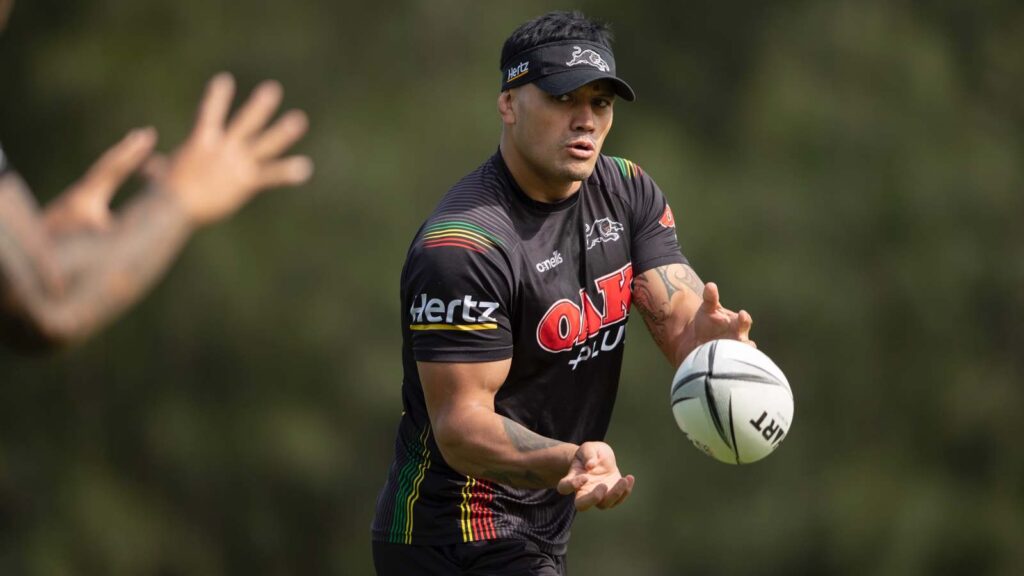
    Of all of the inspirational quotes that adorned the makeshift gym in James Fisher-Harris’ home during COVID lockdown, none resonated more than those four words from Lamar Jackson.

    The Baltimore Ravens quarterback coined the phrase when the reigning NFL MVP began wearing t-shirts with the mantra emblazoned on it. It has subsequently been borrowed by the Los Angeles Lakers and also served as the inspiration for the Panthers to maintain their work ethic when the competition shut down.

    Fisher-Harris, Moses Leota, Viliame Kikau and Zane Tetevano alternated as training partners during those six weeks when the season was in limbo. Every day they pushed each other to the absolute limit in the belief this was a premiership that would be won during lockdown.

    “Every session. All the time. It was always the same intensity,” Fisher-Harris said.

    “We just bounce off each other. We are working towards something.”

    James Fisher-Harris 

    When equipment from the Panthers gym was divvied up among the players, Fisher-Harris ended up with an assault bike and the majority of the weights. His main training partner, Tetevano, made do with a watt bike and some barbells. They chronicled their journey via a series of videos, which they reflected on the day after the Panthers booked their first grand final appearance in 17 years, via a semi-final win against South Sydney.

    “That’s a story on its own,” Tetevano said. “We made sure we were training every day.

    “Me and Fish, we were just talking about it [on Sunday]. In that period we had our videos and we were showing each other the memories, why we are here today.

    “We were making sure we were accountable. It’s paying off now, we always talk about it.

    “We knew we put in a lot of work during that six-week break. We haven’t stopped ever since.”

    Their efforts have been rewarded. Prop Fisher-Harris and back-rower Kikau were named in the Dally M team of the year, while Tetevano has a chance to be part of a third premiership outfit after switching from the Roosters during the pre-season.

    Whenever things got tough, they would look to an inspirational quote for motivation. Often, it was Jackson’s words that got them through sessions.

    “He’s the quote man,” Tetevano said pointing at Fisher-Harris. “He would chuck up different quotes when we were in the gym. If you’re hurting, nobody really cares. You just do the work.

    “That’s how we looked at it. Things are hard but nobody cares if you’re hurting. That’s what kept us going.

    “These are the things that got us to where we are. It was tough. We reap the rewards now.”

    Fisher-Harris and Tetevano have become close in a short space of time.

    “I roomed with him throughout the year with the Kiwis and I knew what he was like,” Fisher-Harris said. “When I saw him rock up at Panthers, I thought ‘this is good’.

    “Naturally, we want to test ourselves anyway. It’s who we are.”

    The Panthers bonds have been formed on and off the paddock. Many of the current squad came up through the lower grades together, culminating in an under-20s premiership in 2015.

    “There was about six or seven,” halfback Nathan Cleary said. “That makes it even more special to be able to do it with a group you have grown up with. We have gelled so well. I am super grateful to be part of this group. I am riding the wave and absolutely loving it.

    “I think everyone gets along so well. It has been a dream of mine to win a grand final together. To be able to win it with your mates is pretty crazy.”

    Original article posted in the Sydney Morning Herald online, 21 October 2020. https://www.smh.com.au/sport/nrl/lockdown-lessons-the-mantra-pushing-the-panthers-to-grand-final-glory-20201021-p5673w.html

  • Keeping Faith & Keeping It Real. The Stockdale Paradox

    Keeping Faith & Keeping It Real. The Stockdale Paradox

    As all around the world, lives are turned upside down by Corona Virus, and as families around the world are hunkering down to stand-firm in the face of the second wave, I was reminded of the mindset, and approach of Admiral Stockdale. Brilliantly codified and shared by Jim Collins in his best seller, From Good to Great.

    The Stockdale Paradox was first published by Jim Collins. Copyright © 2017 Jim Collins, All rights reserved. Link to article can be found at the bottom of this post. Photo image, Forward Rowing Club, Switzerland.

    The Stockdale Paradox

    Admiral Jim Stockdale was the highest-ranking military officer in the Hanoi Hilton. He was there for, I think, seven years, from 1968 to 1974. He was tortured over twenty times. And by his own account, Stockdale came out of the prison camp even stronger than he went in.  

    In preparation for a day I got to spend with Jim Stockdale, I read his book In Love and War. As I read this book, I found myself getting depressed because it seemed like his systemic constraints were so severe, and there was never going to be any end to it. His captors could come in any day and torture him. He had no sense of whether, or if, he would ever get out of the prison camp. Absolutely depressing situation. It’s like we can all survive anything as long as we know it will come to an end, we know when, and we have a sense of control. He had none of that.  

    Then all of a sudden it dawned on me, “Wait a minute, I’m getting depressed reading this book, and I know the end of the story. I know he gets out. I know he reunites with his family. I know he becomes a national hero. And I even know that we’re going to have lunch on the beautiful Stanford campus on Monday. How did he not let those oppressive circumstances beat him down? How did he not get depressed?” And I asked him.  

    He said, “Well, you have to understand, it was never depressing. Because despite all those circumstances, I never ever wavered in my absolute faith that not only would I prevail—get out of this—but I would also prevail by turning it into the defining event of my life that would make me a stronger and better person. Not only that, Jim, you realize I’m the lucky one.”  

    I said, “No, I don’t.”  

    He said, “Yes, because I know the answer to how I would do, and you never will.”

    A little later in the conversation, after I’d absorbed that and said nothing for about five minutes because I was just stunned, I asked him who didn’t make it out of those systemic circumstances as well as he had.

    He said, “Oh, it’s easy. I can tell you who didn’t make it out. It was the optimists.”

    And I said, “I’m really confused, Admiral Stockdale.”  

    He said, “The optimists. Yes. They were the ones who always said, ‘We’re going to be out by Christmas.’ Christmas would come and it would go. And there would be another Christmas. And they died of a broken heart.” Then he grabbed me by the shoulders and he said, “This is what I learned from those years in the prison camp, where all those constraints just were oppressive. You must never ever ever confuse, on the one hand, the need for absolute, unwavering faith that you can prevail despite those constraints with, on the other hand, the need for the discipline to begin by confronting the brutal facts, whatever they are. We’re not getting out of here by Christmas.”

    Remembering another great leader and the inspiration he gave to the world in a time of great darkness. “Now this is not the end. It is not even the beginning of the end. But it is, perhaps, the end of the beginning”. Winston Churchill (1942)

    Original article found at www.jimcollins.com

    https://www.jimcollins.com/media_topics/TheStockdaleParadox.html

  • Conversation with Mick Miller – 6 x Olympic Strength & Performance Coach

    Conversation with Mick Miller – 6 x Olympic Strength & Performance Coach

    “I believe in challenging people so that they can grow and evolve, and change the world for the better.”

    Mick has seen it all. He’s worked with elite athletes chasing Olympic glory, world champions, professional Rugby League teams, America’s Cup campaigns, and up-and-coming youth champions. He’s seen athletes through good times and bad, through victory and meltdown, through triumphant euphoria and heart-breaking despair. He’s brought athletes back from career-threatening injury, rebuilt teams that were crumbling under pressure, and mentored his junior athletes through the challenges of growing up. Then in 2013, at age 49, he discovered a lump in his neck that turned out to be cancer. He then discovered more about himself that he could ever have imagined.

    Mick’s cancer survival journey started in a bed at the Oncology ward at Royal North Shore Hospital Sydney, then took him on a journey of recovery and discovery  around and  to the heart of Australia in a ‘68 VW Beetle. Only then was he able to listen to his own heart, let go of everything he was preconditioned to be, and discovered who he really was.

    In my conversation with Mick, we cover our mutual friendship and our passion for rowing and helping others to achieve high performance. We cover Mick’s journey of discovery on what it took, for Mick to find his right path and how through this experience, Mick is helping others to find their Right Path.

    https://anchor.fm/s/1f7219c8/podcast/rss