Original article written by Dr Shona L Halson, Department of Physiology, Australian Institute of Sport, and re-posted with permission.
Image, Mark Sisson 2020.
High performance sport and the importance of successful performances have led athletes and coaches to continually seek any advantage or edge that may improve performance. It follows that the rate and quality of recovery is extremely important for the high performance athlete and that optimal recovery may provide numerous benefits during repetitive high-level training and competition. Therefore, investigating different recovery interventions and their effect on fatigue, muscle injury, recovery and performance is important.
Recovery aims to restore physiological and psychological processes, so that the athlete can compete or train again at an appropriate level. Recovery from training and competition is complex and involves numerous factors. It is also typically dependent on the nature of the exercise performed and any other outside stressors that the athlete may be exposed to. Athletic performance is affected by numerous factors and therefore, adequate recovery should also consider such factors.
METHODS TO ENHANCE RECOVERY
There are a number of popular methods used by athletes to enhance recovery. Their use will depend on the type of activity performed, the time until the next training session or event, and equipment and/ or personnel available. Some of the most popular recovery techniques for athletes include:
- sleep,
- hydrotherapy,
- active recovery,
- stretching,
- compression garments,
- massage and
- nutrition.
SLEEP
Background
Although the function of sleep is not fully understood, it is generally accepted that it serves to recover from previous wakefulness and/or prepare for functioning in the subsequent wake period. An individual’s recent sleep history therefore has a marked impact on their daytime functioning. Restricting sleep to less than 6 hours per night for four or more consecutive nights has been shown to impair cognitive performance and mood, disturb glucose metabolism, appetite regulation and immune function. This type of evidence has led to the recommendation that adults should obtain 8 hours of sleep per night.
While there are considerable data available related to the amount of sleep obtained by adults in the general population, there are few published data related to the amount of sleep obtained by elite athletes.
Sleep deprivation
There are a limited number of studies which have examined the effects of sleep deprivation on athletic performance. From the available data it appears that several phenomena exist. Firstly, sleep deprivation must be greater than 30 hours (one complete night of no sleep and remaining awake into the afternoon) to have an impact on anaerobic performance. Secondly, aerobic performance may be decreased after only 24 hours and thirdly, sustained or repeated bouts of exercise are affected to a greater degree than one-off maximal efforts.
The mechanism behind reduced performance following prolonged sustained sleep deprivation is not clear, however it has been suggested that an increased perception of effort is one potential cause. While the above studies provide some insight into the relationship between sleep deprivation and performance, most athletes are more likely to experience acute bouts of partial sleep deprivation where sleep is reduced for several hours on consecutive nights.
Partial sleep deprivation
Only a small number of studies have examined the effect of partial sleep deprivation on athletic performance. From the available research it appears that sub- maximal prolonged tasks may be more affected than maximal efforts particularly after the first two nights of partial sleep deprivation.
Effects of sleep extension and napping
Another means of examining the effect of sleep on performance is to extend the amount of sleep an athlete receives and determine the effects on subsequent performance. Information from the small number of studies suggests that increasing the amount of sleep an athlete receives may significantly enhance performance.
Athletes suffering from some degree of sleep loss may benefit from a brief nap, particularly if a training session is to be completed in the afternoon or evening. Naps can markedly reduce sleepiness and can be beneficial when learning skills, strategy or tactics in sleep deprived individuals. Napping may be beneficial for athletes who have to routinely wake early for training or competition and for athletes who are experiencing sleep deprivation.
Habitual sleep duration
According to a 2005 Gallup poll in the USA, the average self-reported sleep duration of healthy individuals is 6.8 hours on weekdays and 7.4 hours on weekends (National Sleep Foundation, 2006). However, the sleep habits of elite athletes have only recently been investigated. Leeder et al4 compared the sleep habits of 47 elite athletes from Olympic sports using actigraphy over a 4-day period to that of age and gender-matched non-sporting controls. The athlete group had a total time in bed of 8:36 hour:minutes, compared to 8:07 in the control group. Despite the longer time in bed, the athlete group had a longer sleep latency (time to fall asleep) (18.2 minutes vs 5.0 minutes), a lower sleep efficiency (estimate of sleep quality) than controls (80.6 vs 88.7%), resulting in a similar time asleep (6:55 vs 7:11 hour:minutes). The results demonstrated that while athletes had a comparable quantity of sleep to controls, significant differences were observed in the quality of sleep between the two groups.
While the above data was obtained during a period of normal training without competition, athletes may experience disturbed sleep prior to important competition or games. Erlacher et al administered a questionnaire to German athletes to assess possible sleep disturbances prior to competition. Of these athletes, 66% (416) reported that they slept worse than normal at least once prior to an important competition. Of these 416 athletes, 80% reported problems falling asleep, 43% reported waking up early in the morning and 32% reported waking up at night. Factors such as thoughts about competition (77%), nervousness about competition (60%), unusual surroundings (29%) and noise in the room (17%) were identified as reasons for poor sleep. Therefore it appears that sleep disturbances in athletes can occur at two time points:
- prior to important competitions and
- during normal training.
This sleep disruption during normal training may be due to a poor routine as a consequence of early training sessions, poor sleep habits (i.e. watching television in bed), nocturnal waking to use the bathroom, caffeine use and excessive thinking/worrying/planning. While not documented in the literature, anecdotal evidence also suggests that athletes such as footballers who compete at night also have significant difficulties falling asleep post-competition. Athletes should focus on utilising good sleep hygiene to maximise sleep.
Strategies for good sleep include:
- The bedroom should be cool, dark and quiet. Eye masks and ear plugs can be useful, especially during travel.
- Create a good sleep routine by going to bed at the same time and waking up at the same time.
- Avoid watching television in bed, using the computer in bed and avoid watching the clock.
- Avoid caffeine approximately 4 to 5 hours prior to sleep (this may vary between individuals).
- Do not go to bed after consuming too much fluid as it may result in waking up to use the bathroom.
- Napping can be useful, however generally naps should be kept to less than 1 hour and not too close to bedtime as it may interfere with sleep.
HYDROTHERAPY
Although hydrotherapy is widely incorporated into post-exercise recovery regimens, information regarding these interventions is largely anecdotal. The human body responds to water immersion with changes in the heart, peripheral resistance and blood flow, as well as skin, core and muscle temperature alterations. These changes in blood flow and temperature responses may have an effect on inflammation, immune function, muscle soreness and perception of fatigue.
Various forms of water immersion are becoming increasingly popular with elite athletes. While athletes have been using hydrotherapy for a number of years, we are now beginning to see increased research into water immersion, recovery and performance. The most common forms of water immersion are cold water immersion (CWI), hot water immersion (HWI) and contrast water therapy (CWT), where the athlete alternates between hot and cold water immersion.
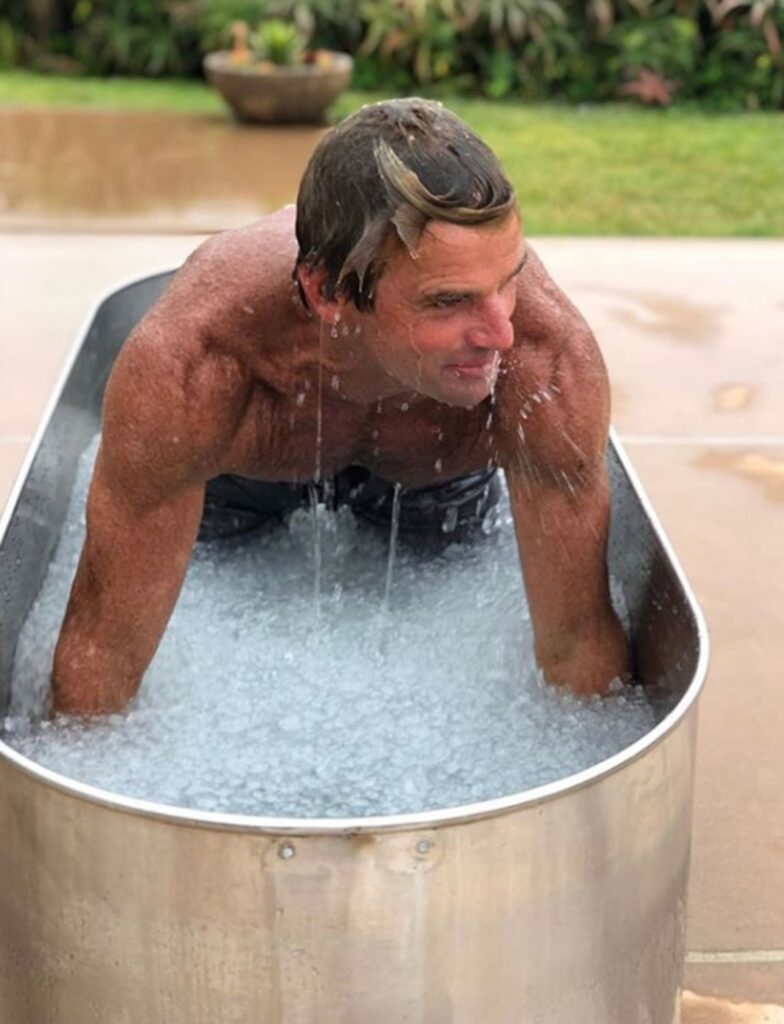
The effects of three hydrotherapy interventions on next day performance recovery following strenuous training was investigated on 12 male cyclists who completed four experimental trials differing only in recovery intervention: CWI, HWI, CWT or passive recovery. After completing each exercise session, participants performed one of the four recovery interventions (in a randomised crossover design). Sprint and time trial performance was enhanced across the 5-day trial following both CWI and CWT when compared to HWI and passive recovery.
The same authors also examined different water immersion temperatures (15 minutes of intermittent immersion in 10°C, 15°C, 20°C, continuous immersion in 20°C water, and active recovery). Two 30-minute cycling bouts performed in the heat were separated by 60 minutes, with one of the five recovery strategies performed immediately after the first exercise bout. Each trial was separated by 7-days. All water immersion protocols improved subsequent cycling performance when compared to active recovery, demonstrating the benefits of cold water immersion in the heat.
In a study investigating a dose-response effect of CWT improved cycling time trial and sprint performance was observed following 6-min of CWT (hot water: 38.4°C; cold water: 14.6°C; 1 minute rotations) when compared with control (passive rest). Twelve minutes of CWI also improved sprint total work and peak power. There was no improvement in repeat performance with 18-minutes of CWT, indicating that a dose-response relationship does not exist under these conditions. The same research group repeated the above study with trained runners using identical water immersion times and temperatures and the same time between exercise bouts (2 hours). The results of this study again did not show a dose-response relationship between running performance and CWT; however, CWT for 6-minutes improved performance, whereas 12 and 18-minutes did not. Importantly, this study was performed outdoors in an environmental temperature of 14.9°C and the increased duration of cold water exposure may have reduced the potential benefits of longer water immersion durations. Therefore, benefits of longer duration CWT may potentially occur in warmer environments.
From available literature it appears that hydrotherapy may be beneficial for athletes, particularly those performing high intensity efforts. Specifically, CWI and CWT appear more beneficial than HWI for recovery.
ACTIVE RECOVERY
Active recovery generally consists of aerobic exercise which can be performed using different modes such as cycling, jogging, aqua jogging or swimming. Active recovery is often thought to be better for recovery than passive recovery due to enhanced blood flow to the exercised area and clearance of lactate and other metabolic waste products via increased oxygen delivery.
It is not clear whether there are benefits of active recovery between training sessions or following competition in various sports. No detrimental effects on performance have been reported following active recovery (when compared to a passive recovery) between training sessions, with a small amount of literature reporting enhanced performance. Many researchers, however, use the removal of lactate as their primary indicator of recovery and this may not be a valid indicator of enhanced recovery and ability to repeat performance at a previous level. The role of active recovery in reducing lactate concentrations and reducing muscle soreness after exercise may be an important factor for athletes. This is anecdotally reported to be one of the most common forms of recovery and utilised by the majority of athletes for these reasons.
STRETCHING
Although stretching is anecdotally one of the most used recovery strategies, there is very little literature examining the effects of stretching as a recovery method. There have been mixed reports regarding the benefit of stretching as a recovery strategy. However, two separate reviews of recovery methods concluded that there was no benefit for stretching as a recovery modality. It is important to note that to date, there have not been any detrimental effects on performance associated with post-exercise stretching.
COMPRESSION GARMENTS
Many recovery strategies for elite athletes are based on medical equipment or therapies used in patients. Compression clothing is one of these strategies. It has traditionally been used to treat various lymphatic and circulatory conditions. Compression garments are thought to improve venous return through application of graduated compression to the limbs from proximal to distal. The external pressure created may reduce the intramuscular space available for swelling and promote stable alignment of muscle fibres, attenuating the inflammatory response and reducing muscle soreness. While there is currently minimal research into compression garments and recovery for endurance athletes, the small amount of data suggests that they may be beneficial and do not appear to be harmful to the recovery process.
MASSAGE
Massage is a widely used recovery strategy among athletes. However, apart from perceived benefits of massage on muscle soreness, little data has shown positive effects on repeated exercise performance. Furthermore, increased blood flow is one of the main mechanisms proposed to improve recovery (thus improving clearance of metabolic waste products). Several reviews of the effects of massage have concluded that while massage is beneficial in improving psychological aspects of recovery, most evidence does not support massage as a modality to improve recovery of functional performance. However, as massage may have potential benefits for injury prevention and management, it should still be incorporated in an athlete’s training programme for reasons other than recovery.
SUMMARY
As recovery research is a relatively new area for scientists, many of the current recommendations are general guidelines only. It is important that athletes experiment with a variety of strategies and approaches to identify the recovery options that work best for each individual. However, it is known that optimal recovery from training and competition may provide numerous benefits for athlete performance. Recovery strategies such as hydrotherapy, low-intensity active recovery, massage, compression garments, stretching or various combinations of these methods may have merit as recovery-enhancing strategies. Importance should also be placed on optimal post-exercise nutrition and adequate sleep to maximise recovery and reduce fatigue from exercise.
Dr Shona L Halson, Department of Physiology, Australian Institute of Sport.