Many of us are lucky enough to be able to train on the ergo during lockdown, yet often training indoors can be a hot and sweaty event. It’s especially important to make sure your hydrated appropriately. The following article from Abby Coleman, explains more about the importance of sodium in your hydration strategy.
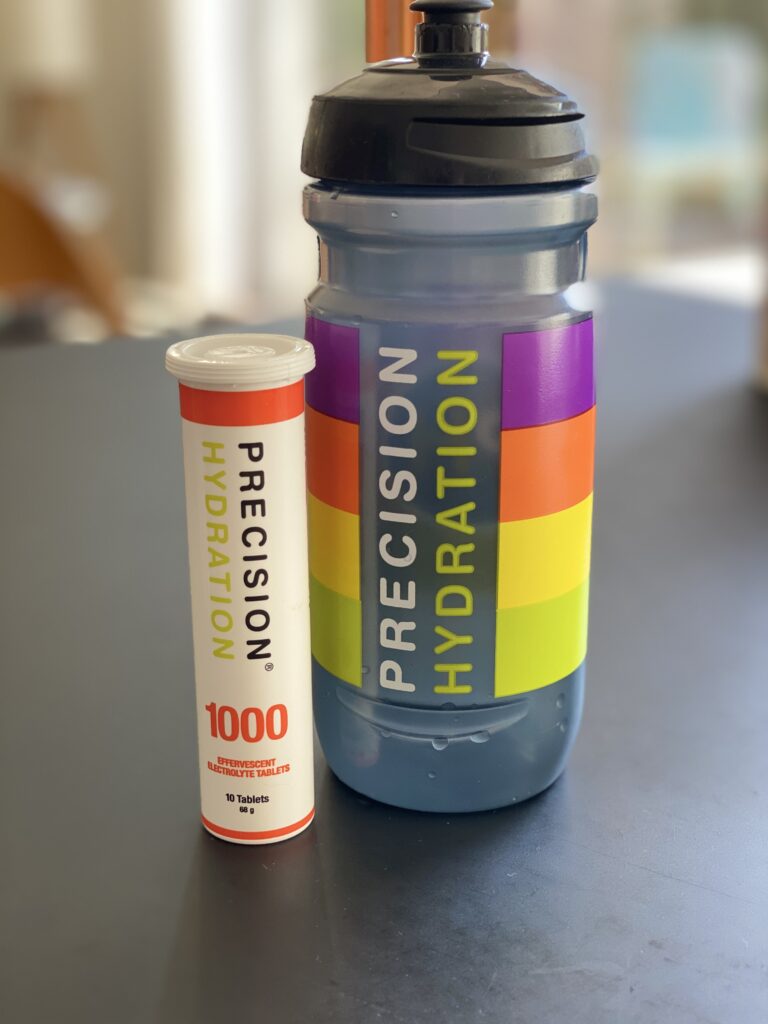
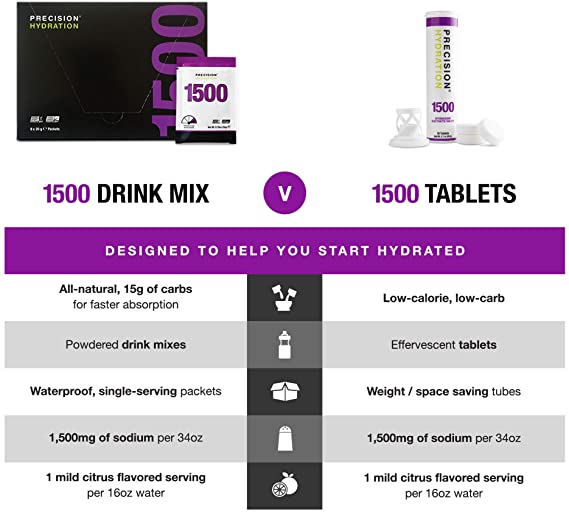
I personally use Precision Hydration (PH) products, and PH are proud support Masters Rowers around the world, with their hydration needs. Use the code FASTER10 at checkout, to receive 10% off your purchase.
How are sodium and water balanced in the body?
By Abby Coleman Medically reviewed by Dr Raj Jutley. Original article can be found on the Precision Hydration website.
Our bodies enjoy balance and will strive for equilibrium to help ensure that our sodium and water levels remain at a constant level. Why link sodium and water together?
Well, the two are a double act (a bit like Ross and Rachel, Ant and Dec, the Chuckle Brothers, and any other legendary double-acts you can think of) in that water acts to hold the sodium ion in the body, so we must look at the two together when it comes to achieving the correct balance.
But how does the body go about finding that all-important balance? We take a look…
How sodium and fluid are balanced in the body
The kidneys are our most important homeostatic control point (i.e. a bit like the heating control in your home) for both sodium and water.
The balance happens in the kidneys with sensors from various parts of the body providing feedback with the end goal being preserving the plasma osmolality (saltiness) tightly between 275-300 mOsm/kg and sodium levels between 135-145 mEq/L. Osmolality, by the way, is how much of one substance is dissolved in another substance, and in humans the most important substance contributing to osmolality happens to be sodium.
When plasma volume or sodium concentration gets too high (osmolality increases)So, volume sensors in the heart, blood vessels, and kidneys detect when the body’s sodium or water levels get too high, and set in motion processes which lead to their greater excretion through the kidneys.
In contrast, when blood plasma volume or sodium concentration becomes too low (osmolality decreases), the sensors trigger processes which increase their reabsorption through the kidneys.
Both functions are actioned and regulated by the body’s endocrine system – a complex chemical messaging system made up of feedback loops of hormones.
Because osmolality is exquisitely sensitive to the volume changes, any alterations in water has important effects. Which brings us to water balance…
Water balance in the body
Humans are a soggy bunch and water makes up ~50 to 70% of our body mass, depending on our age, gender and body composition.
Water is obtained mostly through consumption but also via our internal metabolism (e.g. the breakdown of glycogen), and it’s lost in urine, the gastrointestinal tract, sweat, and through the respiratory tract during breathing.
Put simply, water balance is achieved by ensuring that the water we consume in food and drink is equal to that of excretion.
But what happens when we take on too little or too much water?
Too little water in the body
A decrease in total body water, perhaps due to not drinking enough, excessive urination, sweat production, blood loss, diarrhea or vomiting, pushes the body to find ways of conserving fluids.
Depending on the cause of water loss the body may need to conserve sodium as well.
For instance, blood loss from a trauma will see sodium (in blood) and water (in blood) lost in equal proportion, and the body must try to retain both. Whereas in dehydration you lose proportionately more water than sodium, so the osmolality of your plasma increases and the body must conserve water, but not sodium.
The hormone responsible for regulating the body’s retention of water is the antidiuretic hormone(ADH), also known as vasopressin.
ADH is secreted by the hypothalamus, a kind of regulator in the brain for many bodily systems in response to an increase in plasma osmolality, decreased blood volume, decreased blood pressure and/or stress. The hormone acts on the nephrons of the kidneys (which basically produce urine, and remove waste and excess substances from the blood) and facilitates greater reabsorption of water by dramatically increasing the water permeability of the cell walls (i.e. how much water those cell walls let through).
As a result, the passive movement (no energy required) of water out of the kidney back into the bloodstream is increased, and the urine produced is small in volume and concentrated.
What about thirst?
Whilst the kidneys can conserve water, they can’t do anything about producing more, so for that reason we must drink. Water intake is regulated by thirst; the stimulus for which, like ADH, is an increase in plasma osmolality (as little as 2-3% gives a strong desire to drink) or a decrease in blood volume.
The combined effect of water retention (thanks to our good friend ADH) AND increased water consumption leads to an increase in blood volume and subsequent restoration of fluid balance in the body.
By increasing blood volume, ADH also plays a role in reducing plasma osmolality (and therefore sodium concentration).
Too much water in the body
In a scenario where there is an increase in our total body water, plasma osmolality falls due to the relative decrease in sodium concentration.
So, under these conditions, water moves out of the extracellular fluid into the body cells to try and maintain balance, which causes them to expand.
Receptors within the cells respond to this swelling by signalling to the hypothalamus to slow down the secretion of ADH (‘stop conserving water, we have enough!’).
Less circulating ADH means less aquaporin-2 channels get inserted into the kidneys’ walls and there’s a reduction in the amount of water reabsorbed into the blood. With fewer channels available for removal, a greater volume of water moves undeterred through the kidneys and is subsequently excreted in the urine.
The outcome? A reduced blood plasma volume, an increase in plasma osmolality, and urine which is diluted and large in volume (aaah, sweet, sweet relief as fluid balance is restored again).
WAY too much water in the body
An excessive overconsumption of water can be hugely counterproductive and produce the potentially fatal medical complication of hyponatremia (low sodium concentration of the blood).
There are a few different causes of hyponatremia, but the one which affects athletes most frequently is the dilution of sodium levels driven by drinking TOO MUCH or ‘water intoxication’.
In an attempt to restore water balance, the body goes into overdrive pulling water out of the bloodstream and into the body cells, causing them to swell irrationally and damage or destroy cellular structure, thus disrupting normal cellular function. When this occurs in the brain cells the condition can escalate from confusion to seizures, coma or even death.
The risk of hyponatremia is in part why drinking to thirst is pretty sound advice during everyday life and shorter, less intense activities where you’re not sweating much – and also why listening to your body’s signals is important.
Sodium balance in the body
Sodium is the main substance dissolved in the body, so it mostly determines the osmolality of plasma.
Sodium plays a key role in every cell in the body, particularly nerve and muscle function where deficiencies or excesses become noticeable first, There are no body stores for so what you lose through the gut, sweat and urine, you must ingest – as simple as that.
Just like water, sodium balance is maintained very cleverly by the kidneys adjusting the amount of sodium it filters, reabsorbs and excretes depending on whether the body is in deficit or excess.
Too little sodium in the body
A depletion of sodium, such as through extreme sweating (particularly if a person’s sweat sodium concentration is high) and/or a chronically low sodium diet, gives rise to low plasma volume, which in turn leads to low blood pressures.
These low blood pressures throughout the cardiovascular system are recognised via baroreceptors (pressure sensors in the blood vessels which detect the pressure changes via changes in tension of the walls).
These cause a decrease in the fancily named ‘glomerular filtration rate’ (the volume of fluid filtered through the kidneys), which is key because the less fluid which passes through the kidneys means less opportunity for sodium to be lost through urinary excretion.
In addition, the fluid which is filtered by the kidney undergoes greater sodium reabsorption. The hormone responsible for regulating this sodium reabsorption is aldosterone, a steroid hormone secreted by the adrenal glands. The reabsorbed sodium is followed back into the blood by water and, as a result, blood volume, salt levels and blood pressure all rise.
It’s important to note that aldosterone’s release is regulated by the renin-angiotensin hormonal system (RAS) which is responsible for managing blood pressure, fluid and electrolyte balance, as well as vascular resistance.
In the event of sodium depletion, the kidneys produce renin, a peptide hormone that initiates a hormonal cascade that ultimately produces angiotensin II. It is angiotensin II which, once in the blood, stimulates:
- thirst
- the peripheral arteries to tighten and increase cardiac output, resulting in an increase in blood pressure
- a decrease in glomerular filtration rate, resulting in water retention
- the adrenal cortex to produce aldosterone.
Renin-Angiotensin System
- Increased renin secretion (from kidneys)
- Increased plasma renin concentration
- Increased plasma angiotensin I concentration (from angiotensinogen)
- Increased plasma angiotensin II concentration
- Increased aldosterone release (from adrenal cortex)
- Increased plasma aldosterone concentration
- Stimulates sodium reabsorption in the kidney
Too much sodium
With the Western diet, it’s not difficult to consume a little too much sodium these days. For centuries man was deficient hence he traded in salt but now the pendulum has swung the other way with hidden sodium in our diets. An excess of sodium in the body isn’t recognised by alterations in sodium concentration as you might think, but rather by the increase in plasma volume as a result of the increased sodium (remember where sodium goes water goes too).
The elevation in blood volume causes an increase in the tension in the receiving chambers of the heart (atria), which in turn initiates the release of atrial natriuretic peptide (ANP); a hormone which is both produced and stored in the cells of the heart.
Once in circulation, ANP affects the kidney by increasing the glomerular filtration rate (the rate at which blood passes through the glomeruli in the kidneys) which induces profound natriuresis (increased sodium excretion) and diuresis (increased water excretion).
It also induces the dilation of the blood vessels to limit the rise in blood pressure and inhibits the secretion of aldosterone, by reducing renin production, thus actively preventing sodium reabsorption from occurring.
This is quite a meaty and complex topic area (congratulations if you made it this far in the blog), but what hopefully comes through loud and clear is that:
- Sodium and water travel together and their ‘saltiness’ must be tightly regulated.
- Their balance is ultimately in the kidney.
- Feedback to the kidney is from ‘pressure and saltiness’ receptors in the heart, blood vessels, kidneys and brain.
- Regulation is a finely balanced and complex interplay between several hormones depending on whether water or sodium is less or more.
Ultimately, the kidneys and the hormonal system play a vital role in helping the body to find equilibrium when it comes to sodium and fluid balance.
Helping these systems out by tailoring what you consume – in terms of sodium and fluid in relation to your individual losses – should therefore start to make a bit more sense from now on.
Original article link