Sharing an article I came across whilst researching approaches to recovery. Original article on Training Peaks and by Simon Wegerif, 2020
Simon Wegerif explains how proper sleep habits affects training and recovery, and how to make the most of your sleep.
Sleep is one of the main mechanism by which the body repairs itself and recovers. While perfect sleep is quite easy to imagine (and desire!), it’s not that easy to achieve.
What are the problems with the less-than-perfect sleep that almost all of us encounter, either on a temporary or ongoing basis, and how do these affect total training load?
Perfect sleep
Perfect sleep is not defined as a certain number of hours each night, but rather it:
Has 90-minute cycles comprising periods of light sleep, deep sleep, and REM sleep, with more deep sleep at the start of the night, and less later on.
Has a number of 90-minute cycles per night, usually five for most people when averaged across the week.
Fits in with your personal body clock or circadian rhythm, which is reset by the daily light/dark cycle (i.e. when your body naturally wants to be asleep).
Satisfies our sleep pressure. This is our need to sleep which has built up during the day, and which carries over from nights of insufficient sleep.
Has good sleep hygiene (i.e. cool, dark, quiet, comfortable).
Includes 20- to 30-minute naps in the early or late afternoon, especially if training or competing later in the day, or if night-time sleep quantity or quality has been reduced.
Why do we need good sleep?
There are plenty of articles out there with advice on how to prepare for effective sleep, but why do we need good sleep? In general, sleep facilitates recovery from damage accumulated during the previous period of wakefulness, and is especially important for athletes.
Good sleep is needed to maintain the performance of thinking and problem solving, carbohydrate metabolism and the appetite associated with particular blood sugar levels, and the performance of the immune system in identifying and neutralizing invading pathogens. The first four hours of sleep are especially critical, as this period has the largest amount of deep sleep when human growth hormone (HGH) and testosterone are produced. These are the hormones responsible for the compensation response to exercise when our muscles and metabolism become stronger and more powerful.
Good sleep resets the calibration of our internal perceived exertion (RPE) scale, and maintains good sensations of fatigue and mood. Workouts (especially high-intensity ones) feel easier when we have slept well, so are more likely to be completed as prescribed. Extended endurance workouts are more satisfying and our pacing strategy is also better when we have slept well too.
With such clear benefits, you would expect that athletes take sleep as seriously as training, but according to surveys performed by Dr. Shona Halson at the Australian Institute of Sport, this is seldom the case, even amongst elite athletes.
As the chart below shows, sleep efficiency (the proportion of time spent asleep whilst in bed, often used as a rough measure of sleep quality) and wake-up time are related, with swimmers and triathletes having the earliest rise times, coupled with the poorest sleep efficiency:
Dr. Shona Halson, Australian Institute of Sport (AIS)
So, although athletes need more sleep than their less-active peers, they often get less, resulting in daytime sleepiness as well as reduced performance.
Less-than-perfect sleep
So, what typically prevents athletes from getting good sleep?
Sleep hygiene: Poor bedtime routine, use of phones and TV in bed, bedding and room temperature mismatched.
Body sensations: Fatigue, injury, muscle soreness, nervous system activity—especially from using caffeine or training late in the day.
Travel: Jet lag, shared hotel rooms, shifts in time zone, training/competition times.
Overall, a lack of awareness of the importance of good sleep is what prevents athletes from paying sufficient attention to the factors they can control.
(Alcohol may aid with sleep onset due to its sedative properties, allowing you to fall asleep more quickly. However, people who drink before bed may experience disruptions later in their sleep cycle as liver enzymes metabolize alcohol.) Source, Sleep Foundation 2020.
How does sleep interact with other total training load components?
NUTRITION
A chronic lack of sufficient sleep has significant effects on the regulation of blood sugar levels, increasing appetite for sweet sugary foods and the likelihood of contracting type 2 diabetes. On the other hand, an evening meal that includes high GI carbohydrates more than one hour before bedtime has been shown to increase the amount of REM sleep and reduce the time required to fall asleep.
Diets high in protein may improve sleep quality slightly, but high-fat diets may negatively influence total sleep time. Foods naturally high in amino acid tryptophan, such as turkey and pumpkin seeds, may improve both sleep latency and quality.
MENTAL STRESS
high levels of perceived stress can reduce endurance athletes’ maximum power output. A study by Canadian researchers used Heart Rate Variability (a sensitive marker of stress) to evaluate the susceptibility of a group of students to stress in the form of a demanding task. They found that the amount of reduction in HRV during a standard stress test predicted the degree of sleep disturbance the students experienced during the build-up to important exams.
Other researchers found that a higher daytime HRV predicted a shorter time to fall asleep and less arousals during the night, as well as a better sleep questionnaire score.
This makes stress management and stress reduction techniques such as mindfulness, meditation, and deep breathing especially valuable at bedtime. It’s also said that a little love at bedtime doesn’t do sleep quality any harm, even the night before competition!
CONCLUSION
Sleep deprivation has significant effects on athletic performance, especially longer endurance sessions and high-intensity intervals. Most athletes don’t get enough sleep, and both napping and deliberately extending sleep on some days to get in the missing 90-minute cycles are very likely to have positive effects on performance, total load, and overall life satisfaction.
Want to have a chat with me about your goals? Let’s connect on WhatsApp.
Original article written by Dr Shona L Halson, Department of Physiology, Australian Institute of Sport, and re-posted with permission.
Image, Mark Sisson 2020.
High performance sport and the importance of successful performances have led athletes and coaches to continually seek any advantage or edge that may improve performance. It follows that the rate and quality of recovery is extremely important for the high performance athlete and that optimal recovery may provide numerous benefits during repetitive high-level training and competition. Therefore, investigating different recovery interventions and their effect on fatigue, muscle injury, recovery and performance is important.
Recovery aims to restore physiological and psychological processes, so that the athlete can compete or train again at an appropriate level. Recovery from training and competition is complex and involves numerous factors. It is also typically dependent on the nature of the exercise performed and any other outside stressors that the athlete may be exposed to. Athletic performance is affected by numerous factors and therefore, adequate recovery should also consider such factors.
METHODS TO ENHANCE RECOVERY
There are a number of popular methods used by athletes to enhance recovery. Their use will depend on the type of activity performed, the time until the next training session or event, and equipment and/ or personnel available. Some of the most popular recovery techniques for athletes include:
sleep,
hydrotherapy,
active recovery,
stretching,
compression garments,
massage and
nutrition.
SLEEP
Background
Although the function of sleep is not fully understood, it is generally accepted that it serves to recover from previous wakefulness and/or prepare for functioning in the subsequent wake period. An individual’s recent sleep history therefore has a marked impact on their daytime functioning. Restricting sleep to less than 6 hours per night for four or more consecutive nights has been shown to impair cognitive performance and mood, disturb glucose metabolism, appetite regulation and immune function. This type of evidence has led to the recommendation that adults should obtain 8 hours of sleep per night.
While there are considerable data available related to the amount of sleep obtained by adults in the general population, there are few published data related to the amount of sleep obtained by elite athletes.
Sleep deprivation
There are a limited number of studies which have examined the effects of sleep deprivation on athletic performance. From the available data it appears that several phenomena exist. Firstly, sleep deprivation must be greater than 30 hours (one complete night of no sleep and remaining awake into the afternoon) to have an impact on anaerobic performance. Secondly, aerobic performance may be decreased after only 24 hours and thirdly, sustained or repeated bouts of exercise are affected to a greater degree than one-off maximal efforts.
The mechanism behind reduced performance following prolonged sustained sleep deprivation is not clear, however it has been suggested that an increased perception of effort is one potential cause. While the above studies provide some insight into the relationship between sleep deprivation and performance, most athletes are more likely to experience acute bouts of partial sleep deprivation where sleep is reduced for several hours on consecutive nights.
Partial sleep deprivation
Only a small number of studies have examined the effect of partial sleep deprivation on athletic performance. From the available research it appears that sub- maximal prolonged tasks may be more affected than maximal efforts particularly after the first two nights of partial sleep deprivation.
Effects of sleep extension and napping
Another means of examining the effect of sleep on performance is to extend the amount of sleep an athlete receives and determine the effects on subsequent performance. Information from the small number of studies suggests that increasing the amount of sleep an athlete receives may significantly enhance performance.
Athletes suffering from some degree of sleep loss may benefit from a brief nap, particularly if a training session is to be completed in the afternoon or evening. Naps can markedly reduce sleepiness and can be beneficial when learning skills, strategy or tactics in sleep deprived individuals. Napping may be beneficial for athletes who have to routinely wake early for training or competition and for athletes who are experiencing sleep deprivation.
Habitual sleep duration
According to a 2005 Gallup poll in the USA, the average self-reported sleep duration of healthy individuals is 6.8 hours on weekdays and 7.4 hours on weekends (National Sleep Foundation, 2006). However, the sleep habits of elite athletes have only recently been investigated. Leeder et al4 compared the sleep habits of 47 elite athletes from Olympic sports using actigraphy over a 4-day period to that of age and gender-matched non-sporting controls. The athlete group had a total time in bed of 8:36 hour:minutes, compared to 8:07 in the control group. Despite the longer time in bed, the athlete group had a longer sleep latency (time to fall asleep) (18.2 minutes vs 5.0 minutes), a lower sleep efficiency (estimate of sleep quality) than controls (80.6 vs 88.7%), resulting in a similar time asleep (6:55 vs 7:11 hour:minutes). The results demonstrated that while athletes had a comparable quantity of sleep to controls, significant differences were observed in the quality of sleep between the two groups.
While the above data was obtained during a period of normal training without competition, athletes may experience disturbed sleep prior to important competition or games. Erlacher et al administered a questionnaire to German athletes to assess possible sleep disturbances prior to competition. Of these athletes, 66% (416) reported that they slept worse than normal at least once prior to an important competition. Of these 416 athletes, 80% reported problems falling asleep, 43% reported waking up early in the morning and 32% reported waking up at night. Factors such as thoughts about competition (77%), nervousness about competition (60%), unusual surroundings (29%) and noise in the room (17%) were identified as reasons for poor sleep. Therefore it appears that sleep disturbances in athletes can occur at two time points:
prior to important competitions and
during normal training.
This sleep disruption during normal training may be due to a poor routine as a consequence of early training sessions, poor sleep habits (i.e. watching television in bed), nocturnal waking to use the bathroom, caffeine use and excessive thinking/worrying/planning. While not documented in the literature, anecdotal evidence also suggests that athletes such as footballers who compete at night also have significant difficulties falling asleep post-competition. Athletes should focus on utilising good sleep hygiene to maximise sleep.
Strategies for good sleep include:
The bedroom should be cool, dark and quiet. Eye masks and ear plugs can be useful, especially during travel.
Create a good sleep routine by going to bed at the same time and waking up at the same time.
Avoid watching television in bed, using the computer in bed and avoid watching the clock.
Avoid caffeine approximately 4 to 5 hours prior to sleep (this may vary between individuals).
Do not go to bed after consuming too much fluid as it may result in waking up to use the bathroom.
Napping can be useful, however generally naps should be kept to less than 1 hour and not too close to bedtime as it may interfere with sleep.
HYDROTHERAPY
Although hydrotherapy is widely incorporated into post-exercise recovery regimens, information regarding these interventions is largely anecdotal. The human body responds to water immersion with changes in the heart, peripheral resistance and blood flow, as well as skin, core and muscle temperature alterations. These changes in blood flow and temperature responses may have an effect on inflammation, immune function, muscle soreness and perception of fatigue.
Various forms of water immersion are becoming increasingly popular with elite athletes. While athletes have been using hydrotherapy for a number of years, we are now beginning to see increased research into water immersion, recovery and performance. The most common forms of water immersion are cold water immersion (CWI), hot water immersion (HWI) and contrast water therapy (CWT), where the athlete alternates between hot and cold water immersion.
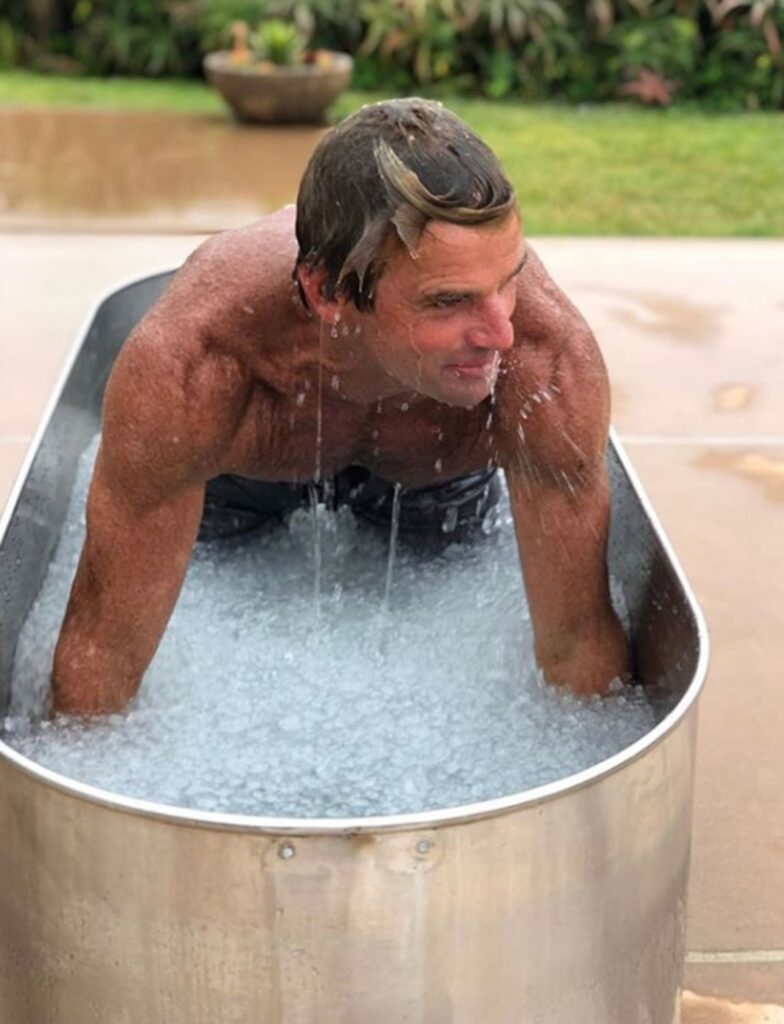
Laird Hamilton in an ice bath
The effects of three hydrotherapy interventions on next day performance recovery following strenuous training was investigated on 12 male cyclists who completed four experimental trials differing only in recovery intervention: CWI, HWI, CWT or passive recovery. After completing each exercise session, participants performed one of the four recovery interventions (in a randomised crossover design). Sprint and time trial performance was enhanced across the 5-day trial following both CWI and CWT when compared to HWI and passive recovery.
The same authors also examined different water immersion temperatures (15 minutes of intermittent immersion in 10°C, 15°C, 20°C, continuous immersion in 20°C water, and active recovery). Two 30-minute cycling bouts performed in the heat were separated by 60 minutes, with one of the five recovery strategies performed immediately after the first exercise bout. Each trial was separated by 7-days. All water immersion protocols improved subsequent cycling performance when compared to active recovery, demonstrating the benefits of cold water immersion in the heat.
In a study investigating a dose-response effect of CWT improved cycling time trial and sprint performance was observed following 6-min of CWT (hot water: 38.4°C; cold water: 14.6°C; 1 minute rotations) when compared with control (passive rest). Twelve minutes of CWI also improved sprint total work and peak power. There was no improvement in repeat performance with 18-minutes of CWT, indicating that a dose-response relationship does not exist under these conditions. The same research group repeated the above study with trained runners using identical water immersion times and temperatures and the same time between exercise bouts (2 hours). The results of this study again did not show a dose-response relationship between running performance and CWT; however, CWT for 6-minutes improved performance, whereas 12 and 18-minutes did not. Importantly, this study was performed outdoors in an environmental temperature of 14.9°C and the increased duration of cold water exposure may have reduced the potential benefits of longer water immersion durations. Therefore, benefits of longer duration CWT may potentially occur in warmer environments.
From available literature it appears that hydrotherapy may be beneficial for athletes, particularly those performing high intensity efforts. Specifically, CWI and CWT appear more beneficial than HWI for recovery.
ACTIVE RECOVERY
Active recovery generally consists of aerobic exercise which can be performed using different modes such as cycling, jogging, aqua jogging or swimming. Active recovery is often thought to be better for recovery than passive recovery due to enhanced blood flow to the exercised area and clearance of lactate and other metabolic waste products via increased oxygen delivery.
It is not clear whether there are benefits of active recovery between training sessions or following competition in various sports. No detrimental effects on performance have been reported following active recovery (when compared to a passive recovery) between training sessions, with a small amount of literature reporting enhanced performance. Many researchers, however, use the removal of lactate as their primary indicator of recovery and this may not be a valid indicator of enhanced recovery and ability to repeat performance at a previous level. The role of active recovery in reducing lactate concentrations and reducing muscle soreness after exercise may be an important factor for athletes. This is anecdotally reported to be one of the most common forms of recovery and utilised by the majority of athletes for these reasons.
STRETCHING
Although stretching is anecdotally one of the most used recovery strategies, there is very little literature examining the effects of stretching as a recovery method. There have been mixed reports regarding the benefit of stretching as a recovery strategy. However, two separate reviews of recovery methods concluded that there was no benefit for stretching as a recovery modality. It is important to note that to date, there have not been any detrimental effects on performance associated with post-exercise stretching.
COMPRESSION GARMENTS
Many recovery strategies for elite athletes are based on medical equipment or therapies used in patients. Compression clothing is one of these strategies. It has traditionally been used to treat various lymphatic and circulatory conditions. Compression garments are thought to improve venous return through application of graduated compression to the limbs from proximal to distal. The external pressure created may reduce the intramuscular space available for swelling and promote stable alignment of muscle fibres, attenuating the inflammatory response and reducing muscle soreness. While there is currently minimal research into compression garments and recovery for endurance athletes, the small amount of data suggests that they may be beneficial and do not appear to be harmful to the recovery process.
MASSAGE
Massage is a widely used recovery strategy among athletes. However, apart from perceived benefits of massage on muscle soreness, little data has shown positive effects on repeated exercise performance. Furthermore, increased blood flow is one of the main mechanisms proposed to improve recovery (thus improving clearance of metabolic waste products). Several reviews of the effects of massage have concluded that while massage is beneficial in improving psychological aspects of recovery, most evidence does not support massage as a modality to improve recovery of functional performance. However, as massage may have potential benefits for injury prevention and management, it should still be incorporated in an athlete’s training programme for reasons other than recovery.
SUMMARY
As recovery research is a relatively new area for scientists, many of the current recommendations are general guidelines only. It is important that athletes experiment with a variety of strategies and approaches to identify the recovery options that work best for each individual. However, it is known that optimal recovery from training and competition may provide numerous benefits for athlete performance. Recovery strategies such as hydrotherapy, low-intensity active recovery, massage, compression garments, stretching or various combinations of these methods may have merit as recovery-enhancing strategies. Importance should also be placed on optimal post-exercise nutrition and adequate sleep to maximise recovery and reduce fatigue from exercise.
Dr Shona L Halson, Department of Physiology, Australian Institute of Sport.
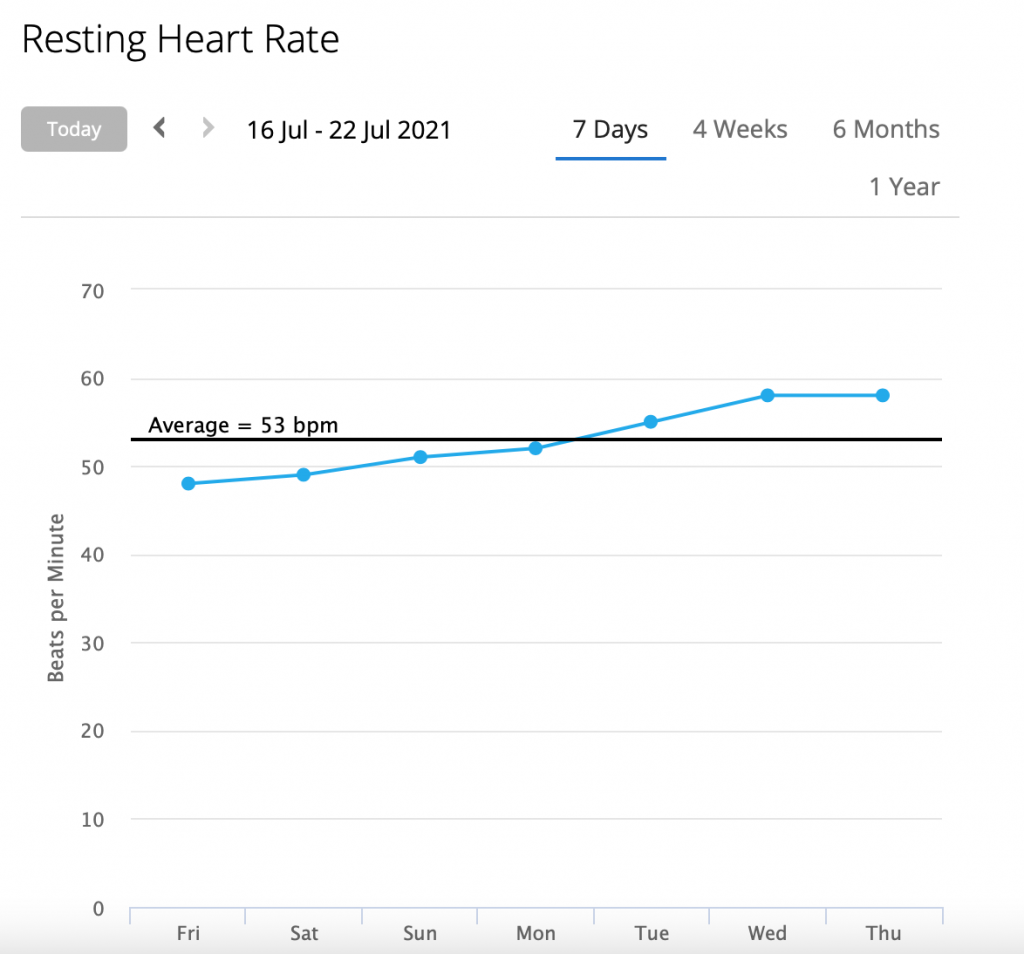
One of the things I’ve been experimenting with, over the last 8-weeks, is measuring and tracking my Heart Rate Variability (HRV) and Morning Resting Heart Rate (MRHR). I’m doing this to understand how I am recovering from training and day-to-day stress. I’ve been really surprised at the impact of a couple of glasses of wine with dinner, both on my sleep, and my recovery. In doing some research, I now know why. Sharing some high level material to provide you with some insights.
‘How Alcohol Impacts Your Sleep’ originally posted on the Oura Blog, 20 February 2020.
Having a glass of wine or a nightcap before bed is a common nighttime ritual. In fact, approximately 20% of the U.S. adult population drinks alcohol to help them fall asleep.
As you sink into bed and doze off with that pleasant buzz of alcohol, it’s tempting to think you’ve unlocked the secret to falling asleep.
But this is one shortcut you may want to avoid because while you may fall asleep quickly, the quality of your sleep suffers under the influence. Alcohol affects multiple processes in your body that prevent you from getting high-quality sleep.
How Alcohol Impacts Your Sleep
Alcohol impacts several of your body’s sleep systems. Most notably it:
Decreases melatonin: Alcohol inhibits the release of melatonin, your body’s primary sleep signal.
Reduces growth hormone: Alcohol reduces growth hormone release, which is crucial for your body’s nighttime repairs.
Increases stress hormones: Alcohol increases your body’s levels of cortisol, a stress hormone that increases your resting heart rate and generally stimulates the body—making it more likely you’ll wake up during the night.
Disrupts your circadian rhythm: Alcohol can impact your brain and liver’s internal clocks, causing your body to be misaligned with its natural sleep cycle.
Increases urination: Alcohol is a diuretic. Your body typically halts your bladder function at night; however, alcohol may interrupt your sleep for extra trips to the bathroom.
Aggravates breathing problems: Alcohol causes your muscles to relax, including your throat. This relaxation can make you more prone to snoring and can worsen sleep-related breathing problems like sleep apnea.
Look Out for These Patterns
Wondering if all this applies to you? Take notice next time you have a drink with friends or a nightcap on your own.
Watch for these patterns in your sleep data:
Better sleep latency: Alcohol’s sedative effect reduces the time it takes for you to fall asleep by overriding your body’s natural, gradual transition to sleep.
More deep sleep, less total sleep: Alcohol may increase your deep sleep on the first night of drinking; however, it decreases your total hours of sleep.
Delayed REM, less REM: Alcohol significantly delays your first REM sleep cycle. Moreover, because alcohol also decreases your total sleep time and REM is weighted later in your sleep cycles, alcohol leads to fewer total minutes in REM.
Higher restlessness: Alcohol impacts your bladder, leading to more bathroom trips and more awakenings.
More fragmented sleep: Alcohol is more likely to disrupt the second half of your night, often decreasing total time spent asleep and disrupting your flow through sleep stages.
Oura website (2020)
Given that you’re not sleeping as well, you’re likely to suffer the next day with poorer reaction times, decreased concentration, compromised memory, and increased irritability.
This, along with that late-night piece of greasy pizza you might have had—which also interferes with sleep—can compound to make your next day tough.
Things to Keep in Mind
Does this mean you have to give up drinking altogether? Not necessarily.
Some people are more susceptible to alcohol than others, so compare your results to an average night’s sleep without alcohol to see what changes.
Try out these tips to soften alcohol’s impact on your sleep:
End early: Allow your body at least 3 hours before bed to metabolize the alcohol from your system. Keep in mind this varies by your weight, gender, and consumption.
Hydrate often: Having a glass of water along with every drink helps your system flush out alcohol.
Avoid mixers: Beverages that have sugar or caffeine in the mix are more likely to stimulate your internal clocks when you’re trying to wind down.
References
Roehrs, Timothy, and Thomas Roth. “Insomnia pharmacotherapy.” Neurotherapeutics 9, no. 4 (2012): 728-738.
Rupp, Tracy L., Christine Acebo, and Mary A. Carskadon. “Evening alcohol suppresses salivary melatonin in young adults.” Chronobiology International 24, no. 3 (2007): 463-470. (link)
Ekman, A. C., O. L. L. I. Vakkuri, M. I. K. A. Ekman, J. Leppäluoto, A. Ruokonen, and M. Knip. “Ethanol decreases nocturnal plasma levels of thyrotropin and growth hormone but not those of thyroid hormones or prolactin in man.” The Journal of Clinical Endocrinology & Metabolism 81, no. 7 (1996): 2627-2632. (link)
Spencer, Robert L., and Kent E. Hutchison. “Alcohol, aging, and the stress response.” Alcohol Research and Health 23, no. 4 (1999): 272-283. (link)
Udoh, Uduak, Jennifer Valcin, Karen Gamble, and Shannon Bailey. “The molecular circadian clock and alcohol-induced liver injury.” Biomolecules 5, no. 4 (2015): 2504-2537.
Ebrahim, Irshaad O., Colin M. Shapiro, Adrian J. Williams, and Peter B. Fenwick. “Alcohol and sleep I: effects on normal sleep.” Alcoholism: Clinical and Experimental Research 37, no. 4 (2013): 539-549. (link)
Prinz, Patricia N., Timothy A. Roehrs, Peter P. Vitaliano, Markku Linnoila, and Elliot D. Weitzman. “Effect of alcohol on sleep and nighttime plasma growth hormone and cortisol concentrations.” The Journal of Clinical Endocrinology & Metabolism 51, no. 4 (1980): 759-764. (link)
Sometimes my training and work, really suffer due to a lack of sleep. After a few nights of short, and interrupted sleep, I feel exhausted. My morning resting heart rate elevates and my HRV (see below) goes into a hole. These are signs that I need to take it easy. Take a day off training, and get back into a good sleep routine. Has that ever happened to you?
Sleep is the simplest and cheapest performance booster available. One would think that athletes would maximise every opportunity for rest and recovery. You may be surprised. Check out the article below on how some elite athletes sleep.
Elite Athletes Don’t Sleep As Much As You Think
One of the hallmarks of truly elite athletes, and of high-performing people in general, is task discipline: you know what you need to do, so you do it. You run 100-mile weeks, project a hard climbing route for months, or work on your crossover with ankle weights strapped to your wrist for six hours a day. That’s the hard stuff. In comparison, you’d think that the routine challenges of daily life-eating and sleeping, for example-would be easy.
But that’s not necessarily the case, as a recent study of athlete sleep habits illustrates. The study is from a research team led by Charli Sargent of Central Queensland University, published in the International Journal of Sports Physiology and Performance (free to read here). The researchers surveyed the sleep habits of 175 athletes from 12 different Australian national teams, and monitored their actual sleep with a wrist band for a couple of weeks. The main conclusion is that a startling number of these athletes, who are presumably performing herculean feats in their training, are falling way short of their sleep goals.
Before diving into the study, it’s worth acknowledging that the links between sleep and athletic performance are more complicated than you might assume. Getting lots of sleep sounds like a guaranteed performance enhancer, and up to a point it almost certainly is. But the research in the area is surprisingly thin, and claims like the supposed link between lack of sleep and sports injuries look much weaker when you scrutinize them. As Charles Samuels, a sleep scientist with the Canadian Olympic team, told me a few years ago, getting enough sleep seems to be important, but more isn’t necessarily better.
The tricky part is defining enough. Even for the general population, that question can be controversial; for athletes, there’s even less data to base decisions on. Sargent and her colleagues sidestep that question by asking their subjects a simple question: “How many hours of sleep do you need to feel rested?” It’s purely subjective and individual. The answer, on average, was 8.3 hours, with no difference between men and women. The differences between sports were also very minor: pretty much all of them clustered around that average of 8.3. (There were a few outliers, like alpine skiing at 6.0 hours and diving at 6.5 hours, but they were each based on just one athlete in the sample, compared to 43 Australian Rules footballers, 29 rugby players, 20 soccer players, 17 triathletes, and so on.)
The advantage of this approach is that we can assess how well the athletes are living up to their own personal goals. That alpine skier and the diver may think that the National Sleep Foundation’s recommendation of seven to nine hours for young adults is hogwash, so their decision to ignore it is perfectly reasonable. But if they’re falling short of their own goals, that’s different.
Sure enough, most of the athletes were nowhere near what they needed to feel rested. On average, they got 6.7 hours of sleep per night, a total deficit of 96 minutes compared to their supposed need. Only three percent of them hit their goal. A common definition of insufficient sleep is if you’re more than an hour short of your self-assessed sleep need; in this study, 71 percent of the athletes met that definition. In comparison, just 20 percent of ordinary adults got insufficient sleep in a study of more than 12,000 people in Finland.
The authors dig deep into the data looking for patterns. Team sport athletes, it turns out, get 6.9 hours of sleep compared to just 6.4 hours for individual sports, despite having roughly the same sleep need. This is consistent with previous data, though it runs counter to my image of hard-partying rugby players and studious triathletes. Indeed, the two sports with the lowest sleep numbers were triathlon and swimming-both sports that often feature early-morning practices. Those two sports also woke the earliest, close to 6 A.M. Basketball players got the most sleep, because they slept until almost 8 A.M. Overall, the average time to fall asleep was 11:24 P.M., with relatively minor differences among sports; average wake-up time was 7:18 A.M.
There’s one big caveat about this data: it doesn’t include naps. The authors argue, based on previous studies, that “the frequency of daytime napping in athletes is typically low and unlikely to substantially increase total sleep duration.” That may be true overall, but I can’t help wondering whether napping might be more common among certain specific sports-like those with 6 A.M. practices.
Strangely, what this study made me think of was the Shelby Houlihan doping case. Houlihan’s defense revolved around the consumption of a burrito from a food truck-an idea that some observers found implausible. After all, she’s a professional athlete, right? Surely every morsel of food she eats is weighed and hyper-optimized to deliver maximum performance, not purchased willy-nilly on the street. Well, not quite.
Leaving aside the actual claims and counterclaims about doping (and the nutritional merits of burritos, which I happen to think can be a pretty good part of a healthy diet), it’s clear that the best athletes in the world sometimes eat at food trucks, and have as much trouble as the rest of us in getting to bed as early as they know they should. Maybe this means that we should all relax a little and not sweat the small stuff; maybe it means that even when we’re laser-focused on achieving hard goals, there’s always room to make some improvements. Or maybe it’s both.
Original article by Alex Hutchinson, Outside Online, 20 July 2021
Recommended Reading
Remember that I may receive commissions when you click links and make purchases. However, this does not impact my reviews and comparisons. I try to keep things fair and balanced to help you make the best choice. Click on the link to see the books on Amazon.