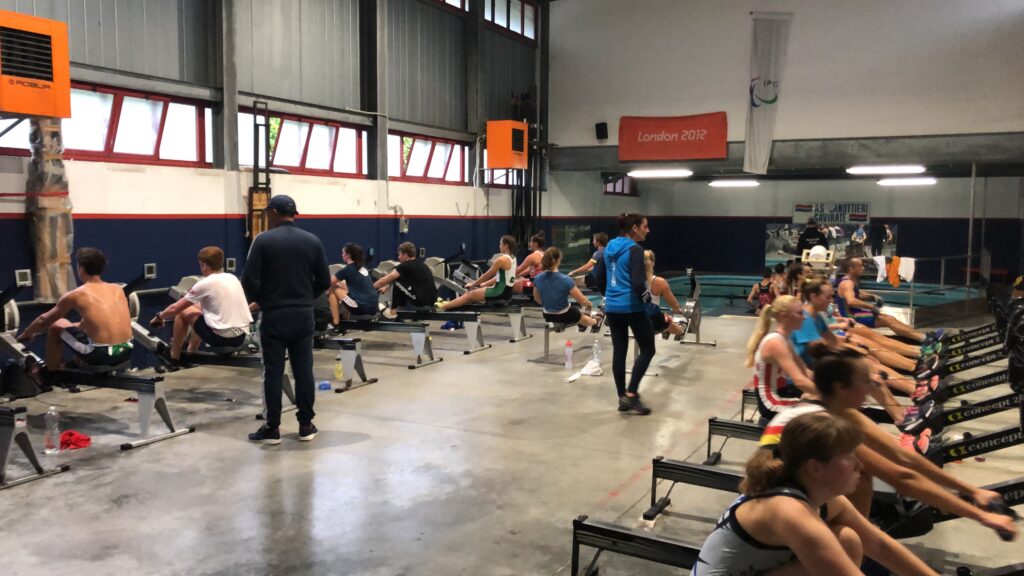
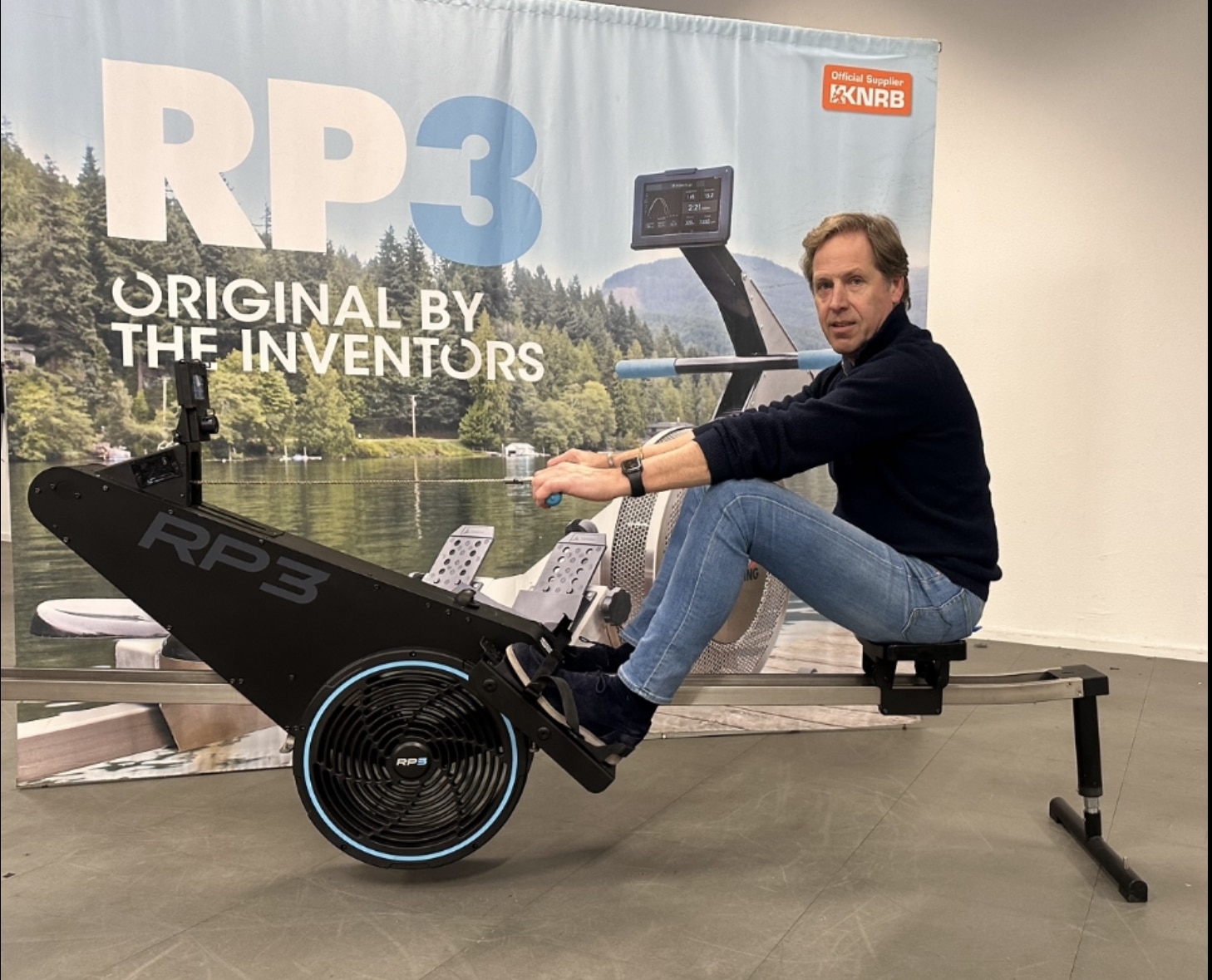
Many of us will be doing a lot of training on the rowing machine in these coming weeks, and it’s important to understand the impact of sweat and proper hydration. This article by Andy Blow, provides good insights and tips for all of us using the Concept2 to train indoors.
Gavirate Rowing Club 2020. Photo WH Chambers.
Original article by Andy Blow, BSc Honours degree in Sports and Exercise Science from the University of Bath, Precision Hydration (2020). Precision Hydration support our newsletter subscribers with 10% off all purchases, when you use the discount code; Faster10 at checkout. www.precisionhydration.com
Indoor training can be viewed as an unfortunate but necessary evil by some athletes, while others relish the opportunity to get in the ‘Pain Cave’ and log those hours on the turbo trainer or treadmill.
There’s often an impressive (and slightly dangerous) pool of sweat on the floor whenever I’ve finished an indoor training session. So, does that puddle mean I sweat more when training indoors than outdoors? Let’s find out…
The effects of heat on sweat rate
The body controls core body temperature (CBT) to keep us alive and functioning, and we sweat when our CBT rises above a certain point.
The heat given off by working muscles has the greatest influence on CBT when exercising, so how hard you’re working has a massive impact on your sweat rate and more so than body fat, weight and overall size. This was emphasised by the findings of a recent study.
So, the average indoor workout is probably more intense than an outdoor session because we generally go for ‘quality’ over ‘quantity’ (unless you really enjoy being in your ‘pain cave’ for hours and hours on end). Therefore, this results in a higher sweat loss per unit of time.
Air Flow and Temperature
Two other important factors which will impact on how sweaty you get when training indoors are Air Flow and Temperature:
Air Flow
When outdoors, you’re moving through air so you get some airflow past the skin. Air movement causes heat to be drawn away from the body’s surface more effectively (via convection and sweat evaporation) and this cools you.
On a static bike or treadmill, you lose this airflow and the sweat tends to drip off you, making you more aware of it. And as there’s no natural cooling effect, you probably actually do sweat a little more to compensate too (unless you attempt to mitigate the lack of air flow by adding a fan to your indoor ‘Pain Cave’…).
Temperature
Your body tries to offload heat to the environment when you’re training. The bigger the gradient between the air temperature, and the lower the humidity, the easier it is for heat to be evaporated away. As many places we train indoors are already quite warm and humid, the gradients for heat loss and evaporation are less pronounced than outside, and this further hinders thermoregulation and drives sweat rate up.
So, whilst you don’t necessarily sweat significantly more indoors than outdoors, there are reasons why total sweat loss might be higher some of the time.
Tips for staying hydrated during indoor training
There are five simple steps you can take to ensure that you are well hydrated for your daily indoor training session…
Before: Arrive well hydrated
As we mentioned earlier, most people’s indoor training sessions are short and intense as we go for the old ‘quality over quantity’ approach. So, it’s important to make sure you start hydrated by doing some form of preload as this will maximise your ability to thermoregulate by sweating.
Aim to drink around 500-750ml (16-25oz) of plain water mixed with a strong electrolyte drink (we recommend PH 1500) a few hours before you start your session. Use a bit of trial and error over the course of a few sessions to refine this approach.
Before: Don’t overdo your fluid intake
Having said that, there’s no need to go overboard on fluid intake in the immediate build-up to your session. Just try to stick to good hydration practices on a day-to-day basis.
Before: Add sodium
If you do find yourself low on fluid leading up to a session, it’s a good idea to add additional sodium to your drinks in the preceding hours as this maximises absorption of the fluids you do consume.
During: Drink to thirst during the session
This comes back to the ‘don’t overdo it’ point. Ultimately, don’t interfere with what you’re actually there to do (i.e. get sweaty on the turbo or treadmill) by trying to taking on unnecessary amounts of fluid.
Don’t forget to stay on top of your hydration when training indoors and following these simple steps will help keep you hydrated correctly and able to perform at your best.
Interview with James Goodwin, Head of physical performance and science for the Swiss Rowing Federation. James is responsible for ensuring the Swiss Team are strong and fit, to train and race. In this episode, James shares his expertise towards Masters Rowing. James and I discuss strength and condition strategies for Masters, and answer questions from the Masters Rowing Facebook Group.
James holds a Bachelor of Science (BSc) in Sports and Exercise Science, from Sheffield Hallam University and worked as the Strength and Conditioning Coach (GB Rowing) through the Rio Olympic cycle.
This episode is supported by Precision Hydration. You can take Precision Hydration’s free online sweat test at www.precisionhydration.com and save 10% on purchases when you use the code FASTER10 at check-out.
To listen to the podcast, click on the link to the Faster Podcast below or find the Faster Podcast in your favourite podcast player.
I have in the past experimented with monitoring HRV to understand both how I’m responding to training (stress) and recovery (rest) to optimise my training response and avoid overtraining. So far, I’m still learning and building up a baseline. I’m researching different sources of information and will share these with you.
Sharing original article found at the Oura website. Author: Oura Team February 12, 2020
Stress vs. Rest
When stressful thoughts consume your day, it can feel as though stress is strictly a mental problem. The reality is that stress materializes as both emotional and physiological symptoms—your brain and body are inseparable.
Whether you are running from a lion or preparing for a presentation at work, your brain and body share a single response system for all stressors—the autonomic nervous system (ANS).
Knowing how your body uses the ANS to react to different situations can help you build awareness and identify practices that transform your stress reaction into a reasoned response.
The ANS functions like a tug-of-war game between two subsystems: your activation (sympathetic nervous) system and your rest (parasympathetic nervous) system. Both regulate essential body functions like heart rate, respiratory rate, and digestion.
Your sympathetic nervous system is well known as the driver of your activating, fight-or-flight response, while the parasympathetic nervous system kicks in during calmer moments as your rest-and-digest network.
Both systems dial their activity up or down based on messages from your brain and spinal cord. These systems can be active at the same time, or one can take over and dominate the other.
When activated, they trigger a cascade of changes in your body:
If your fight-or-flight system starts to dominate, there are some rest-and-digest functions that stop altogether, while others simply scale back.
Your rest-and-digest system has multiple players (e.g., your heart, lungs, liver). If your fight-or-flight system dominates, some parasympathetic players quit (e.g., digestion pauses while you’re running). Others may use a different tactic; for example, as you warm up for a jog, your body will shift its temperature-regulating strategy and reroute blood from your internal organs to your skin in an effort to shed heat.
Finding Balance
Life’s stress levels naturally fluctuate. When your body remains in a stressed-out, fight-or-flight mode, it can take a serious toll on your health by slowing your recovery time, weakening your immune system, and impacting your mental state.
Our ANS was designed to help us deal with brief episodes of high-intensity stress (e.g., running from a predator), but our modern lifestyle contains multiple chronic stressors that rarely shut off (e.g., job pressure, balancing childcare and work, sleep deprivation, and constant device stimulation).
It’s all about balance. You don’t want your fight-or-flight system to be in a constant state of activation, but you also don’t want it to remain inactive—it is essential for your survival ability to respond to stress as well as maintain your body’s equilibrium.
Managing Your Stress
We are often unaware of the tug-of-war inside our ANS because it functions involuntarily and reflexively. Becoming more in tune with the physiological effects of stress can help you regulate your response or deploy strategies to bring you back into balance.
Check out these tips to identify and reverse imbalances sooner:
Become more self-aware: Techniques like meditation can help you become more in touch with how activated or relaxed your body is. Taking a moment during the day also offers an opportunity to reset imbalances when you sense them and may even improve your sleep.
Sense imbalances sooner: Consider how wearables, like Oura, can give you the opportunity to follow patterns of stress within your body and measure their impact more objectively. You can even see your body’s ANS balance and reduce stress by monitoring your heart rate variability.
Improve your resilience: Increasing your fitness level and improving your sleep both boost your body’s ability to bounce back from stressful periods. If you’re looking for ways to rest and restore, consider these ideas.
References
Stults-Kolehmainen, Matthew A., and John B. Bartholomew. “Psychological stress impairs short-term muscular recovery from resistance exercise.” Medicine and science in sports and exercise 44, no. 11 (2012): 2220-2227. (link)
Morey, Jennifer N., Ian A. Boggero, April B. Scott, and Suzanne C. Segerstrom. “Current directions in stress and human immune function.” Current opinion in psychology 5 (2015): 13-17. (link)
Slavich, George M. “Life stress and health: A review of conceptual issues and recent findings.” Teaching of Psychology 43, no. 4 (2016): 346-355. (link)
This is a repost of an interesting article on why athletes suffer from cramp, by Andy Blow. Medically reviewed by Dr Tamara Hew-Butler. Original article can be found at precision hydration.com
The causes of muscle cramp in athletes remain a contentious issue in the scientific world. We’ve taken a look at the competing theories of cramp, the major studies and detailed the methods that can help alleviate the symptoms of cramp…
Definition of muscle cramp
I have a strong personal interest in the subject of Exercise Associated Muscle Cramps (EAMC) because I used to be a chronic sufferer back when I was competing.
For as long as I can remember I seem to have been especially susceptible to ‘sudden, involuntary, spasmodic contractions’ of selected my muscles – to borrow a phrase from the dictionary definition – to the point where cramps ruined numerous important races for me.
I’ve also been plagued with horrible contractions in my legs that have woken me up during the night after hard training sessions, and on one memorable occasion cramp even cost me a Chicken Tikka Masala when an extremely violent hamstring spasm made me kick over my table during a quiet meal after a race.
Despite the fact that muscle cramps are a very common phenomenon and that they have been widely studied, no-one really knows the full story about cramp yet.
In spite of this, over the last ten years or so I seem to have largely got on top of my issues with cramp. This has come through modifying my behaviour, diet and expectations of my body based on what I’ve learned through a combination of reading and personal experimentation.
So, if you’re a fellow cramper, there may be hope. Here are some of the things I’ve picked up along the way in case they help you win your own war on cramp. If you want to skip past the science to the potential solutions, just click here (I won’t hold it against you).
What causes exercise associated cramps?
In the research world there are essentially two competing theories of what causes Exercise Associated Muscle Cramp…
This theory is probably the oldest. It speculates that a significant disturbance in fluid or electrolyte balance, usually due to a reduction in total body exchangeable sodium stores, causes a contraction of the interstitial fluid compartment around muscles and a misfiring of nerve impulses, leading to cramp.
In simpler terms, if you lose a lot of sodium and don’t replace it (as is common when you sweat a lot) it can cause fluid shifts in the body that in turn causes cramps.
This theory is predominantly based on plenty of case studies, observational data, anecdote and expert opinion (what scientists call ‘level 4 and 5 evidence’). So, although there’s a decent amount of circumstantial weight behind it, it lacks the more “concrete proof” of data from large scale randomised controlled trials (RCTs) which is rightly considered necessary by proponents of evidence-based practice for it to be widely accepted as anything approaching ‘fact’.
The ‘Neuromuscular Theory’
This theory is more recent and proposes that muscle overload and neuromuscular fatigue are the root causes of Exercise Associated Muscle Cramp. The hypothesis is that fatigue contributes to an imbalance between excitatory impulses from muscle spindles and inhibitory impulses from Golgi tendon organs, and that this results in a localised muscle cramp.
In other words, muscles tend to cramp specifically when they are overworked and fatigued due to electrical misfiring.
This theory is much better suited to being tested in a lab (where researchers can ‘excite’ muscles with electrical stimuli and provoke muscle cramps to measure what is happening at an electrical level) and so there’s arguably more robust data to support it than is the case for the Dehydration/Electrolyte depletion model (although a recent lab-based study has looked at the effects of electrolyte intake on cramping threshold). It’s probably also fair to say that, in certain circles at least, this theory is gaining widespread popularity at the moment.
One big factor that does appear to support the neuromuscular theory is that stopping and stretching affected muscles is a pretty universally effective method to fix a cramp when it is actually happening. What stretching does is put the muscle under tension invoking afferent activity from the Golgi Tendon Organs (part of the muscle responsible for telling it to relax) and causing the cramp to dissipate.
Scientific studies of cramp
Studies in this area that looked at the general electrical activity of muscles (EMG) have also shown increased baseline levels of excitatory activity in fatigued muscles right between bouts of cramping – as if the muscles are firing away more excitedly than they should and ‘close’ to cramping even when they are not. Again this tends to support the conclusion that fatigue is somehow causing problems for the muscle to relax so are often cited to back up this theory.
Field studies that have failed to find major differences in the blood electrolyte profiles of athletes getting cramps during events like triathlons and marathons are often cited to dismiss the dehydration/electrolyte theory. This is essentially saying that if there’s no difference in blood electrolyte levels between crampers and non-crampers then it cannot be an influencing factor.
Unfortunately what these studies tend to overlook is the fact that blood electrolyte levels can be quite stable in athletes in the face of vastly different levels of total sweat and sodium loss.
This is because the body tends to protect sodium concentration in the blood at the expense of blood volume when sweat losses are high, so seeing similar blood sodium concentrations in crampers and non-crampers is not necessarily indicative of anything and could even be a bit misleading in the context of the bigger picture.
In fact in one of the major studies often cited in this area researchers did find that crampers ended an ultra marathon race with statistically lower serum sodium values than non-crampers, but they deemed the difference ‘not clinically significant’ even if it was statistically different…and I think that this evidence can be viewed in different ways, depending on your predisposition!
At this point it’s important to steer your thinking away from this being a binary – ‘one or the other’ – argument between two competing ideas, even though this is how the topic of cramping is commonly presented in both the scientific and mass media.
As no-one definitively knows what’s going on with muscle cramps yet, focusing on a polarised argument between two incomplete theories is a lot less productive than looking at the bigger picture and considering the merits of both theories and the actionable advice they have to offer.
Back in the early 1900s cramp was more commonly viewed as a productivity issue for manual labourers doing hard physical work in hot environments, rather than not as an inconvenience to athletes.
Different groups of doctors and researchers took notes on numerous case studies around this time and some conducted rudimentary field tests. Whilst it’s fair to say that the research efforts were not anywhere near as rigorously structured as modern clinical trials, they did elicit a pretty universal consensus. That was that providing workers with adequate sodium chloride (salt) along with drinking water to help them replace what was being sweated out was quite effective in treating or preventing many cases of cramps.
“Excessive sweat is accompanied by abnormal loss of sodium chloride through the skin. Fluid replacement is necessary and should include sufficient sodium chloride, otherwise the individual will suffer from fatigue, cramp, or collapse…A suitable preparation of sodium chloride in tablet form is described…After extensive trial this has proved satisfactory in the prevention of fatigue and other symptoms due to excessive heat.”
It was this kind of work that inevitably shaped our early understanding of EAMC in relation to athletes.
These days it’s become quite fashionable for commentators seeking to ‘disprove’ the Dehydration/Electrolyte theory of EAMC to play down this early work in industrial medicine around salt and cramping as dated, flimsy and insignificant. This is especially true for staunch supporters of the neuromuscular theory. However, having read (and re-read) most of the work available from the era, I’m far from convinced that it deserves to be so easily dismissed.
I actually feel that playing it down as ‘old hat’ is perhaps just a convenient (or even slightly lazy) way of dealing with evidence that is otherwise incongruent with a more contemporary – but not necessarily more correct – way of thinking.
In addition to the early work on industrial workers, there are a few other perspectives on electrolyte balance and cramping that are worth highlighting here too. These, in their own way, add some credence to the idea that it’s still relevant…
The Salt Deprivation Study
The first is a classic study on salt depletion that was carried out by a pioneering doctor – R.A McCance – in the 1930s. McCance was a hands on type of researcher and was intrigued by the question of what would happen to the human body if it was depleted of salt but not fluid (numerous studies into dehydration had already been undertaken by then). He organised a study using himself and a couple of colleagues as test subjects.
Essentially what McCance and his co-workers did was subject themselves to an incredibly low salt diet. Along with their salt-free food, the subjects drank plenty of water and took hot baths to increase sweat output and accelerate salt loss. They found that when salt depletion started to kick in it quickly led to…
“…aberrations of flavour, cramps, weakness, lassitude, and severe cardio-respiratory distress on exertion.”
Interestingly, as soon as the test subjects reintroduced salt into their systems (eating bacon and drinking the fat from the pan I might add) their recovery from symptoms – including the absence of further cramping – was ‘dramatic’ with effects being felt within 15 minutes of ingestion of the salty meal.
This experience in particular – cramps disappearing soon after salt ingestion – is completely consistent with my own experiences in very long and hot triathlons when I had become salt depleted due to heavy sweating, so it definitely struck a chord with me when I first read it.
It’s also congruent with lots of other anecdotal evidence coming from athletes who train or compete in similar conditions of heavy sweat loss, but more on that later.
Image credit: Quang Nguyen Ven via Pexels (copyright free).
Hyponatremia and cramp
Another notable example of electrolyte disturbance associated with cramping can be found in case reports of people suffering with hyponatremia, especially when this occurs around exercise.
Hyponatremia is a condition where blood sodium levels fall lower than they should be due to dilution by over-consumption of water, excessive loss of sodium from the body, or both together as is common amongst athletes.
Cramping is often listed as a general symptom of hyponatremia in medical texts and there are case study reports in the literature such as one involving a UK serviceman who suffered cramps and collapsed whilst running in the heat in Saudi Arabia in 1991. He was successfully treated with intravenous saline (salt) solution and made a full recovery in the short term, but was later found out to have undiagnosed Cystic Fibrosis (CF) – a condition in which sufferers lose very large amounts of salt in their sweat.
It seems likely that this high rate of salt loss could have pre-disposed him to losing more salt than others doing the same exercise (who did not cramp and collapse) and contributed to him suffered the cramps and fatigue on more than one occasion when exercising in hot conditions.
Aside from this individual case it’s well known that CF sufferers can struggle with exercise in the heat, at least in part due to their elevated levels of salt and fluid loss through very salty sweating.
Athletic case studies and cramp anecdotes from the real world
There are a large number of case studies, observations and anecdotal reports from athletes whose cramping problems seem to be directly related to times when fluid and sodium balance are significantly disrupted due to heavy sweating.
For example, in 1996 Dr Michael Bergeron documented a case study (in the International Journal of Sport Nutrition and Exercise Metabolism) of a tennis player who often suffered with cramps during tournaments. Having ascertained that this player had a high sweat rate and was calculated to be unlikely to be replacing his sodium losses via his normal diet, he was prescribed an increased salt intake. The conclusion of the study was that…
“[The Player] was ultimately able to eliminate heat cramps during competition and training by increasing his daily dietary intake of sodium.”
In 2020, a study of a 17-year-old American Football player with a history of Cystic Fibrosis and hyponatremic seizure emphasised the importance of planning nutrition and hydration. The player had previously struggled with severe muscle cramping issues during his previous two seasons, but he got through an entire season with minimal cramp symptoms after establishing an appropriate electrolyte replacement and hydration plan.
At Precision Hydration we carry out an Annual Cramp Survey survey of athletes who had reported that they had suffered with muscle cramps at one time or another. Of the survey respondents many said that they had found that supplementing with sodium or salt during exercise had helped them manage or eliminate EAMCs.
As alluded to earlier, I also personally suffered through many long and hot triathlon races with debilitating cramps slowing me down during the run leg, or kicking in post race.
Through simple trial and error I gradually learned to consume plenty of sodium before the race and during the bike section (usually in the form of salt capsules) and found this to be extremely effective at not only reducing my cramping symptoms dramatically, but also helping overall performance in the latter stages of events.
Subsequently I also learned that I lose very large amounts of sodium in my sweat (approaching the levels that some Cystic Fibrosis sufferers lose) and that this is likely to have contributed to my issues.
Whilst I could go on with more of these kind of examples from different sports and athletes it’s probably better to stop at this point and move on at the risk of getting repetitive. The bottom line is that there are a lot of examples out in the real world of people losing a lot of salt (often via sweating) and suffering cramps as a result and that, very often, increasing their intake of salt (or sodium in other forms) seems to provide relief, or even prevents cramps from happening in the first place.
Of course, the big problem with case studies, observations and anecdote is that they can fail to paint a truly complete picture of what is really going on, because they can be influenced by bias, lack control groups and can fail to account for the placebo effect.
It has also been pointed out that not all cramps can be traced back to sodium loss (think about cramps that occur in cool conditions or at times when sweat losses are not significant) and that not all cramps respond to increased sodium intake. This is one big reason that the Neuromuscular Theory has been developed to try to fill in the gaps where sodium loss does not provide an adequate explanation for what is likely to be going on.
How to alleviate the symptoms of cramp
One thing that makes cramping so difficult to understand is that it remains a stubbornly fickle and unpredictable phenomenon to pin down and study properly. This is one reason why evidence for both the Dehydration/Electrolyte theory and the Neuromuscular theory is often not as robust as it could be.
Although I tended to cramp a lot when I was competing, especially in longer and hotter races, it didn’t happen every single race and it was relatively rare that it would occur in training. And this is the case for a lot of other athletes; cramps happen from time to time, but not all the time – so zeroing in on causative factors and cures can be tricky.
The bottom line appears to be that muscle cramps are likely to have multiple causes including, but not limited to, electrolyte imbalances and neuromuscular fatigue and that, as a result, it’s likely that multiple interventions are likely to be needed to try to eliminate these ‘different flavours’ of cramp. At Precision Hydration we surveyed hundreds of athletes who reported suffering from cramp and more than 85%of them had tried more than one method in an attempt to alleviate the issue.
Does pickle juice fix cramp?
In the last five years or so (and somewhat connected with the rise of the neuromuscular theory) there has been a lot of interest in the use of compounds that can stimulate something in the mouth called ‘transient receptor potential (TRP) channels’ and the possible effects these might have on cramping muscles.
TRP channels connect the mouth into the central nervous system and the hypothesis is that stimulating these receptors somehow causes a ‘jolt’ reaction down the nerves that disrupts the signals that are causing a cramp.
Substances that stimulate TRP channels are things like wasabi, mustard oil and other pungent spices and it’s thought that this is where the idea of using pickle juice to cure muscle cramps (a common practice in the USA in particular) comes from. Pickle juice contains acetic acid and it’s believed to be this (rather than the high levels of sodium in it) that stimulate the TRP receptors and help relieve cramps.
This would explain why cramps have sometimes been shown to be relieved almost instantly when pickle juice is ingested (the nerve stimulation happens almost instantly, whereas the sodium in it takes several minutes to travel to the gut and to be absorbed into the blood). It’s also consistent with the the general idea that the root cause of some cramp is found in the nervous system rather than solely an electrolyte imbalance.
There is no ‘magic bullet’ available to kill off muscle cramping at the moment and it doesn’t look like there will be one coming anytime soon.
However, if you’re not inclined to sit around twiddling your thumbs waiting for science to deliver in it’s own sweet time, there are a few things you might want to try if you are a cramper and want to try to get on top of the issue…
Increase your sodium intake
Based on my own experiences and the historical evidence I absolutely think it’s worth looking at your sodium intake in relation to your sweat output. It’s a cheap and simple exercise and has little downside to it. It’s certainly a good idea if your cramps tend to occur during or after periods of heavy sweating, in hot weather, late on during longer activities or if you generally eat a low sodium (or low carb) diet.
One note of caution however; if you do take on additional sodium, especially in the form of electrolyte drinks, make sure they are strong enough to make a real difference. Most sports drinks are extremely light on electrolytes (despite the claims they make on their labels), containing only about 300-500mg sodium per litre (32oz).
Human sweat, on average, comes in at over 900mg of sodium per litre (32oz), and at Precision Hydration we often measure athletes losing over 1500mg per litre (including myself) through our Advanced Sweat Test. It’s therefore a good idea to look for upwards of 1000mg sodium per litre in a drink and over 1500mg per litre if you suspect you are a particularly ‘salty sweater’. A good way to see where this should fit in to the rest of your hydration strategy is by taking this free online Sweat Test.
If you’re consuming salt or sodium separate to your fluids, in foods or capsule form, aim for a similar ratio (i.e. 1000-1500mg sodium along with each litre of water you drink) and remember that table salt (NaCl) is only 39% sodium (the other 61% is chloride), so you need ~3g of salt to give you ~1170mg of sodium.
Take the extra sodium in the hours immediately before and during activities that normally result in cramping and see how you get on (there’s a specific protocol laid out in this blog I wrote about how to start hydrated). You’ll know pretty quickly if this is effective or not, and can fine tune your dosage to balance cramp prevention with keeping your stomach happy over time (really excessive salt or sodium intake can cause nausea).
When I first started taking in additional sodium before and during long, hot triathlon races the effect was immediate and dramatic. I went from cramping up almost every time, to almost never having problems again. I ended up settling on a regime of consuming around 1000-1500mg of sodium per hour during long races (I lose a lot of salt in my sweat, 1,842mg/l in fact) and also found that taking this amount eliminated post-race cramping almost entirely as well.
Reduce fatigue
Because it seems highly likely that fatigue is also implicated in cramping, finding ways to minimise this is also logical. As obvious as many of them may sound try to make sure you tick all of the following boxes to ensure you’re not overloading your body excessively…
Train specifically for the event(s) that tend to induce cramps – i.e. with the right mix of volume and intensity to prepare your muscles for what is going to be asked of them.
Pace yourself appropriately based on fitness levels and environmental conditions to avoid overloading muscles prematurely.
Taper into events so that you are fresh and well rested when you start.
Make sure you’re adequately fuelled with plenty of carbohydrates on board before you start events and that you fuel adequately to avoid becoming glycogen depleted which can contribute to premature fatigue.
Other strategies
Other strategies that are far from proven, but that either make intuitive sense or have been used by athletes in the war on cramp include…
Sports massage and stretching of the affected muscles.
Acupuncture.
Thorough warm ups prior to cramp inducing activities.
Mental relaxation techniques.
Although none of these are likely to offer a complete solution they are generally accessible, inexpensive and may even benefit performance in other ways, so there would seem to be little downside to giving them a try.
Hopefully this overview of the major theories on what causes Exercise Associated Muscle Cramp have left you feeling better equipped to fight your own war on cramp.
Andy Blow is a Sports Scientist with a BSc Honours degree in Sports and Exercise Science from the University of Bath. An expert in hydration, he has co-authored a number of scientific studies and books.
He was once the Team Sports Scientist for the Benetton and Renault Formula 1 teams and remains an adviser to the Porsche Human Performance Centre at Silverstone.
Andy has finished in the top 10 of IRONMAN and IRONMAN 70.3 races, as well as winning an XTERRA Age Group World title. It was his own struggles with cramp that led to him specialising in hydration and founding Precision Hydration.
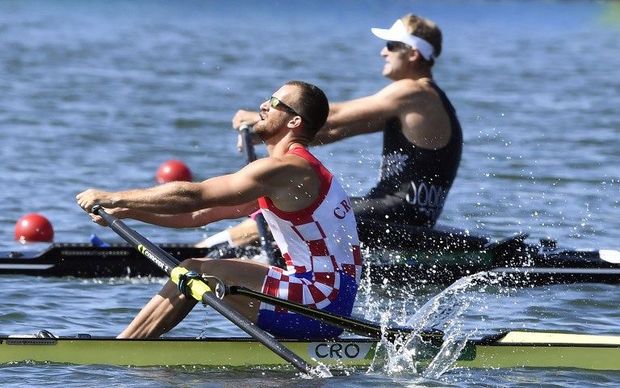
What can we learn from the studies done on other sports like running, and how does this potentially apply to rowing? We see crews that bolt out of the start and hold a fast pace all the way (Aussie Men’s 4-) and the Kiwi Pair that settle into a relentless pace and simply grind through the field. And there are the famously fast finishes from Olaf Tufte in 2008, and Damian Martin at the Rio Olympics. Which approach is the most successful? Alex Hutchinson provides a nice perspective and review of the emerging literature over the last years. I hope you enjoy the read.
Original article written by Alex Hutchinson, Jan 26, 2021.
If even pacing is so great, why do the best runners in the world always seem to have another gear at the end?
I used to see my finishing kick as a sign of toughness. Nobody passed me in the closing stages of a race, I’d tell myself, because nobody wanted it more than me.null
But as time went on, I began to see it from a different perspective. No matter how a race played out, whether it was fast or slow and whether I was way ahead or way behind, I would always manage to sprint the last quarter-mile or so. Why did I always have energy left for a sprint, even if I’d been dropped by the leaders? Shouldn’t I have used that energy to avoid being dropped in the first place? Eventually, my kick became a source of frustration. I tried to race hard enough that I’d have nothing left for a kick, but I almost never managed it.
As a result, I’ve always been fascinated by attempts to unravel the physiology and psychology of the finishing kick. The most recent addition: a study in Medicine & Science in Sports & Exercise, led by graduate student Rafael Azevedo at the University of Calgary under the direction of Juan Murias and Guillaume Millet, using an interesting new methodology to tease out levels of fatigue in the brain and body before and after the finishing kick.
Some important background: I always come back to a 2006 study by University Cape Town researchers Ross Tucker, Michael Lambert, and Tim Noakes that analyzed pacing patterns in a century’s worth of men’s world record performances over distances between 800 and 10,000 meters. As I discussed in more detail here, they observed a remarkably consistent U-shaped pacing template for races longer than 800 meters, featuring a fast start, even-paced middle, and fast finish, as shown in this graph:
(Illustration: International Journal of Sports Physiology and Performance)
The presence of a finishing kick even in elite athletes running at world-record pace, they argued, reflected a hardwired tendency to maintain a physiological reserve during intense exercise. In other words, it was evolution rather than cowardice that made me hold back energy for a sprint.
This big-picture explanation makes intuitive sense, but actually unraveling what’s going in your body at different stages in a race has turned out to be more complicated than expected. To that end, Azevedo’s new study involved 12 male volunteers performing a series of 4K cycling time trials. The trials lasted a little over six minutes on average, and as expected they followed a U-shaped pacing profile with a fast start, even-paced middle, and finishing sprint. On average, according to a mathematical analysis, the fast start lasted 827 meters, and the finishing kick started with 410 meters left.
After a couple of familiarization trials, the subjects completed three experimental trials in randomized order: one in which they were stopped after the fast start, a second in which they were stopped after the even-paced section, and a third in which they continued to the finish. As soon as they stopped, they underwent a battery of tests to assess fatigue in various ways. The measurements used force sensors mounted in the pedals of the bike—a crucial detail, since fatigue starts dissipating within a few seconds. Previous experiments have involved getting subjects off the bike and then strapping them into a separate apparatus to measure fatigue, so this is a key technical innovation.
The simplest way of measuring muscle fatigue is with a maximal voluntary contraction: you ask the subject to contract the relevant muscle (in this case the quads) as hard as possible. Using more sophisticated techniques, you can also break it down into two subcomponents. “Central fatigue” is how much the signal from the brain to the muscles has decreased; “peripheral fatigue” is how much weaker the muscle fibers themselves are when you stimulate them with electricity. The researchers performed all three of these measurements.
The results showed a rapid increase in fatigue during the initial fast start: the max voluntary contraction dropped by 23 percent, central fatigue was 8 percent, and peripheral fatigue was 40 percent. Then things stabilized: by the end of the even-paced phase, which accounts for about 70 percent of the overall race, all three of the fatigue markers were essentially unchanged compared to just after the fast start. But after the finishing sprint, fatigue ramped up again, for example to 34 percent for max voluntary contraction.
In other words, muscle fatigue doesn’t accumulate in a nice straight line. After the initial excitement of the start, we settle into a sustainable pace that seems to have very little impact on muscle function. The sensation that your jellied legs couldn’t take another step after a race is produced almost entirely by the finishing sprint, not by the miles that preceded it. One way to understand this is in terms of critical speed (or, equivalently, critical power), a concept I’ve written about in detail a fewtimesrecently. Your critical speed is essentially the threshold of what’s metabolically sustainable. You can run above critical speed for a while, but you’re using up your finite reserves of anaerobic capacity—and once they’re done, you’re cooked.
If you were to run a race at a perfectly even pace, you’d use up your anaerobic capacity gradually, hitting zero as you cross the finish line if you judge it right. In contrast, what most of us tend to do is use up a chunk of anaerobic capacity at the start. (There may be good physiological reasonsfor that, since a fast start ramps up your oxygen-processing capacities more quickly.) Then we settle into a pace relatively close to critical power, where we’re only nibbling away very slowly at anaerobic capacity. Then, as we approach the finish, we use it all up with a glorious sprint.
Sure enough, in Azevedo’s data, the cyclists settled into a pace barely above critical power for the middle portion of the race, meaning that they used most of their anaerobic capacity at the beginning and end. The big question is whether this approach is suboptimal. That’s certainly my intuition. When Joshua Cheptegei broke the 5,000-meter world record last summer, I arguedthat the Wavelight pacing lights flashing around the perimeter of the track at a perfectly even pace helped Cheptegei by enabling him to run the most evenly paced world record ever. It must be more efficient, right?
But it’s perhaps not as obvious as I thought. Back in 2013, a study from Andy Jones’s lab at the University of Exeter compared different pacing strategies in three-minute cycling trials: the typical self-paced U-shape, an all-out-from-the-start effort, and an even-paced trial. Here’s what those pacing patterns looked like, with the amount of work done above critical power (i.e. the anaerobic capacity) shaded in grey. Panel A is an incremental test to exhaustion, B is all-out from the start, C is even pacing, and D is self-paced.
(Illustration: Medicine & Science in Sports & Exercise)
The numbers indicate the total anaerobic capacity shown by the shaded areas, and there are no significant differences between them. Even pacing produced an anaerobic capacity of 12.9 kJ; self-pacing with a finishing kick produced 12.8 kJ. There’s a big difference in how these different strategies feel, though. The closer you are to emptying your anaerobic capacity, the worse you feel. “My interpretation/hunch,” Jones told me by email, “is that athletes have learnt, or know intuitively, that a pacing strategy involving an end spurt results in the same performance outcome as other strategies, BUT that this same performance can be achieved with less pain for most of the race! The athletes will be just as knackered at the end but that middle section won’t be quite so excruciatingly intolerable if they implement an end spurt strategy.”
It’s an interesting idea. And it would explain why U-shaped pacing patterns are so ubiquitous even among the greatest runners in the world. It has always puzzled me that a seemingly suboptimal pacing strategy could produce so many world records. Even if we’re wired to pace ourselves cautiously, you’d still expect that world records would happen when athletes accidentally started too fast if having a finishing kick was really so bad for performance.
On the other hand, as Ross Tucker has noted, the pacing in world records does seem to be getting more and more even. The gains from smoothing out your pacing may be marginal, but at that level you have to look for every possible edge. Personally, though, I find Andy Jones’s argument very tempting—because if U-shaped pacing doesn’t cost you anything, then I can start thinking of my finishing kick as a badge of pride again, rather than a mark of shame.
Original article written by Alex Hutchinson, Jan 26, 2021
In this episode I cover the metrics that I track during a rowing season, to monitor and manage. This episode ought to be useful for anyone seeking to understand what training metrics and devices are best to improve their performance in rowing.
Latest insights from observational data from Supersapiens users on the best time to eat before your workout so you get the most metabolic efficiency and glucose availability.
Source, Supersapiens Blog (10 March 2023) References included at the end.
Still second guessing what the best time to fuel up before your workout is? There’s been decades of debate. And there’s still a lot of differing opinions out there. But they’re just that: opinions. Let’s settle this debate with the data.
Most athletes agree that loading up with carbs is key during the pre-exercise window. But when and how much are sources of contention.
There is support for eating low-GI foods in the 30 minutes prior to exercise. But others advocate for higher doses of carbohydrate 3-4 hours prior to exercise.
Some still believe that glycogen stores are full after 24 hours of intake at a rate of 10g of carbohydrate/kg of body weight, suggesting that a longer time frame for loading up is more important.
But here’s the latest insight from observational data from our Supersapiens users:
It turns out that the best time to eat before your workout is either within 20 minutes of the start or 4 hours before the start.
What that means for you: don’t eat between 20 minutes and 4 hours from the start of your workout.
One of our team members just set a new marathon personal best using this strategy.
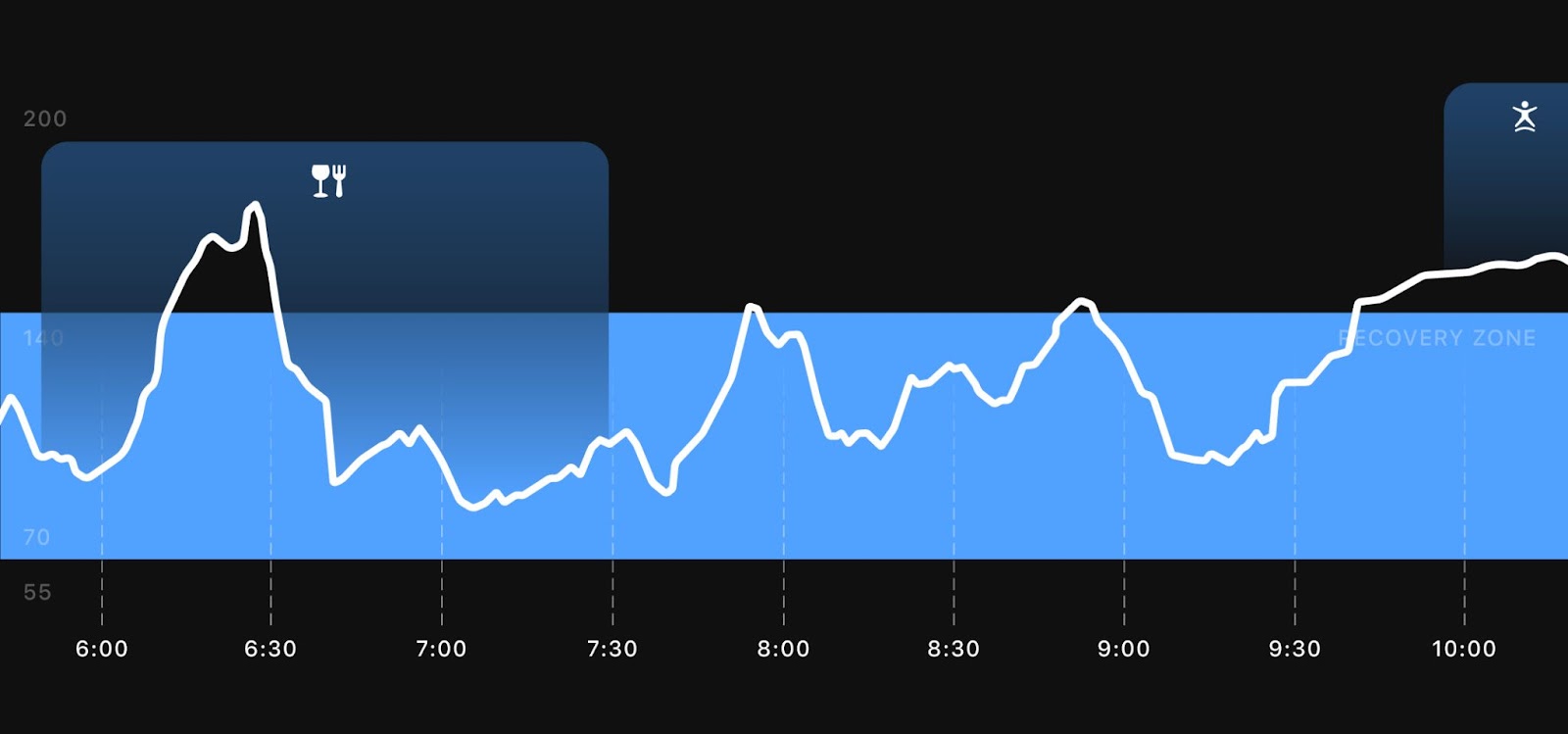
Figure 1: Glucose data, including pre-workout meal (PRIMING)
You can see the glucose rush induced by his high carbohydrate breakfast, which was just about 4 hours prior to the start of the race. From there you can see some small rushes as a result of some stress/excitement and some potential metabolic perturbations from that high carb meal.
The main reason why you should avoid fueling during that 20 minute to 4 hour window prior to the start is because of the hormonal and metabolic imbalance triggered by the high carb glucose rush. Those imbalances can impact your feel, energy, and performance during the race!
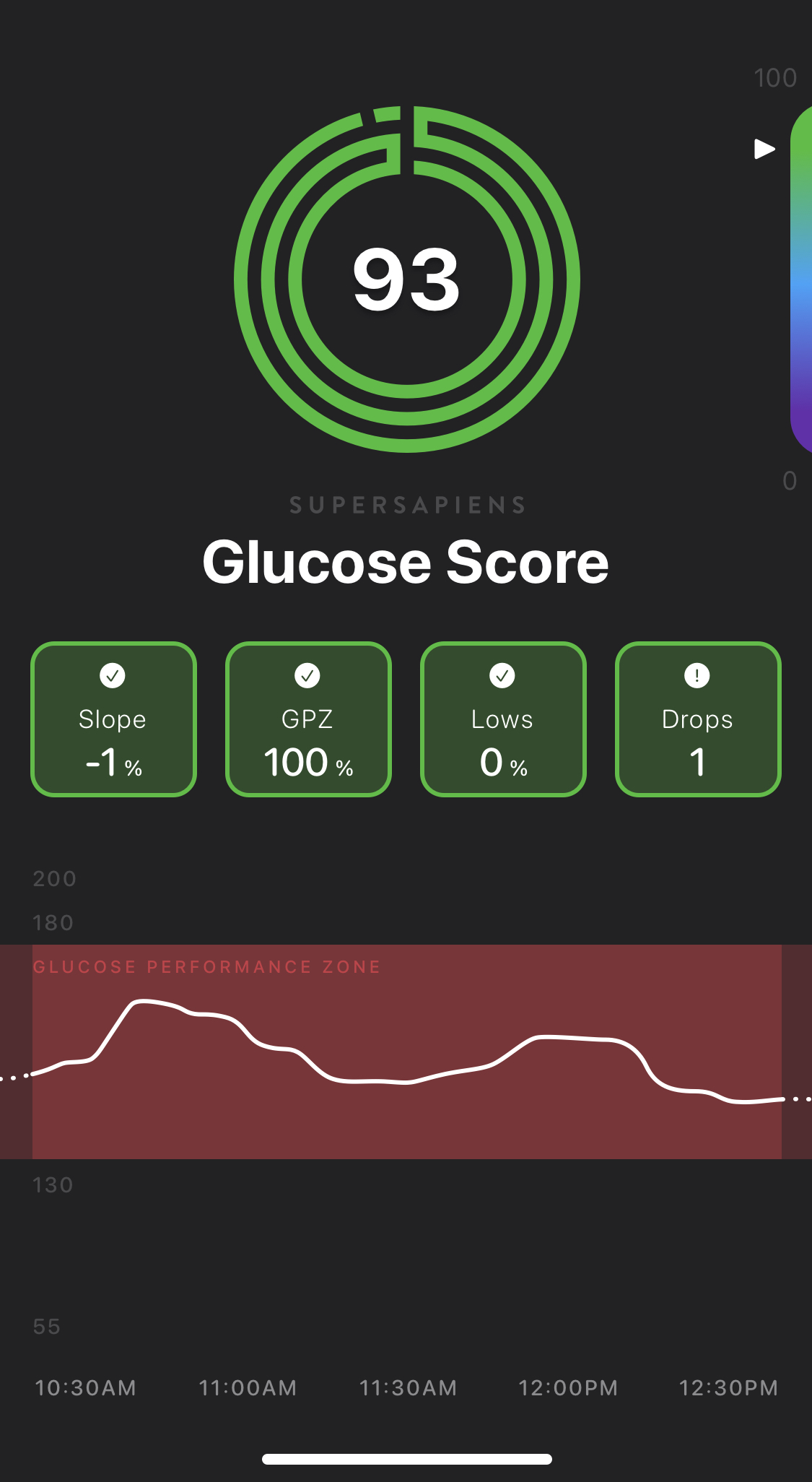
Figure 2: Glucose Score and glucose trace from the marathon.
You will see a rise in glucose at start line arrival (9:30am) which leads into the race start.
You can see here that he managed to keep his glucose up and stable for the duration of his marathon. Likewise, he has great glucose stability. Both of these factors contributed to his high Glucose Score and amazing performance.
For the record, his nutrition strategy was dialed in during the months prior to the race, where he found that 75g/hr of carbohydrates, starting from 10 minutes into the race, was optimal for his glucose stability.
For him, loading up 4 hours before the start is key number one. Key number two was not eating and triggering internal imbalances for the next few hours before the race started.
Let’s dive into the ‘why’ and also explore what your options are if you can’t fuel up 4 hours before a workout (maybe because you run at 6am!)
Why Should You Fuel Exactly 4 Hours Before A Workout?
There are a few reasons for eating this far in advance of your workout. And they’re the same reasons to avoid fueling during the 4 hour window before your workout.
One of these is gastrointestinal comfort. If you eat too close to exercise, especially if you eat a lot of food, you may experience gastrointestinal problems. This may be worsened by things that slow gastrointestinal emptying, including fiber, fats, and protein.
But the most significant reason to avoid eating too close to exercise is ‘Rebound Hypoglycemia’ also known as ‘Reactive Hypoglycemia.’ Simply put, a steep rush in glucose triggers a big insulin release, which can overcorrect things in your system, and the result is a steep drop in glucose levels and low glucose for a period of time. This can be exacerbated by commencing exercise close to your meal. If you eat during your warmup for example, you may not get the insulin release from ingesting carbs because exercise-induced muscle uptake of glucose does not require insulin – in a rested state, your muscle uptake of glucose does require insulin.
Bottom line: too much glucose (without exercise) can result in too much insulin, which can drive metabolic instability and unwanted low glucose levels before and at the start of your workout! During that time of instability, you’ll probably have energy swings, feel lethargic, and, given such effects, you might end up wasting carbohydrates or causing GI stress by overcompensating for how poorly you feel through over-fueling in the early stages of your workout.
Why Is Rebound Hypoglycemia Bad?
The main reasons that we think that rebound hypoglycemic (sometimes referred to as “reactive hypoglycemia”) events are bad is due to metabolic perturbations and the potential perception/feeling of the athlete. Anyone who has had one of these will attest to the fact that it is quite unpleasant and feels like you cannot perform well. That said, unfortunately all literature currently suggests that there is no performance detriment to rebound hypoglycemia.
Interestingly, the chance to develop symptoms from a reactive episode is somewhat subjective. Research suggests that around 30-to-40% of athletes develop symptoms of reactive hypoglycemia and if you are prone to it, you are also more sensitive to it.
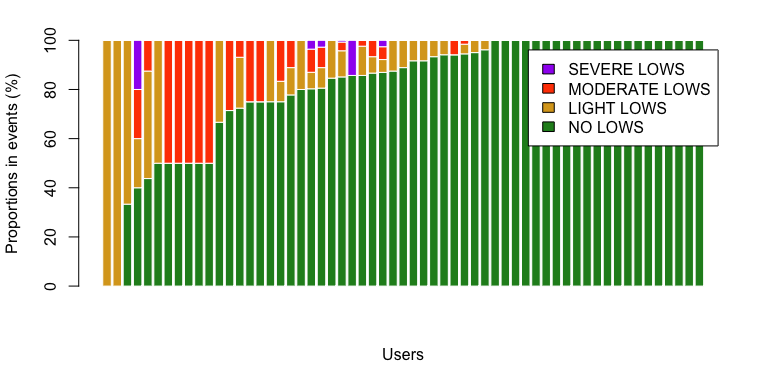
Data from our database do support such evidence as displayed in the figure below.
As you can see, there is a portion of athletes (on the far right) that never develop rebound hypoglycemic events. On the other hand (the far left) the same users tend to develop rebound hypoglycemic events of different severity (described by the depth and the duration of episodes).
Sample of users indicating frequency and severity of rebound low
What If You Can’t Eat 4 Hours Before A Workout?
Maybe you have a morning workout and don’t want to get up in the middle of your sleep? Some people will be able to get away with eating at any time without consequence. Likewise, the other side of this coin is that there seems to be a subset of people who are very susceptible to rebound hypoglycemic events and these folks find any food within four or so hours of exercise is an issue.
It is a good time to remind readers that your pre-workout meal is mostly about topping up glycogen stores and so carbohydrates are the main focus. The amount, type (liquid, gels, solids etc) and their glycemic index (GI) are all relevant variables to manipulate when planning this meal and its timing.
Research suggests that the closer to your workout, the lower the amount of carbohydrates should be included. Likewise, the type is relevant mostly for comfort and convenience. The GI is heavily timing dependent and has the potential to either exacerbate or somewhat limit rebound hypoglycemic events. Generally, advice is that within 30mins of a workout you should be eating a higher GI whereas between this time and 4 hours, it probably serves users best to use low GI sources of carbohydrate.
So, to eat or not to eat.
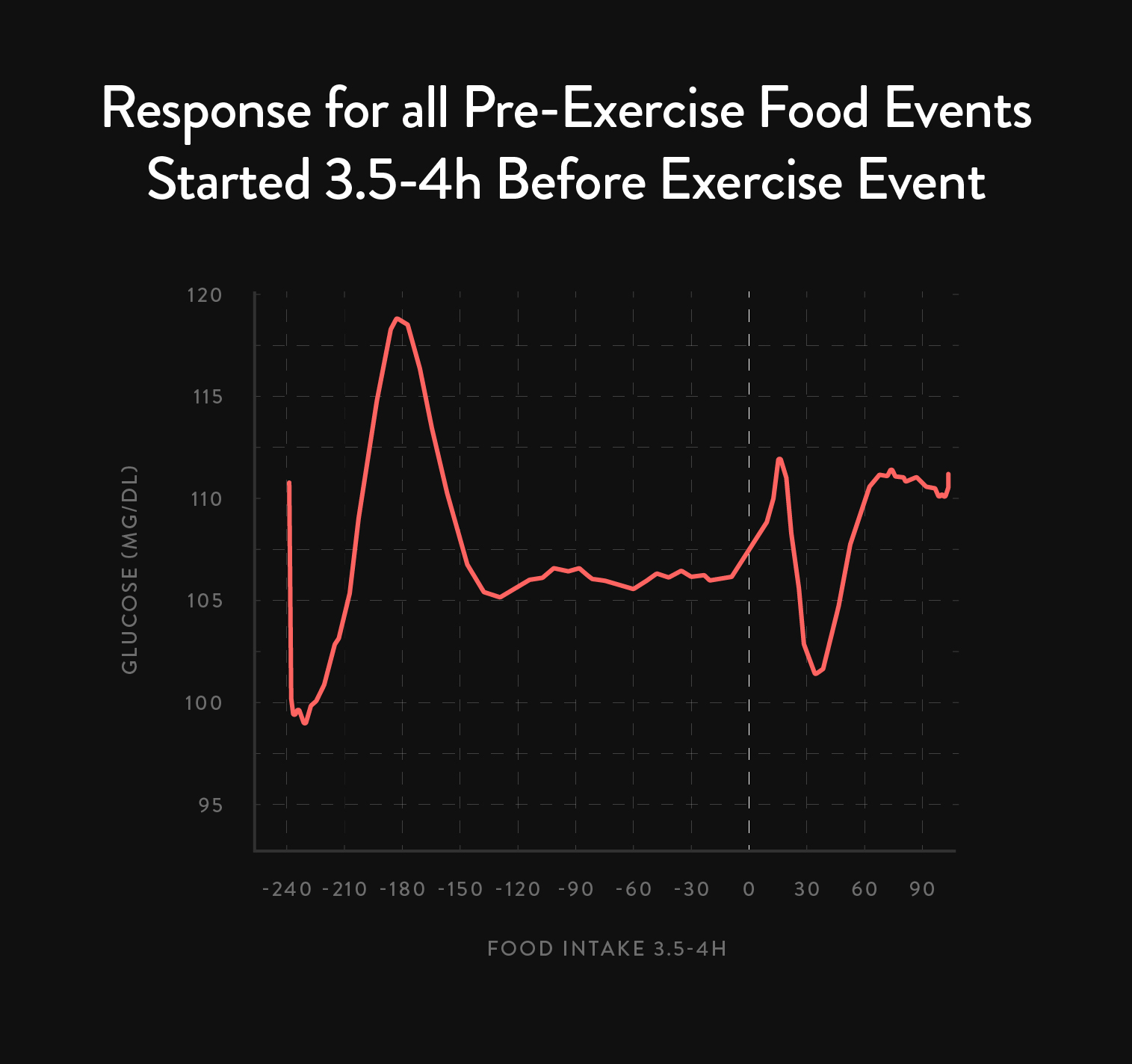
The below data is from fellow Supersapiens and sheds light on whether or not to eat if you’re not able to eat four hours prior to a workout. It is a graphical representation of the average glucose response to meals eaten at different times prior to exercise. In brief, the graph focuses on the average CGM profile of a representative sample of users (~6000 Supersapiens). Variability has been removed for clarity.
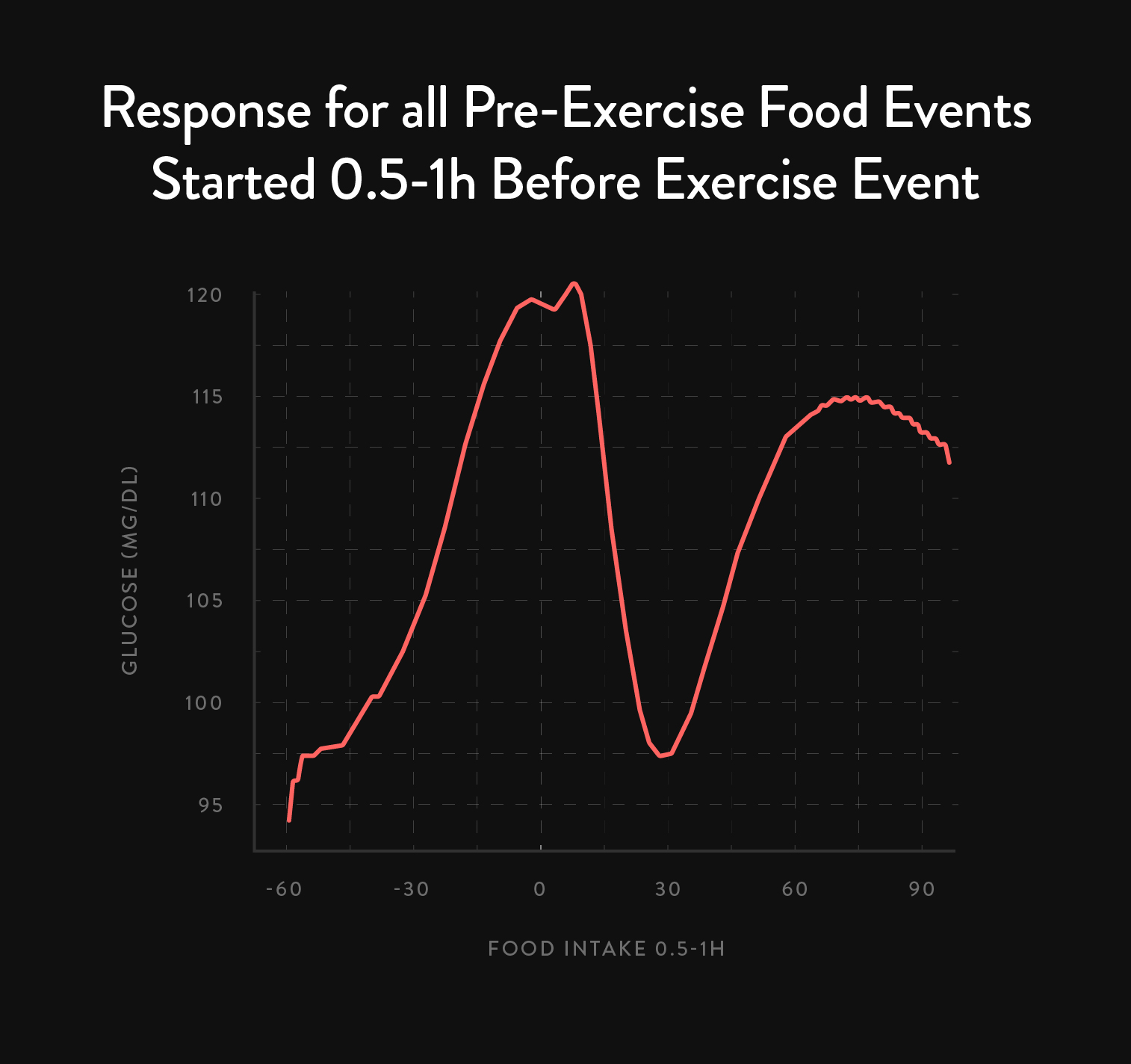
Figure 3A: Meal time and average glucose response for the first 90mins of exercise. Dashed vertical line signifies exercise beginning, the beginning of the trace signifies the beginning of the food event. The graph in this figure signifies the response average in a 30min block from 3.5hrs prior to exercise start to 4hrs prior to exercise start. Exercise event data were limited to up to 90mins into exercise to remove the effects of prolonged exercise.Figure 3B: Meal time and average glucose response for the first 90mins of exercise. Dashed vertical line signifies exercise beginning, the beginning of the trace signifies the beginning of the food event. The graph in this figure signifies the response average in a 30min block from 30mins prior to exercise start to 60mins prior to exercise start. Exercise event data were limited to up to 90mins into exercise to remove the effects of prolonged exercise.Figure 3C: Meal time and average glucose response for the first 90mins of exercise. Dashed vertical line signifies exercise beginning, the beginning of the trace signifies the beginning of the food event. The graph in this figure signifies the response average in a 30min block from exercise start to 30mins prior. Exercise event data were limited to up to 90mins into exercise to remove the effects of prolonged exercise.
Notice the significant rebound hypoglycemia in the 60 minutes prior to exercise graph. This doesn’t happen when the meal is 3.5 hours or more prior to the exercise event.
The last graph (of the 30 minutes prior to exercise) is a key one. This may be the answer to “What if you can’t eat four hours before a workout?”
This data currently includes all food events from the last 30 minutes prior to exercise. This means events from 1 minute prior are grouped with those 30 minutes prior to exercise.
Metabolism is more of a continuum (or dimmer switch) than an all or nothing phenomenon (or light switch), and so it is fair to assume that there is a continuum that exists between 1 minute and 60 minutes prior to exercise. There is a significant portion of the 0-30 minutes group that is more like the 30-60 minutes group. Thus eating just before the start of exercise is probably the safest strategy here. Allowing minimal insulin release and any rise in glucose being mitigated by muscle contraction related glucose absorption rather than insulin. Basically, eat during your warmup or after the start of your workout.
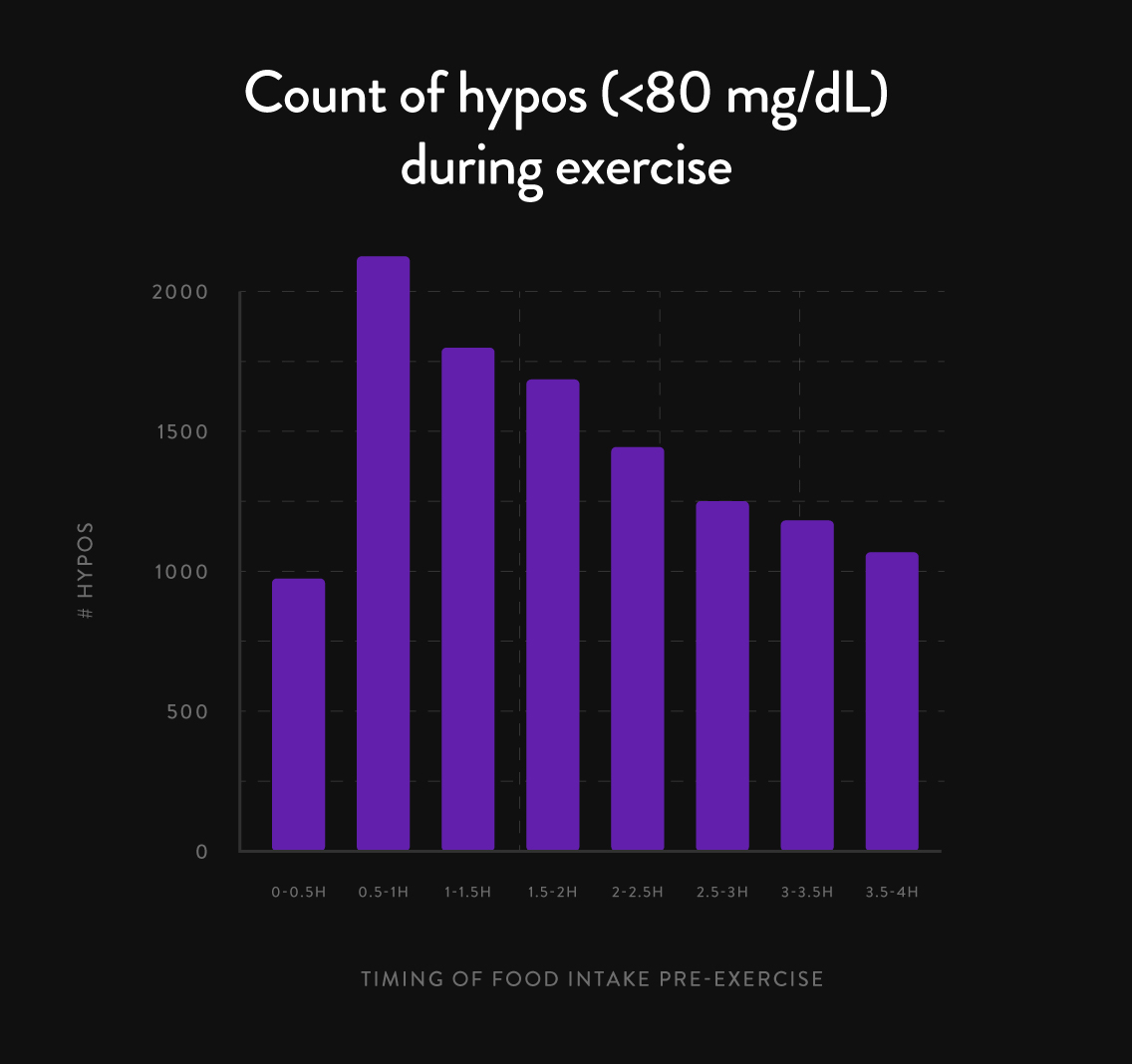
This data is further supported by the below figure relating to the number of lows during exercise with respect to the meal timing preceding it in Supersapiens users. This too is split up into 30min blocks of timing.
Figure 4: Meal time before exercise and number of lows developed during exercise. The different bars in this figure signify the responses in 30min blocks from 0-30mins prior to exercise through to 240mins prior to exercise.
Again, considering the way metabolism works (more of a continuum than all or nothing), this is likely a reflection of very few episodes of low glucose in the last 10 to 15 minutes before exercise starts. Thus lowering the number of lows in the 0-30min time block. Similarly, this is as high as it is, likely in large part due to the effects of lows events when eating 15-30 minutes prior to exercise.
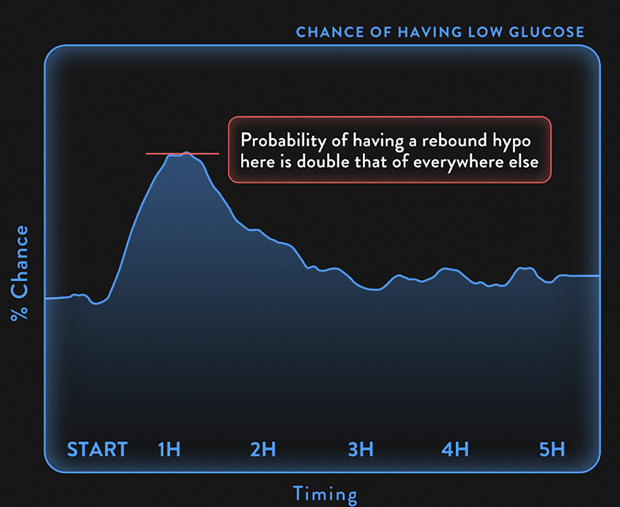
Further clarity and resolution is provided by the below, final figure. This figure shows the normalized probability of experiencing a lows, with respect to time of the last meal. Of note and perhaps most importantly, your risk is never 0. This is because not all lows are food induced. Some may be due to the warm-up phase, as one example.
The risk of low glucose events, as displayed in this figure, is highest when eating 50-60 minutes before exercise, where it is double the baseline risk and there is a hint that it is a little lower when eating less than 15 minutes before exercise starts.
Figure 5: Normalized probability of experiencing a rebound hypoglycemic event with respect to time of eating prior to the event.
It should be considered that these probabilities are for when an athlete eats (not when they do not, though eating 4 hours prior is fairly likely a good indication of baseline physiology) and are population level data rather than specific to an individual. This is all to say that our data gives a great starting point but the athletes need to find a best practice for themselves. Thankfully, Supersapiens gives you the visibility to do so.
*A caveat with this data is that it is only for exercise events made in the app with a concomitant prior food event made too. We have no insight into what users ate in these food events. Similarly we have no context for what the exercise event entailed.
5 Tips for Pre-workout Eating:
Eat four hours prior to exercise if possible. You can also split your planned intake in 2 moments. 4 hours and 20 minutes prior to exercise. Just avoid eating in between that time frame.
Make sure you consider amount and type of carbohydrates in the context of the timing of your pre-exercise meal (4h vs 20mins)
If you can’t eat four hours prior to exercise, try eating just before you start.
Nothing new on race day! You need to be dialing this in over time to be able to best execute on race day, so start ASAP.
Visibility is crucial to understanding this. Without it, you will not understand the effects of what you are eating on your own metabolism.
Don’t hesitate and write off another poor training session as a result of fatigue when it is because of your glucose. And definitely don’t waste another race on a mistimed pre-race meal.
Get Supersapiens today and get back to the lab to dial your nutrition in!
References
Febbraio, M. A., Keenan, J., Angus, D. J., Campbell, S. E., & Garnham, A. P. (2000). Preexercise carbohydrate ingestion, glucose kinetics, and muscle glycogen use: Effect of the glycemic index. Journal of Applied Physiology, 89(5), 1845–1851. https://doi.org/10.1152/jappl.2000.89.5.1845
Kerksick, C. M., Arent, S., Schoenfeld, B. J., Stout, J. R., Campbell, B., Wilborn, C. D., Taylor, L., Kalman, D., Smith-Ryan, A. E., Kreider, R. B., Willoughby, D., Arciero, P. J., VanDusseldorp, T. A., Ormsbee, M. J., Wildman, R., Greenwood, M., Ziegenfuss, T. N., Aragon, A. A., & Antonio, J. (2017). International society of sports nutrition position stand: Nutrient timing. Journal of the International Society of Sports Nutrition, 14(1), 1–21. https://doi.org/10.1186/s12970-017-0189-4
Chryssanthopoulos, C., & Williams, C. (1997). Pre-exercise carbohydrate meal and endurance running capacity when carbohydrates are ingested during exercise. International Journal of Sports Medicine, 18(7), 543–548.https://doi.org/10.1055/s-2007-972679
Bussau, V. A., Fairchild, T. J., Rao, A., Steele, P., & Fournier, P. A. (2002). Carbohydrate loading in human muscle: An improved 1 day protocol. European Journal of Applied Physiology, 87(3), 290–295. https://doi.org/10.1007/s00421-002-0621-5
Jeukendrup, A. E., & Killer, S. C. (2011). The myths surrounding pre-exercise carbohydrate feeding. Annals of Nutrition and Metabolism, 57(SUPPL. 2), 18–25. https://doi.org/10.1159/000322698
Achten, J., & Jeukendrup, A. A. (2003). Effects of pre-exercise ingestion of carbohydrate on glycaemic and insulinaemic responses during subsequent exercise at differing intensities. European Journal of Applied Physiology, 88(4–5), 466–471. https://doi.org/10.1007/s00421-002-0730-1
Moseley, L., Lancaster, G. I., & Jeukendrup, A. E. (2003). Effects of timing of pre-exercise ingestion of carbohydrate on subsequent metabolism and cycling performance. European Journal of Applied Physiology, 88(4–5), 453–458. https://doi.org/10.1007/s00421-002-0728-8
Jentjens, R. L. P. G., Cale, C., Gutch, C., & Jeukendrup, A. E. (2003). Effects of pre-exercise ingestion of differing amounts of carbohydrate on subsequent metabolism and cycling performance. European Journal of Applied Physiology, 88(4–5), 444–452. https://doi.org/10.1007/s00421-002-0727-9
Chryssanthopoulos, C., Petridou, A., Maridaki, M., & Mougios, V. (2008). Meal frequency of pre-exercise carbohydrate feedings. International Journal of Sports Medicine, 29(4), 336–342. https://doi.org/10.1055/s-2007-965340
Febbraio, M. A., & Stewart, K. L. (1996). CHO feeding before prolonged exercise: Effect of glycemic index on muscle glycogenolysis and exercise performance. Journal of Applied Physiology, 81(3), 1115–1120. https://doi.org/10.1152/jappl.1996.81.3.1115
Aandahl, M. H., Noordhof, D. A., Tjønna, A. E., & Sandbakk, Ø. (2021). Effect of Carbohydrate Content in a Pre-event Meal on Endurance Performance-Determining Factors: A Randomized Controlled Crossover-Trial. Frontiers in Sports and Active Living, 3(May). https://doi.org/10.3389/fspor.2021.664270
Kondo, S., Tanisawa, K., Suzuki, K., Terada, S., & Higuchi, M. (2019). Preexercise Carbohydrate Ingestion and Transient Hypoglycemia: Fasting versus Feeding. Medicine and Science in Sports and Exercise, 51(1), 168–173. https://doi.org/10.1249/MSS.0000000000001773
Wu, C. L., & Williams, C. (2006). A low glycemic index meal before exercise improves endurance running capacity in men. International Journal of Sport Nutrition and Exercise Metabolism, 16(5), 510–527. https://doi.org/10.1123/ijsnem.16.5.510