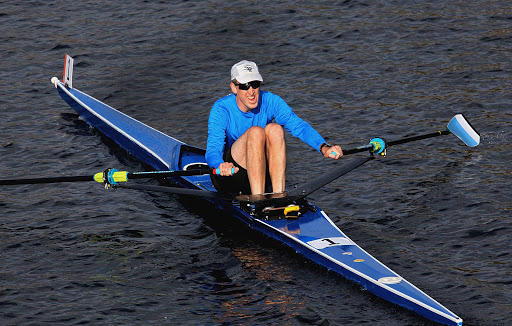
Join Greg and I, as we discuss Greg’s preparations for this years Head of The Charles Regatta. How he adapted his training through Covid-19 and what he has been experimenting with.
Greg Benning, started rowing at the University of Pennsylvania in 1980 and has been engaged in the sport ever since. Greg is the Vice-Chair of US Rowing and a multiple winner of the Head of The Charles regatta.
This episode is a recording of the exclusive Live event for the Masters Rowing Group and my newsletter subscribers. For more information and to subscribe to my newsletter, go to www.whchambers.com and subscribe.
In this podcast episode, I chat with the amazing masters crew that set the masters record at the Head of The Charles Regatta (HOCR). The Wallingford crew of Mike Edge, Pete King, Steve Pearson and stroke, Richard Smith – coxed by Sara Ball, won the 2016 regatta by 30-seconds, with a new course record of 17mins 5 secs.
From right to left; Mike Edge, Pete King, Steve Pearson and stroke, Richard Smith – cox Sara Ball
The crew share how they trained and prepared for the race. Everything from engaging a new coach, and partnering with an amazingly talented cox. How they used YouTube to get used to the bends and bridges, to mapping the race distance and course on their local stretch of water in Wallingford, Oxford.
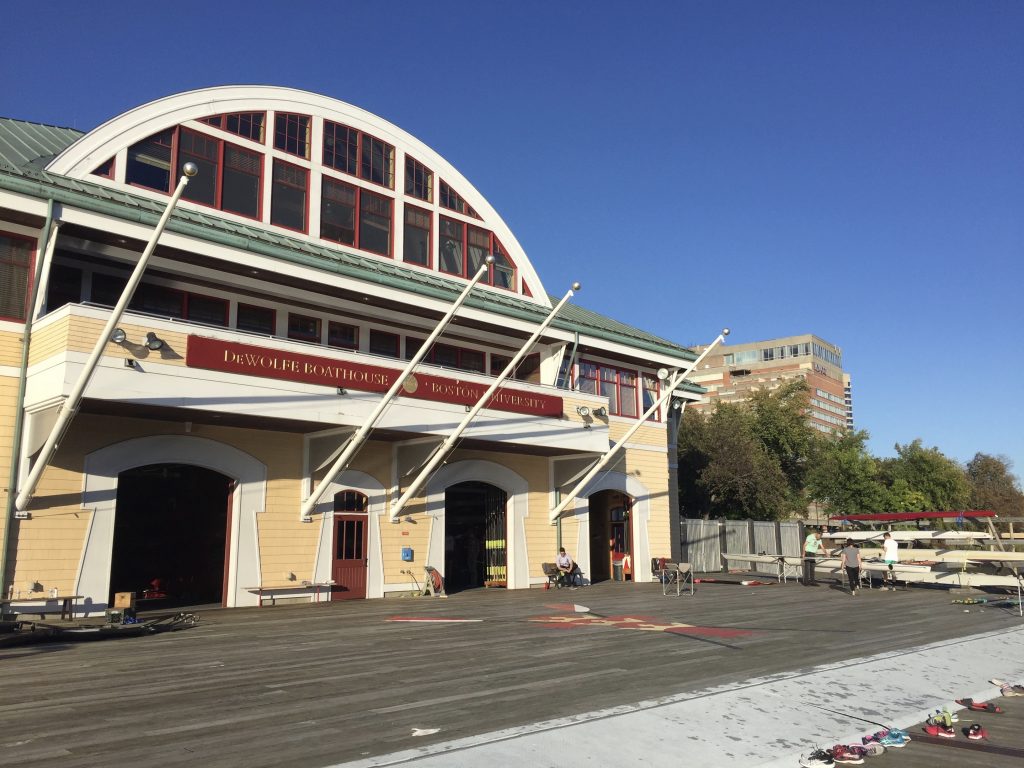
Boat used was a Filippi coxed four out of Boston University.
If you are a Masters Rowers, and interested in training for the Head of The Charles Regatta, I have prepared training plans especially for you. Whether you are planning to race in Boston, or compete virtually, these plans will help you to be at your best. The plans are designed by the most successful Masters Rowers, specifically for the Head of The Charles, and for Masters with 6 hours a week all the way to 12 hours of training a week. Click on the link to check out the programs. HOCR Training Plan
My guest today, is Wendy Miller, from Mosman Rowing Club in Sydney Australia. Wendy competed in the 2019 Head of The Charles regatta, and gained 3rd place in her first attempt in the single sculls event.
I first met Wendy in 2019, as she was travelling through Europe on holidays on her way to Boston. She gave me a call to ask if she could drop by Switzerland, (as you do:-) to do a spot of training with me, before heading over to race in the US. Wendy has a great story to share, with her journey through Europe, training on a yacht whilst sailing down the Italian coast, her ingenuity to source boats, blades and boathouses to use, staying with wonderful hosts in different cities, and finding races to sharpen up before the big event. Nothing stopped Wendy on her way to racing in the 2019 Head of The Charles regatta and having a great adventure along the way. I hope you enjoy listening to her journey as much as I did.
Head of The Charles Training Plans
If you are a Masters Rowers, and interested in training for the Head of The Charles Regatta, I have prepared training plans especially for Masters Rowers. Whether you are planning to race in Boston, or compete virtually, these plans will help you to be at your best. The plans are designed by the most successful Masters Rowers, specifically for the Head of The Charles, and for Masters with 6 hours a week all the way to 12 hours of training a week. Click on the link to check out the programs. HOCR Training Plan
Since its inception in 1965, The Head Of The Charles Regatta, also known as HOCR, is a rowing head race held on the penultimate complete weekend of October each year on the Charles River, which separates Boston and Cambridge, Massachusetts. I thought it would be interesting to find out from the organisers, and rowers, what makes the HOCR so special, and what attracted them to fly half way around the world to race on the Charles River. Over the next weeks, I will be releasing episodes where I chat with crews from around the world, to share insights into what makes this regatta so special.
In this first episode, I speak with Blair Crawford (Chair) of the HOCR Board of Directors, to understand more about the regatta, how it all started, and how the regatta has evolved into what it is today.
Head of The Charles Training Plans
If you are a Masters Rowers, and interested in training for the Head of The Charles Regatta, I have prepared training plans especially for Masters Rowers. Whether you are planning to race in Boston, or compete virtually, these plans will help you to be at your best. The plans are designed by the most successful Masters Rowers, specifically for the Head of The Charles, and for Masters with 6 hours a week all the way to 12 hours of training a week. Click on the link to check out the programs. HOCR Training Plan
Most will now be aware, that the 2021 Boat Races, will take place on the River Cam in Ely. After a combination of factors, including the COVID pandemic, and the closure of Hammersmith Bridge at the halfway mark of the 6,800m course, forced the organisers to take radical action. The change in venue marks a return to Ely for the first time since a series of unofficial races took place there during the Second World War. Source; Robert Treharne Jones (Dec 2020)
Although the scale of the Boat Race event, could seem small in comparison to other major sporting events held in London, the Boat Race has an important attractor effect on people through physical visitors and also through television and digital platforms. I feel we can all learn a lot from what the Boat Race Organisation, and others like Henley Royal Regatta, The Head of The Charles, and Silver Skiff regatta, are are doing to attract and inspire people to rowing. How the organisers are understanding and translating the economic benefit of regatta, as well as learning how to televise, engage and extend the reach of the event beyond Race Day itself.
The facts and figures used in this article have been gathered from multiple sources, including a detailed report titled; The Boat Race, Impact of a Single Day Major Event on a City, Arup & The Boat Race Company (October 2017). Link to the original report can be found at the bottom of this post.
The Boat Race Today
There are 250,000+ visitors each year to the river banks on Race Day, and some 7 million people watching on national television, representing 3,400 visitors and 100,000 viewers per athlete.
In comparison the London 2012 Olympic Games had 10,568 athletes, 52 million individual viewers in the UK and 2 million visitors to London for the Games – or each athlete “attracting” 190 visitors and 4,900 viewers.
As such, each rower at the Boat Race, “attracts” 20 times more visitors than Olympic athletes.
The Boat Race generates 40 percent more spend per athlete than the London Olympics.
In the spirit of sport competition, The Boat Race has always been inclusive to all visitors, with no ticketing costs to the visitor. Yet the total spend from visitors is estimated between £7 million and £8.5 million, averaging £30 per person or £100,000 per athlete.
The visitor spend generated by the London 2012 Olympic Games was about £760 million (in the UK), averaging £1,290 per person, or £72,000 per athlete. Again, the Races have a yield per rower (based on visitor spend) 40 percent higher than the London 2012 Olympic Games.
The Boat Race attracts 50,000 additional day-visitors to London.
The Race attracts 200,000 visitors living in London who would not be considered additional visitors to the local area as the vast majority of them come from one of the four adjoining boroughs along the route.
Yet it attracts over 50,000 people from outside London each year to west London.
The direct net economic impact on the local economy is estimated between £2.1 and £2.9 million.
The 50,000 day-visitors spend £1.4 to £1.7 million in the local economy. Whilst London-based visitors are not additional as such to London or the local area, they will likely be spending more than on their average Saturday day-out, due to the event and celebratory atmosphere.
The direct economic impact of The Boat Race in the local economy is estimated between £2.1 and £2.9 million, with indirect contribution reaching £2.8 to £3.7 million each year.
Multiplier Effect
The additional spend in local businesses has an indirect impact on the wider supply chain, called the ‘multiplier effect’. In this case for every £1 spent directly, it will generate £0.30 in the supply chain.
It is estimated that the total net economic benefit to the local area from The Boat Race to be between £2.8 and £3.7 million each year.
Digital Spectators
Global sport is in the process of undergoing a dramatic change in how it is presented, followed and consumed by the public. As the demographics of sport spectators moves towards people who have grown up in the digital age the appetite for ‘sport as entertainment’ and data integration have become the focus of events organisers to capture the attention of the digital consumer. In a recent report out by Deloitte, it is estimated that 85% of the workforce in 2025 will be of the ‘Millennial Generation’, a generation that is defined by their use of digital in daily life.
Integration of technology and data into the broadcast material has enabled The Boat Race to reach out to, and maintain the interest of, a new generation of spectators. The results of online consumption are on the increase. For a small sport, at time of writing this post, the Boat Race has more than 1 Million views on You Tube, and Henley Royal Regatta nearly 10 Million views, and World Rowing 5.8 million views. Source, YouTube 2020.
Another ‘niche’ spectator sport, the America’s Cup, has transformed itself, from an event that attracted attention within the sport – but little public interest – to an event that has a huge online following (165,000 subscribers to their YouTube channel, with over 35m views in 2017) and is broadcast live through an in-house app and subscription TV channels worldwide.
Final Thoughts
The Boat Race has a much larger and wider impact on the London economy, beyond the event. The Boat Race and Henley Royal Regatta, have already, and continue to transform the way they present rowing in the digital age. Both have looked to how other sports, like the America’s Cup, T20 Cricket, Golf and Formula E motor sport, have achieved success, and figured out how the success of attracting and keeping new audiences, can translate and be relevant to rowing.
As the younger generations become the predominant spectator demographic for sporting events, integrating data analysis and real time graphic updates into the streaming and broadcast feeds will ensure that the rowing can move into the digital age. As former FISA secretary general and Henley Steward John Boultbee said, “Most people watch the World Championships and Olympic Regatta, do so via television. We need to make it more appealing for these audience to stay relevant.” You can listen to the episode with John, by clicking on the link to the Faster podcast below.
I invite you to consider how you and I, can directly influence rowing events, to challenge and inspire regatta organisers, to explore, to test and develop ways of presenting our sport to current and future generations.
You can access the report that I have sampled by visiting the following link on the Boatrace.org website. https://www.theboatrace.org/wp-content/uploads/Arup-Report-The-Boat-Race.pdf
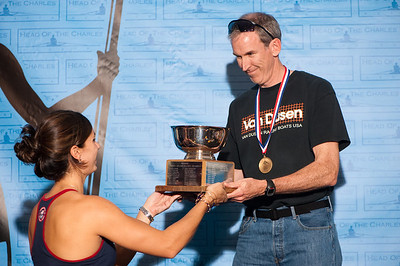
Really excited to release my follow up interview with Greg Benning. With 19 wins at HOCR, 4 course records, and 7 wins at SilverSkiff, I just had to get him back on the podcast, to share with us his approach to training and preparing for an event.
Anyone that wants to get insights and inspiration, into how a multiple champion athlete, prepares and trains to win, you will not want to miss this episode.
Some of the key points covered;
How Greg plan’s his season to key races
How Greg measures and manages his training volume, intensity and recovery
Technology Greg uses in training and racing
Rigging, catch angles and how to approach power application
Key workouts and strength program
What Greg has learnt from other sports and how these insights can be applied to rowing
Coffee or tea? Coffee
Racing or training? Training
Crew or Single? Crew
Favourite race? Head of the Charles Regatta, Silver Skiff & Heineken Roeivierkamp
To make sure you get all the latest information, ideas and inspiration, subscribe to my newsletter and join our community on Facebook.
This podcast is brought to you by High Performance Coaching in business and sport with Bill Chambers. To have a chat about your goals and high performance coaching, connect with me on WhatsApp.
My guest today is well known in both World Rowing, US Rowing and business. He is a competitive master-level rower, with 19 wins at HOCR, 4 course records. 7 wins at SilverSkiff. Half dozen FISA Veteran or US Masters Nationals with 6+ wins/regatta. He is the Vice Chair of US Rowing, captained the 1984 crew at the University of Pennsylvania, former President of Cambridge Boat Club and co-founder of the Boston rowing Federation. He is a highly successful Boston-based investment banker and an avid saltwater fly fisherman. My guest today, is Greg Benning.
This podcast is brought to you by High Performance Coaching in business and sport with Bill Chambers.