Tag: greg benning

  • How Alcohol Impacts Your Sleep

    How Alcohol Impacts Your Sleep

    One of the things I’ve been experimenting with, over the last 8-weeks, is measuring and tracking my Heart Rate Variability (HRV) and Morning Resting Heart Rate (MRHR). I’m doing this to understand how I am recovering from training and day-to-day stress. I’ve been really surprised at the impact of a couple of glasses of wine with dinner, both on my sleep, and my recovery. In doing some research, I now know why. Sharing some high level material to provide you with some insights.

    ‘How Alcohol Impacts Your Sleep’ originally posted on the Oura Blog, 20 February 2020.

    Having a glass of wine or a nightcap before bed is a common nighttime ritual. In fact, approximately 20% of the U.S. adult population drinks alcohol to help them fall asleep.

    As you sink into bed and doze off with that pleasant buzz of alcohol, it’s tempting to think you’ve unlocked the secret to falling asleep.

    But this is one shortcut you may want to avoid because while you may fall asleep quickly, the quality of your sleep suffers under the influence. Alcohol affects multiple processes in your body that prevent you from getting high-quality sleep.

    How Alcohol Impacts Your Sleep

    Alcohol impacts several of your body’s sleep systems. Most notably it:

    • Decreases melatonin: Alcohol inhibits the release of melatonin, your body’s primary sleep signal.
    • Reduces growth hormone: Alcohol reduces growth hormone release, which is crucial for your body’s nighttime repairs.
    • Increases stress hormones: Alcohol increases your body’s levels of cortisol, a stress hormone that increases your resting heart rate and generally stimulates the body—making it more likely you’ll wake up during the night.
    • Disrupts your circadian rhythm: Alcohol can impact your brain and liver’s internal clocks, causing your body to be misaligned with its natural sleep cycle.
    • Increases urination: Alcohol is a diuretic. Your body typically halts your bladder function at night; however, alcohol may interrupt your sleep for extra trips to the bathroom.
    • Aggravates breathing problems: Alcohol causes your muscles to relax, including your throat. This relaxation can make you more prone to snoring and can worsen sleep-related breathing problems like sleep apnea.

    Look Out for These Patterns

    Wondering if all this applies to you? Take notice next time you have a drink with friends or a nightcap on your own.

    Watch for these patterns in your sleep data:

    • Better sleep latency: Alcohol’s sedative effect reduces the time it takes for you to fall asleep by overriding your body’s natural, gradual transition to sleep.
    • More deep sleep, less total sleep: Alcohol may increase your deep sleep on the first night of drinking; however, it decreases your total hours of sleep.
    • Delayed REM, less REM: Alcohol significantly delays your first REM sleep cycle. Moreover, because alcohol also decreases your total sleep time and REM is weighted later in your sleep cycles, alcohol leads to fewer total minutes in REM.
    • Higher restlessness: Alcohol impacts your bladder, leading to more bathroom trips and more awakenings.
    • More fragmented sleep: Alcohol is more likely to disrupt the second half of your night, often decreasing total time spent asleep and disrupting your flow through sleep stages.
    Oura website (2020)

    Given that you’re not sleeping as well, you’re likely to suffer the next day with poorer reaction times, decreased concentration, compromised memory, and increased irritability.

    This, along with that late-night piece of greasy pizza you might have had—which also interferes with sleep—can compound to make your next day tough.

    Things to Keep in Mind

    Does this mean you have to give up drinking altogether? Not necessarily.

    Some people are more susceptible to alcohol than others, so compare your results to an average night’s sleep without alcohol to see what changes.

    Try out these tips to soften alcohol’s impact on your sleep:

    • End early: Allow your body at least 3 hours before bed to metabolize the alcohol from your system. Keep in mind this varies by your weight, gender, and consumption.
    • Hydrate often: Having a glass of water along with every drink helps your system flush out alcohol.
    • Avoid mixers: Beverages that have sugar or caffeine in the mix are more likely to stimulate your internal clocks when you’re trying to wind down.

    References

    • Roehrs, Timothy, and Thomas Roth. “Insomnia pharmacotherapy.” Neurotherapeutics 9, no. 4 (2012): 728-738. 
    • Rupp, Tracy L., Christine Acebo, and Mary A. Carskadon. “Evening alcohol suppresses salivary melatonin in young adults.” Chronobiology International 24, no. 3 (2007): 463-470. (link
    • Ekman, A. C., O. L. L. I. Vakkuri, M. I. K. A. Ekman, J. Leppäluoto, A. Ruokonen, and M. Knip. “Ethanol decreases nocturnal plasma levels of thyrotropin and growth hormone but not those of thyroid hormones or prolactin in man.” The Journal of Clinical Endocrinology & Metabolism 81, no. 7 (1996): 2627-2632. (link
    • Spencer, Robert L., and Kent E. Hutchison. “Alcohol, aging, and the stress response.” Alcohol Research and Health 23, no. 4 (1999): 272-283. (link
    • Udoh, Uduak, Jennifer Valcin, Karen Gamble, and Shannon Bailey. “The molecular circadian clock and alcohol-induced liver injury.” Biomolecules 5, no. 4 (2015): 2504-2537. 
    • Ebrahim, Irshaad O., Colin M. Shapiro, Adrian J. Williams, and Peter B. Fenwick. “Alcohol and sleep I: effects on normal sleep.” Alcoholism: Clinical and Experimental Research 37, no. 4 (2013): 539-549. (link
    • Prinz, Patricia N., Timothy A. Roehrs, Peter P. Vitaliano, Markku Linnoila, and Elliot D. Weitzman. “Effect of alcohol on sleep and nighttime plasma growth hormone and cortisol concentrations.” The Journal of Clinical Endocrinology & Metabolism 51, no. 4 (1980): 759-764. (link)
  • Tips to Go Faster in the same regatta next year. (Premium access)

    Tips to Go Faster in the same regatta next year. (Premium access)

    Faster Membership

    The rest of this one is for members.

    This article, both twelve-week training plans, and the full library of protocols and calculators are part of Faster Membership. CHF 129 for the year.

    See what’s inside Members log in

  • What the best do to constantly improve. Are you planning for 2023 now?

    What the best do to constantly improve. Are you planning for 2023 now?

    Success loves preparation, and it’s not uncommon to see athletes heading into the last months of the year, without a clear goal for the next year, and an understanding of what they need to do to achieve their goals. With the off season in Europe and America and with at least 6-months to racing in most of the world, we have an opportunity, to reflect on results from 2022, what went well and what can be improved for next year. Question is, will you take time to reflect and plan?

    I thought I’d share the approach I use, along with the approaches from super successful masters athletes and coaches, with the intention of inspiring and even challenging you, in your approach to setting up, and preparing for the year ahead.

    First, take some time off

    Many rowers feel that they shouldn’t take a break at the end of the season. I like to take at least 3-weeks off, and sometimes 4-weeks. Rest the body and mind. Build up an appetite to get back in the boat, gym and ergo, to train through the off season. I use this time to build up my reserves, and to reflect what I need to do to go faster next year.

    Review the year

    Take some time to reflect on the year to date. What did you do this year, and how has it worked out?

    What I review

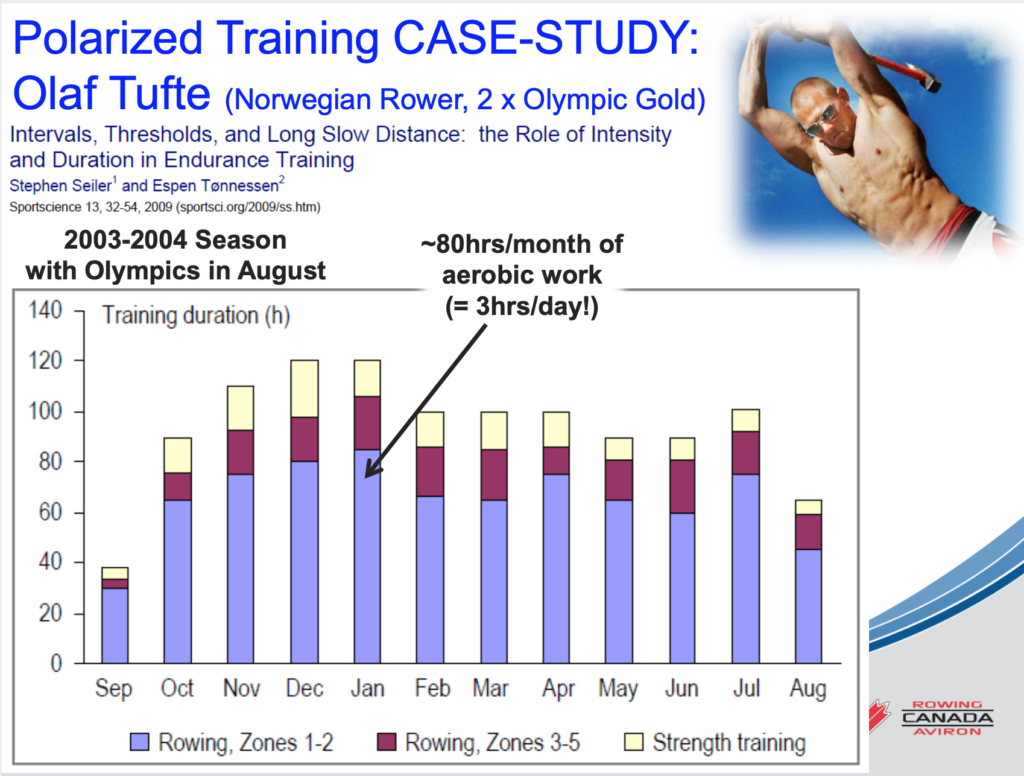
    • Total training hours vs. prior year
    • Total annual training stress score (TSS) and total TSS in the last 8-weeks leading to a target race vs. plan vs. prior year
    • Percentage of time spent in high vs. low intensity vs. target
    • Number of strength sessions and progression in power to weight
    • Online and actual regattas, how’d you go? What were your results?
    • What blocked you and what would you do differently in hindsight?
    • New things you tried out during the year. Technique or equipment, how’d it go?
    S Seiler & E Tonnessen (2009)

    Some points to consider in reviewing the year

    • How did you do on the basics; sleep, nutrition and training consistency?
    • Did you complete all the sessions you planned, or did you miss some due to injury, fatigue or work etc…
    • Did you advance your technique (ergo & boat) to go faster? It’s noticeable at all intensities/power output, when rowers improve their technique. How’d you go? Are you getting the right advice? Have you consulted someone to help you? Are you focusing on the improvement or did you just go through the motions.
    • Did your aerobic efficiency improve over time? e.g. more power (watts) at your aerobic threshold. Did you measure this?
    • Did you improve your power at your anaerobic threshold?
    • Did your power and strength improve with training? Is this something you track and manage?

    So What! Identify areas for improvement

    Now that you have the what identified, i.e. data points from the season, a good question to consider is, so what? With good data from the year, you can start making informed decisions, on where to focus in the year ahead.

    In my interview with multiple HOCR winner, Greg Benning, this is what he had to say about planning the year.

    Goal #1: Do it better every year

    Accretive:  Start with prior year, try new stuff, keep best ideas

    Incremental Gains: Keeping a list of strengths, weaknesses, measuring

    Faster podcast interview with Greg Benning (2020)
    • If your power fades and you can’t last in a race, you may need to spend time building your aerobic base?
    • If you find that your power to weight has decreased, it will be time to get into the gym and build the strength over the months of Nov – Jan.
    • You have good times on the ergo yet this doesn’t translate to speed on the water in comparison to your peers. Time to get some technical advice and engage a coach.

    Use the off season to invest

    I use the time now to plan forward for next year, with a strong focus on what I need to do in the off season, to be ready for the base training in 4-months time.

    • Systems and tools to help me track and analyse performance
    • Getting crystal clear on the main target events, and how these fit around family and work
    • Identify clearly the gaps I need to close and the plan to close them
    • Planning out the main training phases.
    • Complete a strength and power block. Targeting an increase in lean muscle mass, before the high volume endurance work starts
    • Close the gaps in weak areas. For example, I may want to work on a specific area for strength improvement or flexibility.

    Review and Plan are key aspects of success in life, business and sport. I hope that some of the points I have raised, challenge and inspire you, to review what you have done, and identify areas that will help you to go faster.

  • Preparing for the HOCR with Greg Benning

    Preparing for the HOCR with Greg Benning

    Join Greg and I, as we discuss Greg’s preparations for this years Head of The Charles Regatta. How he adapted his training through Covid-19 and what he has been experimenting with. 

    Greg Benning, started rowing at the University of Pennsylvania in 1980 and has been engaged in the sport ever since. Greg is the Vice-Chair of US Rowing and a multiple winner of the Head of The Charles regatta.

    This episode is a recording of the exclusive Live event for the Masters Rowing Group and my newsletter subscribers. For more information and to subscribe to my newsletter, go to www.whchambers.com and subscribe.

    Listen to Faster Podcast

  • Latest podcast episode – Head of The Charles Regatta with Blair Crawford (Chair) Board of Directors

    Latest podcast episode – Head of The Charles Regatta with Blair Crawford (Chair) Board of Directors

    Since its inception in 1965, The Head Of The Charles Regatta, also known as HOCR, is a rowing head race held on the penultimate complete weekend of October each year on the Charles River, which separates Boston and Cambridge, Massachusetts. I thought it would be interesting to find out from the organisers, and rowers, what makes the HOCR so special, and what attracted them to fly half way around the world to race on the Charles River. Over the next weeks, I will be releasing episodes where I chat with crews from around the world, to share insights into what makes this regatta so special.

    In this first episode, I speak with Blair Crawford (Chair) of the HOCR Board of Directors, to understand more about the regatta, how it all started, and how the regatta has evolved into what it is today.

    Head of The Charles Training Plans

    If you are a Masters Rowers, and interested in training for the Head of The Charles Regatta, I have prepared training plans especially for Masters Rowers. Whether you are planning to race in Boston, or compete virtually, these plans will help you to be at your best. The plans are designed by the most successful Masters Rowers, specifically for the Head of The Charles, and for Masters with 6 hours a week all the way to 12 hours of training a week. Click on the link to check out the programs. HOCR Training Plan

  • Planning for the Head of The Charles Regatta with Greg Benning

    Planning for the Head of The Charles Regatta with Greg Benning

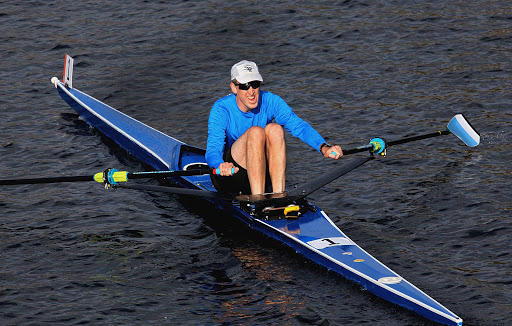
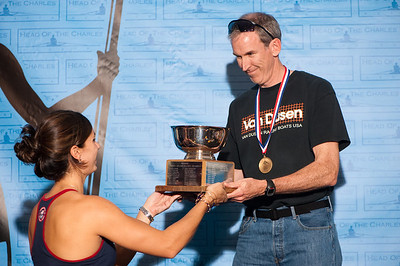
    Really excited to release my follow up interview with Greg Benning. With 19 wins at HOCR, 4 course records, and  7 wins at SilverSkiff, I just had to get him back on the podcast, to share with us his approach to training and preparing for an event.

    Anyone that wants to get insights and inspiration, into how a multiple champion athlete, prepares and trains to win, you will not want to miss this episode.

    Some of the key points covered;

    • How Greg plan’s his season to key races
    • How Greg measures and manages his training volume, intensity and recovery
    • Technology Greg uses in training and racing
    • Rigging, catch angles and how to approach power application
    • Key workouts and strength program
    • What Greg has learnt from other sports and how these insights can be applied to rowing
    • Coffee or tea? Coffee
    • Racing or training? Training
    • Crew or Single? Crew
    • Favourite race? Head of the Charles Regatta, Silver Skiff & Heineken Roeivierkamp

    Links to Greg’s mentions

    To make sure you get all the latest information, ideas and inspiration, subscribe to my newsletter and join our community on Facebook.

    This podcast is brought to you by High Performance Coaching in business and sport with Bill Chambers. To have a chat about your goals and high performance coaching, connect with me on WhatsApp.

    https://anchor.fm/s/1f7219c8/podcast/rss
  • Conversation with Greg Benning – Faster Podcast

    Conversation with Greg Benning – Faster Podcast

    My guest today is well known in both World Rowing, US Rowing and business. He is a competitive master-level rower, with 19 wins at HOCR, 4 course records.  7 wins at SilverSkiff.  Half dozen FISA Veteran or US Masters Nationals with 6+ wins/regatta. He is the Vice Chair of US Rowing, captained the 1984 crew at the University of Pennsylvania, former President of Cambridge Boat Club and co-founder of the Boston rowing Federation. He is a highly successful Boston-based investment banker and an avid saltwater fly fisherman. My guest today, is Greg Benning.

    This podcast is brought to you by High Performance Coaching in business and sport with Bill Chambers.

    https://anchor.fm/s/1f7219c8/podcast/rss