Tag: faster podcast

  • What Is Fatigue?

    What Is Fatigue?

    Original article By Alex Hutchinson, New Yorker Magazine, December 12, 2014. Includes links to Podcast interviews.
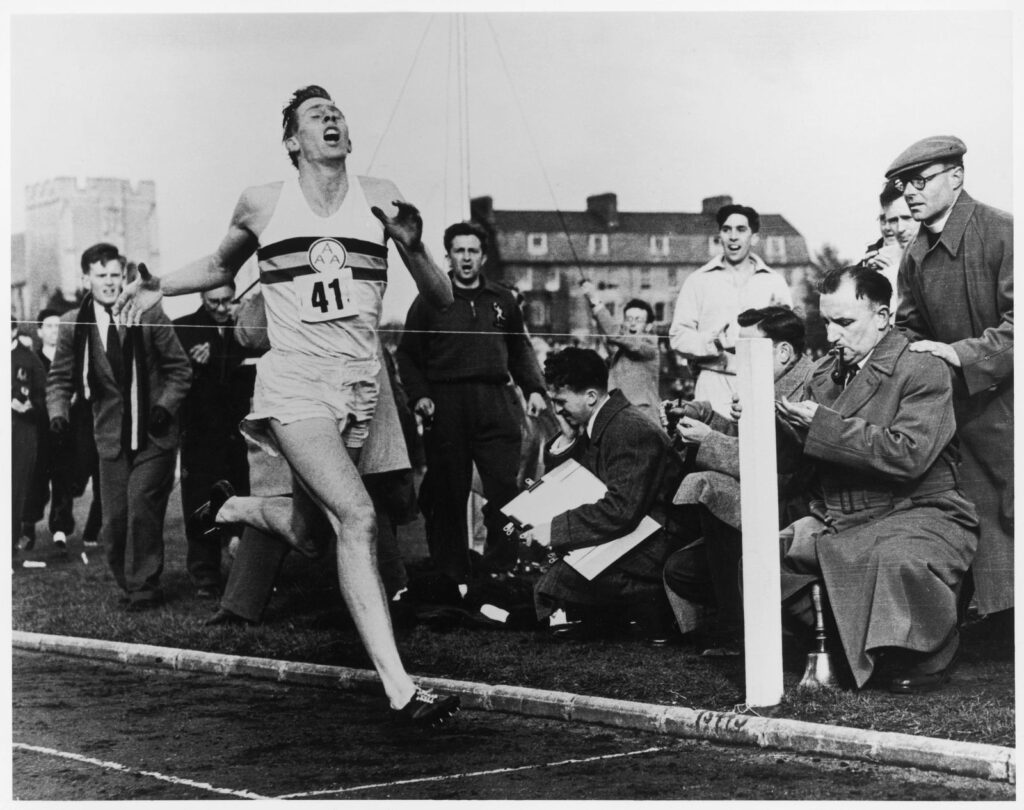
    Roger Bannister at the end of his record-breaking mile run at Oxford, in 1954.
    Photograph by Norman Potter

    When, on a blustery day in Oxford in 1954, Roger Bannister ran the first sub-four-minute mile, measuring out the full capacity of his lungs and legs and collapsing across the finish line, he felt, as he later wrote, “like an exploded flashlight.” That was the feeling researchers were trying to evoke, recently, when they paid thirteen volunteers at Bangor University, in Wales, to pedal a stationary bike at a predetermined pace for as long as they could. Such “time to exhaustion” trials are a well-established method of measuring the limits of physical endurance, but in this case the experiment also had a hidden psychological component. As the cyclists pedalled, a screen in front of them periodically flashed images of happy or sad faces in imperceptible sixteen-millisecond bursts, ten to twenty times shorter than a typical blink. The cyclists who were shown sad faces rode, on average, twenty-two minutes and twenty-two seconds. Those who were shown happy faces rode for three minutes longer and reported less of a sense of exertion. In a second experiment, the researchers demonstrated that subliminal action words (go, lively) could boost a subject’s cycling performance by seventeen per cent over inaction words (toil, sleep).

    The study, which was published last month (2013) in the journal Frontiers in Human Neuroscience, by Samuele Marcora, who heads the University of Kent’s Endurance Research Group, and two of his colleagues at Bangor, Anthony Blanchfield and James Hardy, is the latest salvo in an ongoing debate about the very nature of fatigue. According to one study, fatigue is “the inability of the contracting muscles to maintain the desired force.” But what causes it? Physiologists in the early twentieth century studied exhaustion by cutting off the hind legs of frogs and electrically stimulating the muscles over and over until they couldn’t contract anymore. In 1907, the Nobel Laureate Frederick Hopkins and one of his colleagues showed that the depleted frog muscles were bathed in lactic acid. Their experiment gave rise to an enduring-and incorrect-explanation for muscle failure; scientists now know that lactate, the form in which lactic acid occurs in the body, actually fuels muscular contraction rather than inhibiting it. Nevertheless, the view of fatigue as a mechanical breakdown has persisted. You max out your ability to pump oxygen, the acidity of your blood creeps up, and the neuromuscular signalling between your brain and your muscles gets weaker: one way or another, you hit a limit.

    Marcora believes that this limit is probably never truly reached-that fatigue is simply a balance between effort and motivation, and that the decision to stop is a conscious choice rather than a mechanical failure. This, he says, is why factors that alter a person’s perception or motivation (monetary rewards, for example) can affect performance, even without any change in muscle capacity. In the subliminal experiments, the cyclists’ heart rates and lactate levels rose at the same rate no matter which faces they saw, indicating that nothing had changed from the neck down. Considerations like heat, hydration, and muscle conditioning, Marcora says, “are not unreal things, but their effect is mediated by perception of effort.” In other words, they don’t force you to slow down, as happens with the failing frog muscles in the petri dish; they cause you to want to slow down-a semantic difference, perhaps, but a significant one when it comes to testing the outer margins of human capability.

    Marcora calls his theory the “psychobiological model.” It’s one of several attempts, in the past decade, to incorporate the brain into the understanding of endurance. This isn’t to say that previous generations of scientists discounted the mind’s influence on physical performance; as Michael Joyner, a physiologist at the Mayo Clinic, in Minnesota, told me, “There were people talking about this stuff in the eighteen-eighties, and coming up with very good thought experiments.” The Italian scientist Angelo Mosso, for instance, showed that the muscular endurance of two of his fellow physiology professors was diminished after they had given a series of lectures and oral exams to students. In the more than a century since, researchers have tried everything from hypnosis to curare toxin to alter the correspondence between mental effort and muscular output. But only recently have brain-imaging tools such as functional magnetic resonance imaging and electroencephalography become advanced enough to allow observation of the brain during intense exercise.

    Consider, for example, the sub-two-hour marathon, which is starting to look like the contemporary equivalent of the four-minute mile. Back in 1991, Joyner published an influential paper in which he combined the upper observed limits of several aspects of running performance into a calculation of the fastest possible marathon time. He settled on 1:57:58, almost nine minutes faster than the world record at the time; a discrepancy that suggested, Joyner wrote, that “our level of knowledge about the determinants of human performance is inadequate.” At the Berlin Marathon, this September, a thirty-year-old Kenyan man named Dennis Kimetto, a former subsistence farmer who started competing internationally just three years ago, set a new world record, completing the race in a time of 2:02:57-still almost five minutes short of Joyner’s prediction.

    Why does fatigue prevent athletic wonders like Kimetto from closing the five-minute gap? One possibility, proposed by Tim Noakes, a professor at the University of Cape Town, is that the brain has a subconscious safety mechanism that kicks in to prevent the body from getting too close to dangerous limits. Noakes calls this mechanism the “central governor.” In his view, fatigue is a protective emotion rather than a reflection of the body’s physiological state; its action is preëmptive and involuntary. That’s why, if you go for a run on a hot day, your pace is slower right from the start-not because you’re already overheating but because you might do so later. It’s possible, Noakes might argue, that what holds Kimetto back from a 1:57:48 marathon is hardwired self-preservation.

    Some clues about how this protective circuitry may work are beginning to emerge. A study published in November by researchers at the University of Utah showed that leg exercise makes the arms tired, a brain-mediated phenomenon known as nonlocal fatigue-unless you inject the painkiller fentanyl into the spine to block nerve signals travelling upward from the legs, in which case the arms are unaffected. Other studies have shown that acetaminophen, the pain inhibitor that is used in Tylenol, can boost cycling performance by some two per cent. Last year, a group of Brazilian and international scientists used a weak electric current, directed at a region of their subjects’ brains that monitors effort and pain, to produce an improvement of around four per cent in cycling endurance. In each case, altering the brain’s ability to monitor distress signals from the body seemed to increase the level of fatigue that the central governor was willing to tolerate.

    Marcora views the idea of a subconscious governor as unnecessarily complicated. He cites his subliminal-messaging study as a counterargument. Seeing a smiling face for a fraction of a second doesn’t change the fact that your pulse is, say, a hundred and eighty beats per minute and your blood-lactate concentration is seven millimoles per litre. It simply alters your conscious perception of those physiological extremes. In previous studies, Marcora has used caffeine gum, motivational self-talk, and what he calls “brain endurance training”-daily doses of cognitively challenging computer tasks-to tinker similarly with the feeling of exertion. (His initial interest in fatigue research was sparked by his mother’s struggles with unexplained fatigue after a kidney transplant, a common clinical occurrence in which perception is out of synch with physiology.)

    As laboratory demonstrations of the brain’s role in endurance have accumulated, the sports world has begun its own experiments. In May, Red Bull brought four élite cyclists and triathletes and two dozen researchers, led by a team of neuroscientists from Weill Cornell Medical College and Burke Medical Research Institute, in New York, to its Santa Monica headquarters. There they explored the endurance-boosting potential of transcranial direct-current stimulation, the technique used in the Brazilian study. Members of the U.S. national BMX team are testing a program that was developed by neuroscientists at the University of California, San Diego, to encourage mindfulness. Marcora, meanwhile, is in discussion with Recon Instruments, which bills its Recon Jet as “the first heads-up display for sports”-a Google Glass-like contraption that is ideal for flashing subliminal encouragement.

    Of course, coaches and athletes have long known to focus their efforts on the brain. I contacted Steve Magness, a cross-country coach at the University of Houston and the author of “The Science of Running: How to Find Your Limit and Train to Maximize Your Performance,” to ask him about Marcora’s study. It was the eve of the N.C.A.A. championships, and he was at a hotel in Indiana. “It’s intriguing that a seemingly subliminal cue could impact performance,” he told me in an e-mail. But he wasn’t surprised. “That’s what coaching is all about.” For months, Magness had been preparing his runners for the critical point in a race, the moment at which fatigue threatens to eclipse motivation. He planned to look his star runner in the eye the next morning and tell him that he was ready for the challenge. “That reinforcement from a coach, if it is genuine, I’m sure has a bigger psychological effect both consciously and subconsciously than presenting smiley faces,” he said.

  • How Alcohol Impacts Your Sleep

    How Alcohol Impacts Your Sleep

    One of the things I’ve been experimenting with, over the last 8-weeks, is measuring and tracking my Heart Rate Variability (HRV) and Morning Resting Heart Rate (MRHR). I’m doing this to understand how I am recovering from training and day-to-day stress. I’ve been really surprised at the impact of a couple of glasses of wine with dinner, both on my sleep, and my recovery. In doing some research, I now know why. Sharing some high level material to provide you with some insights.

    ‘How Alcohol Impacts Your Sleep’ originally posted on the Oura Blog, 20 February 2020.

    Having a glass of wine or a nightcap before bed is a common nighttime ritual. In fact, approximately 20% of the U.S. adult population drinks alcohol to help them fall asleep.

    As you sink into bed and doze off with that pleasant buzz of alcohol, it’s tempting to think you’ve unlocked the secret to falling asleep.

    But this is one shortcut you may want to avoid because while you may fall asleep quickly, the quality of your sleep suffers under the influence. Alcohol affects multiple processes in your body that prevent you from getting high-quality sleep.

    How Alcohol Impacts Your Sleep

    Alcohol impacts several of your body’s sleep systems. Most notably it:

    • Decreases melatonin: Alcohol inhibits the release of melatonin, your body’s primary sleep signal.
    • Reduces growth hormone: Alcohol reduces growth hormone release, which is crucial for your body’s nighttime repairs.
    • Increases stress hormones: Alcohol increases your body’s levels of cortisol, a stress hormone that increases your resting heart rate and generally stimulates the body—making it more likely you’ll wake up during the night.
    • Disrupts your circadian rhythm: Alcohol can impact your brain and liver’s internal clocks, causing your body to be misaligned with its natural sleep cycle.
    • Increases urination: Alcohol is a diuretic. Your body typically halts your bladder function at night; however, alcohol may interrupt your sleep for extra trips to the bathroom.
    • Aggravates breathing problems: Alcohol causes your muscles to relax, including your throat. This relaxation can make you more prone to snoring and can worsen sleep-related breathing problems like sleep apnea.

    Look Out for These Patterns

    Wondering if all this applies to you? Take notice next time you have a drink with friends or a nightcap on your own.

    Watch for these patterns in your sleep data:

    • Better sleep latency: Alcohol’s sedative effect reduces the time it takes for you to fall asleep by overriding your body’s natural, gradual transition to sleep.
    • More deep sleep, less total sleep: Alcohol may increase your deep sleep on the first night of drinking; however, it decreases your total hours of sleep.
    • Delayed REM, less REM: Alcohol significantly delays your first REM sleep cycle. Moreover, because alcohol also decreases your total sleep time and REM is weighted later in your sleep cycles, alcohol leads to fewer total minutes in REM.
    • Higher restlessness: Alcohol impacts your bladder, leading to more bathroom trips and more awakenings.
    • More fragmented sleep: Alcohol is more likely to disrupt the second half of your night, often decreasing total time spent asleep and disrupting your flow through sleep stages.
    Oura website (2020)

    Given that you’re not sleeping as well, you’re likely to suffer the next day with poorer reaction times, decreased concentration, compromised memory, and increased irritability.

    This, along with that late-night piece of greasy pizza you might have had—which also interferes with sleep—can compound to make your next day tough.

    Things to Keep in Mind

    Does this mean you have to give up drinking altogether? Not necessarily.

    Some people are more susceptible to alcohol than others, so compare your results to an average night’s sleep without alcohol to see what changes.

    Try out these tips to soften alcohol’s impact on your sleep:

    • End early: Allow your body at least 3 hours before bed to metabolize the alcohol from your system. Keep in mind this varies by your weight, gender, and consumption.
    • Hydrate often: Having a glass of water along with every drink helps your system flush out alcohol.
    • Avoid mixers: Beverages that have sugar or caffeine in the mix are more likely to stimulate your internal clocks when you’re trying to wind down.

    References

    • Roehrs, Timothy, and Thomas Roth. “Insomnia pharmacotherapy.” Neurotherapeutics 9, no. 4 (2012): 728-738. 
    • Rupp, Tracy L., Christine Acebo, and Mary A. Carskadon. “Evening alcohol suppresses salivary melatonin in young adults.” Chronobiology International 24, no. 3 (2007): 463-470. (link
    • Ekman, A. C., O. L. L. I. Vakkuri, M. I. K. A. Ekman, J. Leppäluoto, A. Ruokonen, and M. Knip. “Ethanol decreases nocturnal plasma levels of thyrotropin and growth hormone but not those of thyroid hormones or prolactin in man.” The Journal of Clinical Endocrinology & Metabolism 81, no. 7 (1996): 2627-2632. (link
    • Spencer, Robert L., and Kent E. Hutchison. “Alcohol, aging, and the stress response.” Alcohol Research and Health 23, no. 4 (1999): 272-283. (link
    • Udoh, Uduak, Jennifer Valcin, Karen Gamble, and Shannon Bailey. “The molecular circadian clock and alcohol-induced liver injury.” Biomolecules 5, no. 4 (2015): 2504-2537. 
    • Ebrahim, Irshaad O., Colin M. Shapiro, Adrian J. Williams, and Peter B. Fenwick. “Alcohol and sleep I: effects on normal sleep.” Alcoholism: Clinical and Experimental Research 37, no. 4 (2013): 539-549. (link
    • Prinz, Patricia N., Timothy A. Roehrs, Peter P. Vitaliano, Markku Linnoila, and Elliot D. Weitzman. “Effect of alcohol on sleep and nighttime plasma growth hormone and cortisol concentrations.” The Journal of Clinical Endocrinology & Metabolism 51, no. 4 (1980): 759-764. (link)
  • Latest podcast episode – Head of The Charles Regatta with Blair Crawford (Chair) Board of Directors

    Latest podcast episode – Head of The Charles Regatta with Blair Crawford (Chair) Board of Directors

    Since its inception in 1965, The Head Of The Charles Regatta, also known as HOCR, is a rowing head race held on the penultimate complete weekend of October each year on the Charles River, which separates Boston and Cambridge, Massachusetts. I thought it would be interesting to find out from the organisers, and rowers, what makes the HOCR so special, and what attracted them to fly half way around the world to race on the Charles River. Over the next weeks, I will be releasing episodes where I chat with crews from around the world, to share insights into what makes this regatta so special.

    In this first episode, I speak with Blair Crawford (Chair) of the HOCR Board of Directors, to understand more about the regatta, how it all started, and how the regatta has evolved into what it is today.

    Head of The Charles Training Plans

    If you are a Masters Rowers, and interested in training for the Head of The Charles Regatta, I have prepared training plans especially for Masters Rowers. Whether you are planning to race in Boston, or compete virtually, these plans will help you to be at your best. The plans are designed by the most successful Masters Rowers, specifically for the Head of The Charles, and for Masters with 6 hours a week all the way to 12 hours of training a week. Click on the link to check out the programs. HOCR Training Plan

  • The Problem With Starting Your Ergo Dehydrated.

    The Problem With Starting Your Ergo Dehydrated.

    How to START hydrated and why that’s so important.

    Sharing original article from Andy Blow, Precision Hydration.  Medically reviewed by Dr Tamara Hew-Butler. Precision Hydration support our newsletter subscribers with 10% off all purchases, when you use the discount code; Faster10 at checkout. www.precisionhydration.com

    The benefits of starting exercise hydrated

    Much of the literature on hydration has focused on what athletes should drink during exercise, but your hydration status before you start exercising can have a huge impact upon your athletic performance…

    When people talk about hydration, most of the time it’s about what and how much athletes should drink during exercise.

    These are clearly important questions, but your performance is also massively influenced by how hydrated you are when you start exercising in the first place. Drinking a strong electrolyte drink to optimise your hydration status before long, hot or really hard training sessions and events can significantly improve your performance.

    We call this “preloading” and the practice has been widely studied in the last 20 years or so, both with astronauts and athletes. Whilst there’s not a completely bullet proof consensus on the subject – there rarely is – there’s strong evidence that taking in additional sodium with fluids before you start sweating is effective in promoting increased acute fluid retention and in improving endurance performance, especially in the heat. 

    This blog aims to give you a more solid understanding of what you can do to arrive at the start of your next event optimally hydrated.

    What are the benefits of preloading?

    Once you begin sweating you’re generally going to be fighting a losing battle against fluid and electrolyte loss, so starting off properly hydrated can be extremely beneficial. When you’re properly hydrated you have a larger reservoir of fluid to draw from over time than if you’re dehydrated.

    Starting well hydrated has other benefits too. Optimal hydration maximises your blood volume and this helps general cardiovascular function and your ability to dissipate the heat produced by your working muscles. This reduces fatigue and enables you to maintain your performance for longer.

    Despite the relatively obvious benefits of starting exercise well hydrated, a recent study of over 400 amateur athletes showed that around 31% of them were turning up to training sessions (and, in some cases, competitions) dehydrated!

    In amongst the data there were strong indications that this was very likely to be compromising their performance. This will probably seem like common sense, especially if you’ve ever tried exercising when you know you’re a bit ‘dry’. Who in their right mind would want to start exercising hard in a dehydrated state if they’re trying to perform at their best?

    The problem with starting exercise dehydrated

    This study certainly backs up previous work I’ve read on the subject and the kind of things we’ve seen over many years working with athletes in different scenarios. It’s certainly not uncommon to see people only really thinking about hydration once they turn up to a session rather than preparing in advance. 

    Often this just happens because those of us who are not full time athletes are running around flat out between workouts and aren’t always able to think about preparing properly for them 100% of the time. That’s just life.

    But it can also be a problem for full-time athletes when training two or more times a day, or at times when they’re just under a very high total training load. That’s because uncorrected dehydration from a prior training session can make it’s presence felt when the next session gets underway. This blog addresses how to optimise your recovery by hydrating properly.

    Although athletes turning up to training a bit low on fluids is relatively common, it’s generally less of an issue before major competitions. That’s not to say that turning up to an event dehydrated never happens, I’m sure it does.

    The dangers of overdrinking and hyponatremia

    But, because most athletes care a lot about their performance in big events, there’s a tendency to increase fluid intake before the big day because extra priority is placed on all aspects of last minute preparation.

    2019 study found that 14% of 63 ultrarunners started the 246km (153 miles) Spartathlon midly hyponatremic

    The irony of this extra emphasis on pre-event hydration is that quite a lot of athletes can go from slightly under-drinking before training to significantly over-drinking pre-competition and this can lead to a different set of problems!

    I’ve written about the common tendency to over-drink before races in the past and the bottom line is that it’s a very real problem that can potentially lead to hyponatremia (i.e. low blood sodium levels caused by inadequately replacing the sodium lost when sweating and further dilution by drinking plain water or weak sports drinks), something that can be pretty catastrophic for health and performance if it goes unchecked. A recent study found that 10% of athletes tested at the Ironman European Championships had hyponatremia, which shows you the extent to which hydration issues might be impacting performance.

    The idea of carb loading – i.e. maximising the amount of glycogen you have stored in your muscles and liver before a strenuous activity – is one that’s well researched and essentially universally accepted as a performance-enhancing tactic.

    OK, so sports scientists love to argue over exactly what and how much you should eat, and when exactly to shove it in your cake hole, but few sane athletes would argue with the principle that consuming additional carbohydrate calories (often combined with a tapering off in training load) in the final days before an event is a good idea.

    That’s because you can store up and subsequently use a lot of this energy later on when you need to dig deep and burn through large amounts of fuel during a long or hard effort.

    With hydration things are less clear cut than with carbs. As we’ve seen, many athletes do tend to increase fluid intake prior to important events or hard training sessions, with the vague notion that having more in the tank should result in better performance. But many unfortunately over do it in the process and this is harming their performance.

    The importance of sodium for hydration

    But, can you actually store fluid over and above being normally hydrated and, if so, does it help to do so?

    The answer has a lot to do with not just how much water you drink, but with how much sodium you consume with that water as it’s this electrolyte that plays a key role in retention of fluid in the body and in the bloodstream in particular. For more on why sodium is crucial to staying hydrated and maintaining your performance, you may want to read this blog.

    In a nutshell though, without the right amount of sodium in your pre-exercise drinks, drinking lots of water will do you a fat lot of good. The importance of sodium to hydration and maintaining your performance was further proven by research conducted at NASA at the end of the 20th century.

    NASA astronauts hydration study

    NASA’s astronauts were commonly found to be suffering with low blood pressure because they were losing bodily fluids (and therefore blood volume) during their time in microgravity. One NASA paper I read suggested that astronauts live with as much as a 3-4% deficit in total body fluid levels during a typical mission. It was causing them to feel weak, light headed and even to black out on re-entry or once they landed back on terra firma. That’s not something you want to be dealing with when you’re trying to land a rather expensive space craft! 

    To combat this, NASA tested lots of drinks containing different carbohydrates and electrolyte mixtures and found that the more sodium you put in a drink, the more effective the drink would be at being retained in the body and bloodstream and correcting dehydration.

    On top of the work by NASA, there have been a number of scientific studies conducted into the idea of athletes ‘preloading’ with sodium and fluids prior to exercise in the last few years and the key findings from this work were summarised in a paper back in 2013.

    This review article essentially came to the same conclusion as NASA that sodium preloading with a drink strong enough to stimulate fluid retention in the blood stream, but not so strong that it caused other knock on issues, does seem to improve endurance performance. 

    As I mentioned, a higher blood volume means an easier time for your cardiovascular system when you’re exercising and also a bigger reservoir of fluids available to ‘lose’ through sweating if you need to cool down, as is the case when working your muscles hard and producing lots of metabolic heat.

    However, due to the mechanisms that control fluid and electrolyte balance in the body, any attempt to preload with plain water inevitably just leads to more trips to the bathroom as your body tries it’s best to avoid an excessive dilution of your blood sodium levels, which would lead to hyponatremia if unchecked.

    How to preload effectively

    It’s about striking a balance between being aggressive enough to drive some extra fluid retention in your blood stream without this leading to gastro-intestinal issues or excessive fluid build-up making you feel bloated and sluggish.

    Typical sports drinks – which generally contain ~200 to 500mg of sodium per litre – simply don’t cut it when it comes to preloading as they’re just way too dilute to make a meaningful difference to blood volume. The reality is it’s not vastly different from drinking water.

    At the other extreme, most of the scientific studies that have been conducted in this area have looked at using extremely strong electrolyte drinks containing ~3,600mg of sodium per litre. That’s like drinking a bag of saline solution that would normally be put into you via an IV! Whilst this has been shown to be highly effective at boosting blood plasma volume, it’s has a tendency to cause upset stomachs, sickness or diarrhoea – something that is obviously very counterproductive when you’re trying to improve your performance!

    One study back in 2014 looked at the effectiveness of 4 drink concentrations – Water, 1,380mg/l, 2,750mg/l and 3,680mg/l – to compare the effect they had on blood volume pre-exercise v how much sickness and diarrhoea they caused.

    The athletes drank a set amount (17ml per kg of body weight, so about 1.2l for an average sized 70kg athlete) of each of the drinks and the more sodium that was in it, the more blood volume was increased, as you’d expect. But with the strongest drink, 6 of the 8 athletes experienced diarrhoea compared with zero issues with the 1,380mg/l drink and plain water.

    That paper was of real interest to me as at Precision Hydration we’d already been experimenting with different concentrations of drink to use for preloading. I’d had lots of GI problems when trying 3,000mg/l+ drinks, so was already using less strong stuff and I was still finding it beneficial, so it was good to get some scientific confirmation that we were on the right track.

    In the end we settled on a strength of 1,500mg/l (32oz) for our preloading drinks and these are available in the all-natural PH 1500 drink mix format as well as low-calorie H2Pro Hydrate 1500 effervescent tablets. 1,500mg/l seemed to be the ‘sweet spot’ in that it’s very palatable and easy on the gut (we never get comments about stomach upsets from using it) whilst still being effective at boosting your blood plasma volumes and getting you optimally hydrated before you start sweating.

    If you want to test whether preloading improves your performance, follow this protocol before your next long/intense training session or B-race.

    Preloading with PH 1500:

    • Drink 1 x PH 1500 with ~500ml (16oz) of water the evening before your activity.
    • Drink 1 x PH 1500 with ~500ml (16oz) of water about 90 minutes before you start. Finish your drink at least 45 minutes before you start to give your body time to fully absorb what it needs and pee out any excess.
    • Drink the PH 1500 in water you’d have drank anyway to ensure you don’t overdo it. The circa symbol (~) before the fluid total is key here as different athletes will drink differing amounts – for example, more petite athletes might typically drink less than larger athletes. One size won’t fit all, so use some trial and error with these guidelines to help work towards what is best for you when preloading. 
    • DON’T just drink lots of water in the build-up to a race. You can end up diluting your body’s sodium levels before you start, increasing the risk of hyponatremia.

    Why you should preload

    • Boosting your blood plasma volume before intense exercise is a proven way to enhance your performance, especially in hot conditions.
    • Having more blood makes it easier for your cardiovascular system to meet the competing demands of cooling you down and delivering oxygen to your muscles.
    • PH 1500 is very effective at increasing your plasma volume as it contains 3x more sodium than a typical sports drink. That extra sodium helps to pull water into your bloodstream and keep it there. This may allow you to get away with drinking considerably less in shorter/harder events where previously they would have had to try to consume more on the move (not easy when you’re flat out!). It can also help reduce the amount of times you need to pee before you start.
    • Preloading with PH 1500 can also help you avoid/alleviate muscle cramps, especially if you’re prone to suffering from them late on in events and especially when it’s hot. 89% of athletes with cramp who try preloading PH 1500say that it solves their problems.
    • You can’t preload anywhere near as effectively with weaker sports drinks as you’ll lose a large proportion of the fluid as urine. Or it’ll slosh around in your stomach without being properly absorbed. 

    Precision Hydration support our newsletter subscribers with 10% off all purchases, when you use the discount code; Faster10 at checkout. www.precisionhydration.com

    If you’re looking for a way to optimise your performance then testing sodium preloading is definitely worth a try. If you have any questions about how to preload effectively or need help optimising your approach, drop us an email.

  • Peter Hardcastle – Triple Olympian – Head Rowing Coach at Imperial College

    Peter Hardcastle – Triple Olympian – Head Rowing Coach at Imperial College

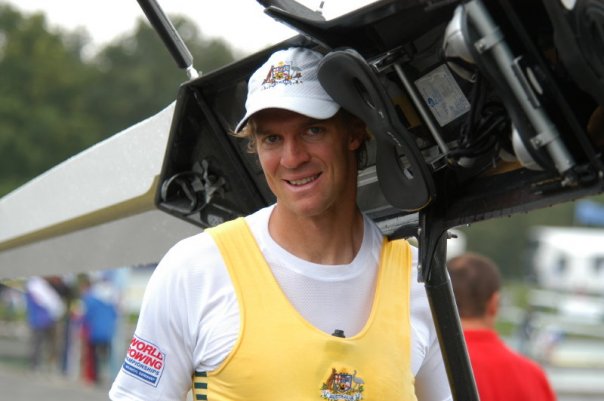
    Peter (Pete) Hardcastle, is well known in Australian and World Rowing. Pete represented Australia at the Sydney, Athens and Beijing Olympic Games in different boat classes. After the olympics, Pete moved to the UK in 2008.  where he coached at Dulwich College, Emanuel School and London Rowing Club, and coached the men’s four at the Coupe de la Jeunesse in 2014.  In 2017, Pete joined Imperial College as the Head of Rowing and in his first season at Imperial, he coached the crew that won the Prince Albert Challenge Cup at Henley Royal Regatta.  

    Pete is an amazing athlete, and still continues to amaze mere mortals, with his Ironman Triathlon exploits, and marathon running. In this episode, Pete and I explore what got him into rowing, and how he progressed to the U23 World Championships and then the Elite team under 4-years. We talk about personal motivation, and challenging others to explore what is possible. We review what is really going on with some of the rapid crews we are watching today, and he shares his tips on how to get yourself ready to race as well as preparing your race mindset.

    This podcast is supported by, Precision Hydration, Bont Rowing, Filippi Boats and Citius Remex seat pads. For more information about our supporters, and to gain access to exclusive bonus offers, ensure you subscribe to my newsletter.

    https://anchor.fm/s/1f7219c8/podcast/rss
  • Anne-Marie Howald – Swiss Rowing Team Coach

    Anne-Marie Howald – Swiss Rowing Team Coach

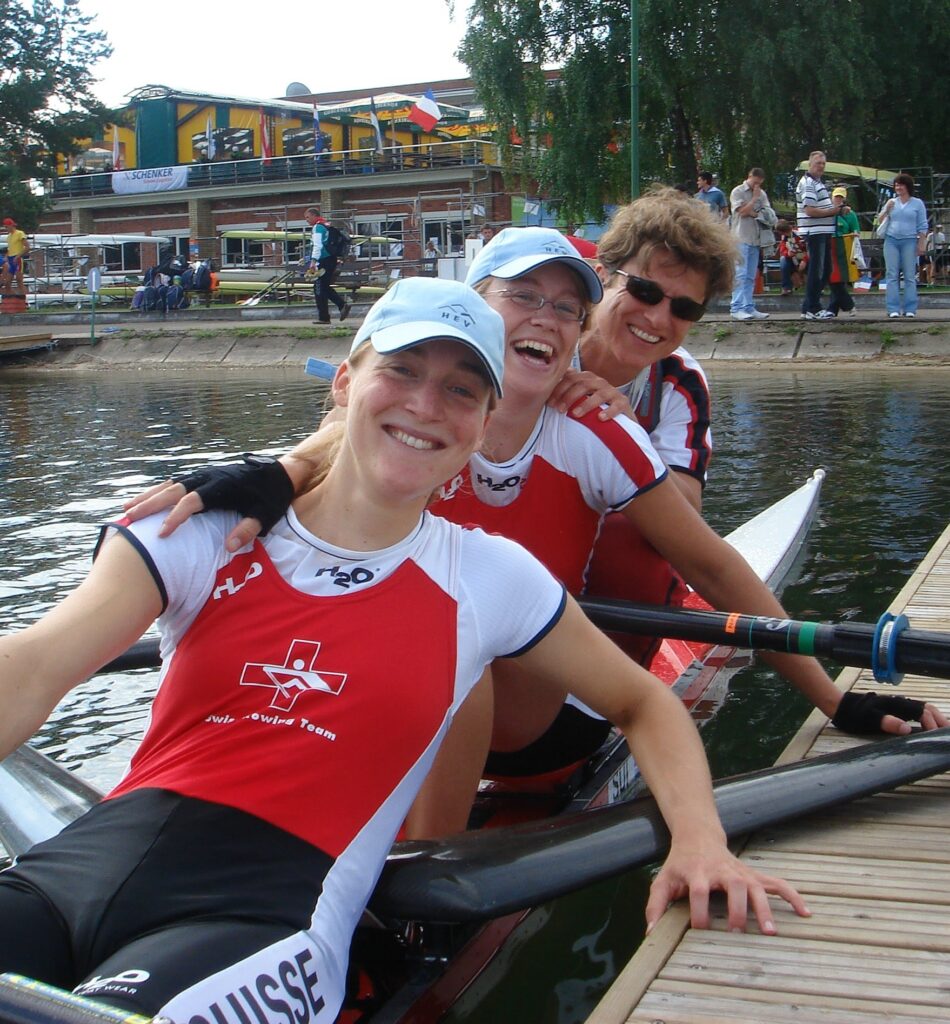
    Anne-Marie Howald is well know in the rowing world, having represented Switzerland at the 1987 & 88 World Championships as a lightweight, and now as the Head Coach of the U23 and Junior Squad.

    In 2018, Anne-Marie was awarded the “Swiss Olympic Coach Award” for the impressive achievements of the junior national team at the European Championships in Krefeld and the World Championships in Trakai.

    Anne-Marie leads the talent identification of young rowers in Switzerland, with the ‘Future Rowers’ programme that takes promising young athletes through to the Elite level. In this episode, Anne-Marie covered how she first started in rowing and how that love for rowing, and high performance, has taken her on her own journey to coaching and inspiring others. Plenty of inspiration for the listener, some ideas and tips on how to move the boat faster, along with some nice insights into her time training with the legendary coach, Harry Mahon.

    You can connect with Anne-Marie via email: annemarie.howald@swissrowing.ch

    This podcast is supported by, Precision Hydration, Bont Rowing, Filippi Boats and Citius Remex seat pads. For more information about our supporters, please ensure you subscribe to my newsletter to gain access to exclusive bonus offers.

    https://anchor.fm/s/1f7219c8/podcast/rss